
7 Best Questions to Ask at the End of an Interview Worldwide

Most candidates stick to surface questions during interviews, yet studies show that thoughtful inquiries can set you apart from the competition. When you ask about a company’s vision, team culture, or growth opportunities, it signals serious intent and strategic thinking. The right questions not only help you gauge if the role fits your goals, but also impress interviewers who value curiosity and initiative. Discover which questions reveal a company’s true potential and help you find long-term success.
Table of Contents
- 1. Show Interest In The Company’s Future Plans
- 2. Ask About Team Structure And Culture
- 3. Clarify Role Expectations And Success Metrics
- 4. Request Feedback On Your Fit And Skills
- 5. Inquire About Growth And Learning Opportunities
- 6. Understand Next Steps In The Hiring Process
- 7. Explore Support For Remote Or Flexible Work
Quick Summary
| Takeaway | Explanation |
|---|---|
| 1. Show interest in future company goals | Asking about future plans signals you are invested in the company’s success and see the long-term vision. |
| 2. Inquire about team culture and structure | Understanding team dynamics helps assess if you will thrive in the role and environment. |
| 3. Clarify role expectations and success metrics | Asking about success indicators shows your commitment to making a meaningful impact in the role. |
| 4. Request feedback on your qualifications | Seeking feedback demonstrates openness to growth and helps address potential concerns during the interview. |
| 5. Understand opportunities for growth and learning | Inquiring about career development paths shows your ambition and interest in long-term professional growth. |
1. Show Interest in the Company’s Future Plans
Asking about a company’s future plans demonstrates more than basic curiosity. It reveals you are a forward thinking candidate who sees beyond the immediate role and wants to understand the organization’s strategic trajectory.
When you ask thoughtful questions about future goals, you signal to the interviewer that you are invested in the company’s long term success. This approach transforms you from a mere job applicant into a potential strategic partner who thinks holistically about the organization.
Strategic Questions to Consider:
- What major initiatives or growth strategies are planned for the next 12 to 24 months?
- How do you see this role contributing to the company’s broader objectives?
- What emerging market trends or technologies are influencing your future plans?
By researching the company beforehand using company research strategies, you can craft questions that demonstrate genuine understanding. This preparation allows you to ask nuanced questions that show you have done your homework and are truly interested in the organization’s potential.
Remember that your goal is not just to ask questions but to engage in a meaningful dialogue. Listen carefully to the interviewer’s responses. Their insights can provide valuable information about the company culture, potential growth opportunities, and your potential fit within the team.
A well placed question about future plans can leave a lasting impression. It tells the interviewer that you are thinking strategically and see yourself as a potential long term contributor to their organization’s success.
2. Ask About Team Structure and Culture
Understanding a team’s structure and culture is not just about gathering information. It is about evaluating whether you will thrive in the professional environment where you might spend the next chapter of your career.
Understanding group interview dynamics can help you ask more insightful questions about team interactions. According to research from the University of Minnesota, comprehending work environment and team dynamics is crucial for assessing your potential fit.
Key Questions to Explore:
- How would you describe the team’s communication style?
- What does collaboration look like in your department?
- Can you share an example of how the team supports professional growth?
When you ask about team culture, you are doing more than seeking information. You are demonstrating your commitment to finding a workplace where you can genuinely contribute and grow. Smart candidates recognize that a job is not just about tasks but about finding an environment where they can excel.
Pay close attention to the interviewer’s response. The language they use revealing underlying team dynamics reveals volumes about the workplace. Are they enthusiastic? Do they provide specific examples? These nuances can offer deeper insights than generic statements.
Remember that understanding team culture is a two way street. You are evaluating them as much as they are evaluating you. A great team fit can make the difference between a job and a rewarding professional experience.
3. Clarify Role Expectations and Success Metrics
Every great journey begins with crystal clear expectations. Understanding precisely what success looks like in your potential new role transforms an ordinary job interview into a strategic career conversation.
According to research from the University of Minnesota, asking about the ways a company expects a new hire to contribute during the first few months can clarify role expectations and priorities with remarkable precision.
Strategic Questions to Uncover Expectations:
- What are the key performance indicators for this role?
- What would success look like after 30, 60, and 90 days?
- How do you measure and evaluate team member performance?
Common interview strategies suggest that proactively discussing metrics demonstrates your commitment to delivering tangible results. By asking these questions, you signal to the interviewer that you are not just seeking a job but aiming to make a meaningful impact.
Think of this conversation as a mutual mapping exercise. You want to understand the landscape of expectations and the interviewer wants to see how you navigate professional challenges. The more precisely you can align your skills with their needs, the more compelling a candidate you become.
Remember that great employers appreciate candidates who are goal oriented and focused on measurable outcomes. Your curiosity about performance metrics reveals a professional mindset that values accountability and continuous improvement.
4. Request Feedback on Your Fit and Skills
The most powerful interviews are conversations where you actively seek understanding about your potential contribution. By requesting direct feedback, you transform a one sided assessment into a collaborative evaluation of your professional potential.
According to Harvard Business School, asking if the interviewer has any hesitations about your qualifications provides a strategic opportunity to address potential concerns and demonstrate your suitability for the role.
Powerful Feedback Seeking Approaches:
- Do you see any gaps in my background that might concern you?
- What additional skills or experiences would make me an ideal candidate?
- Based on our conversation, how do you see me fitting into the team?
Research from MIT suggests that inquiring about key role challenges can help you assess your fit and readiness to tackle potential issues. This approach shows intellectual curiosity and a proactive mindset.
The art of requesting feedback is about balance. You want to appear confident yet open to growth. Your goal is not defensive explanation but genuine understanding. When an interviewer shares reservations, listen carefully. This is your chance to provide additional context or showcase adaptability.
Remember that vulnerability can be a strength. By inviting candid assessment, you demonstrate emotional intelligence and a commitment to continuous professional development. The most successful candidates view interviews as two way dialogues where mutual understanding matters most.
5. Inquire About Growth and Learning Opportunities
Career growth is not a luxury. It is a strategic necessity in today’s rapidly evolving professional landscape. Understanding potential advancement pathways transforms a job interview from a mere hiring transaction into a meaningful career exploration.
Common interview questions can help you frame your inquiry effectively. According to Forbes, inquiring about career paths with growth potential demonstrates your ambition and commitment to long term professional development.
Key Questions to Explore Opportunities:
- What professional development resources does the company offer?
- How do employees typically advance within this department?
- Are there mentorship or cross training programs available?
According to MasterClass, asking about professional development opportunities signals your genuine interest in growing within the company and continuously enhancing your skill set. Smart employers recognize and appreciate candidates who view their role as a platform for ongoing learning and improvement.
Think of this conversation as a mutual investment discussion. You are not just seeking a job but exploring a potential ecosystem where your professional capabilities can flourish. The interviewer gains insight into your forward thinking mindset while you gain clarity about your potential trajectory.
Remember that growth is multidimensional. Beyond vertical promotions, consider lateral moves, skill acquisition opportunities, and potential for expanding your professional network within the organization.
6. Understand Next Steps in the Hiring Process
The final moments of an interview are your strategic window to gain clarity about your potential professional future. Understanding the recruitment timeline transforms uncertainty into actionable insight.
According to Harvard Business School, requesting information about the recruitment timeline helps you manage expectations and demonstrates professional maturity.
Critical Questions to Explore:
- What are the next stages in your hiring process?
- What is your expected timeline for making a decision?
- When can I expect to hear back from your team?
- Are there additional interviews or assessments I should prepare for?
Research from the American Chemical Society highlights that asking about the hiring timeframe shows your eagerness and proactive professional approach. This seemingly simple inquiry signals your serious interest and organizational awareness.
Pro tip: When the interviewer shares the timeline, listen carefully and take mental notes. If they provide a specific date or range for follow up, you can strategically plan your subsequent communication.
Crucial job offer considerations extend beyond the initial interview. By understanding the process, you position yourself as a thoughtful candidate who values clear communication and mutual understanding.
7. Explore Support for Remote or Flexible Work
The modern workplace is transforming. Understanding a company’s approach to flexible work arrangements has become as crucial as understanding the role itself.
Remote job interview tips suggest that inquiring about work flexibility demonstrates your adaptability and strategic thinking. According to Forbes, asking about the company’s approach to maintaining work life balance provides critical insights into their support for flexible arrangements.
Key Questions to Explore Flexibility:
- What is your policy on remote and hybrid work?
- How do you support employee productivity in flexible arrangements?
- What technologies do you use to facilitate remote collaboration?
- Are there core hours or specific in office requirements?
Research from MasterClass highlights the importance of understanding the tools and technologies used to support remote working conditions. This inquiry reveals not just logistical details but the company’s technological maturity and commitment to modern work practices.
Beyond practical considerations, these questions signal your professionalism. You are not just seeking a job but evaluating a potential professional ecosystem that aligns with your working style and personal needs.
Remember that flexibility means different things to different organizations. Some offer full remote work. Others provide hybrid models. Your goal is to understand their specific approach and assess how it matches your professional preferences and lifestyle requirements.
Below is a comprehensive table summarizing the strategies and key inquiries discussed throughout the article for enhancing job interview effectiveness.
| Strategy | Key Inquiries | Benefits/Outcomes |
|---|---|---|
| Show Interest in the Company’s Future Plans | What major initiatives or strategies are planned? How does this role contribute to broader objectives? | Demonstrates strategic thinking; shows long term interest |
| Ask About Team Structure and Culture | What is the team’s communication style? How does collaboration work in the department? | Evaluates fit with team’s environment; reveals team dynamics |
| Clarify Role Expectations and Success Metrics | What are the key performance indicators? What would success look like after 30, 60, and 90 days? | Clarifies expectations; aligns candidate’s skills with needs |
| Request Feedback on Your Fit and Skills | Do you see any gaps in my background? How do you see me fitting into the team? | Offers opportunity to address concerns; shows openness to growth |
| Inquire About Growth and Learning Opportunities | What professional development resources are available? How do employees advance? | Demonstrates ambition; explores career development prospects |
| Understand Next Steps in the Hiring Process | What are the next stages in your hiring process? What is the expected timeline for a decision? | Manages expectations; shows professionalism |
| Explore Support for Remote or Flexible Work | What is your policy on remote work? How do you support productivity in flexible arrangements? | Assesses compatibility with work-life balance; reveals organizational adaptability |
Master Your Interview Questions and Impress Every Time
Navigating the right questions to ask at the end of an interview can be challenging. This article highlights how probing about future company plans, team culture, role expectations, and feedback not only showcases your strategic thinking but also helps you find the perfect job fit. Common struggles include knowing what to say without hesitation and demonstrating your readiness to contribute meaningfully. If you want to tackle each interview confidently and create that lasting impression, having real-time support can be a game changer.
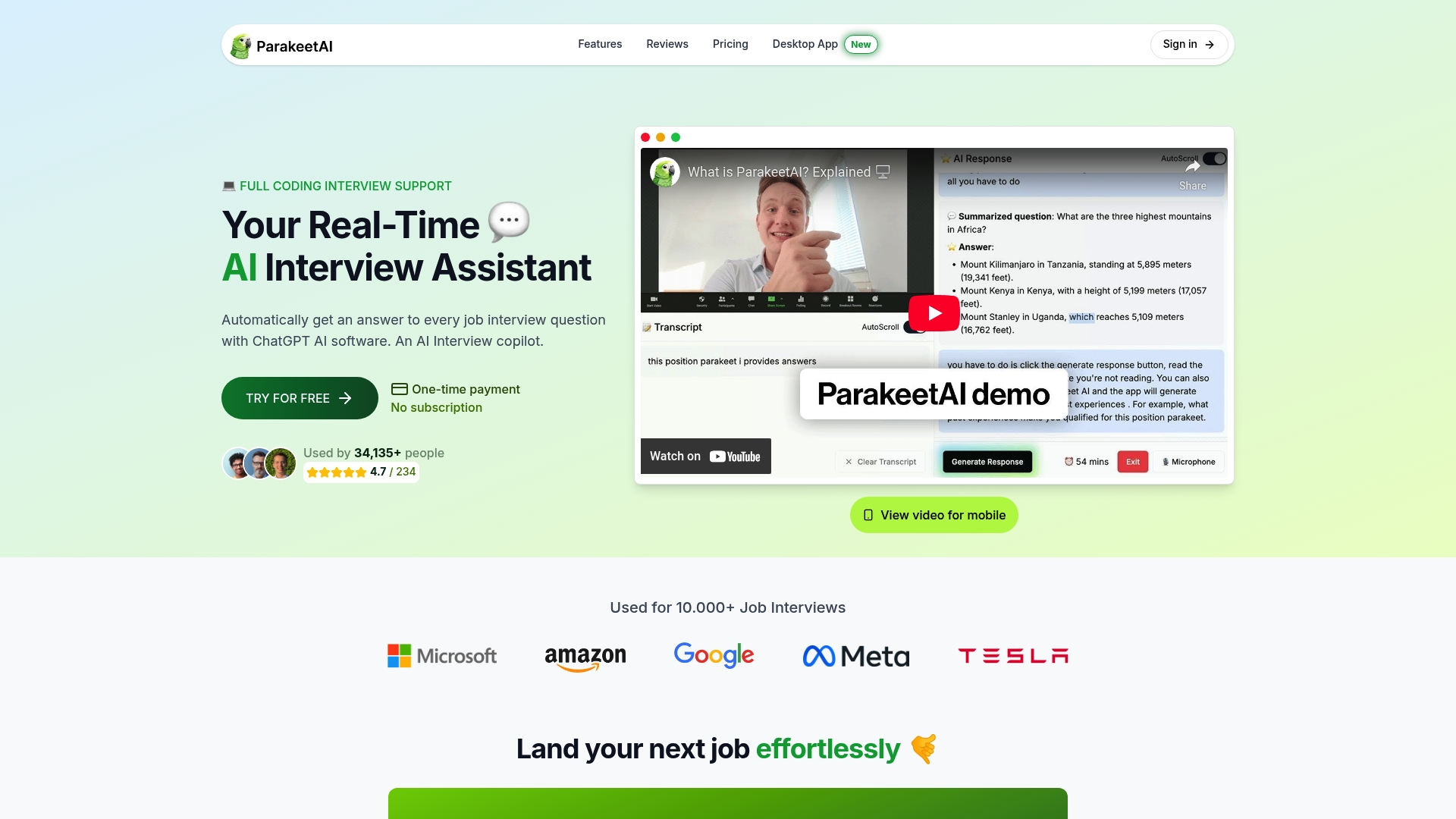
Experience the power of a real-time AI job interview assistant that listens to your conversation and equips you with instant, thoughtful responses. Visit Parakeet AI to practice asking the best questions, get help clarifying role expectations, and learn how to discuss growth opportunities effortlessly. Don’t wait to transform nerves into confidence — master your next interview with us today. Discover more about how to prepare with common interview questions and sharpen your understanding of company research strategies to stand out. Your dream job is one conversation away — start now at https://parakeet-ai.com.
Frequently Asked Questions
What are the best questions to ask at the end of an interview?
To make a strong impression, consider asking about the company’s future plans, team structure and culture, role expectations, growth opportunities, and the hiring process. Tailor your questions to reflect your genuine interests and ensure they align with the position you’re applying for.
How can asking about future plans benefit my candidacy?
Asking about future plans demonstrates your forward-thinking mindset and shows you are invested in the company’s long-term success. Prepare specific questions that reflect your research on the company’s strategic initiatives to enhance your engagement in the conversation.
Why is it important to inquire about team culture during an interview?
Understanding team culture helps you assess whether you’ll thrive in the professional environment. Formulate questions about communication styles and collaboration to gain insights that are crucial for your potential fit within the organization.
How do I effectively ask about role expectations and success metrics?
Inquiring about role expectations allows you to clarify what success looks like in the first few months. Ask about key performance indicators and the evaluation process to align your skills with the company’s needs.
What should I include in my questions about growth and learning opportunities?
Focus on the professional development resources available, mentorship programs, and typical advancement pathways. This shows your ambition and commitment to ongoing learning, making you a more attractive candidate.
How can I learn about the next steps in the hiring process?
Ask about the stages in the hiring process and the timeline for decisions to manage your expectations and show your eagerness. This information helps you plan your follow-up communication effectively.