
Cultural Interview Questions: Boost Tech Job Success

Facing an interview at an innovative tech startup or a dynamic creative agency can leave candidates wondering how to stand out beyond their resume. Understanding cultural interview questions is essential because these inquiries reveal much more than technical skills. They highlight your cultural intelligence and ability to adapt in diverse team settings. This guide unpacks what makes these questions unique and offers practical insight to help you confidently showcase your adaptability, communication style, and team fit.
Table of Contents
- What Are Cultural Interview Questions
- Common Types in Tech and Creative Roles
- What Employers Look For in Responses
- How to Craft Impactful Answers
- Mistakes to Avoid and Proven Strategies
Key Takeaways
| Point | Details |
|---|---|
| Cultural Interview Importance | Cultural interview questions assess candidates’ adaptability, communication styles, and alignment with organizational values. |
| Sector-Specific Approaches | Different sectors, like tech and creative industries, require tailored cultural interview questions to evaluate unique workplace dynamics. |
| Employer Evaluation Criteria | Employers prioritize authenticity, emotional intelligence, and clear communication in candidate responses to gauge cultural fit. |
| Effective Response Strategies | Candidates should use the STAR method and share authentic stories to highlight their adaptability and teamwork skills. |
What Are Cultural Interview Questions
In today’s global tech landscape, cultural interview questions have become critical tools for understanding how candidates will integrate into complex workplace environments. These specialized questions go far beyond traditional skill assessments, exploring workplace adaptability through nuanced inquiries about values, communication styles, and interpersonal dynamics.
Cultural interview questions typically aim to reveal several key dimensions of a candidate’s professional approach:
- How candidates navigate diverse work environments
- Their ability to communicate across different cultural backgrounds
- Capacity for empathy and inclusive collaboration
- Adaptability to changing team dynamics
- Personal values alignment with organizational culture
These questions are strategically designed to uncover a candidate’s cultural intelligence - the ability to effectively interact and work successfully across different cultural contexts. Unlike standard technical interviews, cultural interviews probe deeper psychological and interpersonal attributes that predict long-term team success.
Tech companies particularly value cultural interview questions because they help predict not just technical competence, but also team compatibility. By understanding a candidate’s approach to collaboration, communication, and problem-solving, recruiters can assess whether an individual will thrive within the specific social ecosystem of their organization.
Pro tip: Practice your cultural interview responses by researching your target company’s values and reflecting on specific scenarios that demonstrate your cross-cultural adaptability and teamwork skills.
Common Types in Tech and Creative Roles
Tech and creative industries have developed specialized cultural interview questions that assess candidates’ compatibility with unique workplace dynamics. Assessing cultural alignment requires nuanced approaches tailored to specific organizational environments, ranging from startup innovation hubs to established corporate teams.
In tech and creative roles, cultural interview questions typically explore several critical dimensions:
- Problem-solving approaches
- Communication and collaboration styles
- Adaptability to changing technologies
- Personal motivation and professional values
- Ability to work in team or autonomous settings
These questions often differ significantly between tech and creative sectors. In technology companies, interviews might focus more on technical collaboration and innovation potential, while creative organizations may emphasize artistic vision, interpersonal creativity, and collective ideation.

Here’s how cultural interview questions differ in tech and creative roles:
| Sector | Focus Area | Typical Expectation |
|---|---|---|
| Tech | Collaborative innovation | Advanced teamwork on projects |
| Creative | Artistic vision and ideation | Unique perspectives for ideas |
| Tech | Adaptability to new tech | Fast learning of platforms |
| Creative | Interpersonal creativity | Open sharing in brainstorming |
Tech companies frequently seek candidates who demonstrate flexible communication skills and can navigate complex team dynamics. Interview assessments for cultural fit help recruiters identify professionals who can seamlessly integrate into their unique organizational ecosystem, balancing technical expertise with strong interpersonal capabilities.
Pro tip: Research your target company’s core values and prepare specific examples that showcase how your professional approach aligns with their cultural expectations.
What Employers Look For in Responses
Employers are increasingly sophisticated in evaluating cultural interview responses, seeking candidates who go beyond surface-level answers. Evaluating candidate cultural alignment involves deep analysis of communication style, demonstrated values, and potential team impact.
Key elements employers consistently examine in candidate responses include:
- Authenticity and genuine self-reflection
- Alignment with company core values
- Evidence of emotional intelligence
- Ability to articulate complex ideas clearly
- Demonstrated adaptability and learning mindset
- Potential for positive team interaction
- Capacity to handle workplace challenges constructively
Tech and creative organizations pay particular attention to nuanced communication skills, looking for candidates who can articulate their thought processes, demonstrate empathy, and show genuine enthusiasm for collaborative problem-solving. Responses that reveal a candidate’s ability to integrate smoothly into existing team dynamics are especially valued.
Successful interview responses typically balance personal storytelling with professional insights. Employers want to hear concrete examples that showcase your professional approach, highlighting how your individual skills and perspectives can contribute to the broader organizational ecosystem.
Pro tip: Craft responses that reveal your professional personality by using specific, authentic stories that demonstrate your values and problem-solving approach.
How to Craft Impactful Answers
Demonstrating cultural competence through interview responses requires strategic storytelling and thoughtful reflection. Successful candidates understand that cultural interview questions are not just about providing correct answers, but revealing their professional identity and potential team contribution.
Key strategies for crafting compelling cultural interview responses include:
- Use the STAR method (Situation, Task, Action, Result)
- Provide specific, concrete examples
- Highlight personal growth and learning
- Demonstrate self-awareness
- Connect personal experiences to professional skills
- Show genuine enthusiasm for collaborative work
- Reflect on how diversity enhances team performance
Tech and creative employers seek authentic narrative approaches that go beyond generic responses. This means sharing real experiences that illustrate your adaptability, emotional intelligence, and capacity to work effectively across different cultural contexts. Each response should offer insight into your problem-solving approach, communication style, and ability to navigate complex workplace dynamics.
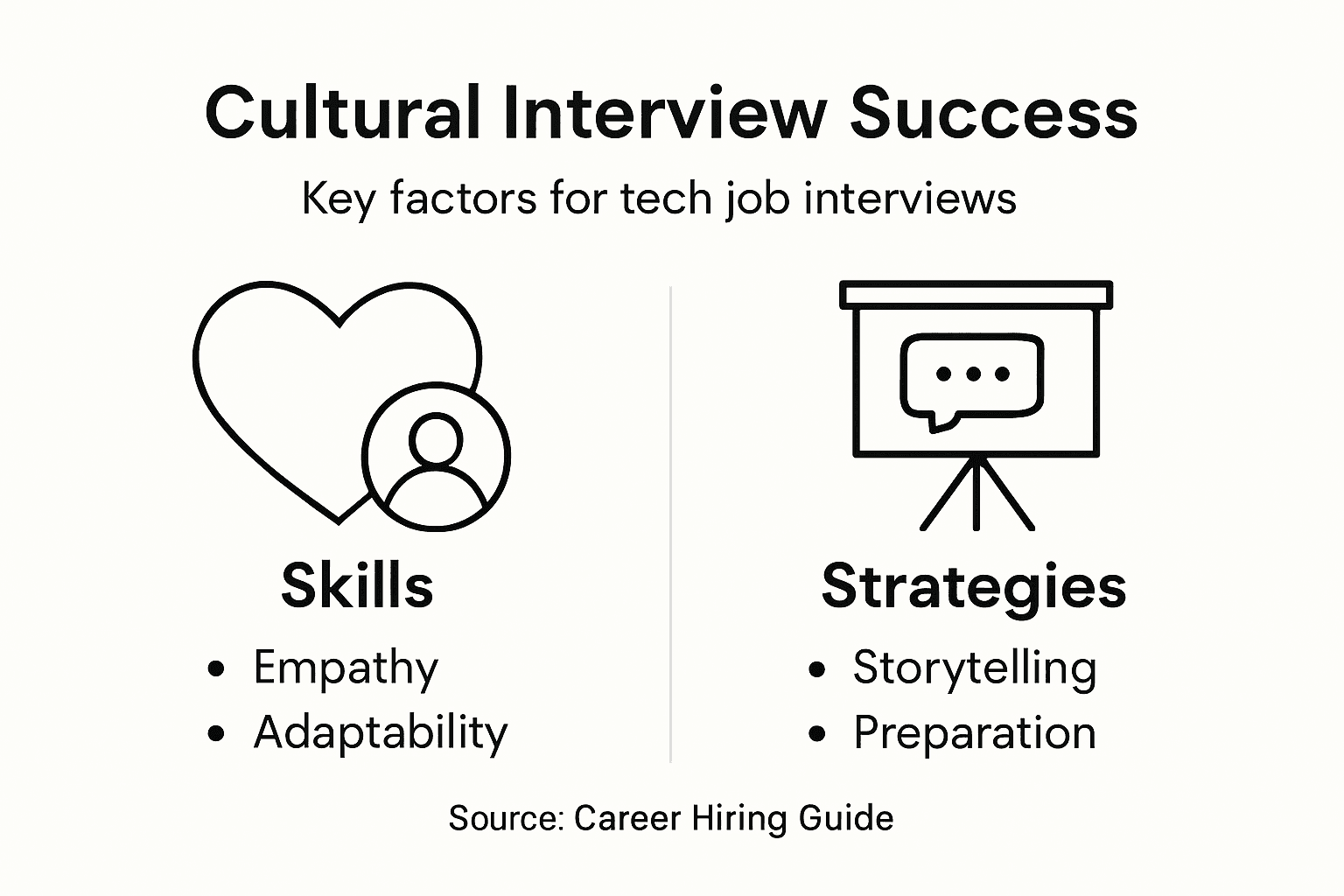
Successful candidates craft responses that are simultaneously personal and professional. They weave together individual experiences with broader organizational insights, showing how their unique perspective can contribute to team success and innovation.
Pro tip: Practice your cultural interview responses by recording yourself and critically analyzing your communication style, ensuring you balance storytelling with professional clarity.
Mistakes to Avoid and Proven Strategies
Cultural interview assessment challenges demand nuanced understanding and strategic preparation. Candidates and interviewers alike must navigate complex interpersonal dynamics while avoiding common pitfalls that can undermine effective cultural communication.
Critical mistakes to avoid during cultural interviews include:
- Relying on cultural stereotypes
- Making assumptions about communication styles
- Displaying unconscious cultural biases
- Over-generalizing individual experiences
- Misinterpreting nonverbal communication cues
- Failing to demonstrate cultural adaptability
- Presenting rigid or inflexible perspectives
Successful candidates develop strategic communication skills that transcend cultural boundaries. This involves actively listening, demonstrating empathy, and showing genuine curiosity about diverse perspectives. Understanding that cultural competence is a continuous learning process helps candidates present themselves as adaptable and open-minded professionals.
Tech and creative organizations prioritize candidates who can articulate their cultural awareness thoughtfully. This means providing concrete examples of cross-cultural collaboration, reflecting on personal growth, and showing how diverse experiences enhance professional effectiveness.
This summary highlights proven strategies for succeeding in cultural interviews:
| Strategy | Business Impact |
|---|---|
| Authentic storytelling | Builds trust with interviewers |
| Concrete cross-cultural examples | Demonstrates adaptability and learning |
| Empathetic communication | Encourages inclusive team dynamics |
| Continuous self-reflection | Signals ongoing professional growth |
Pro tip: Research your potential employer’s cultural values and prepare specific stories that demonstrate your ability to navigate and contribute to diverse workplace environments.
Master Your Cultural Interview Answers with AI Support
Navigating cultural interview questions can be challenging as they probe your adaptability, communication style, and alignment with company values. These questions require you to show emotional intelligence and authentic storytelling while demonstrating your ability to thrive within diverse tech environments. If you want to overcome these hurdles and confidently express your cross-cultural competence you need a solution that helps you practice and refine your responses in real time.
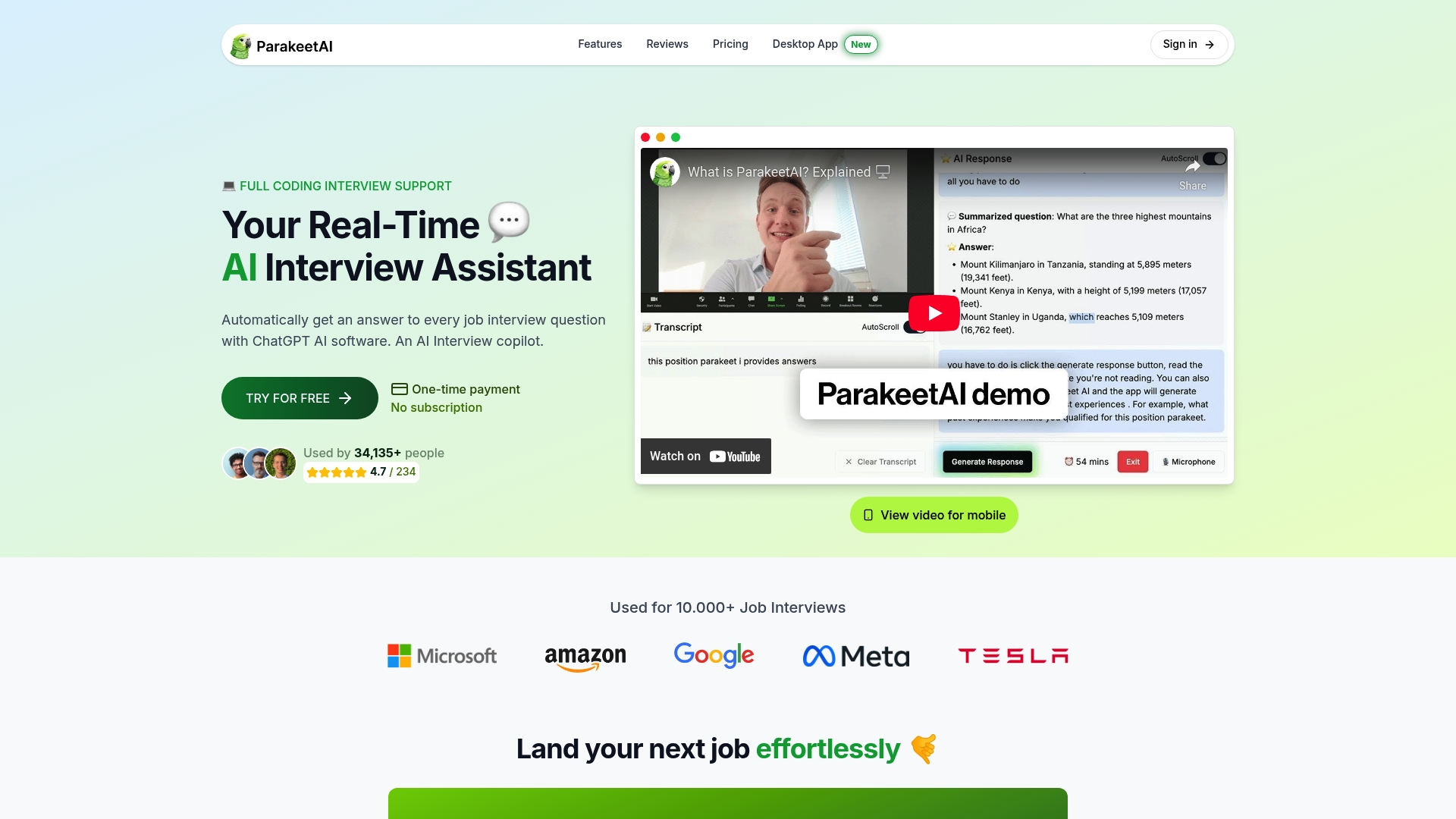
Experience the advantage of a real-time AI job interview assistant that listens and instantly suggests tailored answers to every cultural interview question. With Parakeet AI, you can practice demonstrating your workplace adaptability and collaboration skills exactly as tech employers expect. Don’t wait to improve your communication style and boost your cultural fit confidence. Visit Parakeet AI now and transform your interview preparation into undeniable success.
Frequently Asked Questions
What are cultural interview questions?
Cultural interview questions are designed to assess a candidate’s compatibility with an organization’s workplace culture by exploring their values, communication styles, and interpersonal dynamics.
Why are cultural interview questions important in tech jobs?
Cultural interview questions help identify not only a candidate’s technical abilities but also their potential for teamwork and how well they might adapt to the organization’s unique social environment.
How can I prepare for cultural interview questions?
To prepare, research the target company’s core values and reflect on specific experiences that showcase your adaptability and teamwork skills, using the STAR method (Situation, Task, Action, Result).
What should I avoid during a cultural interview?
Avoid relying on cultural stereotypes, making assumptions about communication styles, and displaying rigid perspectives. Instead, focus on demonstrating empathy, listening actively, and showcasing your adaptability.