Group Interview Advantages: Boosting Hiring Efficiency
Over 60 percent of American employers now use group interviews to streamline their hiring process. In a competitive market, understanding how these sessions work can make all the difference for job seekers and companies alike. Whether you are hoping to stand out as a candidate or aiming to identify real teamwork and leadership, this guide sheds light on the essential principles every American professional should know.
Table of Contents
- Defining Group Interviews And Core Concepts
- Types Of Group Interviews And Key Differences
- How Group Interviews Work In Practice
- Benefits For Employers And Job Seekers
- Common Challenges And How To Overcome Them
Key Takeaways
| Point | Details |
|---|---|
| Group Interviews Define Collaborative Evaluation | These interviews assess multiple candidates simultaneously, focusing on interpersonal dynamics and teamwork skills. |
| Variety of Formats Available | Group interviews can include panel interviews and candidate group discussions, each with distinct evaluation goals. |
| Real-World Skill Assessment | They simulate workplace scenarios to evaluate candidates’ practical skills, emotional intelligence, and ability to perform under pressure. |
| Challenges Require Strategic Navigation | Candidates must balance showcasing their own skills while engaging collaboratively with others to overcome group dynamics. |
Defining Group Interviews and Core Concepts
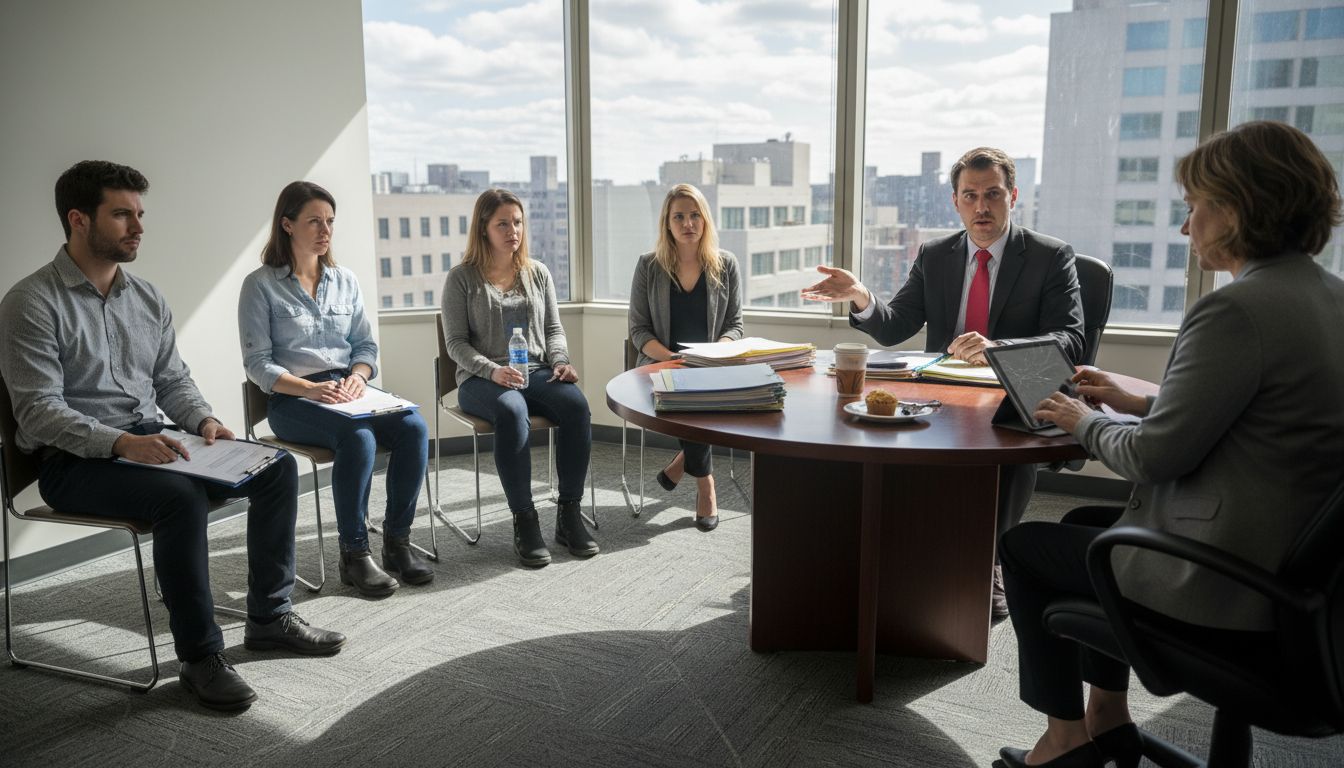
Group interviews represent a strategic hiring approach where multiple job candidates are simultaneously evaluated in a single assessment session. A group interview is a format where multiple candidates are assessed together in a single session by one or more interviewers, designed to efficiently gauge interpersonal dynamics and collective performance.
These interviews differ fundamentally from traditional one-on-one interviews by creating a collaborative environment where candidates interact, solve problems, and demonstrate their communication skills simultaneously. Key characteristics include:
- Multiple candidates present in one interview session
- One or more interviewers observing group dynamics
- Focus on teamwork, leadership, and interpersonal communication
- Efficient screening method for identifying top talent
The primary objective of group interviews is to simulate real-world workplace scenarios where professionals must collaborate, communicate effectively, and navigate complex social interactions. Employers use this method to quickly assess how candidates perform under group pressure, reveal natural leadership tendencies, and evaluate potential cultural fit within their organization. By observing candidates’ behaviors, communication styles, and collaborative approaches, recruiters can gain deeper insights than traditional individual interview formats would typically provide.
Understanding the nuanced dynamics of group interviews requires recognizing that success isn’t just about individual brilliance, but about demonstrating the ability to work harmoniously within a team environment. Candidates must balance showing their unique strengths while simultaneously supporting and engaging with their fellow participants.
Types of Group Interviews and Key Differences
Group interviews encompass several distinctive formats designed to assess candidates from different perspectives. Types of group interviews include panel interviews, where multiple interviewers assess a group of candidates simultaneously, and candidate group interviews where multiple applicants engage in collective discussions or problem-solving activities.
These interview formats vary significantly in structure and objectives:
- Panel Interviews
- Multiple professional interviewers evaluate candidates simultaneously
- Candidates face questions from different organizational perspectives
- Comprehensive assessment of candidate’s communication and adaptability
- Typically used for senior or complex professional roles
- Candidate Group Interviews
- Several candidates participate together in structured interactions
- Focus on observing interpersonal dynamics and collaborative skills
- May involve group discussions, problem-solving challenges, or team exercises
- Reveals leadership potential and communication effectiveness
Another sophisticated approach is the interactive group interview, where candidates are placed in simulated workplace scenarios that require real-time collaboration, strategic thinking, and immediate problem resolution. These sessions go beyond traditional question-and-answer formats by creating dynamic environments that test candidates’ practical skills, emotional intelligence, and ability to work under pressure.
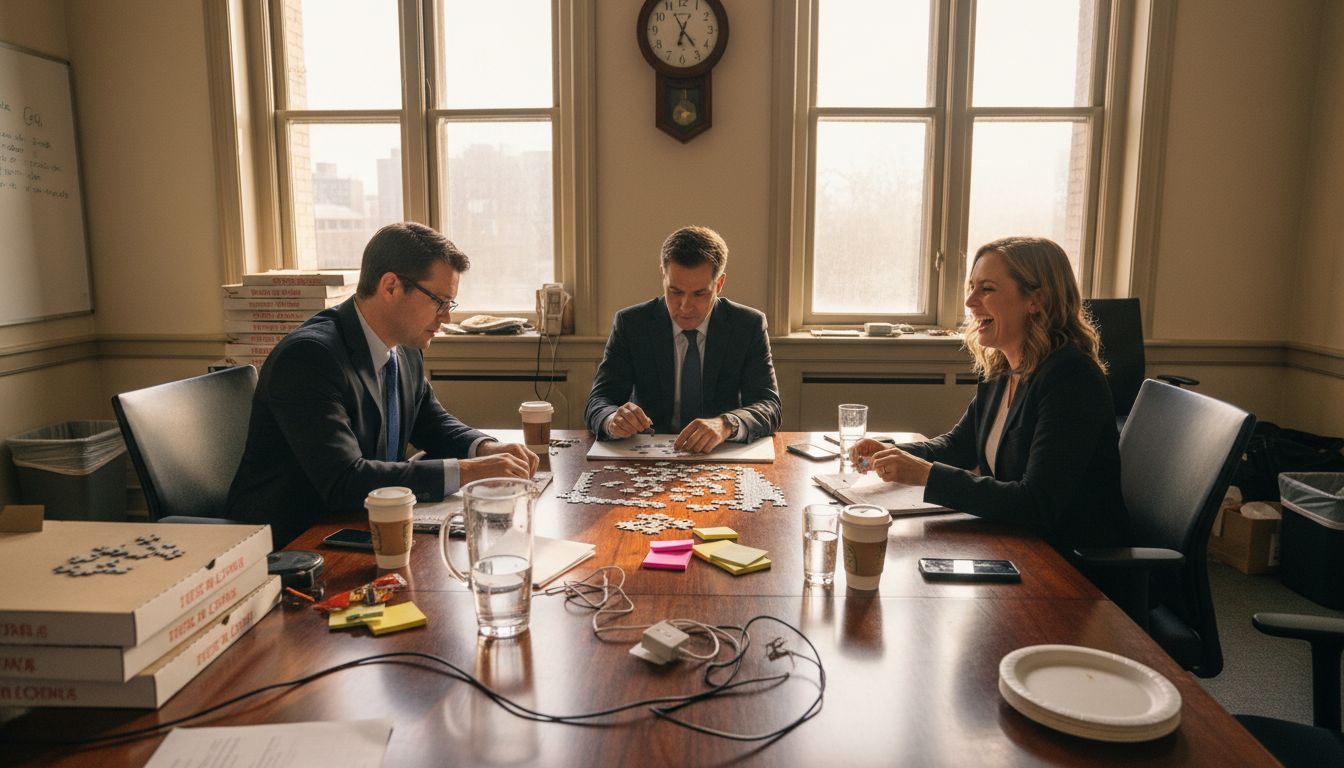
Understanding these interview types enables candidates and employers to prepare more effectively. While each format has unique characteristics, they share a common goal: identifying professionals who can communicate effectively, demonstrate teamwork, and quickly adapt to complex interpersonal workplace challenges.
How Group Interviews Work in Practice
Group interviews transform traditional hiring processes by creating dynamic assessment environments that reveal candidates’ true professional capabilities. Understanding group interview challenges helps candidates navigate these complex evaluation scenarios through strategic preparation and nuanced interpersonal skills.
Typical group interview scenarios often follow structured frameworks designed to test multiple professional competencies simultaneously:
- Initial Introduction Phase
- Candidates provide brief personal/professional summaries
- Interviewers observe communication style and confidence
- Assess ability to articulate professional background concisely
- Group Problem-Solving Stage
- Collaborative challenge presented to entire candidate group
- Candidates must work together to develop comprehensive solutions
- Evaluators monitor leadership potential, teamwork, and communication skills
The practical mechanics of group interviews typically involve multiple assessment layers. Interviewers carefully observe how candidates interact, listening for indicators of emotional intelligence, collaborative skills, and ability to contribute meaningfully without dominating discussions. Some organizations use structured scenarios like business case studies, team projects, or simulated workplace challenges to create realistic interaction environments.
Successful navigation of group interviews requires a delicate balance of individual brilliance and collaborative spirit. Candidates must demonstrate their unique value while simultaneously showing respect, active listening, and the capacity to integrate diverse perspectives into cohesive team solutions.
Benefits for Employers and Job Seekers
Group interviews offer transformative advantages for both employers and candidates, creating a dynamic assessment environment that goes beyond traditional hiring methods. Group interviews allow employers to examine a greater number of candidates in detail, evaluate inherent teamwork abilities, and identify candidates who perform well under pressure.
For employers, the benefits are multifaceted and strategically significant:
- Efficiency in Candidate Evaluation
- Simultaneous assessment of multiple candidates
- Reduced time and resource investment in recruitment
- Comprehensive view of candidate interactions and capabilities
- Quick identification of top talent
- Enhanced Talent Selection
- Direct observation of interpersonal dynamics
- Real-time assessment of communication skills
- Insight into candidates’ collaborative potential
- Deeper understanding of cultural fit
Job seekers also gain substantial advantages through group interview formats. These environments provide unique opportunities to showcase adaptability, communication prowess, and professional demeanor in ways traditional interviews cannot. Candidates can demonstrate leadership potential, active listening skills, and the ability to contribute meaningfully within team settings while simultaneously learning from peer interactions.
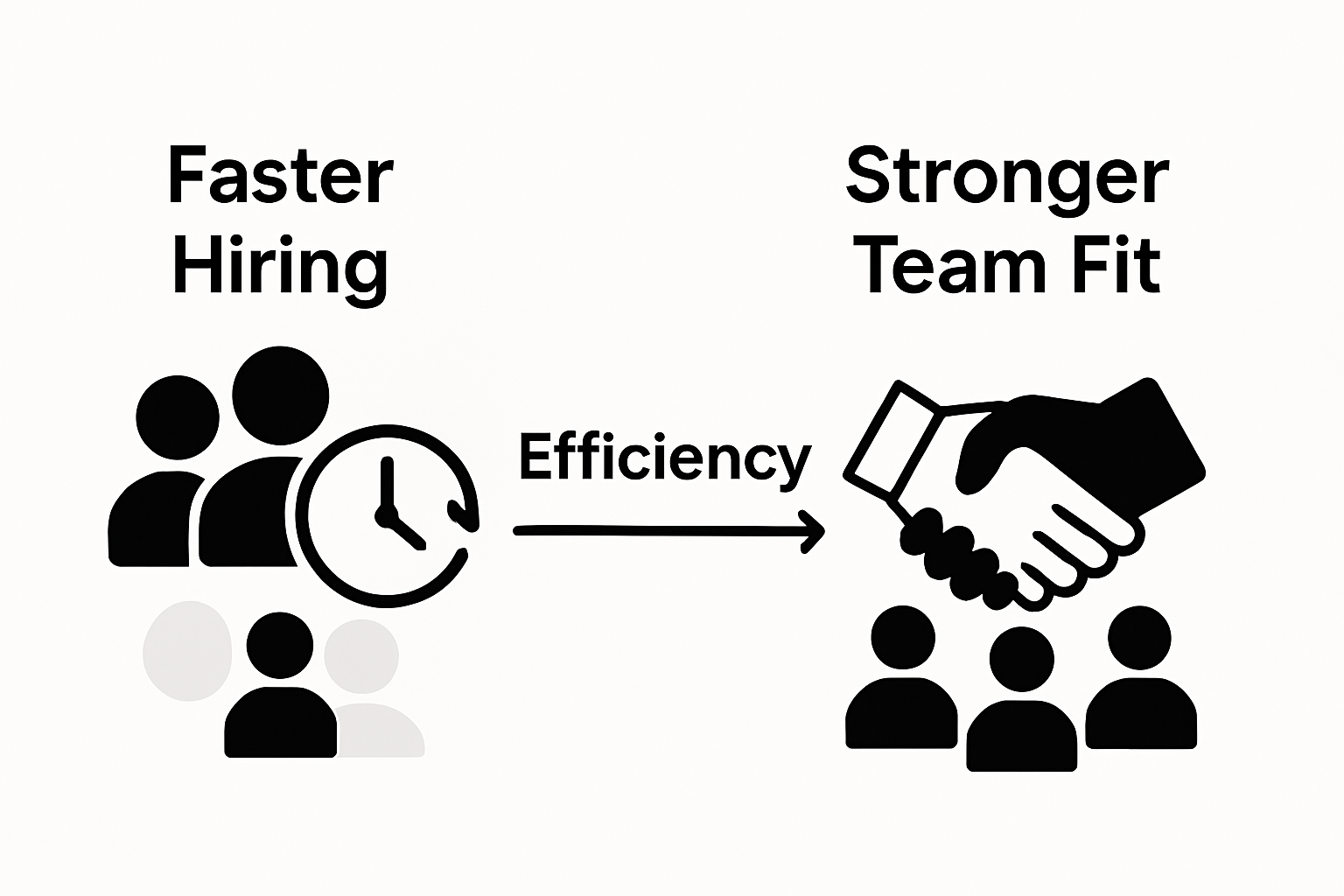
Ultimately, group interviews represent a sophisticated approach to talent acquisition that benefits both organizations and professionals. By creating transparent, interactive assessment environments, these interviews transcend conventional recruitment limitations, offering a more holistic and insightful approach to identifying and selecting exceptional talent.
Common Challenges and How to Overcome Them
Group interviews present unique challenges that require strategic navigation from both employers and candidates. Challenges of group interviews include less time for each candidate, potential for dominant personalities overshadowing others, and difficulties in assessing individual performance, demanding careful planning and management to ensure fair and effective evaluation.
Key challenges for candidates include:
- Personality Dynamics
- Risk of being overshadowed by more assertive participants
- Maintaining individual visibility without appearing aggressive
- Balancing collaborative spirit with personal showcasing
- Performance Pressure
- Limited individual interaction time
- High-stakes competitive environment
- Need for rapid, articulate communication
- Managing performance anxiety
Overcoming these challenges requires a multifaceted approach. Candidates must develop strategies to stand out authentically by demonstrating active listening, offering thoughtful contributions, and showing genuine collaborative skills. This involves speaking confidently but concisely, supporting teammates’ ideas, and creating meaningful interactions that highlight individual strengths without dominating group discussions.
Successful group interview navigation is about striking a delicate balance between personal excellence and team dynamics. By understanding potential pitfalls and preparing strategically, candidates can transform these challenging environments into opportunities for professional showcasing and meaningful connections.
Enhance Your Group Interview Success with Real-Time AI Support
Group interviews often challenge candidates to balance individual visibility with collaborative dynamics while managing communication pressure. This article highlights key pain points such as standing out without dominating and delivering confident, concise contributions in limited time frames. When navigating these complex social interactions, having an intelligent assistant that listens and suggests immediate, thoughtful responses can transform performance and reduce anxiety.
[Image:cta_image]
Boost your ability to shine in group interview settings by using Parakeet AI, a real-time AI job interview assistant designed to help you answer every question clearly and effectively under pressure. Experience the advantage of enhanced communication skills and strategic interaction from your first introduction to problem-solving discussions. Learn more about excelling in high-stakes interview scenarios at Parakeet AI and start turning group interview challenges into opportunities now.
Frequently Asked Questions
What are the main advantages of group interviews for employers?
Group interviews allow employers to assess multiple candidates at once, saving time and resources. They provide a comprehensive view of how candidates interact with others, revealing important aspects such as teamwork, communication skills, and cultural fit within the organization.
How do group interviews benefit job seekers?
Group interviews give candidates the chance to showcase their adaptability, communication abilities, and professional demeanor. They also offer opportunities to demonstrate leadership potential and effective collaboration skills in a dynamic setting.
What types of group interviews are commonly used?
Common formats include panel interviews, where multiple interviewers evaluate candidates, and candidate group interviews, where several candidates engage in discussions or team exercises. These formats help reveal different facets of candidates’ skills and interpersonal dynamics.
What challenges do candidates face in group interviews, and how can they overcome them?
Candidates may feel overshadowed by more assertive participants or experience performance pressure due to limited interaction time. To overcome these challenges, they should focus on active listening, making thoughtful contributions, and balancing personal visibility with team collaboration.