
How to Close an Interview With Confidence and Get Results

Over 90 percent of American hiring managers say a candidate’s final impression can be just as influential as their entire interview performance. For job seekers everywhere, mastering a strong close is often the deciding factor between getting a job offer or just missing out. This guide highlights proven, actionable strategies to help recent graduates and young professionals worldwide confidently wrap up interviews and stand out among the competition.
Table of Contents
- Step 1: Prepare Your Final Talking Points
- Step 2: Summarize Your Value for The Role
- Step 3: Express Genuine Enthusiasm for The Opportunity
- Step 4: Ask Thoughtful Closing Questions
- Step 5: Confirm Next Steps and Express Gratitude
Quick Summary
| Key Insight | Explanation |
|---|---|
| 1. Prepare Final Talking Points | Develop concise statements highlighting your qualifications and relate them to the job requirements to leave a strong impression. |
| 2. Summarize Your Value Effectively | Use the STAR method to showcase key achievements, demonstrating how your skills address the employer’s challenges. |
| 3. Express Genuine Enthusiasm | Show authentic interest in the role by using positive body language and referencing specific aspects of the company that inspire you. |
| 4. Ask Thoughtful Closing Questions | Formulate insightful questions that demonstrate your curiosity about the role and reflect strategic thinking about the company. |
| 5. Confirm Next Steps and Show Gratitude | Politely inquire about the selection timeline and send a personalized thank-you note that reiterates your enthusiasm and qualifications. |
Step 1: Prepare Your Final Talking Points
Preparing your final talking points is crucial for making a powerful impression in your interview’s concluding moments. Your goal is to strategically highlight your qualifications and align them precisely with the job requirements while demonstrating your unique value proposition.
Start by reviewing your core professional strengths and organizing them into concise, impactful statements. Focus on creating a narrative that connects your past experiences directly to the role you are seeking. This means selecting 3-4 key accomplishments that showcase your skills and how they translate to solving potential challenges the employer might face. Practice delivering these points conversationally avoid sounding rehearsed or mechanical. The most effective talking points feel natural and spontaneous while remaining strategically crafted.
Remember that your final talking points should answer the critical question: Why are you the best candidate for this position? Anticipate potential concerns the interviewer might have and proactively address them through your prepared examples. Demonstrate not just what you have done but how your specific skills and experiences make you uniquely qualified.
Pro Tip: Develop a concise 30-second summary of your professional value that you can deploy smoothly at the interview’s conclusion, highlighting your most compelling professional attributes.
Step 2: Summarize Your Value for the Role
Summarizing your professional value is your opportunity to crystallize why you are the ideal candidate and leave a lasting impression with the interviewer. Your objective is to articulate a compelling narrative that connects your unique skills and experiences directly to the specific needs of the role.

Begin by crafting narratives that highlight your most relevant professional competencies, using concrete examples that demonstrate your capabilities. Leverage the STAR method (Situation, Task, Action, Result) to structure your stories effectively. Select achievements that not only showcase your technical skills but also illustrate your problem solving abilities, adaptability, and potential to contribute to the organization. Focus on recent experiences that align closely with the job description and company culture. Your summary should feel like a natural progression of your professional journey that leads seamlessly to this specific opportunity.
When delivering your value summary, maintain a confident yet humble tone. Avoid sounding boastful by framing your accomplishments as collaborative efforts and opportunities for future growth. Connect your past successes to the potential challenges and objectives of the role you are pursuing. The most powerful summaries reveal not just what you have done but how your unique combination of skills makes you an exceptional fit for this specific position.
Pro Tip: Practice your value summary in front of a mirror or with a trusted friend to ensure your delivery sounds authentic and naturally confident.
Use this quick reference for structuring powerful STAR stories in interviews:
| Step | Key Focus | What to Highlight |
|---|---|---|
| Situation | Context or challenge | Set the scene clearly |
| Task | Your responsibilities | Define your specific role |
| Action | Steps you took | Showcase problem-solving approach |
| Result | Outcome achieved | Demonstrate measurable success |
Step 3: Express Genuine Enthusiasm for the Opportunity
Showing authentic enthusiasm is your secret weapon in making a memorable impression during the final stages of an interview. This critical step transforms you from a qualified candidate into a compelling prospect that employers want to bring onto their team.
Demonstrating positive and engaged body language is essential in communicating your genuine interest. This means maintaining consistent eye contact, leaning slightly forward when listening, offering a warm smile, and speaking with energy about the role and company. Your nonverbal cues can communicate excitement even more powerfully than words. Connect your passion directly to specific aspects of the organization that genuinely inspire you such as their mission, recent innovations, or industry impact. Avoid generic statements and instead reference concrete details that show you have done your research and are truly invested in the opportunity.
When articulating your enthusiasm, balance confidence with humility. Share specific examples of how the role aligns with your career goals and how your skills can contribute to the company’s objectives. Use language that conveys motivation and potential while remaining professional and authentic. Your goal is to convince the interviewer that you are not just seeking any job but are specifically excited about this unique opportunity with their organization.
Pro Tip: Record a practice interview on video to assess your enthusiasm levels and ensure your body language and verbal tone genuinely reflect your excitement.
Step 4: Ask Thoughtful Closing Questions
Ask thoughtful closing questions is your final opportunity to demonstrate professionalism, curiosity, and genuine interest in the role and organization. These strategic inquiries serve as your last chance to leave a powerful impression and gather critical insights about your potential future workplace.
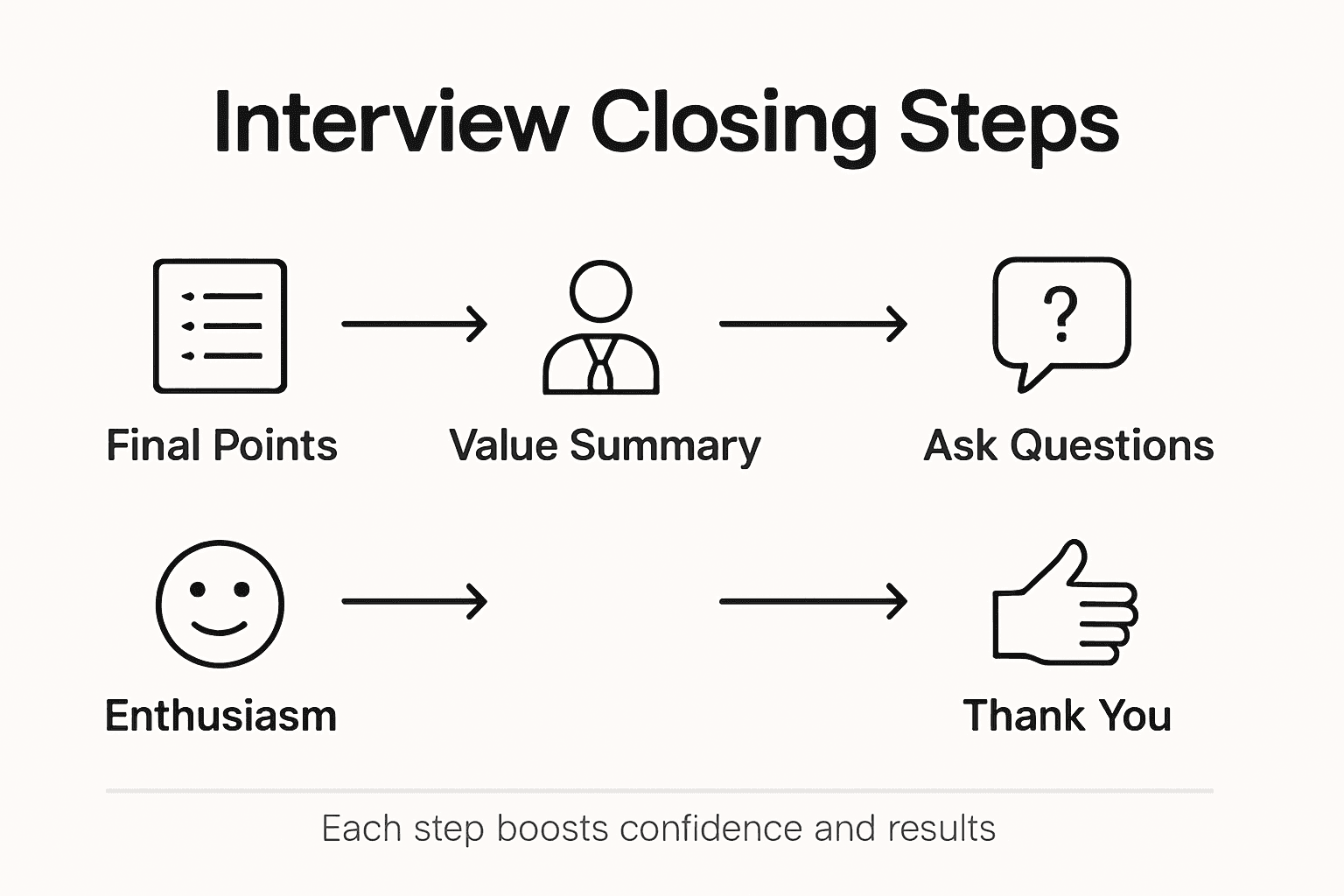
Preparing strategic questions that reveal deeper understanding of the role and company is crucial for making a memorable final impact. Focus on crafting inquiries that go beyond surface level information and demonstrate your strategic thinking. Target questions about team dynamics, specific challenges the department is facing, professional development opportunities, and the immediate expectations for the role. Avoid generic questions that could be answered through simple online research. Instead, reference specific details from earlier interview conversations or recent company news to show your attentiveness and preparation.
Your closing questions should accomplish multiple objectives simultaneously. They should reveal your professional insight, confirm your continued interest in the position, and provide you with valuable information about potential fit. Approach these questions as a collaborative dialogue rather than an interrogation. Listen actively to the interviewer’s responses, maintaining engaged body language and showing genuine curiosity. Your goal is to transform the final moments of the interview from a routine conclusion into a meaningful professional conversation that reinforces why you are the ideal candidate.
Pro Tip: Prepare 3-5 thoughtful questions in advance but remain flexible enough to adapt based on the interview’s actual flow and conversation.
Step 5: Confirm Next Steps and Express Gratitude
Confirming next steps and expressing gratitude transforms the final moments of your interview from a passive interaction into a proactive demonstration of your professional communication skills. This crucial phase allows you to reinforce your candidacy while showing genuine appreciation for the opportunity.
Sending a personalized thank-you communication within 24 hours is an essential professional courtesy that can significantly impact your candidacy. During the interview’s closing moments, professionally request clarity about the upcoming selection timeline and next steps. Ask specific questions about when you can expect to hear back and what additional information they might require from you. This demonstrates your proactive approach and genuine interest in the role. Craft a follow-up note that references specific conversation highlights, reinforces your enthusiasm, and provides a concise reminder of why you are an exceptional candidate.
While expressing gratitude, maintain a balance between warmth and professionalism. Your communication should feel genuine and personalized, reflecting the unique conversation you shared. Reference specific moments or insights discussed during the interview to show you were fully engaged. End your interaction with a clear understanding of the next phase in the hiring process and a sincere appreciation for the interviewer’s time and consideration.
Pro Tip: Compose your thank-you note immediately after the interview while details are fresh, and have a trusted colleague review it for tone and clarity.
Here’s a comparison of effective interview closing strategies and their intended outcomes:
| Closing Strategy | Main Objective | Benefit to Candidate |
|---|---|---|
| Final Talking Points | Reinforce qualifications | Leaves a lasting strong impression |
| Value Summary | Showcase unique skills | Connects experience to company needs |
| Show Enthusiasm | Demonstrate interest | Builds genuine rapport with interviewer |
| Thoughtful Questions | Gain deeper insight | Reveals preparedness and curiosity |
| Confirm Next Steps | Clarify process | Shows professionalism and proactive attitude |
Close Your Interview with Confidence Using Real-Time AI Support
Feeling nervous about preparing final talking points or expressing genuine enthusiasm in your interview is common. The challenge lies in delivering your unique value smoothly without sounding rehearsed while also asking thoughtful closing questions that truly impress. These crucial moments can determine whether you leave a lasting impact and secure the job you want.
Parakeet AI transforms this challenge into your strongest advantage by acting as a real-time interview assistant that listens actively and provides instant, tailored responses to every question. With Parakeet AI, you can practice delivering your 30-second professional value summary and STAR stories naturally while receiving insightful feedback on tone and enthusiasm. This instant guidance helps you prepare strategic questions and confirm next steps effectively, turning anxiety into confident action.
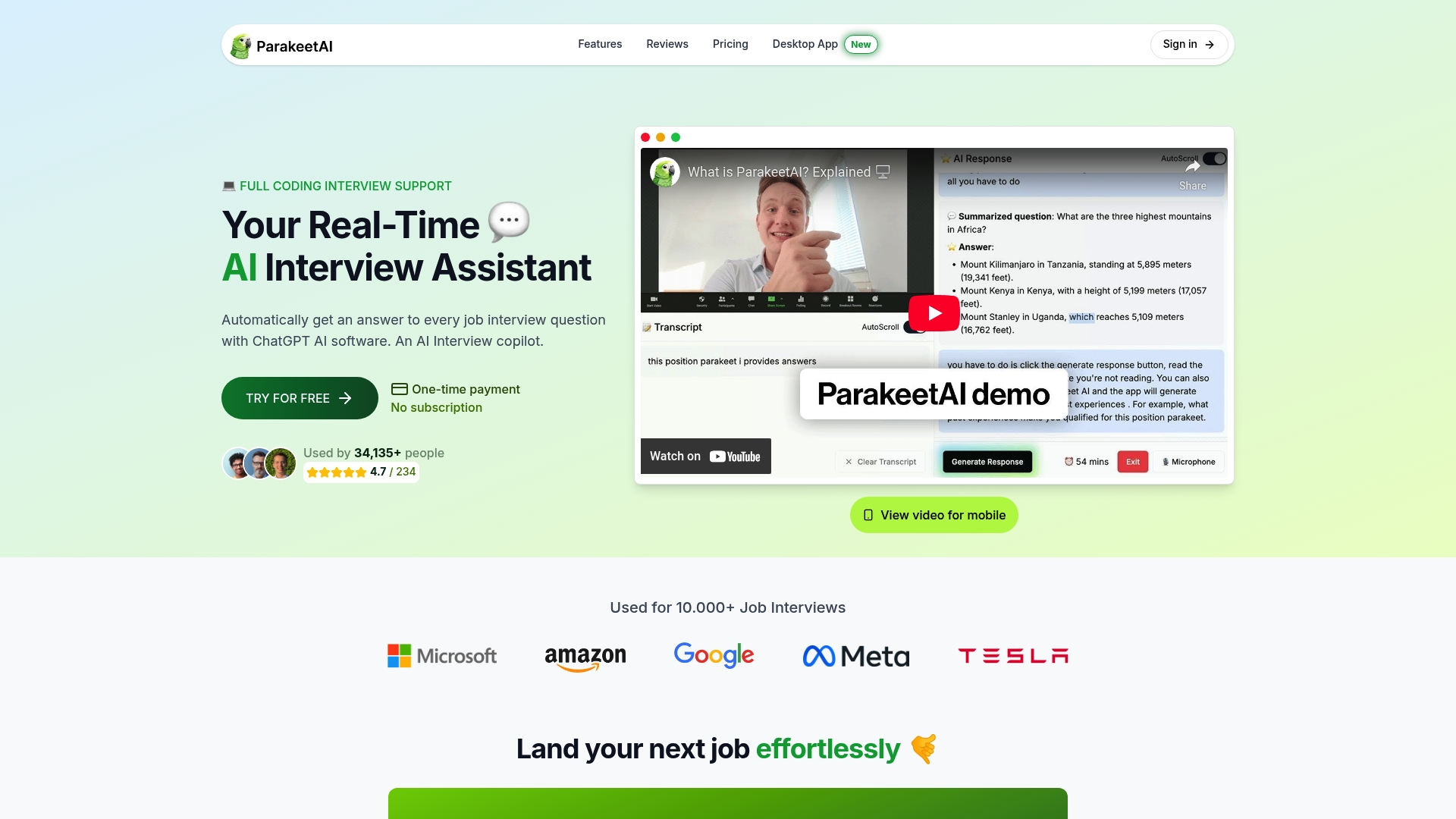
Discover how to elevate your interview closing strategy at Parakeet AI. Visit our landing page now to experience the future of interview preparation. Take control of your interview and make every moment count with expert AI support designed to boost your confidence and results.
Frequently Asked Questions
How can I prepare my final talking points before the interview ends?
To prepare your final talking points, identify 3-4 key accomplishments that highlight your qualifications and relate directly to the job requirements. Organize these accomplishments into concise statements and practice delivering them clearly to ensure they feel natural and confident.
What should I include in my value summary during the interview closing?
Your value summary should connect your unique skills and experiences to the specific needs of the role. Use the STAR method (Situation, Task, Action, Result) to structure your examples and ensure they demonstrate your abilities and suitability for the position.
How can I show enthusiasm during the interview closing?
To show enthusiasm, maintain positive body language, such as consistent eye contact and a warm smile, while discussing the role and company. Mention specific aspects of the organization that excite you to convey genuine interest and engagement.
What types of closing questions should I ask the interviewer?
Ask insightful questions that demonstrate your curiosity about team dynamics, challenges the department faces, and professional development opportunities. Tailor your questions based on details from the interview to show you’ve been actively listening and are genuinely interested in the role.
How should I confirm next steps after the interview?
At the end of the interview, politely ask about the selection timeline and what additional information might be needed from you. This not only shows your proactive nature but also helps clarify the next steps in the hiring process.
Why is sending a thank-you note important after an interview?
Sending a thank-you note is a professional courtesy that reinforces your interest in the position and can positively influence the hiring decision. Aim to send your note within 24 hours of the interview and reference specific details from your conversation to make it personal and memorable.