
How to Structure Interview Answers for Strong Impressions

Over 60 percent of American job seekers say interview anxiety is their biggest hurdle. Every conversation with a potential employer can shape your career, so mastering the interview process is essential. This guide breaks down practical steps to help you analyze questions, organize responses, and deliver answers with confidence so you can make a memorable impression during your next interview.
Table of Contents
- Step 1: Assess The Interview Question Carefully
- Step 2: Choose The Right Answer Framework
- Step 3: Organize Your Key Points Clearly
- Step 4: Support Responses With Relevant Examples
- Step 5: Review And Refine Your Delivery
Quick Summary
| Key Point | Explanation |
|---|---|
| 1. Analyze Interview Questions Carefully | Break down questions to understand what skills and experiences are needed for your response. Focus on key terms to guide your answer. |
| 2. Use the STAR Method for Behavioral Questions | Structure your responses using the STAR method to clearly present your experiences and their outcomes. This enhances the clarity of your answers. |
| 3. Organize Key Points Logically | Select and arrange 3-4 critical points that align with interview questions to build a coherent narrative about your qualifications. |
| 4. Support Answers with Concrete Examples | Use relevant examples that illustrate your achievements and competencies, focusing on quantifiable results to demonstrate impact. |
| 5. Review and Improve Communication Skills | Regularly practice and evaluate your interview delivery, seeking feedback to refine your verbal and non-verbal communication styles. |
Step 1: Assess the Interview Question Carefully
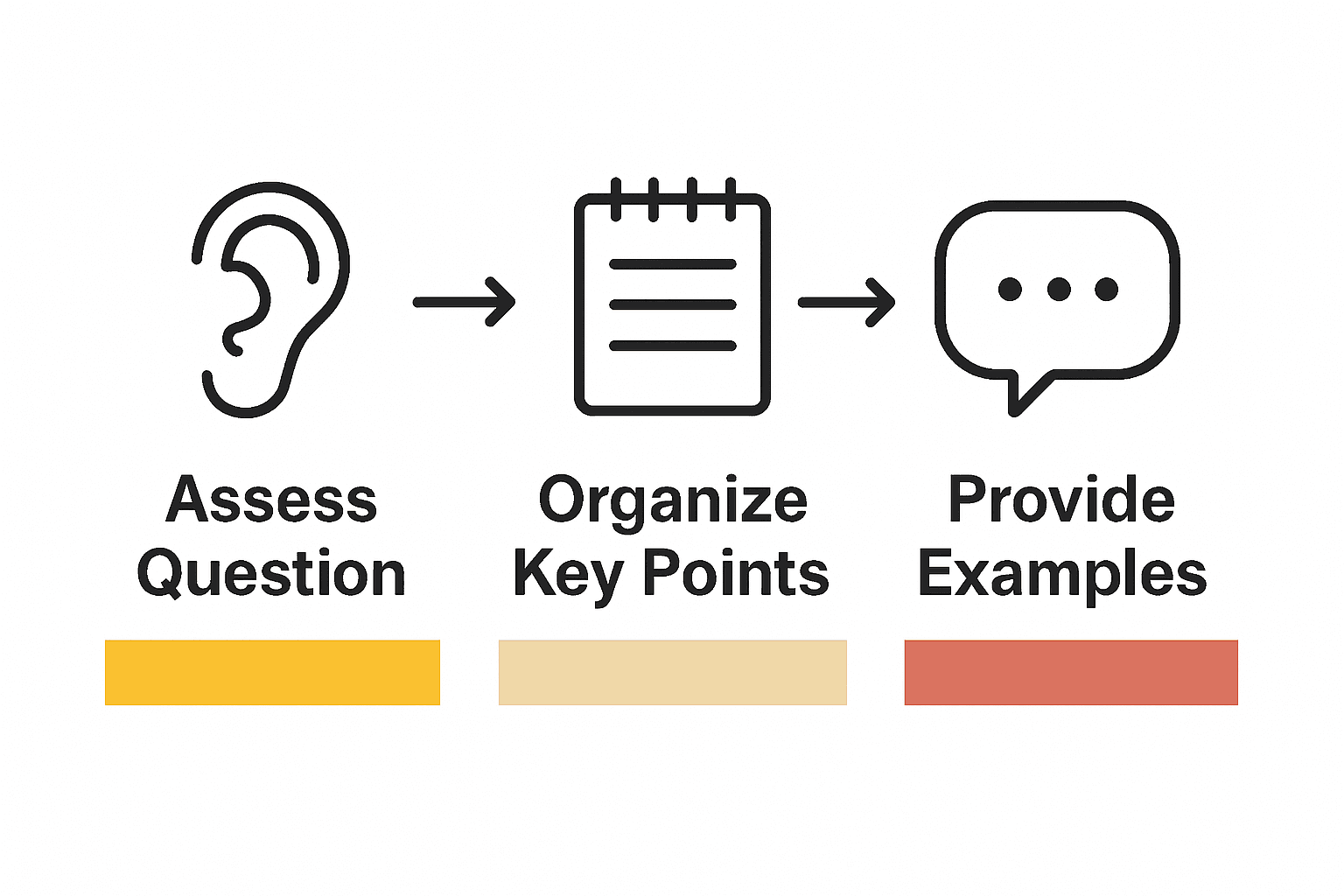
Successfully navigating an interview starts with understanding the question before you craft your response. Your ability to carefully analyze interview questions will determine how precisely and effectively you communicate your skills and experiences.
The first step involves breaking down the question into its core components. Listen carefully to every word and identify the specific skills or experiences the interviewer wants you to highlight. Pay attention to keywords like “describe,” “explain,” or “provide an example” which signal the type of response expected. Behavior coding techniques suggest that understanding question nuances can significantly improve the quality of your answer.
Take a moment to mentally organize your thoughts before responding. This pause demonstrates thoughtfulness and gives you time to select the most relevant details from your professional background. Your goal is to align your answer directly with what the interviewer is seeking while showcasing your unique strengths.
Pro tip: Practice active listening during interviews. Repeat the question silently in your head to ensure you fully comprehend its requirements before formulating your response.
Step 2: Choose the Right Answer Framework
Choosing the right interview answer framework can significantly boost your communication effectiveness and help you present your experiences compellingly. The STAR method provides a structured approach to presenting your professional narrative with clarity and impact.
Different interview questions require different response strategies. When confronted with behavioral questions, the STAR method works brilliantly: Situation describes the context, Task outlines your specific responsibility, Action details the steps you took, and Result highlights the measurable outcomes. Interview answer templates offer multiple frameworks that can help you strategically select the most appropriate method depending on the question type.
Remember that frameworks are tools, not rigid templates. Your goal is to sound natural while providing structured, informative responses that showcase your problem-solving skills and professional achievements. Practice switching between frameworks to develop flexibility in your interview communication style.
Pro tip: Before your interview, review common question types and practice translating your experiences into different answer frameworks to build confidence and adaptability.
Here’s a quick comparison of common interview answer frameworks and when to use them:
| Framework | Best For | Structure | Benefit |
|---|---|---|---|
| STAR Method | Behavioral questions | Situation, Task, Action, Result | Highlights problem-solving and results |
| CAR Method | Achievements-focused responses | Context, Action, Result | Emphasizes accomplishments |
| SOAR Method | Organizational fit questions | Situation, Obstacle, Action, Result | Shows adaptability and overcoming challenges |
Step 3: Organize Your Key Points Clearly
Successfully communicating your professional experiences requires a strategic approach to presenting information during interviews. Preparing a comprehensive set of standard response points helps you articulate your thoughts with precision and confidence.
Start by identifying 3-4 critical points that directly address the interview question. Each point should highlight a specific skill, achievement, or experience that demonstrates your qualifications. Arrange these points in a logical sequence that builds a compelling narrative about your professional capabilities. Practicing your responses out loud can help you refine your communication strategy and ensure smooth delivery.

Pay attention to the flow and connection between your key points. Aim to create a narrative that feels natural and conversational while maintaining a clear, structured progression. Your goal is to guide the interviewer through your professional story in a way that feels engaging and authentic.
Pro tip: Create a mental roadmap of your key points before the interview. This will help you navigate your response confidently and ensure you cover the most important aspects of your professional experience.
Step 4: Support Responses with Relevant Examples
Transforming your interview answers from generic statements to compelling narratives requires strategic use of concrete examples. Demonstrating competencies through specific past experiences allows interviewers to visualize your professional capabilities in action.
When selecting examples, prioritize instances that directly relate to the skills or qualities the interviewer is seeking. Focus on outcomes and quantifiable achievements whenever possible. Preparing multiple success stories with concrete, measurable data provides you with flexibility to match the most appropriate narrative to each interview question. Consider including specific metrics like percentage improvements, cost savings, or project completion rates that showcase your tangible impact.
Ensure your examples are concise yet comprehensive. Each story should quickly establish context, highlight your specific actions, and conclude with a clear result that demonstrates your professional value. Practice delivering these examples smoothly to maintain a natural conversational tone while effectively communicating your strengths.
Pro tip: Create a mental inventory of 5-7 powerful professional stories that can be adapted to various interview questions, allowing you to respond confidently and authentically.
Below is a summary of effective ways to support your interview answers with examples:
| Example Type | Key Benefit | Suitable For |
|---|---|---|
| Quantitative (metrics, data) | Demonstrates measurable impact | Performance-based questions |
| Qualitative (stories, anecdotes) | Adds personal touch, builds rapport | Culture fit questions |
| Problem-Solution | Shows critical thinking | Situational questions |
Step 5: Review and Refine Your Delivery
Perfecting your interview performance requires a systematic approach to evaluating and improving your communication skills. Practicing answers aloud and using a performance assessment rubric can help you identify areas for improvement and build confidence.
Recording practice interviews allows you to critically analyze your verbal and non verbal communication. Pay close attention to your speaking pace, tone, and body language. Listen for filler words like ‘um’ or ‘like’ that can undermine your professional presence. Watch for unconscious gestures or nervous habits that might distract from your message. Focus on maintaining a steady, clear voice and developing a conversational yet polished delivery style that demonstrates your professional competence.
Seek feedback from trusted colleagues or mentors who can provide objective insights into your interview performance. Their external perspective can highlight blind spots in your communication approach that you might not recognize on your own. Consider conducting mock interviews that simulate real world scenarios to build muscle memory and reduce interview anxiety.
Pro tip: Create a personal checklist of communication goals for each practice session. Track your progress in reducing filler words, improving eye contact, and maintaining a confident speaking rhythm.
Boost Your Interview Confidence by Structuring Answers Like a Pro
Mastering how to structure your interview answers using methods like STAR or CAR takes more than practice. The article highlights key challenges including organizing your thoughts clearly, backing responses with strong examples, and refining your delivery to create a lasting impression. These steps can feel overwhelming when facing real-time pressure and tough interview questions.
Imagine having a real-time assistant that listens and helps you craft precise, impactful answers instantly during your interview. This is exactly what you get with Parakeet AI, a breakthrough tool that supports your communication by providing AI-driven responses tailored to each question. It empowers you to stay focused, reduce anxiety, and shine with confidence by reinforcing effective frameworks discussed in the guide.
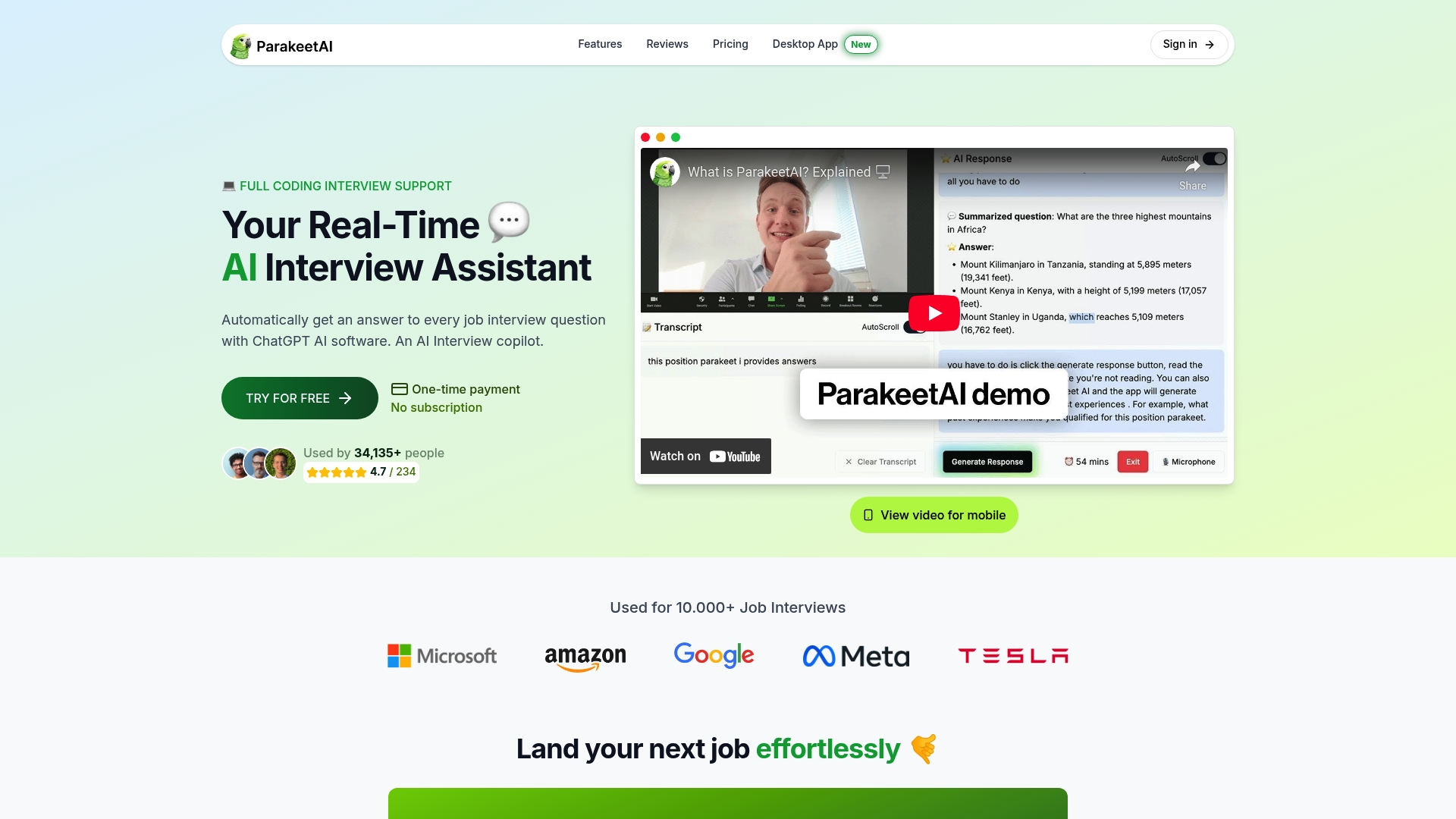
Don’t let hesitation or confusion weaken your chance to impress. Take control of your interview performance now with Parakeet AI, your ultimate partner in delivering structured, powerful, and authentic answers. Visit Parakeet AI and turn every interview moment into a winning opportunity.
Frequently Asked Questions
How can I effectively assess interview questions before answering?
To effectively assess interview questions, break down the question into its core components and identify keywords that indicate the type of response expected. Take a moment to mentally organize your thoughts before responding, ensuring you address the specific skills or experiences the interviewer seeks.
What are some effective answer frameworks to use in interviews?
Two effective answer frameworks are the STAR method and the CAR method. The STAR method involves sharing a Situation, Task, Action, and Result, while the CAR method focuses on Context, Action, and Result; practice using these frameworks to organize your responses based on the type of question.
How do I organize my key points for an interview answer?
Organize your key points by identifying 3-4 critical elements that highlight your skills, achievements, or experiences directly relevant to the interview question. Arrange these points in a logical sequence to create a compelling narrative that flows naturally and maintains clarity.
What types of examples should I use to support my interview answers?
Use a mix of quantitative examples, such as metrics and data, and qualitative examples, like personal anecdotes, to support your answers. Aim for specific instances that illustrate your competencies, focusing on outcomes and measurable achievements that reflect your professional value.
How can I refine my delivery for interviews?
To refine your delivery, practice your answers aloud and assess your communication style through mock interviews or by recording your responses. Pay attention to your speaking pace, tone, and body language, and create a personal checklist to track your improvement in these areas over time.