
7 Essential Interview Time Management Tips for Job Seekers

Preparing for a job interview often feels like racing against the clock. Balancing your schedule, organizing your thoughts, and managing each conversation can leave you feeling overwhelmed and underprepared. Without a clear plan, even strong candidates risk losing focus and missing important cues during the interview.
The good news is that you can take control of your interview timing with proven strategies. This list reveals realistic ways to manage your schedule, practice concise answers, and use modern tools for extra support. Each tip is designed to help you stay sharp, reduce stress, and make a memorable impression.
Get ready to discover actionable steps that can transform how you approach interview time management. If you want to walk into your next interview with confidence and clarity, these insights make a difference.
Table of Contents
- 1. Plan Your Interview Schedule Ahead of Time
- 2. Practice Answering Questions Within Set Limits
- 3. Use AI Tools For Real-Time Guidance
- 4. Prioritize Key Information In Your Responses
- 5. Track And Adjust Your Speaking Pace
- 6. Stay Focused And Minimize Distractions
- 7. Review And Reflect On Your Interview Timing
Quick Summary
| Takeaway | Explanation |
|---|---|
| 1. Plan Your Interview Schedule | Organizing your interview timeline reduces stress and shows professionalism. Utilize digital tools for efficient scheduling. |
| 2. Practice Concise Responses | Ensure timely answers by rehearsing with the one to two-minute rule and using the STAR method to structure responses. |
| 3. Use AI Tools for Feedback | Implement AI interview platforms to gain real-time insights and improve communication skills through targeted practice. |
| 4. Prioritize Relevant Information | Focus on significant accomplishments and tailor your narratives to highlight abilities that align with the job requirements. |
| 5. Manage Your Speaking Pace | Control your speaking tempo to enhance clarity and engagement; practice with various speeds to find the best rhythm for communication. |
1. Plan Your Interview Schedule Ahead of Time
Successful job interviews start with meticulous scheduling and preparation. By strategically mapping out your interview timeline, you can reduce stress and present yourself as a highly organized candidate.
Effective interview preparation involves several key scheduling strategies:
- Research the position thoroughly before any interview
- Create a dedicated calendar for tracking interview commitments
- Allow buffer time between different interview rounds
- Set digital reminders for each scheduled interview
- Prepare your interview materials in advance
Carefully managing your interview schedule helps prevent last-minute conflicts and demonstrates professional reliability. When you plan ahead, you create space to mentally and logistically prepare for each interaction.
A well-planned interview schedule reduces anxiety and increases your chances of success.
Practically speaking, start by creating a comprehensive calendar that tracks all upcoming interviews, including date, time, expected duration, interview format (phone, video, in-person), and specific preparation requirements for each opportunity.
Digital tools like Google Calendar or specialized job tracking apps can help you maintain a clear overview of your interview landscape. Color-code different interview stages to quickly distinguish between initial screenings, second-round interviews, and final selections.
Pro Tip: Always include a 30-minute buffer between interviews to account for potential technological glitches, travel delays, or unexpected preparatory needs.
2. Practice Answering Questions Within Set Limits
Job interviews demand crisp, strategic communication where timing is just as crucial as content. Mastering the art of delivering concise yet comprehensive answers can significantly enhance your interview performance.
Rehearsing interview responses helps candidates develop critical time management skills. When you practice answering questions within specific time constraints, you achieve several strategic advantages:
- Demonstrate professional communication skills
- Prevent rambling or off-topic discussions
- Show respect for the interviewer’s time
- Build confidence through structured preparation
- Highlight your ability to be clear and direct
Time-Conscious Response Strategies:
- Use the one to two-minute rule for most answers
- Structure responses with a clear beginning, middle, and end
- Practice using the STAR method (Situation, Task, Action, Result)
- Set a timer during practice sessions
- Record and review your responses
Concise answers reveal more about your communication skills than lengthy explanations.
Professional interviewers appreciate candidates who can articulate complex experiences succinctly. For instance, when asked “Tell me about yourself,” aim to provide a 90-second professional narrative that covers your key qualifications and career objectives.
The goal is not to squeeze in every detail but to spark the interviewer’s interest and invite further discussion. Your responses should act like a professional movie trailer - compelling, informative, and leaving them wanting to know more.
Pro Tip: Practice your interview responses in front of a mirror or with a trusted friend who can provide honest feedback about your pacing and clarity.
3. Use AI Tools for Real-Time Guidance
Modern job seekers have an incredible advantage with AI-powered interview preparation tools that provide instant, personalized coaching and feedback. Technology has transformed interview readiness from a solitary practice into an interactive, data-driven experience.
AI-driven mock interview platforms simulate realistic interview scenarios, helping candidates refine their communication skills with unprecedented precision. These intelligent systems offer real-time insights that traditional preparation methods cannot match.
Key benefits of AI interview guidance include:
- Instantaneous performance feedback
- Objective analysis of communication skills
- Customized practice scenarios
- Confidence-building through repeated simulations
- Identification of verbal and nonverbal communication patterns
Strategic AI Tool Implementation:
- Select reputable AI interview preparation platforms
- Upload your resume and target job descriptions
- Complete multiple mock interview sessions
- Review detailed performance analytics
- Iterate and improve based on AI recommendations
AI tools are not replacements for human skills but powerful supplements to your interview preparation strategy.
While AI can provide incredible insights, remember that these tools are designed to enhance your natural abilities. They help you recognize communication patterns, refine your responses, and build confidence.
The most effective AI interview tools go beyond simple question-and-answer simulations. They analyze your tone, pacing, word choice, and even non-verbal cues to provide comprehensive feedback.
Pro Tip: Treat AI interview tools as collaborative partners by critically evaluating their suggestions and maintaining your authentic professional voice.
4. Prioritize Key Information in Your Responses
Successful interview communication is about quality over quantity. Your ability to distill complex experiences into clear, impactful narratives can make the difference between blending in and standing out.
Structured interview responses help candidates showcase their most relevant skills efficiently. By strategically prioritizing information, you transform potentially meandering conversations into powerful professional summaries.
Key strategies for prioritizing interview response content:
- Focus on job-specific accomplishments
- Highlight measurable professional achievements
- Connect past experiences to current role requirements
- Use concise storytelling techniques
- Eliminate unnecessary background details
Response Prioritization Framework:
- Understand the specific job requirements
- Select most relevant professional experiences
- Structure responses using STAR method
- Quantify achievements when possible
- Practice delivering crisp narratives
Interviewers want proof of capability not exhaustive personal histories.
Prioritization means recognizing that every word counts. Your goal is to provide evidence of your professional competence quickly and memorably. Think of your interview responses like movie trailers - compelling highlights that make the listener want to know more.
Effective prioritization requires understanding what information truly matters. Technical skills technical achievements organizational impact and problem-solving capabilities should take center stage.
Pro Tip: Before your interview draft a one-page summary of your top three professional achievements that directly align with the job description.
5. Track and Adjust Your Speaking Pace
Your speaking pace can make or break an interview performance. Like a skilled musician, successful communicators understand how to modulate their vocal tempo to engage and persuade.
Speaking pace impacts communication effectiveness dramatically. Too fast and you risk overwhelming the listener. Too slow and you might lose their attention.
Benefits of mastering speaking pace:
- Improved listener comprehension
- Enhanced perceived confidence
- Better emotional connection with interviewer
- Reduced communication anxiety
- Greater perceived professionalism
Speaking Pace Management Techniques:
- Record and analyze your natural speaking speed
- Practice responses at different tempos
- Use strategic pauses for emphasis
- Match pace to content complexity
- Breathe deliberately to control rhythm
The perfect interview pace balances information density with listener engagement.
Think of your speaking rhythm like a conversation dance. Some moments call for quicker steps highlighting excitement. Others demand slower deliberate movements to underscore critical points.
Physical techniques like controlled breathing can help you maintain an optimal speaking tempo. Inhaling deeply before key statements provides natural pacing opportunities.
Pro Tip: Practice your interview responses in front of a mirror while consciously monitoring your speaking speed and using a metronome or timer to develop consistent pacing.
6. Stay Focused and Minimize Distractions
Interviews are high-stakes conversations where your mental clarity can make or break your performance. Your ability to maintain laser-like focus amid potential interruptions separates exceptional candidates from average ones.
Managing environmental distractions requires strategic preparation and mental discipline. Understanding how external and internal disruptions impact your communication is the first step toward interview success.
Key strategies for maintaining interview focus:
- Eliminate potential technological interruptions
- Create a dedicated interview preparation space
- Practice mindfulness techniques
- Develop pre-interview centering rituals
- Recognize and redirect wandering thoughts
Distraction Management Techniques:
- Silence mobile devices completely
- Choose a quiet interview location
- Use noise-canceling headphones if needed
- Practice deep breathing before interview
- Visualize successful interview scenarios
Mental focus is your most powerful interview weapon.
Understanding distraction sources helps you build targeted defense mechanisms. External distractions might include background noise digital notifications or uncomfortable physical environments. Internal distractions often stem from anxiety performance pressure or self-doubt.
Mental preparation involves training your brain to recognize and quickly redirect attention. Think of focus like a muscle that becomes stronger with consistent practice and intentional conditioning.
Pro Tip: Create a pre-interview mental checklist that includes three deep breaths and a 60-second positive visualization to center yourself and eliminate potential mental clutter.
7. Review and Reflect on Your Interview Timing
Post-interview reflection transforms good interviews into great learning opportunities. Your ability to critically analyze your performance can significantly accelerate professional growth and future interview success.
Post-interview performance analysis helps candidates understand their communication strengths and areas for improvement. Systematic reflection turns each interview into a strategic development experience.
Key reflection focus areas:
- Assess response timing and pacing
- Evaluate overall interview energy
- Identify moments of strong connection
- Note areas needing improvement
- Compare performance against preparation
Self-Reflection Framework:
- Record immediate post-interview impressions
- Wait 24 hours before detailed analysis
- Review responses objectively
- Compare actual performance with preparation
- Document specific improvement strategies
Reflection transforms interviews from singular events into continuous learning opportunities.
Immediate documentation matters. Write down your thoughts while memories are fresh. Note specific questions where you felt confident or struggled with timing and response length.
Self-reflection is not about criticism but strategic improvement. Approach each interview as a chance to understand your professional communication style more deeply.
Pro Tip: Create a standardized post-interview reflection template with specific questions to ensure consistent and actionable self-assessment.
Below is a comprehensive table summarizing the key strategies and principles for effective job interview preparation discussed in the article.
| Topic | Description | Key Strategies & Benefits |
|---|---|---|
| Planning Interview Schedule | Organize interview commitments to ensure preparedness and reduce stress. | Use a calendar, set reminders, buffer times, and research the position thoroughly. |
| Practicing Concise Responses | Develop crisp communication skills to enhance interview performance. | Time responses using the STAR method and rehearse within set time limits. |
| Leveraging AI Tools | Utilize technology for simulating interview scenarios and refining answers. | Select platforms, use performance analytics, and improve via recommendations. |
| Prioritizing Information | Focus on delivering clear narratives and emphasizing relevant experiences. | Highlight measurable achievements and connect past roles to job-specific needs. |
| Managing Speaking Pace | Balance vocal tempo to maintain engagement and professionalism. | Record speech, use pauses strategically, and match content complexity with pace. |
| Minimizing Distractions | Create a focused environment to prevent interruptions during interviews. | Practice mindfulness, choose quiet spaces, and eliminate potential disruptions. |
| Reflecting Post-Interview | Analyze performance to identify areas for future growth. | Document impressions, assess timing and content, and draft improvement strategies. |
Master Your Interview Timing with Real-Time AI Support
Managing interview time effectively and delivering concise, well-paced answers can be one of the toughest challenges during job interviews. This article highlights key struggles job seekers face such as planning interview schedules, practicing crisp answers, and maintaining focus under pressure. If you find yourself wanting clear, immediate guidance that helps control your speaking pace and prioritize key information it is time to experience the difference AI can make.
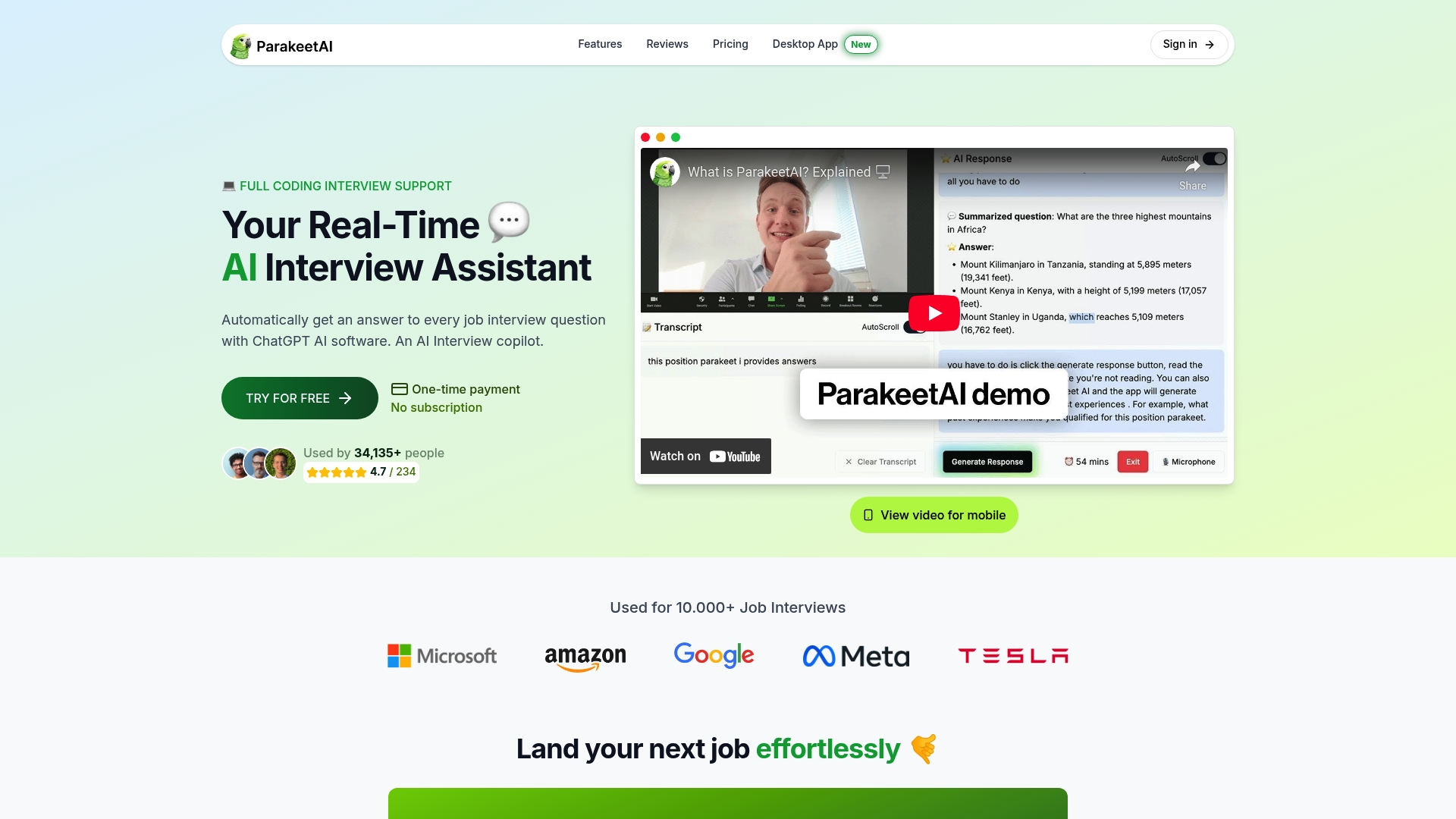
Boost your confidence and sharpen your communication with Parakeet AI’s real-time interview assistant. It listens to your interview and provides instant answers tailored to each question so you never lose track of timing or content relevance. Start transforming your preparation by integrating advanced AI tools that complement your practice sessions and enhance your ability to deliver impactful, concise responses that captivate interviewers. Visit Parakeet AI to start your free trial today and take control of your interview success.
Frequently Asked Questions
How can I effectively plan my interview schedule?
Planning your interview schedule involves creating a dedicated calendar to track all commitments, including dates, times, and formats. Start by listing each interview opportunity and setting digital reminders at least 24 hours in advance to minimize stress.
What strategies can I use to practice answering interview questions within time limits?
To practice answering questions within set limits, use the one to two-minute rule and structure your responses using the STAR method. Set a timer during practice sessions to ensure you stay concise and focused while covering the key points.
How can AI tools assist with my interview preparation?
AI tools can provide real-time coaching and feedback during mock interviews, helping you refine your communication skills. Utilize reputable AI platforms to simulate interview scenarios and review detailed performance analytics for improvement.
What should I prioritize in my responses during an interview?
Focus on job-specific accomplishments and measurable achievements that relate directly to the position. Structure your responses clearly and eliminate unnecessary details to ensure the most relevant information stands out.
How can I control my speaking pace during an interview?
To manage your speaking pace, practice recording and analyzing your natural tempo, and consciously control your rhythm with strategic pauses. Use techniques like deep breathing before key statements to maintain a steady and engaging flow of communication.