
Role of AI Assistants in Hiring: Boosting Efficiency and Fairness

Most American tech startups now rely on AI assistants to sift through thousands of applications, with over 50 percent reporting improved hiring efficiency and sharper candidate insights. For HR professionals navigating mounting workloads and fierce competition for talent, these digital tools have become critical. This guide breaks down what AI assistants in hiring actually do, why they matter for smarter interview processes, and what every American hiring manager should know to stay ahead.
Table of Contents
- Defining AI Assistants In Hiring Today
- Types Of AI Interview Assistants Explained
- Core Features And Automation Capabilities
- Enhancing Candidate Analysis And Decision-Making
- Risks, Bias, And Legal Compliance In AI Hiring
Key Takeaways
| Point | Details |
|---|---|
| AI Assistants Streamline Hiring | AI hiring assistants utilize machine learning to enhance candidate evaluation and reduce bias. These tools analyze resumes and interview responses to predict candidate success effectively. |
| Diverse AI Interview Types | Various AI interview assistants cater to different needs, such as rule-based screening, immersive scenarios, and gamified assessments, each targeting unique recruitment challenges. |
| Automation Enhances Decision-Making | Advanced automation capabilities in AI tools improve workflows by providing real-time analysis and structured feedback, leading to more informed hiring decisions. |
| Addressing Ethical Concerns | Organizations must implement bias detection and transparent algorithms to ensure compliance with legal standards and promote fairness in AI-driven hiring processes. |
Defining AI Assistants in Hiring Today
Artificial Intelligence (AI) assistants in hiring represent a transformative technology revolutionizing recruitment processes across industries. These sophisticated digital tools leverage advanced algorithms and machine learning to streamline candidate evaluation, screening, and selection. Modern AI assistants in hiring now go far beyond simple resume filtering, offering comprehensive insights into candidate potential, skills matching, and predictive performance analysis.
At their core, AI hiring assistants function through complex computational models that analyze multiple data points simultaneously. They can evaluate candidate resumes, assess interview responses, predict job fit, and even recommend personalized recruitment strategies. Government agencies like the US Office of Personnel Management have recognized the strategic importance of these tools, developing comprehensive frameworks to integrate AI technologies into talent acquisition processes.
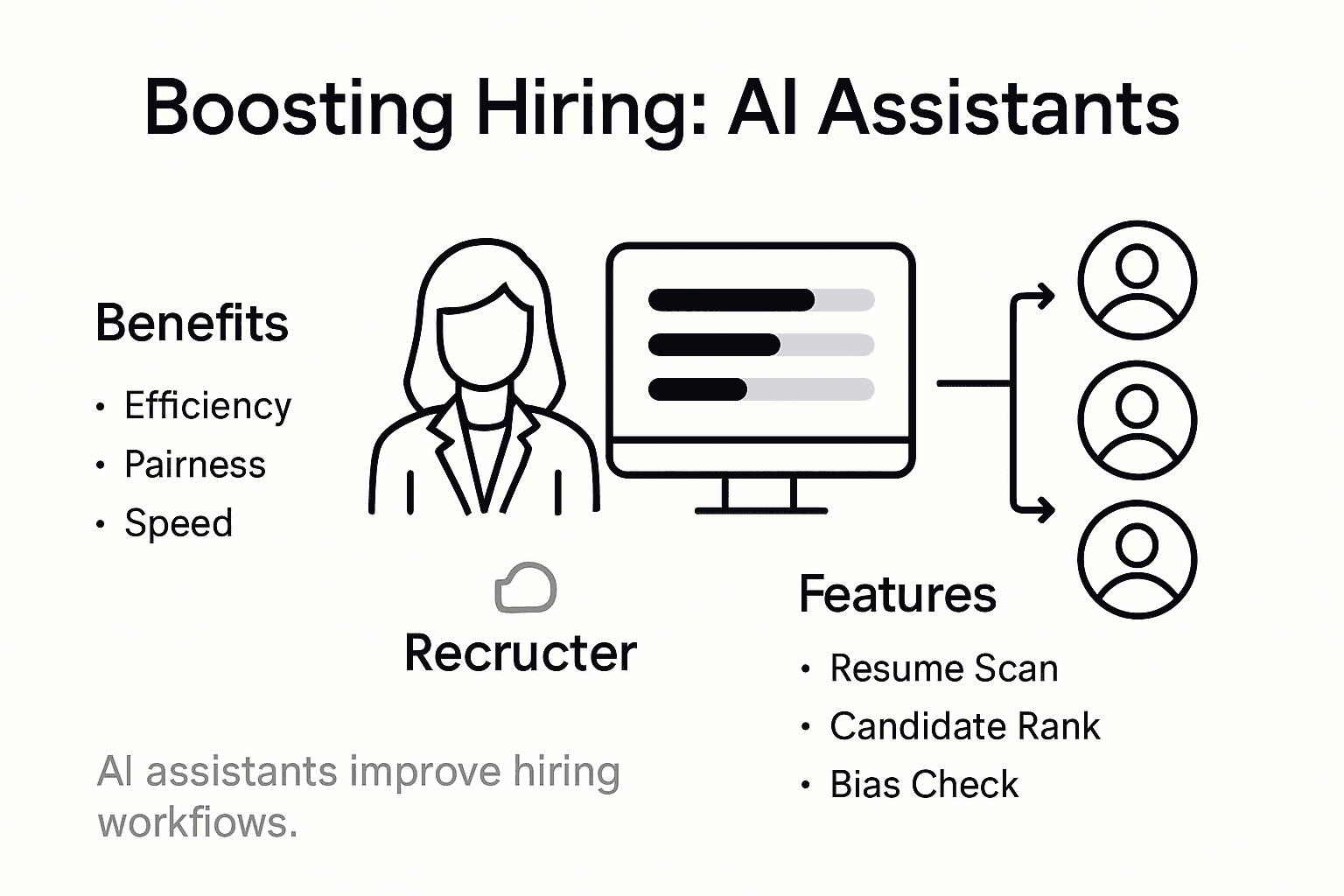
The primary capabilities of AI assistants in hiring typically include automated resume screening, candidate ranking, interview analysis, and predictive matching. These systems can process thousands of applications within minutes, identifying top candidates based on predefined criteria while minimizing human bias. By utilizing natural language processing and machine learning algorithms, AI assistants can extract nuanced insights from candidate interactions that traditional screening methods might overlook.
Pro Tip: When implementing AI hiring assistants, always maintain a balanced approach that uses AI as a supportive tool rather than a complete replacement for human judgment in recruitment decisions.
Types of AI Interview Assistants Explained
AI interview assistants have evolved into sophisticated technological solutions with distinct approaches to enhancing recruitment processes. Systematic research from computing experts reveals multiple categories of AI interview assistants, each designed to address specific recruitment challenges and organizational needs.
The primary categories of AI interview assistants include rule-based systems, AI-enhanced platforms, immersive technologies, and gamified assessment tools. Rule-based systems operate through predefined algorithms that match candidate profiles against specific job requirements. AI-enhanced platforms leverage more advanced machine learning techniques to provide dynamic candidate evaluation, analyzing subtle nuances in communication, skill sets, and potential cultural fit.

Immersive AI interview assistants represent a cutting-edge approach, utilizing virtual reality and avatar technologies to create interactive interview environments. These systems simulate realistic interview scenarios, allowing candidates to demonstrate skills and personality in contextualized settings. Gamified assessment tools add another dimension by transforming traditional interviews into engaging, interactive experiences that reveal candidate problem-solving abilities and psychological attributes through strategic challenges.
Here’s a comparison of common types of AI interview assistants and their typical use cases:
| Assistant Type | Key Characteristics | Common Use Case |
|---|---|---|
| Rule-Based Systems | Fixed logic, matches keywords, static criteria | Quick resume screening |
| AI-Enhanced Platforms | Machine learning, adaptive analysis | In-depth skills and fit assessment |
| Immersive Technologies | Uses VR/avatars, simulates real interactions | Realistic scenario-based interviews |
| Gamified Assessment | Interactive tasks, evaluates problem-solving | Identifying soft skills and agility |
Pro Tip: When selecting an AI interview assistant, prioritize platforms that offer transparency in their algorithmic decision-making and provide clear mechanisms for human oversight and intervention.
Core Features and Automation Capabilities
AI interview assistants have developed sophisticated automation capabilities that transform recruitment workflows, integrating advanced technologies to streamline candidate assessment processes. These systems go beyond traditional screening methods, offering comprehensive tools that support every stage of the interview and evaluation journey.
The core features of modern AI interview assistants typically encompass several critical automation domains. Interview Preparation capabilities include generating personalized interview questions, analyzing candidate resumes for targeted inquiry points, and providing predictive skill matching. Live Interview Support features enable real-time language processing, sentiment analysis, and candidate response evaluation, allowing instantaneous insights into communication skills, emotional intelligence, and technical competence.
Additional automation capabilities focus on post-interview analysis and feedback generation. These include automated note-taking, cognitive load management, structured feedback compilation, and comparative candidate ranking. Advanced systems can now generate comprehensive candidate assessments that integrate multiple evaluation dimensions, including communication patterns, technical skills, psychological attributes, and potential cultural fit within an organization.
Pro Tip: Select AI interview assistants with transparent algorithmic processes and robust human oversight mechanisms to ensure fair, ethical candidate evaluation.
Enhancing Candidate Analysis and Decision-Making
AI technologies are revolutionizing talent acquisition by fundamentally transforming candidate analysis and decision-making processes. These advanced systems move beyond traditional screening methods, offering nuanced insights that combine quantitative assessment with sophisticated predictive analytics.
The core strength of AI-driven candidate analysis lies in its ability to process multiple evaluation dimensions simultaneously. Objective Skill Matching algorithms can precisely map candidate capabilities against specific job requirements, analyzing technical competencies, communication skills, and potential cultural alignment. By integrating machine learning techniques, these systems can identify subtle patterns and potential that human recruiters might inadvertently overlook, providing a more comprehensive candidate profile.
Decision-making enhancements emerge from AI’s capacity to synthesize complex candidate data. Advanced algorithms can now generate predictive performance models, assessing not just current qualifications but potential future contributions. These systems triangulate information from resume analysis, interview interactions, psychometric assessments, and skill evaluations to create holistic candidate representations that go beyond traditional binary hiring metrics.
Pro Tip: Implement AI interview tools as collaborative decision support systems, ensuring human oversight remains central to maintaining ethical and nuanced hiring practices.
Risks, Bias, and Legal Compliance in AI Hiring
AI hiring technologies present significant challenges that demand careful navigation of complex ethical and legal landscapes. Global research reveals critical risks associated with algorithmic recruitment systems, including potential privacy violations, social discrimination, and systemic algorithmic bias that can perpetuate existing workplace inequalities.
The primary legal compliance concerns center on preventing discriminatory outcomes and protecting candidate rights. Algorithmic Bias represents a fundamental challenge, where AI systems might inadvertently reproduce historical discriminatory patterns embedded in training data. Advanced bias detection mechanisms now focus on identifying and neutralizing these systemic prejudices by implementing sophisticated auditing techniques that evaluate decision-making processes for potential unfair treatment across demographic groups.
Comprehensive bias management frameworks have emerged to address these critical challenges. These approaches involve multi-layered strategies including transparent algorithmic design, regular bias audits, diverse training datasets, and ongoing monitoring to ensure that AI hiring tools comply with evolving legal standards such as GDPR, the EU AI Act, and disparate impact doctrine. The goal is to create AI systems that not only avoid discrimination but actively promote fairness and equal opportunity in recruitment processes.
The following table summarizes major risks and mitigation strategies in AI-driven hiring:
| Risk | Example Problem | Recommended Mitigation |
|---|---|---|
| Algorithmic Bias | Favoring certain demographics | Use diverse data, regular audits |
| Privacy Violations | Unlawful data sharing | Adhere to GDPR, secure candidate info |
| Lack of Transparency | Opaque decision-making | Implement explainable algorithms |
| Legal Noncompliance | Ignoring hiring laws | Continuous monitoring and compliance |
Pro Tip: Implement rigorous, independent third-party audits of your AI hiring algorithms to proactively identify and mitigate potential bias before deployment.
Revolutionize Your Hiring Process with Real-Time AI Assistance
The article highlights how AI assistants can boost efficiency and fairness in recruitment by reducing human bias and automating complex candidate analysis tasks. If you are facing challenges in ensuring consistent and unbiased interview evaluations while striving for better candidate engagement AI solutions are essential. Parakeet AI offers a real-time job interview assistant that listens carefully and provides immediate AI-generated answers to every interview question helping you stay prepared and confident throughout the hiring journey.
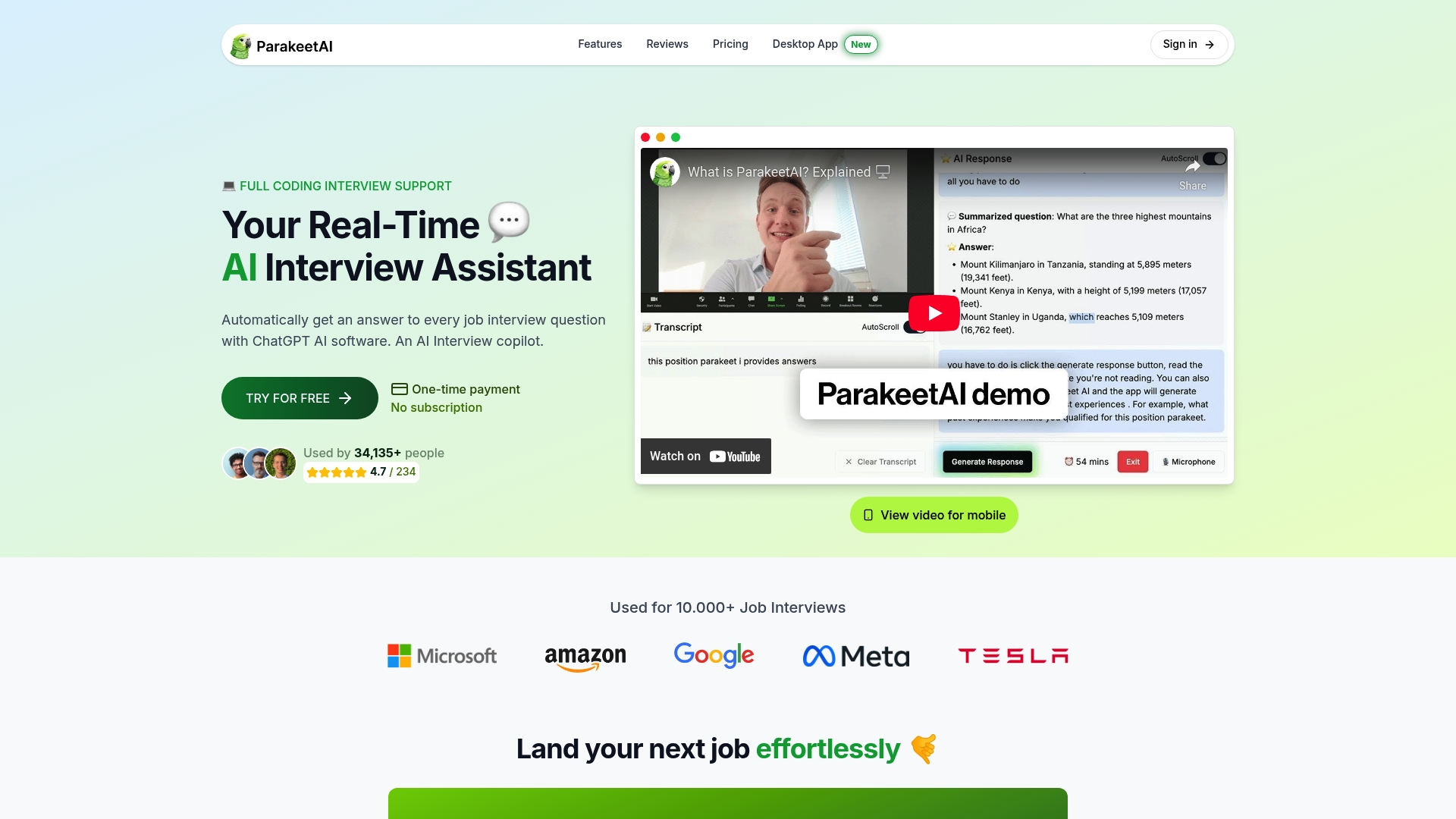
Experience the future of hiring with a tool designed to complement human judgment and enhance decision-making. Visit Parakeet AI to see how our assistant supports ethical recruitment practices and dynamic candidate assessment. Don’t wait to leverage technology that drives fairness and efficiency in every interview session. Discover more and get started today at https://parakeet-ai.com.
Frequently Asked Questions
What are AI assistants in hiring?
AI assistants in hiring are advanced digital tools that use AI algorithms and machine learning to streamline recruitment processes, including candidate evaluation, screening, and selection.
How do AI hiring assistants reduce bias in recruitment?
AI hiring assistants aim to minimize human bias by using algorithms that evaluate candidates based on predefined criteria and multiple data points, rather than personal judgments.
What are the main types of AI interview assistants available today?
The main types of AI interview assistants include rule-based systems, AI-enhanced platforms, immersive technologies, and gamified assessment tools, each designed for specific recruitment needs.
What risks are associated with using AI hiring technologies?
Major risks include algorithmic bias, privacy violations, lack of transparency in decision-making, and potential legal noncompliance, which can be mitigated with regular audits and diverse training datasets.