
Why Adaptive Interview Preparation Empowers Job Seekers

Staring down an interview panel can make even the most prepared candidates sweat, especially when you know that generic, one-size-fits-all answers rarely impress. For job seekers aiming to step into new roles or industries, the old memorization strategies often fall short in real conversations. Adaptive interview preparation offers a smarter, tailored solution that learns with you, targeting the areas where you actually need help and providing dynamic feedback that goes way beyond traditional methods.
Table of Contents
- Adaptive Interview Preparation Defined And Debunked
- Types Of Adaptive Interview Tools And Methods
- How Ai Real-Time Assistants Work In Interviews
- Personalized Feedback And Skill Improvement
- Comparing Adaptive And Traditional Preparation
- Common Pitfalls And Maximizing Ai Interview Results
Key Takeaways
| Point | Details |
|---|---|
| Adaptive Interview Preparation | Focuses on individual strengths and weaknesses for a tailored approach instead of a one-size-fits-all method. |
| Immediate Feedback | Provides real-time insights to help candidates adjust and improve during practice sessions. |
| Personalized Learning Paths | Allocates preparation time based on progress, ensuring efficiency and targeted practice. |
| Maximizing AI Tools | Utilize AI consistently for effective practice; internalize patterns rather than rely on suggestions during actual interviews. |
Adaptive interview preparation defined and debunked
Adaptive interview preparation moves beyond the generic playbook most candidates follow. Instead of memorizing stock answers to common questions, this approach tailors your preparation to your specific challenges, learning style, and growth areas. Think of it as the difference between a one-size-fits-all suit and custom tailoring. Adaptive learning uses real-time monitoring to identify where you struggle, then adjusts the content and feedback you receive based on exactly what you need most. Whether you freeze up when discussing failures, stumble over technical explanations, or lose composure under pressure, an adaptive system recognizes these patterns and targets them directly. This contrasts sharply with traditional preparation methods that treat every job seeker identically, regardless of whether they need help with confidence-building or communication clarity.
The science backing adaptive interview preparation draws from cognitive science and educational psychology rather than guesswork. These approaches work by continuously tracking how you perform in practice scenarios, then personalizing your learning path accordingly. If you nail technical discussions but stumble during behavioral questions, the system knows to allocate more time there. If you answer questions correctly but speak too quickly, it flags pacing as your focus area. This dynamic adjustment happens in real-time, meaning your preparation evolves as you do. You’re not grinding through the same 50 interview questions hoping something sticks. Instead, you’re working on what actually matters for your performance.
Here’s what often gets misunderstood about adaptive preparation. Some people think it means the system will simply hand you all the answers during an interview, essentially letting you coast through without real preparation. That’s a fundamental misreading. Adaptive preparation strengthens your actual abilities through targeted practice, structured feedback, and emotional intelligence development. You’re building genuine skills and confidence, not borrowing answers. The system identifies your weak spots, gives you feedback that sticks, and helps you internalize better approaches. When interview day arrives, you’re not relying on a crutch. You’ve actually improved your communication, your thinking process, and your ability to handle pressure. The adaptation ensures you spend preparation time where it matters most, making your effort far more efficient than traditional methods.
Pro tip: During practice sessions, pay attention to which question types or scenarios feel most uncomfortable, then deliberately practice those areas first before moving to topics you already handle well. This reverses how most people prepare and directly mirrors how adaptive systems prioritize your learning.
Types of adaptive interview tools and methods
Adaptive interview tools come in different flavors, each designed to target specific aspects of your preparation. The most common category uses dynamic question tailoring, where the difficulty and content of questions shift based on your responses. If you answer a behavioral question with depth and clarity, the system raises the bar on the next one. If you struggle, it adjusts to help you build foundational skills before moving forward. This isn’t about making things easier or harder for the sake of it. It’s about meeting you where you are and pushing you just beyond your current comfort zone, which is exactly where learning happens fastest.
Another powerful method involves real-time feedback and performance tracking. Rather than finishing a full practice interview and receiving generic comments, adaptive assessment strategies monitor your performance moment by moment. The system catches when you’re speaking too quickly, repeating filler words, or losing your train of thought, then flags these patterns immediately so you can adjust on the next practice round. Some tools include interactive content delivery through video explanations, text modules, or visual guides that activate based on the specific areas where you stumble. If you tank a technical question, the system might pull up a targeted explainer video rather than just telling you that you got it wrong.
There’s also the personalized learning path approach, where your entire preparation roadmap adjusts weekly based on your progress. Instead of a static checklist of 50 interview topics, your system identifies which question categories hurt your confidence most and allocates preparation time accordingly. One week you might spend 60 percent of your time on behavioral questions if that’s your weak point. The next week, as you improve, the balance shifts. This contrasts sharply with traditional preparation where you grind through every topic equally, wasting time on areas you already handle well. The most sophisticated tools combine multiple methods, layering dynamic questions with personalized feedback and adaptive content delivery into one cohesive system.
Below is a quick reference for common adaptive interview tool features and their benefit:
| Tool Feature | What It Does | How It Helps Candidates |
|---|---|---|
| Dynamic Question Tailoring | Adjusts difficulty in real-time | Focuses on just-right challenge |
| Real-Time Feedback | Flags habits instantly | Enables immediate self-correction |
| Personalized Learning Path | Reallocates prep time weekly | Maximizes effort on true weaknesses |
| Interactive Content | Provides explanations as needed | Deepens understanding of tricky areas |
Pro tip: Track which specific question types or scenarios make you feel most anxious or unprepared, then deliberately seek out tools that let you target those areas with concentrated practice rather than spreading effort evenly across all topics.
How AI real-time assistants work in interviews
AI real-time interview assistants operate like a trained coach sitting beside you during the actual interview. The system listens continuously to the live conversation, processing what the interviewer asks and how you respond in real-time. Within milliseconds, it analyzes the question type, identifies what the interviewer is actually looking for, and generates structured answer suggestions tailored to that specific moment. You’re not waiting until after the interview to get feedback. The assistance happens instantly, feeding you guidance exactly when you need it most. This immediate support helps you manage the cognitive pressure that typically derails candidates. Instead of your brain freezing up while you scramble for an answer, you have structured suggestions appearing in your field of view, allowing you to think more clearly and respond more effectively.

The technology behind these systems uses large language models processing live conversation to simulate what an experienced coach would do during a real interview. As you talk, the AI detects patterns in your responses, identifies gaps, and adjusts its suggestions accordingly. If you start going off track or rambling, it provides follow-up prompts to steer you back. If you nail a particular question, it raises the complexity of subsequent guidance. The system also manages conversation flow dynamically, ensuring you don’t spend too much time on one topic or miss critical areas the interviewer clearly cares about. Think of it as someone with interview expertise whispering guidance in your ear, but instead of a whisper, it’s text appearing on your screen or through an earpiece.
What makes this different from traditional interview prep is the speed and contextual intelligence. You can’t prepare for every possible question combination, but an AI assistant doesn’t need you to. It responds to the actual interview happening right now, not hypothetical scenarios you memorized last week. The system reduces cognitive load by handling the mechanical parts of constructing responses, which frees your mental energy for genuine thinking and authentic communication. You’re not trying to recall memorized answers while managing interview stress. You’re focusing on connecting with the interviewer and demonstrating your actual capabilities. The AI handles the scaffolding that usually takes up so much mental bandwidth, letting your best self come through during the conversation.
Pro tip: During your actual interview, glance at AI-provided suggestions briefly but don’t read word-for-word. Use them as a framework to spark your own thinking, then deliver answers in your own voice and phrasing to maintain authenticity and natural conversation flow.
Personalized feedback and skill improvement
Generic feedback is nearly useless. When someone tells you to “be more confident” or “answer more concisely,” you’re left wondering what that actually means in practice. Personalized feedback, by contrast, gives you specific, actionable insights tied to your exact performance. AI-powered systems analyze your interview responses word by word, identifying patterns that traditional feedback misses. Did you qualify every statement with “I think” or “maybe,” signaling uncertainty? The system catches it. Were you clear and direct on some questions but rambling on others? The feedback pinpoints exactly which topics triggered the rambling and why. This specificity matters because you can only improve what you can see. Vague notes disappear from memory within hours. Specific, concrete feedback sticks because it connects directly to your actual behavior.
The power of this approach lies in how AI analyzes candidate responses to highlight specific areas for improvement. Rather than a one-size-fits-all rubric, the system evaluates your communication style, emotional presence, answer structure, and content clarity individually. One candidate might nail the technical content but speak in a monotone that kills engagement. Another nails the delivery but leaves out critical details. The feedback they each receive targets their unique weaknesses, not generic interview rules. You also get recognition of what you’re doing well, which builds confidence. Many candidates fixate on what they messed up and miss that they actually crushed certain question types. Personalized feedback balances this by highlighting genuine strengths alongside areas to develop.
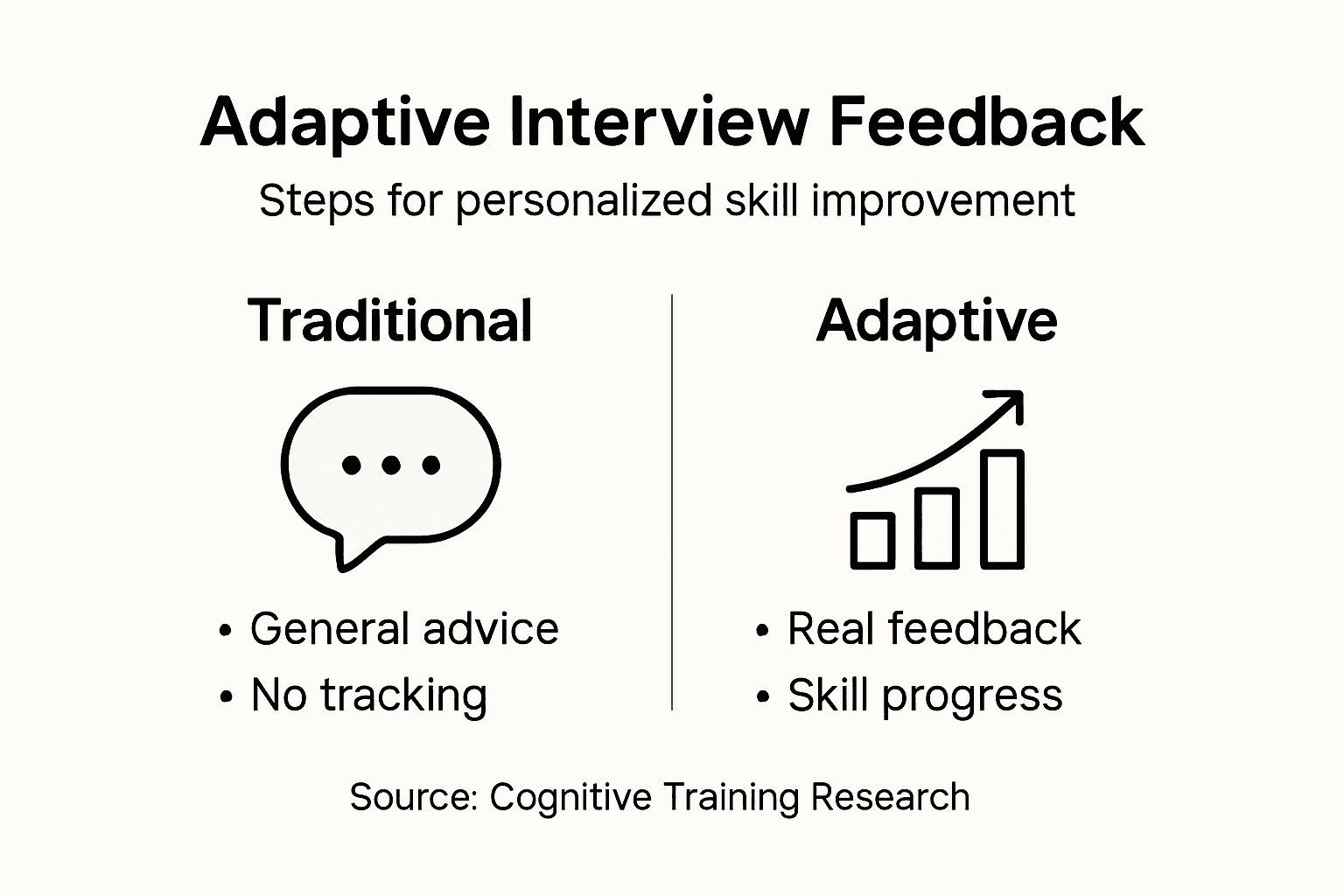
What transforms this feedback into real skill improvement is the repetition cycle. You get specific feedback. You practice the same question type again with that feedback in mind. You get new feedback showing whether you actually improved. This iteration compounds over time. After five practice rounds targeting the same weakness, you internalize the change. It becomes automatic rather than something you have to think about. The system tracks your improvement across sessions, so you can see tangible progress. Confidence surges when you watch yourself actually get better at something that previously stumped you. This isn’t abstract improvement. It’s measurable, visible, personal progress that directly translates to interview performance.
Pro tip: Review your feedback immediately after each practice session while the interview is still fresh in your mind, then take one specific piece of feedback and focus exclusively on that in your next practice round rather than trying to fix everything at once.
Comparing adaptive and traditional preparation
Traditional interview preparation looks familiar because most people have experienced it. You attend a workshop or buy a book that covers the 50 most common interview questions. You memorize answers. You practice with a friend who reads questions from a script. The approach treats interview preparation like studying for a test where the questions are known in advance. Everyone in the workshop gets the same content, the same timeline, and the same expectations. If you’re naturally anxious in interviews, you get the same preparation as someone breezing through. If you’re a non-native English speaker navigating unfamiliar cultural communication norms, you still follow the standard playbook. This one-size-fits-all model has a fundamental flaw: it ignores the fact that every candidate walks into an interview with different strengths, different obstacles, and different growth areas.
Adaptive preparation operates on a completely different principle. Instead of generic content delivered to everyone equally, adaptive systems deliver continuous monitoring and personalized adjustments focused on individual strengths and weaknesses. The system watches you practice, identifies where you struggle, and immediately redirects resources to those specific areas. You’re not forced to spend three days on salary negotiation tactics if you already handle those confidently. You’re not glossing over behavioral questions just because they weren’t prioritized in some standard curriculum. The preparation reshapes itself around your actual performance, not around what some consultant thought candidates generally need. This targeted approach means you spend preparation time where it actually matters for you.
The practical difference shows up on interview day. Traditional preparation leaves candidates vulnerable to conversation shifts they didn’t anticipate. You memorized an answer to “Tell me about a time you failed,” but the interviewer asks a follow-up question that doesn’t match your script. Now you’re scrambling. Adaptive preparation, by contrast, has trained your thinking process rather than your memorization skills. You’ve practiced handling unexpected directions through hundreds of iterations where the system threw curveballs at you. You’ve internalized communication patterns and thinking structures that work in real-time conversation, not just prepared monologues. When the interviewer deviates from your expectations, you can actually think and respond authentically rather than panicking because your script doesn’t fit.
The confidence gap between these approaches is measurable. Candidates using traditional methods often feel anxious right up until the interview because they know they haven’t prepared for everything. Adaptive preparation builds genuine confidence because you’ve actually seen yourself improve in real-time. You know your weak spots have been targeted. You’ve watched yourself get better. That’s not false confidence. That’s earned confidence based on actual skill development.
Here is a side-by-side summary of adaptive vs. traditional interview preparation:
| Aspect | Adaptive Preparation | Traditional Preparation |
|---|---|---|
| Practice Focus | Targets weak areas specifically | Covers all topics equally |
| Feedback Style | Personalized, real-time, actionable | Generic, vague, broad suggestions |
| Preparation Evolution | Adjusts to improvement over time | Follows fixed practice routine |
| Confidence Building | Based on measured skill progress | Based mostly on memorization |
| Handling New Questions | Trains flexible thinking | Relies on rehearsed answers only |
| Efficiency | Saves time by avoiding strengths | May waste time on mastered topics |
Pro tip: If you’re currently using traditional preparation methods, identify your three weakest question categories and practice those almost exclusively for one full week before shifting to other areas. This mini adaptive approach can significantly accelerate improvement without overhauling your entire preparation.
Common pitfalls and maximizing AI interview results
Many candidates approach AI interview tools with unrealistic expectations. The biggest pitfall is treating the AI as a magic solution rather than a preparation partner. You can’t rely on AI suggestions during the actual interview and expect to perform well if you haven’t internalized the thinking behind those suggestions. This is fundamentally different from cheating. The AI during practice teaches you how to think through problems, structure answers, and communicate clearly. But if you’re glancing at AI-generated text word-for-word during the real interview, you’re not demonstrating your actual capabilities. The hiring manager will spot the disconnect between your prepared answers and your ability to think on your feet. The real power of AI comes from using it extensively during preparation so that when interview day arrives, you don’t need it anymore. You’ve already internalized the patterns.
Another common mistake is ignoring the feedback entirely. Candidates get detailed insights about their pacing, filler words, or unclear explanations, then dismiss it as “just how I talk.” But that’s exactly the problem. How you talk right now may be working against you. The purpose of AI feedback is to highlight patterns you can’t see yourself. You can’t hear your own repetitive “umms” or notice that you answer every question with the same three-sentence structure. Context-aware feedback and continuous model monitoring from quality AI systems catches these blind spots reliably. The mistake isn’t that the feedback exists. The mistake is thinking you don’t need to act on it. If the AI identifies an issue, that’s your signal to practice differently, not to keep doing the same thing and hope it works out.
To maximize results, focus on using the AI tool consistently rather than sporadically. One practice session per week won’t create meaningful change. Your brain needs repeated exposure to new patterns to internalize them. Three or four focused sessions per week, even if each is just 20 minutes, produces visible improvement within two weeks. Also, practice the same question types multiple times. Don’t just move through 50 different questions once each. Practice five behavioral questions repeatedly until you nail them, then move to technical questions and do the same. This repetition with feedback is what actually changes your performance. Finally, track specific metrics the AI provides. Don’t just note that you “improved.” Watch your filler word count drop from 47 in your first session to 12 by week three. See your average answer length drop from 180 seconds to 90 seconds. These concrete numbers prove you’re actually changing, which builds the confidence that carries into your real interview.
Pro tip: Set a specific target metric for improvement each week, such as reducing filler words by 30 percent or keeping answers to exactly 60 seconds, then focus all your practice sessions on hitting that single metric before moving to the next one.
Unlock Your Interview Potential with Real-Time AI Support
Adaptive interview preparation focuses on targeting your unique weaknesses and building real confidence, not just memorizing scripted answers. If you have struggled with thinking on your feet, managing pressure, or handling unexpected questions, you are not alone. The key to success lies in personalized, dynamic feedback that evolves with your performance. Parakeet AI brings this powerful concept to life with a real-time AI job interview assistant that listens carefully and provides tailored answer suggestions right when you need them.
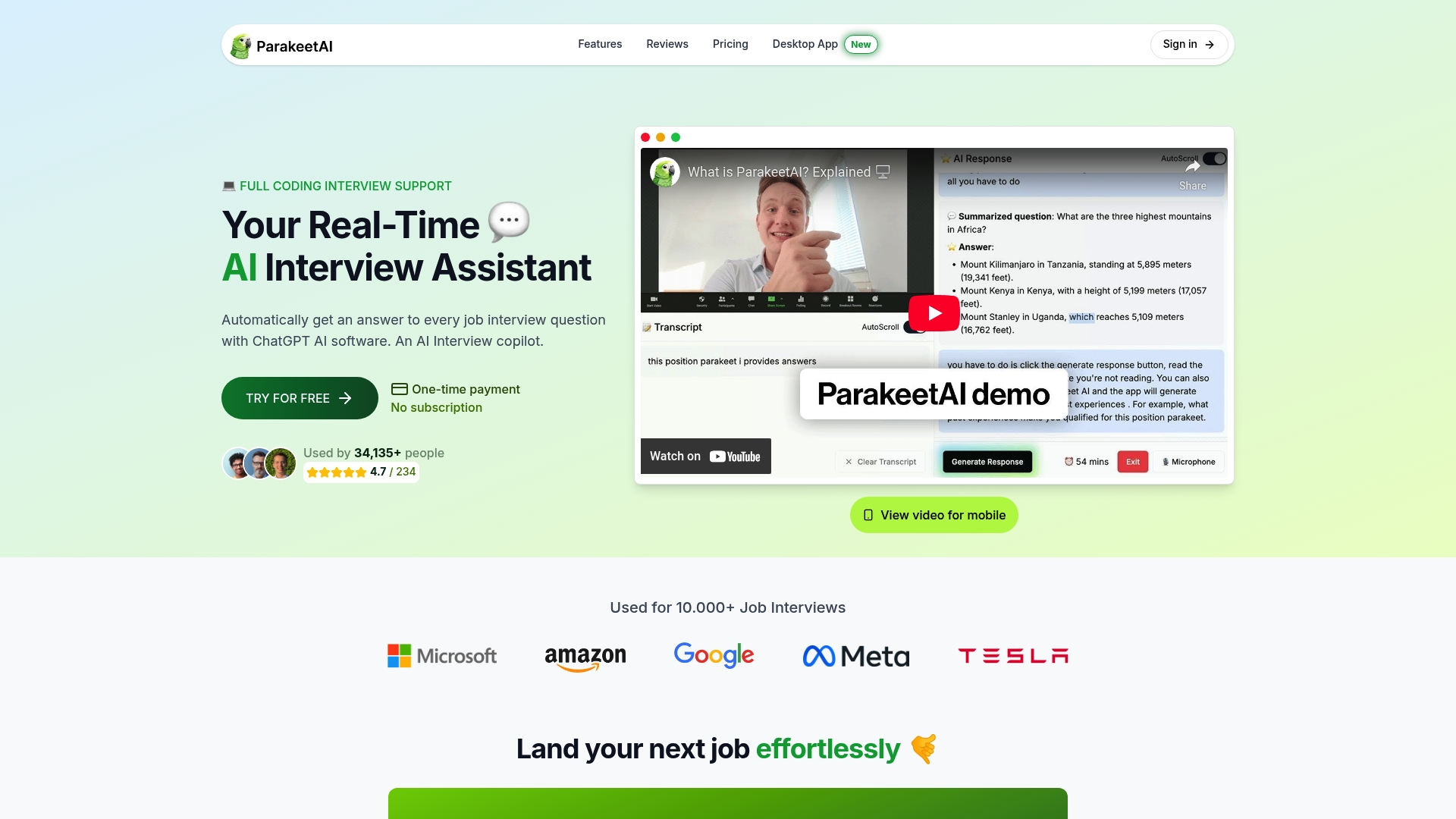
Experience the next level of interview preparation by visiting Parakeet AI and exploring how you can practice with targeted feedback and instant guidance. Stop wasting time on generic methods and start focusing on exactly what matters most to your growth. Take control of your interview success now and prepare with confidence that comes from genuine skill improvement.
Frequently Asked Questions
What is adaptive interview preparation?
Adaptive interview preparation tailors your interview prep to your specific challenges and learning style, focusing on your individual strengths and weaknesses rather than a generic list of stock answers.
How does adaptive interview preparation differ from traditional methods?
Unlike traditional methods that use a one-size-fits-all approach, adaptive preparation continuously monitors your performance and adjusts the content to meet your unique needs, maximizing your efficiency and confidence before the interview.
What types of tools are used in adaptive interview preparation?
Adaptive interview preparation tools may include dynamic question tailoring, real-time feedback, personalized learning paths, and interactive content delivery to ensure targeted practice on your specific areas of improvement.
How can AI assistants enhance the interview preparation process?
AI assistants provide real-time suggestions and feedback during practice interviews, allowing candidates to respond effectively to questions and manage cognitive pressure, thus helping to refine their thinking and communication skills instantly.