
Why Choose AI Job Assistants for Interviews

Most American professionals underestimate how much an AI job assistant can transform the interview process. With over 60 percent still relying on traditional means, many miss out on powerful smart platforms that give real-time, personalized feedback. As new intelligent tools rapidly change job searching, understanding both the reality and misconceptions around AI interview assistants helps candidates harness technology for real advantage.
Table of Contents
- AI Job Assistants Defined And Debunked
- Main Types And Use Cases Explained
- How Real-Time AI Answering Works
- Key Benefits Over Traditional Methods
- Potential Risks And Ethical Concerns
- Choosing The Right AI Assistant Solution
Key Takeaways
| Point | Details |
|---|---|
| AI Job Assistants Enhance Interview Preparedness | These tools offer personalized guidance and feedback, optimizing candidates’ performance beyond traditional coaching methods. |
| Diverse Assistant Types Address Unique Needs | Categories like Behavioral Coaches and Technical Skills Validators tailor support based on specific interview requirements and communication styles. |
| Real-Time AI Response Transforms Preparation | Using advanced algorithms, AI assistants dynamically generate contextually appropriate responses, enhancing the interview preparation experience. |
| Ethical Considerations Demand Attention | Awareness of potential algorithmic biases and privacy concerns is critical for responsible AI development in recruitment. |
AI Job Assistants Defined and Debunked
AI job assistants represent a transformative technology designed to revolutionize the interview preparation and performance process. Unlike traditional coaching methods, these intelligent systems leverage advanced algorithms to provide real-time, personalized interview guidance. Emerging research indicates that many professionals misunderstand AI’s capabilities, often reducing it to mere automation rather than recognizing its sophisticated potential for personalized support.
At their core, AI job assistants function as intelligent platforms that analyze interview questions, help craft responsive answers, and provide immediate feedback on communication style, tone, and content. These tools go beyond simple rehearsal techniques by utilizing natural language processing to understand context, evaluate communication effectiveness, and suggest strategic improvements. Contrary to popular misconceptions, AI assistants are not designed to replace human interaction but to enhance candidates’ confidence and preparedness.
The key functionalities of AI job assistants typically include:
- Real-time speech analysis
- Adaptive question generation
- Performance scoring and detailed feedback
- Contextual answer recommendations
- Personalized interview strategy development
Understanding these tools requires moving beyond simplistic views of artificial intelligence. They represent a nuanced approach to professional development, offering targeted support that adapts to individual communication styles and professional backgrounds. By providing objective, data-driven insights, AI job assistants empower candidates to present their most authentic and compelling professional narrative during high-stakes interview scenarios.
Main Types and Use Cases Explained
AI job assistants for interviews encompass several specialized categories, each designed to address unique professional preparation needs. Emerging research on career transitions reveals that these tools are not monolithic but represent complex systems adapting to different occupational zones and skill development requirements.

Professional Interview Preparation Assistants focus on comprehensive interview readiness, offering services like mock interview simulations, answer optimization, and performance analytics. These tools analyze communication patterns, helping candidates refine their verbal and non-verbal presentation skills. Developer-focused AI assistants demonstrate how targeted technological solutions can dramatically improve preparation efficiency and outcome quality.
The primary types of AI job interview assistants include:
- Behavioral Interview Coaches
- Analyze personality match with job roles
- Provide scenario-specific response strategies
- Evaluate emotional intelligence indicators
- Technical Skills Validators
- Generate industry-specific technical questions
- Assess response accuracy and depth
- Recommend skill improvement pathways
- Communication Skills Enhancers
- Analyze speech patterns and clarity
- Provide real-time linguistic feedback
- Suggest alternative communication approaches
These AI assistants transcend traditional preparation methods by offering dynamic, personalized guidance. They adapt to individual communication styles, professional backgrounds, and specific industry requirements, transforming interview preparation from a generic exercise into a targeted, intelligent skill development process.
How Real-Time AI Answering Works
Real-time AI answering represents a sophisticated technological process that transforms interview preparation through intelligent, adaptive response generation. Advanced dialogue simulation experiments demonstrate the complex mechanisms behind these systems, revealing how artificial intelligence can dynamically interpret and respond to nuanced communication scenarios.
Retrieval-Augmented Generation (RAG) forms the core technological framework for these AI assistants. This innovative approach combines document retrieval with generative modeling, enabling AI systems to access and incorporate external knowledge sources instantaneously during interaction. The process involves multiple sophisticated steps:
- Input Processing
- Analyze interview question context
- Identify key semantic elements
- Parse linguistic nuances
- Knowledge Retrieval
- Search relevant information databases
- Extract contextually appropriate content
- Validate information credibility
- Response Generation
- Synthesize retrieved information
- Construct coherent, contextually appropriate answers
- Optimize linguistic presentation
The magic of real-time AI answering lies in its ability to understand not just the literal question, but the underlying intent, professional context, and subtle communication expectations. By leveraging advanced natural language processing and machine learning algorithms, these systems can generate responses that sound remarkably human-like, tailored to specific industry language, professional tone, and individual communication styles.
Key Benefits Over Traditional Methods
AI job interview assistants fundamentally transform interview preparation by offering capabilities that traditional methods simply cannot match. Research on professional software development demonstrates how AI technologies are revolutionizing professional skill development, providing unprecedented efficiency and precision in performance enhancement.
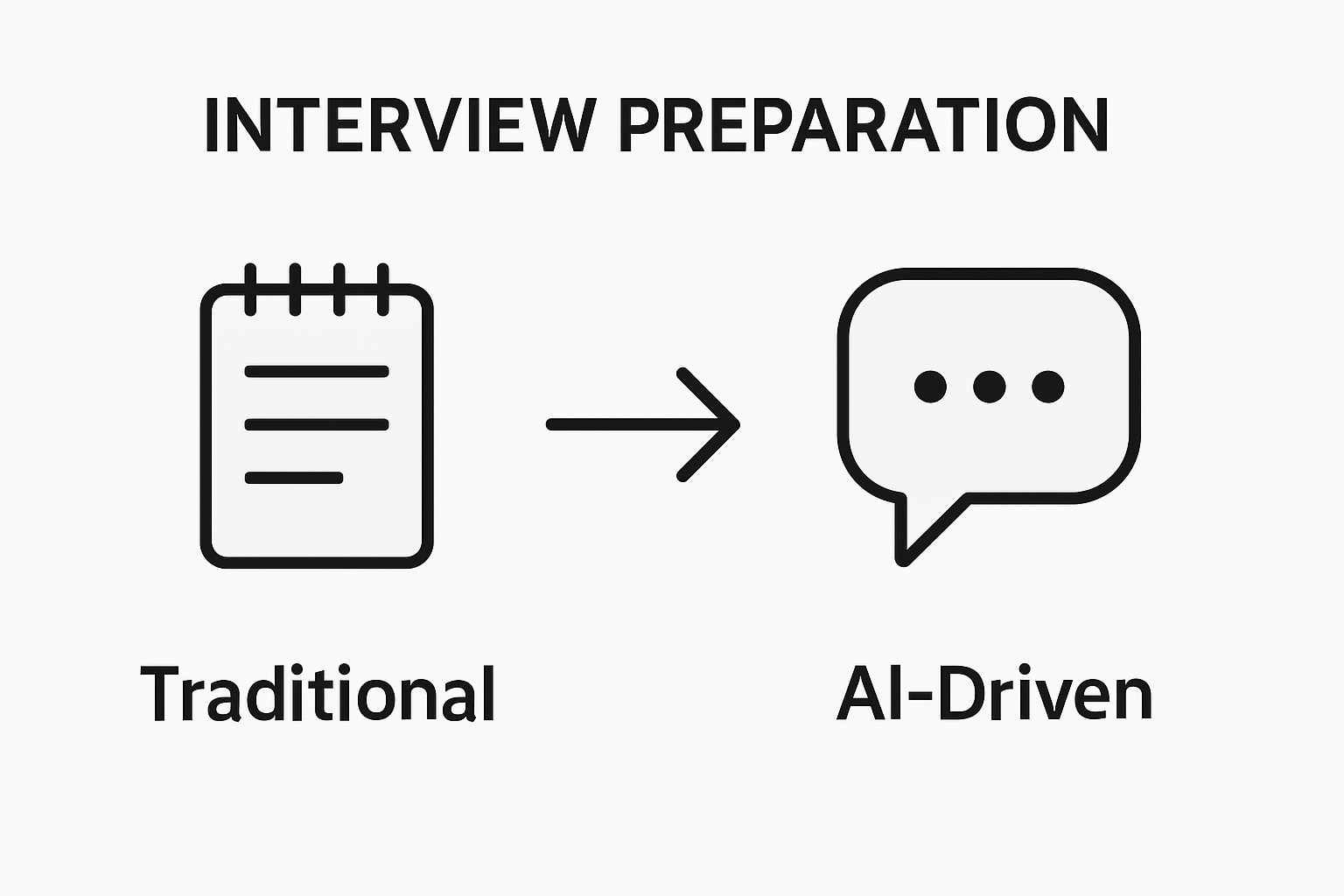
Adaptive Learning Capabilities represent the most significant advantage over conventional interview preparation techniques. Unlike static mock interviews or generic coaching, AI assistants dynamically adjust their approach based on individual communication patterns, professional background, and specific industry requirements. Detailed studies of AI assistant experiences reveal substantial improvements in preparation time and response quality compared to traditional mentoring approaches.
Key benefits of AI job interview assistants include:
- Personalized Feedback
- Instant, objective performance analysis
- Granular communication style assessment
- Tailored improvement recommendations
- Time Efficiency
- 24/7 availability
- Rapid response generation
- Minimal scheduling constraints
- Comprehensive Skill Development
- Multi-industry question banks
- Adaptive difficulty levels
- Cross-functional communication training
These AI-powered tools transcend traditional preparation methods by offering a data-driven, personalized approach to interview readiness. They provide candidates with a sophisticated, intelligent training environment that adapts in real-time, transforming interview preparation from a generic exercise into a precision-targeted skill optimization process.
Potential Risks and Ethical Concerns
While AI job interview assistants offer transformative capabilities, they simultaneously introduce complex ethical challenges that demand careful scrutiny. Research on AI hiring practices reveals significant concerns about potential algorithmic biases that could inadvertently perpetuate systemic discrimination in professional recruitment processes.
Algorithmic Bias represents the most critical ethical challenge in AI-driven interview technologies. These systems can unknowingly replicate historical prejudices embedded in training data, potentially disadvantaging candidates from marginalized communities. Comprehensive studies on AI applications highlight risks such as reduced human agency, diminished critical thinking, and the potential for algorithmic errors that might unfairly impact career opportunities.
Key ethical risks include:
- Potential Discrimination
- Unconscious bias in training datasets
- Demographic representation challenges
- Unintended screening mechanisms
- Privacy Concerns
- Personal data collection risks
- Potential unauthorized information usage
- Transparency in data handling
- Psychological Impact
- Over-reliance on automated feedback
- Potential reduction in human interaction skills
- Algorithmic performance anxiety
Transparency, continuous monitoring, and human oversight remain crucial in mitigating these potential risks. Responsible AI development demands a balanced approach that leverages technological capabilities while maintaining fundamental ethical standards and protecting individual candidate rights.
Choosing the Right AI Assistant Solution
Selecting an appropriate AI interview assistant requires a strategic approach that goes beyond surface-level features. Professional research on AI assistant experiences reveals that effective selection involves careful evaluation of technological capabilities, personalization potential, and alignment with individual career development goals.
Comprehensive Evaluation Criteria form the foundation of intelligent AI assistant selection. Studies on software professional AI usage underscore the importance of critically assessing AI suggestions, understanding technological limitations, and ensuring robust performance across diverse professional scenarios. Candidates must look beyond marketing promises and conduct thorough assessments.
Key selection considerations include:
- Technical Capabilities
- Natural language processing accuracy
- Industry-specific knowledge depth
- Adaptive learning mechanisms
- Personalization Features
- Customizable feedback frameworks
- Individual communication style analysis
- Tailored skill development pathways
- Ethical and Privacy Standards
- Transparent data handling practices
- Bias mitigation strategies
- Compliance with professional guidelines
Ultimately, the ideal AI interview assistant should function as an intelligent partner in professional development, providing nuanced, contextually aware support that amplifies individual strengths while systematically addressing potential communication and presentation gaps.
Elevate Your Interview Success with Real-Time AI Assistance
Preparing for interviews involves navigating complex challenges like delivering polished answers, managing communication style, and adapting to diverse question types. The article highlights key pain points including the need for personalized feedback, real-time speech analysis, and overcoming the limitations of traditional preparation methods. If you want to transform your interview readiness with adaptive, intelligent support that understands your unique style and provides instant strategic guidance, it is time to explore advanced AI solutions.
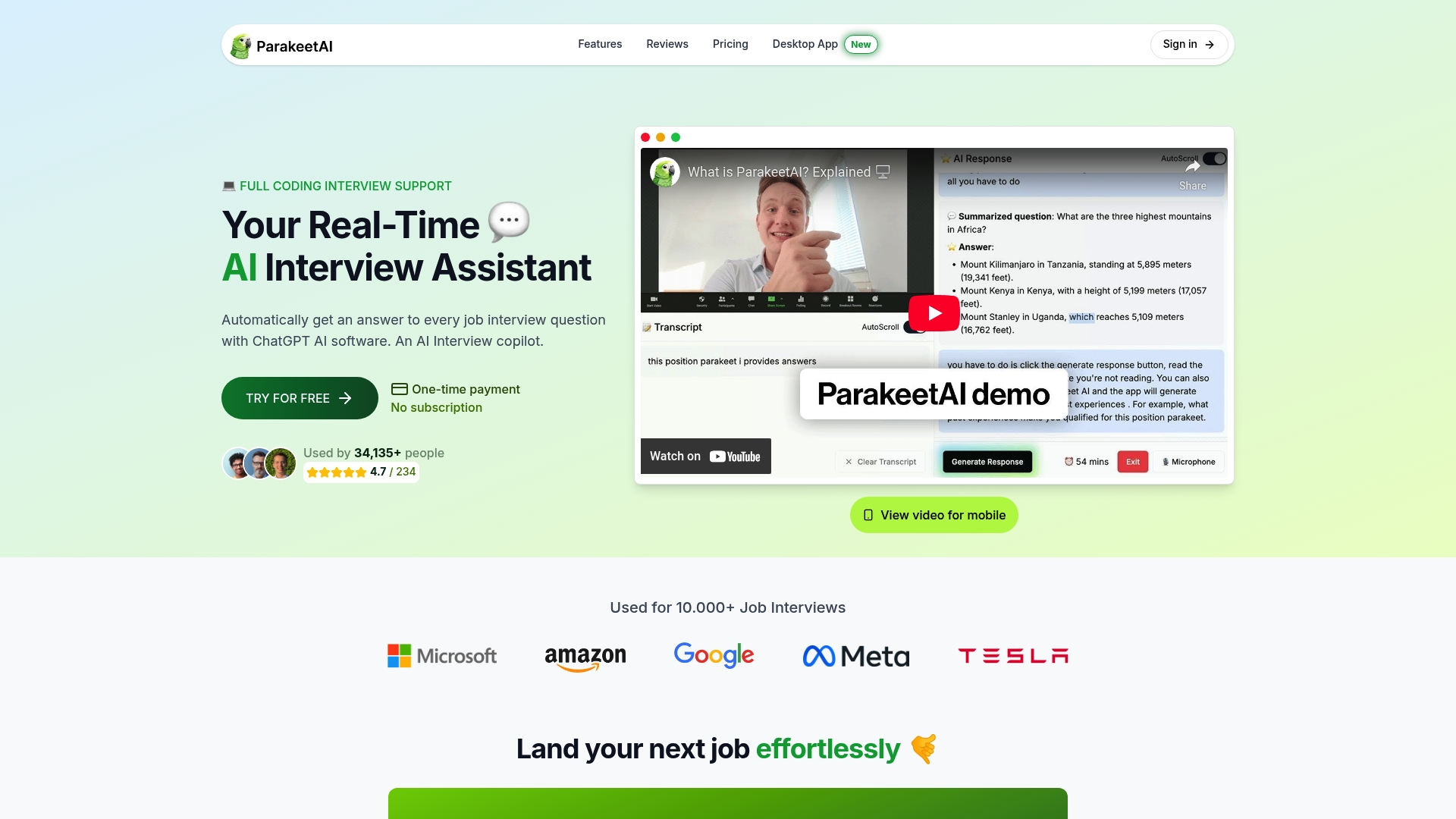
Discover how AI job interview assistants can revolutionize your preparation by automatically listening and responding to each question with expert-crafted answers tailored to your specific industry and communication needs. Don’t wait to harness this powerful tool that combines natural language processing with real-time interaction so you can build confidence, reduce anxiety, and perform at your best in every interview scenario. Begin your journey today by visiting Parakeet AI and experience a smarter way to sharpen your skills and secure your next opportunity.
Frequently Asked Questions
What are AI job assistants for interviews?
AI job assistants for interviews are intelligent platforms that provide personalized preparation tools, including real-time feedback on answers, adaptive question generation, and performance scoring aimed at enhancing candidates’ confidence and interview readiness.
How do AI job assistants improve interview preparation compared to traditional methods?
AI job assistants offer adaptive learning capabilities, providing instant, objective feedback tailored to individual communication styles. This dynamic approach allows for a more personalized and efficient preparation process.
What features should I look for in an AI job assistant?
When selecting an AI job assistant, consider its technical capabilities like natural language processing accuracy, personalization features such as customizable feedback, and ethical standards for data handling and bias mitigation.
Are there any risks associated with using AI job assistants for interviews?
Yes, using AI job assistants can introduce ethical concerns such as algorithmic bias, privacy issues, and potential over-reliance on automated feedback, emphasizing the need for human oversight and transparency.