
AI-Based Coaching in Interviews: Real-Time Success

Over 60 percent of American job seekers now use digital coaching tools for interview practice. When every answer can be the difference between landing your dream job or facing disappointment, mastering interview technique takes on new urgency. This guide explains how artificial intelligence brings personalized, real-time feedback to anyone preparing for interviews, helping you sharpen your responses and build lasting confidence.
Table of Contents
- Defining AI-Based Coaching in Interviews
- Main Types and Their Key Distinctions
- How Real-Time Interview Coaching Works
- Notable Benefits and Practical Limitations
- Legal, Ethical, and Privacy Implications
- Comparing AI Coaching to Human Coaching
Key Takeaways
| Point | Details |
|---|---|
| AI-Based Coaching Revolutionizes Interview Preparation | AI coaching offers real-time, personalized feedback based on communication patterns, transforming traditional interview preparation into a dynamic learning experience. |
| Diverse Coaching Types Foster Tailored Guidance | The four main types of AI coaching (AI-Informed, AI-Guided, AI-Supervised, Fully Autonomous) cater to varying depths of support and interaction levels, enhancing candidate experiences. |
| Technological Advantages vs. Emotional Nuances | While AI excels in data-driven feedback, it lacks the emotional intelligence that human coaches provide, necessitating a blended approach for optimal preparation. |
| Address Legal and Ethical Considerations | Candidates should ensure AI platforms prioritize data privacy, consent mechanisms, and algorithmic fairness to navigate the ethical landscape effectively. |
Defining AI-Based Coaching in Interviews
AI-based coaching in interviews represents a sophisticated technological approach that transforms traditional interview preparation through intelligent, adaptive guidance. This innovative method leverages artificial intelligence to provide real-time, personalized feedback and strategic support during interview scenarios. By analyzing communication patterns, language nuances, and performance metrics, AI coaching systems create a dynamic learning environment that helps candidates optimize their interview skills.
The core mechanism of AI-based interview coaching involves advanced algorithms that track multiple performance dimensions simultaneously. These systems can assess verbal communication, body language, tone modulation, and content relevance with unprecedented precision. Unlike traditional coaching methods, AI technologies can provide immediate, objective insights that help job seekers understand their strengths and address potential weaknesses in real-time. Contextual intelligence becomes the key differentiator, enabling candidates to receive nuanced guidance tailored to specific interview scenarios across different industries and roles.
At its fundamental level, AI-based coaching transforms interview preparation from a static, one-size-fits-all approach to a responsive, personalized learning experience. The technology integrates natural language processing, machine learning, and behavioral analysis to create comprehensive coaching strategies. Job seekers benefit from an intelligent system that can simulate diverse interview scenarios, provide targeted feedback, and help them develop confidence through repeated, refined practice.
Pro tip: Practice with AI coaching tools during off-peak hours when you can focus intensely and analyze feedback without external pressures.
Main Types and Their Key Distinctions
AI-based coaching in interviews encompasses multiple sophisticated approaches, each designed to address different aspects of candidate preparation and performance assessment. Comprehensive classification models reveal distinct categories that range from fully automated systems to hybrid human-AI collaborative platforms. These types are distinguished by their technological complexity, interaction depth, and the level of personalized guidance they provide.
The primary classifications of AI interview coaching can be structured into four fundamental types: AI-Informed Coaching, AI-Guided Coaching, AI-Supervised Coaching, and Fully Autonomous AI Coaching. AI-Informed coaching provides basic recommendations based on predefined algorithms, while AI-Guided coaching offers more interactive and adaptive feedback. AI-Supervised coaching introduces human oversight to validate and refine AI-generated insights, creating a more nuanced support system. Fully Autonomous AI Coaching represents the most advanced tier, where artificial intelligence independently generates comprehensive interview preparation strategies with minimal human intervention.
Each coaching type leverages different technological approaches to enhance interview performance. Rule-based systems rely on predefined decision trees and specific response protocols, whereas generative AI models use machine learning to create dynamic, context-aware interactions. These technological variations enable candidates to receive tailored support ranging from basic template responses to sophisticated, contextually intelligent communication strategies that adapt in real-time to individual communication styles and interview scenarios.
Here is a breakdown of the main types of AI interview coaching and their unique characteristics:
| Coaching Type | Guidance Style | Interaction Depth | Human Involvement |
|---|---|---|---|
| AI-Informed Coaching | Basic suggestions | Low, template responses | None |
| AI-Guided Coaching | Adaptive feedback | Moderate, personalized | Minimal |
| AI-Supervised Coaching | Refined by humans | High, nuanced | Active oversight |
| Fully Autonomous AI Coaching | Self-directed advice | Maximum, comprehensive | Minimal to none |
Pro tip: Experiment with multiple AI coaching types to identify which approach most effectively matches your personal learning style and interview preparation needs.
How Real-Time Interview Coaching Works
Real-time interview coaching represents a sophisticated technological approach that dynamically transforms interview preparation through instantaneous, intelligent feedback mechanisms. Full-stack AI interview coaching platforms leverage advanced algorithms to analyze candidate performance across multiple dimensions simultaneously, providing immediate insights that traditional coaching methods cannot match. These systems process verbal communication, body language, tone modulation, and content relevance with unprecedented precision and speed.
The core mechanics of real-time interview coaching involve a complex, multi-stage process that begins with advanced pattern recognition and contextual understanding. Intelligent processing systems capture candidate responses through voice, video, or text inputs, immediately comparing them against extensive databases of successful interview communication patterns. Natural language processing algorithms deconstruct each response, evaluating linguistic structures, emotional intelligence markers, and contextual appropriateness. This enables the AI to generate nuanced, personalized feedback that goes beyond simple template responses, providing granular insights into communication effectiveness.
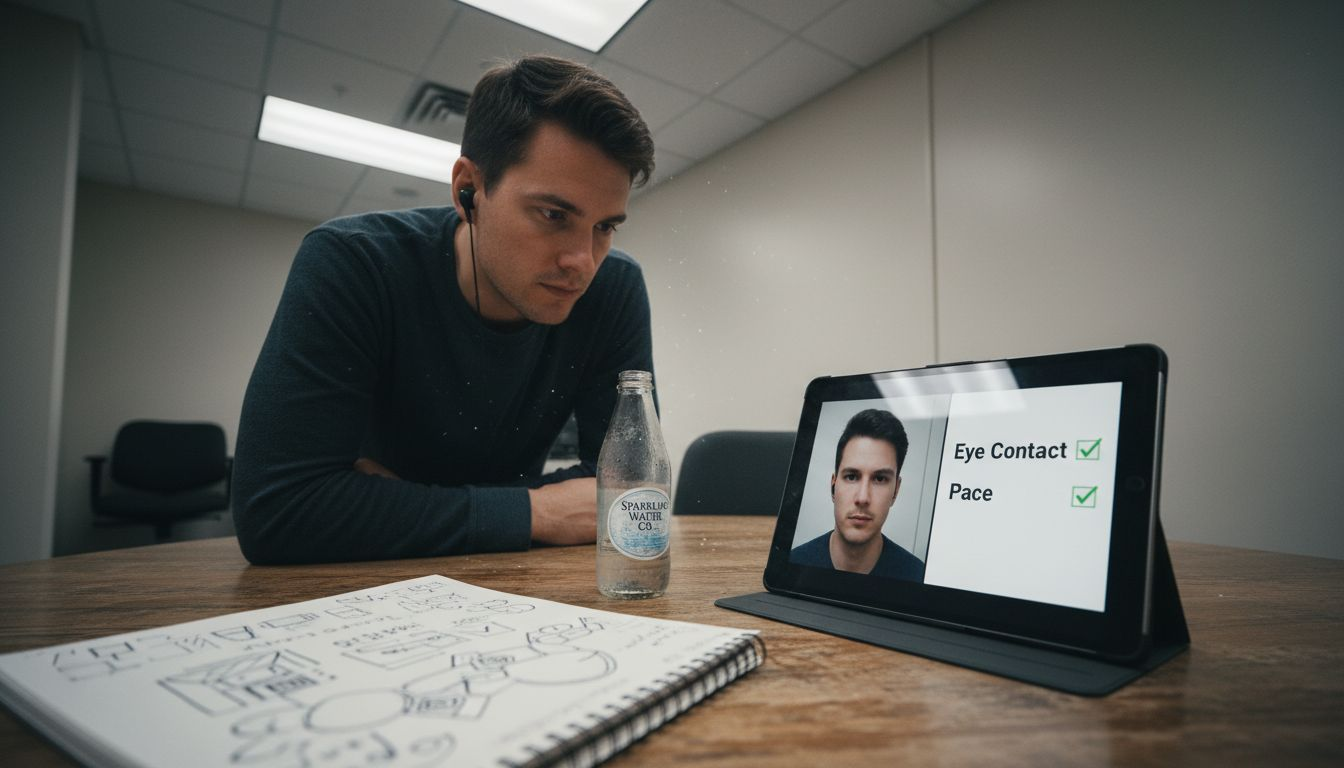
Technologically, these platforms integrate machine learning models that continuously refine their analysis capabilities. Each interaction becomes a learning opportunity, with the AI system progressively improving its understanding of effective communication strategies. The real-time nature of this coaching means candidates receive instant feedback, allowing them to adjust their communication style, tone, and content immediately. This creates a dynamic, adaptive learning environment where job seekers can iteratively improve their interview skills through targeted, immediate guidance, transforming interview preparation from a static exercise to an interactive, intelligent experience.
Pro tip: Practice multiple interview scenarios using real-time AI coaching to develop muscle memory for adaptive communication strategies.
Notable Benefits and Practical Limitations
AI-based interview coaching presents a remarkable technological advancement with significant potential for transforming professional preparation, offering unprecedented advantages while simultaneously revealing notable constraints. Systematic research on AI coaching insights reveals a nuanced landscape of capabilities and challenges that job seekers must carefully navigate. The primary benefits include rapid information processing, scalable learning experiences, and consistently objective performance analysis that transcends human coaching limitations.
The most compelling advantages of AI interview coaching center on its ability to provide immediate, data-driven feedback across multiple communication dimensions. Algorithmic precision enables candidates to receive granular insights into verbal communication patterns, body language subtleties, and response structures that traditional coaching methods might overlook. These systems can analyze thousands of interview scenarios instantaneously, generating personalized recommendations based on comprehensive datasets. However, critical limitations emerge in areas requiring deep emotional intelligence, cultural nuance, and interpersonal rapport – domains where human coaches still maintain a significant advantage.
Technological constraints become particularly evident in scenarios demanding complex emotional interpretation or highly contextual communication strategies. While AI systems excel at pattern recognition and structured feedback, they struggle with understanding subtle contextual cues, cultural variations, and the intricate emotional dynamics of human interaction. The most sophisticated AI coaching platforms acknowledge these limitations, often incorporating hybrid models that combine algorithmic analysis with occasional human oversight. This approach helps mitigate the risk of overly mechanical or generalized feedback, ensuring that candidates receive nuanced, contextually appropriate guidance that respects individual communication styles and professional contexts.
The following table compares key benefits and limitations of AI interview coaching:
| Aspect | Main Advantage | Notable Limitation |
|---|---|---|
| Feedback Speed | Instant, real-time analysis | Lacks emotional depth in critique |
| Performance Analysis | Objective, data-driven insights | May miss cultural or contextual nuances |
| Scalability | Accessible anytime, anywhere | Generic suggestions if not properly customized |
| Emotional Support | Consistent, bias-free interactions | Cannot provide genuine empathy or mentorship |
Pro tip: Combine AI coaching insights with human mentor feedback to create a comprehensive, balanced interview preparation strategy.
Legal, Ethical, and Privacy Implications
AI-based interview coaching technologies present a complex landscape of legal and ethical considerations that demand rigorous examination and proactive governance. International coaching standards and practical guidelines emphasize the critical importance of establishing comprehensive frameworks that protect individual privacy, ensure algorithmic transparency, and mitigate potential systemic biases. These guidelines recognize that technological innovation must be balanced with robust ethical safeguards that prioritize candidate autonomy and data protection.
The primary legal concerns surrounding AI interview coaching center on data privacy, informed consent, and algorithmic fairness. Regulatory compliance becomes paramount, with international standards like GDPR requiring explicit user consent, transparent data processing, and the right to understand how personal information is collected, analyzed, and stored. Sophisticated AI platforms must implement sophisticated anonymization techniques, secure data transmission protocols, and clear mechanisms that allow candidates to understand and control their data usage. This includes providing comprehensive explanations of how AI algorithms assess interview performance, what specific metrics are being evaluated, and how individual privacy is protected throughout the coaching process.
Ethical implications extend beyond technical compliance, addressing deeper questions of algorithmic bias, representation, and potential discrimination. AI interview coaching systems must be continuously audited to ensure they do not perpetuate historical prejudices or inadvertently disadvantage candidates from diverse backgrounds. This requires ongoing algorithmic transparency, diverse training datasets, and proactive bias detection mechanisms. Organizations implementing these technologies bear a significant responsibility to develop AI systems that promote fairness, provide equal opportunities, and respect individual dignity. The most advanced AI coaching platforms are now integrating sophisticated bias detection algorithms, external ethical review processes, and adaptive learning models that can recognize and correct potential discriminatory patterns.
Pro tip: Always request detailed information about data privacy, algorithmic fairness, and consent mechanisms before engaging with any AI interview coaching platform.
Comparing AI Coaching to Human Coaching
The landscape of interview coaching is undergoing a transformative shift with the emergence of AI technologies, creating a nuanced comparison between traditional human coaching and algorithmic approaches. Longitudinal research comparing coaching outcomes reveals a complex picture where AI and human coaches demonstrate distinct strengths and limitations. While AI coaching excels in structured, data-driven interactions, human coaches maintain a critical edge in emotional intelligence and contextual understanding.
Algorithmic precision characterizes AI coaching’s primary advantage, offering consistent, objective feedback across multiple performance dimensions. These systems can analyze communication patterns with remarkable speed and accuracy, providing instantaneous insights that would be challenging for human coaches to replicate. Unlike human coaches who might be influenced by personal biases or inconsistent evaluation methods, AI platforms can process vast amounts of interview data, identifying subtle communication patterns and offering statistically grounded recommendations. The technology’s ability to standardize feedback and provide quantifiable performance metrics represents a significant breakthrough in interview preparation strategies.
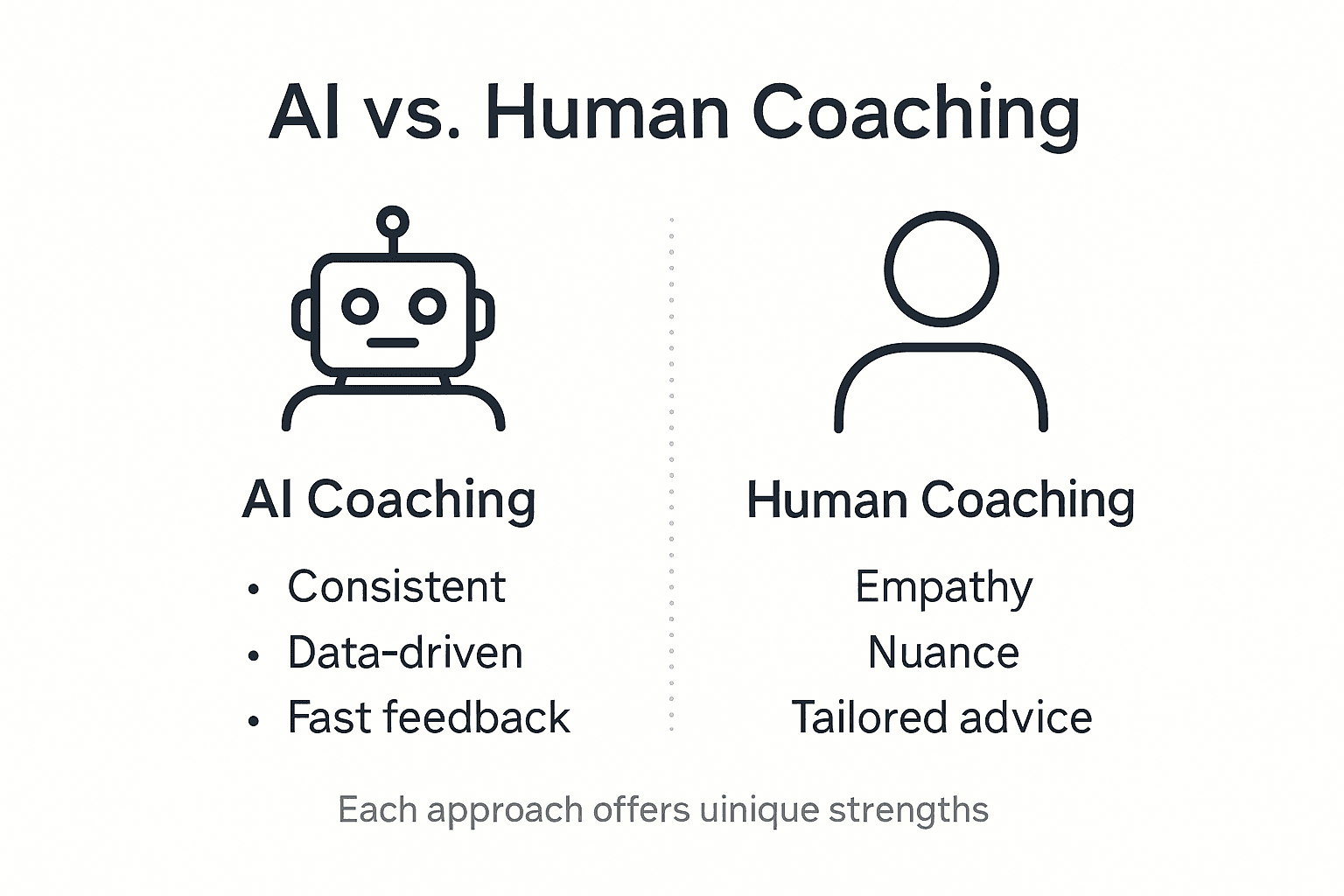
However, human coaches continue to dominate in areas requiring deep emotional nuance, empathetic connection, and complex interpersonal dynamics. While AI can simulate and analyze communication, it struggles to provide the intuitive, context-sensitive guidance that experienced human coaches naturally offer. The most sophisticated coaching approaches now recognize the value of hybrid models that combine AI’s analytical capabilities with human coaches’ emotional intelligence. These integrated approaches leverage technology for objective performance tracking while maintaining the irreplaceable human elements of mentorship, psychological support, and personalized strategic guidance that go beyond measurable metrics.
Pro tip: Seek coaching solutions that blend AI analytical insights with human emotional intelligence for the most comprehensive interview preparation experience.
Boost Your Interview Success with Real-Time AI Coaching
Preparing for interviews can be daunting when you face the challenge of delivering confident, adaptive answers under pressure. This article highlights how AI-based coaching uses real-time feedback and contextual intelligence to sharpen your communication skills and simulate diverse interview scenarios to build your confidence. If you want to overcome the pain points of delayed feedback, lack of personalized guidance, or missing emotional nuance, our real-time AI job interview assistant is designed just for you.
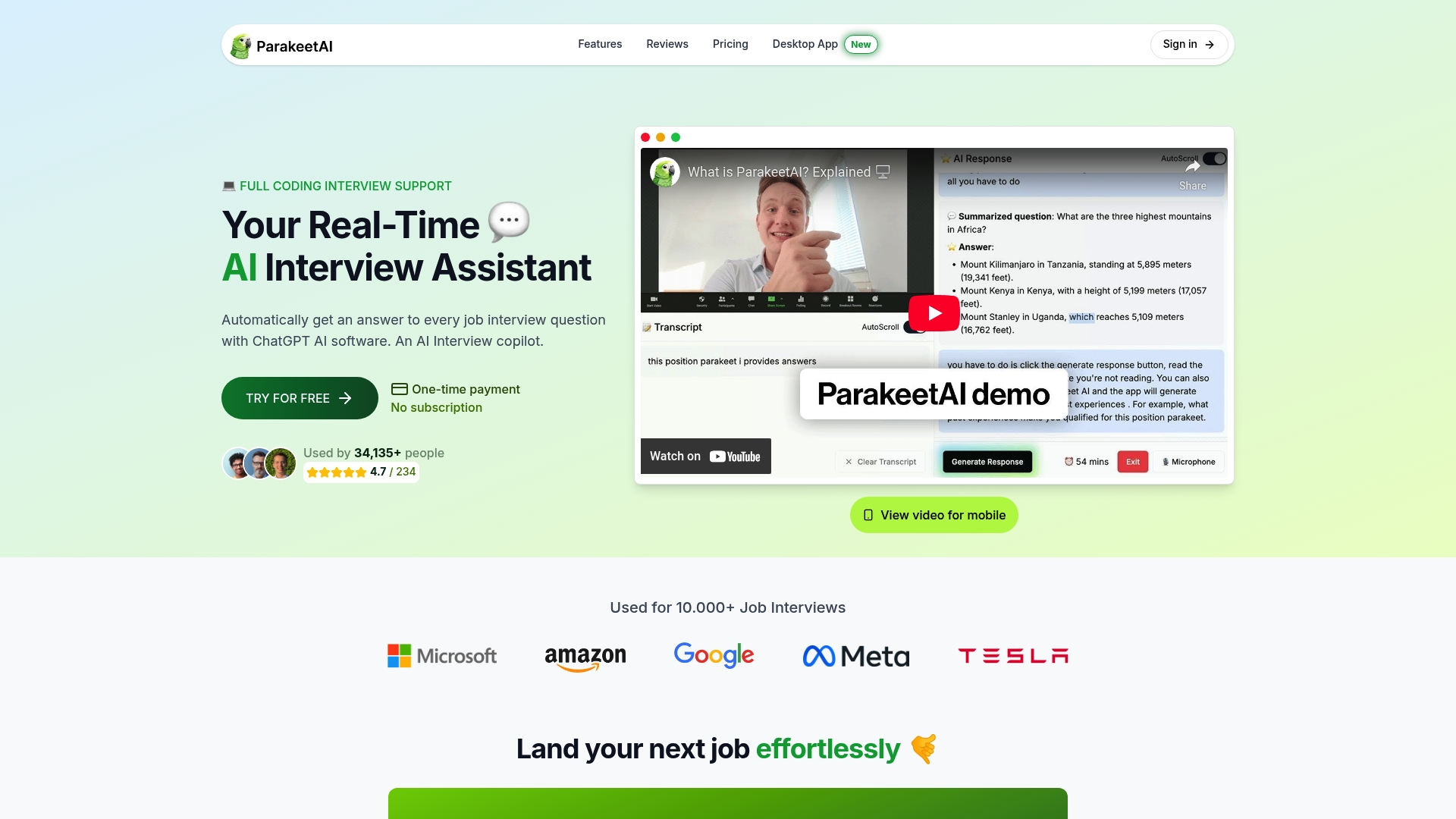
Experience instant, intelligent coaching that listens to your interview and provides automatic, tailored answers to every question. Unlike traditional coaching methods, our solution harnesses advanced AI to give you objective, data-driven insights anytime you practice. Don’t settle for static preparation routines. Visit Parakeet AI and see how AI-Based Coaching in Interviews can transform your readiness. Act now to gain the edge that comes from real-time, personalized support and take your interview skills to the next level.
Frequently Asked Questions
What is AI-based coaching in interviews?
AI-based coaching in interviews refers to a technology-driven approach that leverages artificial intelligence to provide personalized guidance and feedback to candidates during interview preparation, simulating real-life interview scenarios.
How does real-time interview coaching work?
Real-time interview coaching utilizes advanced algorithms to analyze a candidate’s performance across various communication aspects instantly. It captures responses and provides immediate feedback on verbal communication, body language, and overall content relevance.
What are the different types of AI interview coaching?
The main types of AI interview coaching include AI-Informed Coaching, AI-Guided Coaching, AI-Supervised Coaching, and Fully Autonomous AI Coaching, each differing in guidance style, interaction depth, and level of human involvement.
What are the benefits and limitations of AI-based interview coaching?
The benefits include instant, objective feedback and scalable learning experiences. However, limitations exist in areas requiring emotional intelligence and contextual nuances, where human coaches still hold an advantage.