
Real-Time Job Interview Insights: Elevate Your Performance

Most American job seekers now turn to technology to improve their interview skills, yet only a fraction use real-time feedback effectively. With competition fierce and expectations higher than ever, understanding what shapes a strong interview response can make all the difference. Discover how real-time interview insights, powered by artificial intelligence, offer immediate and personalized feedback that helps candidates outperform the average applicant.
Table of Contents
- Defining Real‑Time Interview Insights
- Variations of Real‑Time AI Feedback
- How Real‑Time Insights Work
- Legal and Bias Considerations
- Maximizing Real‑Time Feedback Benefits
Key Takeaways
| Point | Details |
|---|---|
| Real-time Feedback | Real-time AI interview insights provide immediate, contextual feedback to enhance candidates’ communication skills during live interactions. |
| Comprehensive Analysis | AI technologies analyze verbal and non-verbal cues, offering a multi-dimensional assessment that traditional methods lack. |
| Personalized Learning | The AI system creates tailored recommendations based on individual strengths and weaknesses, promoting continuous skill development. |
| Bias and Fairness | It is essential to consider algorithmic bias in AI assessment tools, ensuring that evaluation processes are fair and equitable. |
Defining real‑time interview insights
Real-time interview insights represent a groundbreaking approach to modern job interview preparation and performance evaluation. These insights leverage advanced artificial intelligence technologies to provide immediate, contextual feedback during live interview interactions. By analyzing verbal and non-verbal communication in actual interview moments, real-time AI interview technologies transform how candidates understand and improve their interview skills.
The core mechanism of real-time interview insights involves sophisticated algorithms that simultaneously process multiple communication dimensions. This includes speech patterns, tone of voice, word choice, response clarity, and body language indicators. Unlike traditional interview preparation methods that rely on retrospective advice, these AI-powered insights offer instantaneous assessment and recommendations. Candidates receive actionable guidance precisely when it matters most: during the actual interview conversation.
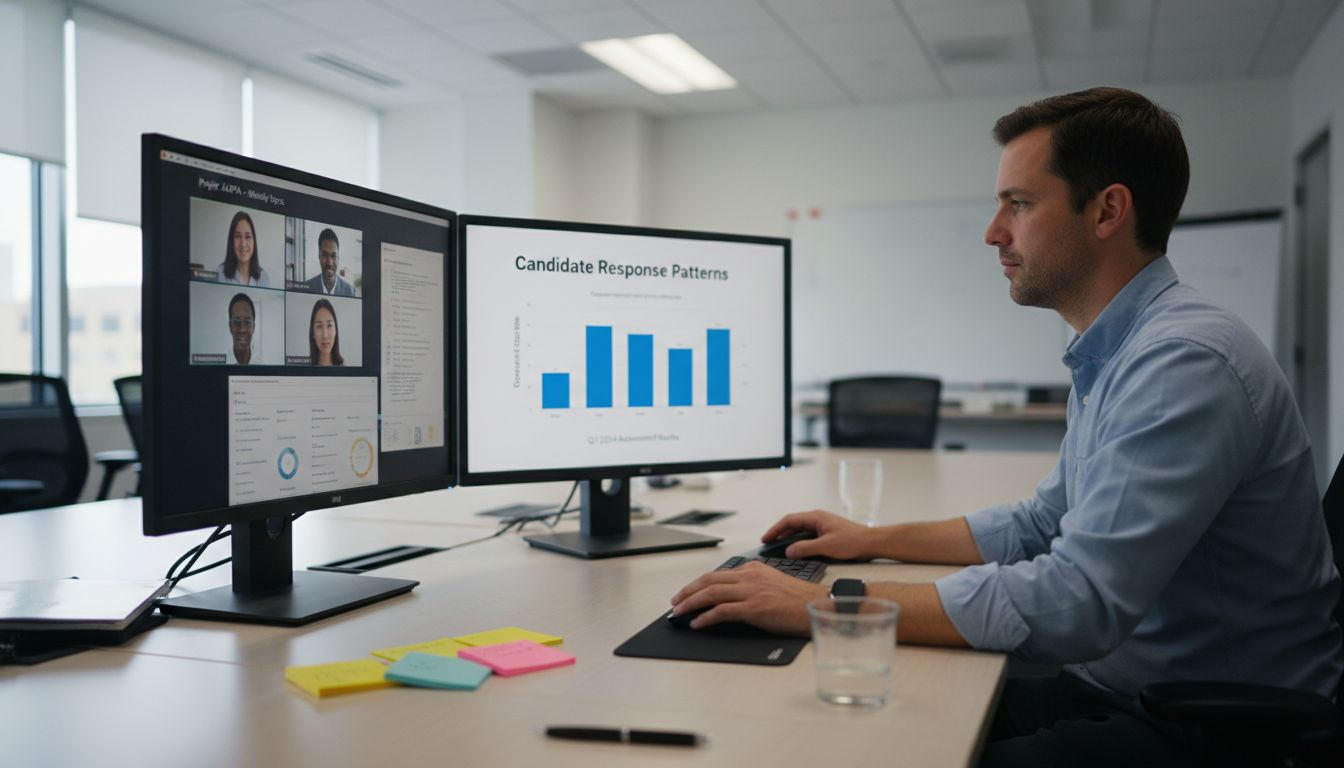
What sets real-time interview insights apart is their dynamic, adaptive nature. The AI continuously learns and refines its understanding of effective communication strategies across different industries and interview styles. By capturing nuanced communication signals that human observers might miss, these technologies provide a comprehensive performance analysis that goes beyond surface-level feedback. From identifying potential communication barriers to suggesting more confident phrasing, real-time insights act as an intelligent coaching companion.
Pro Tip: Practice Active Listening: Before your interview, record mock interviews and use real-time AI tools to understand your communication patterns and identify areas for immediate improvement.
Variations of real‑time AI feedback
Real-time AI feedback encompasses several sophisticated variations designed to address different aspects of interview performance. AI-driven mock interviews offer nuanced approaches that help candidates understand and improve their communication strategies across multiple dimensions. These variations range from linguistic analysis to non-verbal communication assessment, providing comprehensive performance insights.
The primary variations of real-time AI feedback include verbal communication analysis, emotional intelligence tracking, and contextual response evaluation. Verbal communication analysis focuses on speech patterns, word choice, clarity, and articulation. Emotional intelligence tracking monitors tone, confidence levels, and potential stress indicators through voice modulation and speech rhythm. Contextual response evaluation assesses the relevance and depth of answers relative to specific interview questions, ensuring candidates demonstrate both knowledge and adaptability.
Advanced real-time AI feedback systems go beyond simple performance metrics by offering personalized learning pathways. These intelligent systems create tailored recommendations based on individual communication styles, industry-specific interview expectations, and personal improvement areas. By analyzing historical performance data and comparing it with current interview interactions, the AI can provide targeted suggestions for enhancing communication effectiveness, reducing anxiety, and presenting a more confident professional persona.
Here’s a summary of how real-time AI feedback enhances different interview skills:
| Feedback Variation | Communication Aspect Improved | Practical Benefit |
|---|---|---|
| Verbal Analysis | Speech clarity and articulation | Enhanced response precision |
| Emotional Intelligence | Tone and stress detection | Improved confidence impression |
| Contextual Response | Answer relevance and depth | More adaptive, targeted responses |
| Personalized Pathways | Individual communication style | Tailored professional development |
Pro Tip: Experiment Strategically: Use multiple AI feedback tools to cross-reference insights and develop a more holistic understanding of your interview communication strengths and potential improvement areas.
How real‑time insights work
Real-time interview insights operate through a complex technological ecosystem that combines advanced machine learning algorithms, natural language processing, and sophisticated audio-visual analysis. The benefits of real-time AI interviews reveal a multifaceted approach to capturing and interpreting communication nuances during interview interactions. This technological framework begins by capturing multiple data streams simultaneously, including verbal communication, vocal characteristics, facial expressions, and body language signals.
The core mechanism involves intelligent signal processing that breaks down each communication element into granular components. For verbal communication, AI algorithms analyze speech rate, tone variation, word choice, and semantic coherence. These algorithms cross-reference the candidate’s responses against comprehensive databases of successful interview communication patterns, generating instant comparative assessments. The system evaluates not just what is said, but how it is articulated, identifying potential areas of improvement in real-time communication strategies.
Beyond linguistic analysis, these AI systems employ advanced machine learning techniques that continuously refine their understanding of effective communication. By processing thousands of interview interactions, the algorithms develop increasingly sophisticated models of successful professional communication. This adaptive learning allows the AI to provide context-specific feedback that goes beyond generic communication advice. The insights generated are dynamically tailored to individual communication styles, industry-specific interview expectations, and emerging communication trends, creating a personalized coaching experience that evolves with each interaction.
Pro Tip: Calibrate Continuously: Regularly review and compare AI-generated insights across multiple mock interviews to understand your evolving communication patterns and track incremental improvements.
Legal and bias considerations
Real-time AI interview technologies face significant challenges in navigating complex legal and ethical landscapes, particularly around potential algorithmic bias and fairness. Innovative contestable AI design frameworks demonstrate emerging approaches to address these critical concerns by implementing transparent mechanisms that can explain decision-making processes and actively detect potential discriminatory patterns.
The primary legal considerations center on ensuring equal opportunity protections and preventing unintentional discrimination through AI assessment mechanisms. Advanced multimodal analysis models propose sophisticated fusion techniques that go beyond simple demographic categorizations, focusing instead on developing nuanced assessment strategies that minimize systemic bias. These approaches involve creating complex algorithmic frameworks that can recognize and counteract potential prejudicial patterns in interview evaluation, ensuring a more objective candidate assessment process.
Comprehensive bias mitigation strategies require multifaceted approaches that incorporate diverse data sources, continuous algorithmic auditing, and transparent evaluation mechanisms. AI systems must be designed with built-in fairness checks that can identify potential discriminatory patterns across various dimensions, including gender, race, age, cultural background, and communication styles. This involves developing dynamic learning models that can recognize and correct potential bias through ongoing refinement, statistical validation, and regular external review processes.
Pro Tip: Audit Actively: Regularly request detailed bias assessment reports from AI interview tools and critically examine their methodology for identifying and mitigating potential discriminatory evaluation patterns.
Maximizing real‑time feedback benefits
Maximizing the benefits of real-time interview feedback requires a strategic and intentional approach that transforms raw insights into actionable personal development opportunities. The benefits of real-time AI interviews extend far beyond simple performance assessment, offering candidates a comprehensive pathway to professional communication mastery. By adopting a proactive mindset, job seekers can leverage these sophisticated technological tools to systematically enhance their interview skills and professional presentation.
The most effective strategy involves creating a structured feedback integration process that goes beyond passive observation. This means actively analyzing each AI-generated insight, identifying specific communication patterns, and developing targeted improvement plans. Candidates should focus on granular elements like vocal tone, response clarity, body language, and semantic coherence. By treating each mock interview as a deliberate learning experience, individuals can progressively refine their communication skills, building confidence and professional adaptability through consistent, data-driven self-improvement.
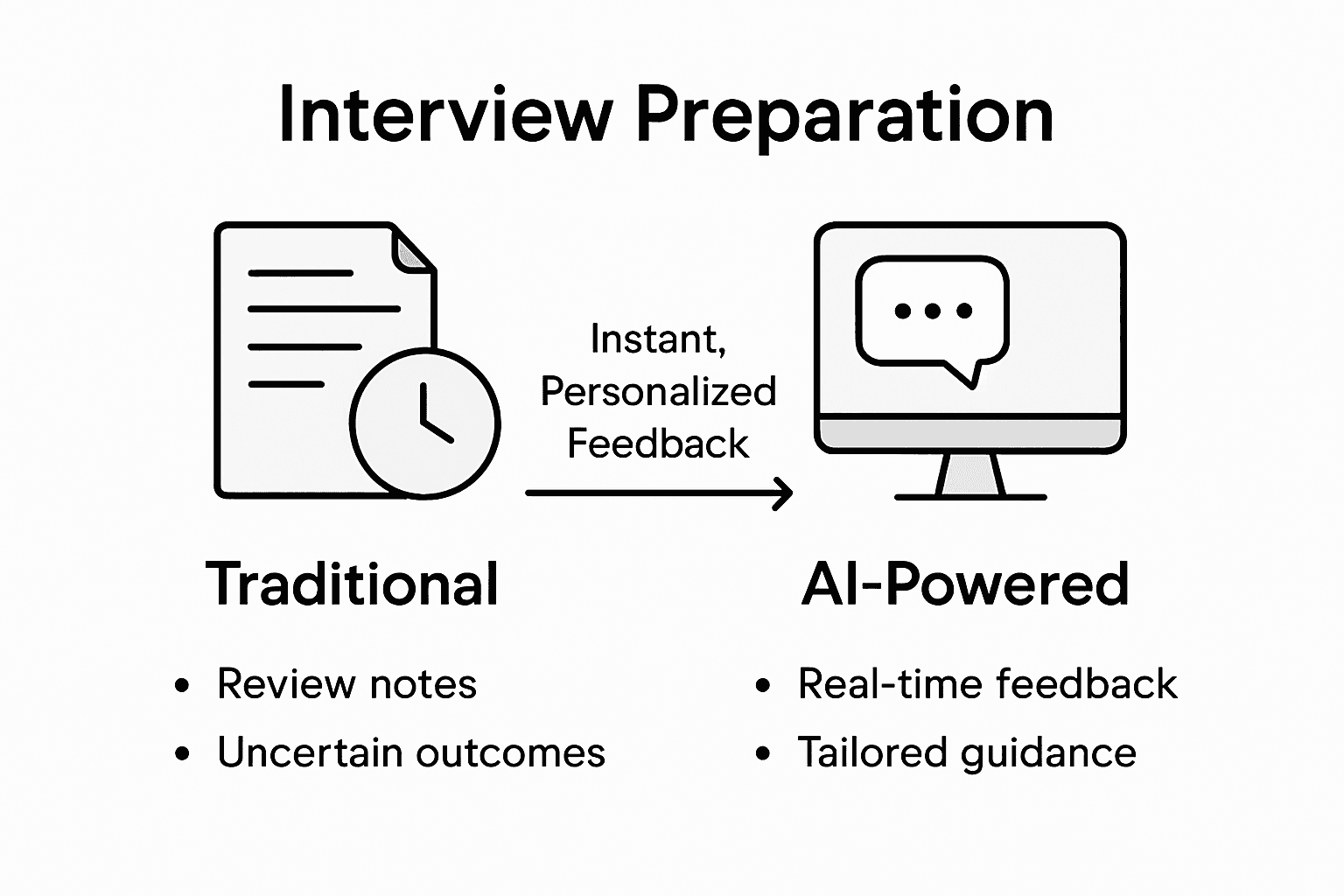
Advanced users of real-time feedback technologies understand that the true value lies in longitudinal skill development. This approach involves maintaining a comprehensive performance tracking system that documents communication patterns over time, allowing candidates to observe incremental improvements and identify persistent challenges. Post-interview analysis techniques can help transform individual feedback sessions into a holistic professional development strategy. The goal is not just to perform well in a single interview, but to develop a robust, adaptable communication framework that serves candidates across multiple professional contexts.
This table compares real-time AI interview insights to traditional interview preparation methods:
| Feature | Real-time AI Insights | Traditional Preparation |
|---|---|---|
| Timing of Feedback | Instant, during live interaction | Delayed, after interview |
| Assessment Detail | Multi-dimensional, adaptive | Generally surface-level |
| Personalization | Highly tailored to user | One-size-fits-all |
| Ongoing Skill Tracking | Dynamic, tracks progress over time | Infrequent, lacks progression |
Pro Tip: Track Systematically: Create a dedicated digital portfolio documenting your AI interview feedback, capturing trends, improvements, and communication evolution to demonstrate your commitment to continuous professional growth.
Transform Your Interview Skills with Real-Time AI Assistance
The article highlights the challenge of receiving instant, multi-dimensional feedback during actual interviews to overcome communication barriers and enhance response precision. Many candidates struggle with unclear verbal articulation, missed non-verbal cues, and anxiety that hinders their performance. Our real-time AI job interview assistant directly addresses these pain points by listening to your interview and offering immediate, contextual insights to refine your answers, tone, and confidence. Leveraging concepts like verbal communication analysis, emotional intelligence tracking, and adaptive personalized feedback, you can turn every interview into a powerful learning experience.
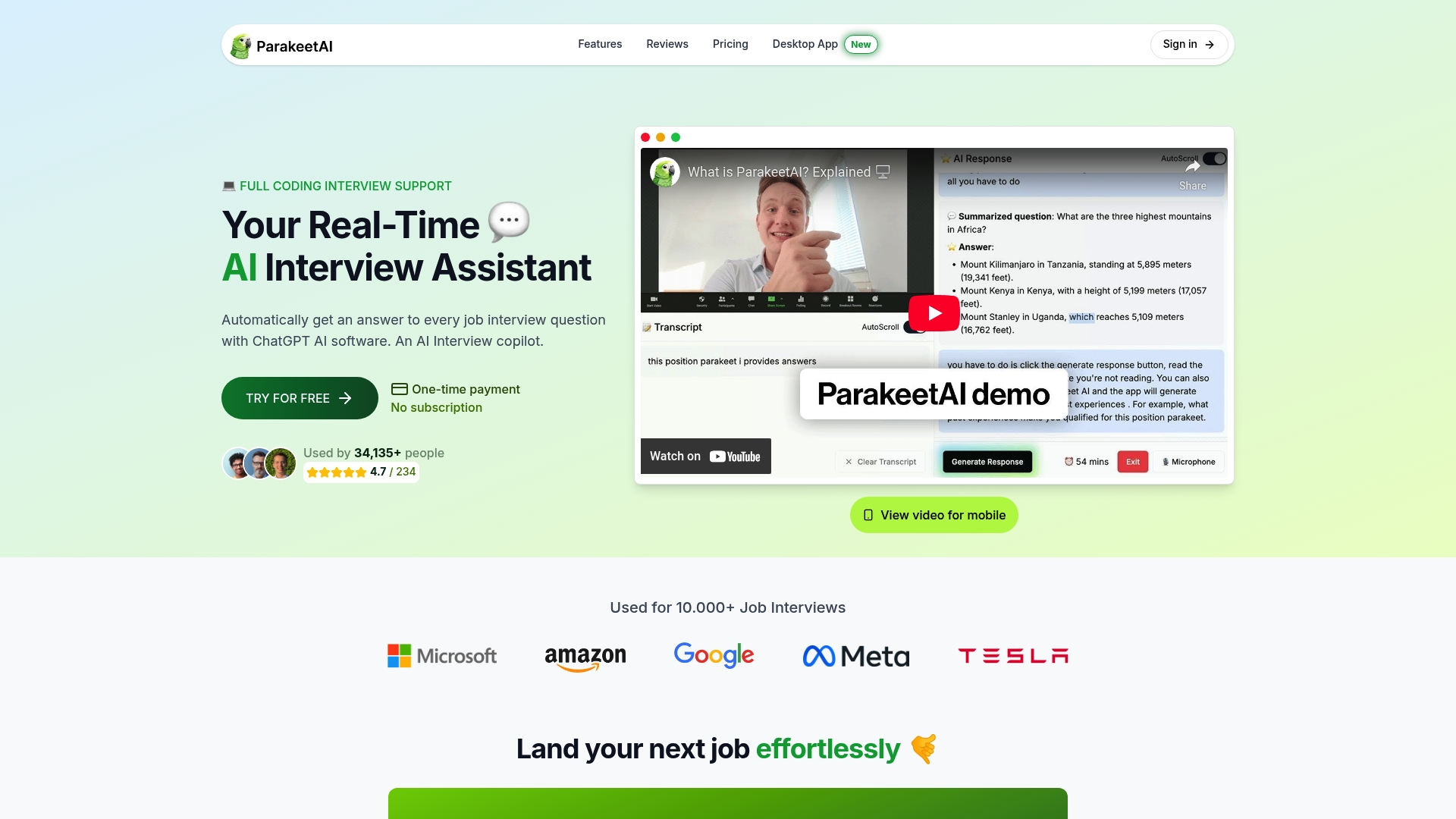
Are you ready to elevate your interview effectiveness and gain a competitive edge? Visit Parakeet AI’s main site to explore a live demo of our cutting-edge assistant. Discover how real-time AI interview insights can become your personal coach and practice with AI-driven mock interviews designed to tackle your unique improvement areas. Take action now to transform nervous moments into confident communications.
Frequently Asked Questions
What are real-time interview insights?
Real-time interview insights are AI-powered tools that provide immediate, contextual feedback during live job interviews, analyzing both verbal and non-verbal communication to help candidates improve their performance.
How do real-time AI feedback systems work?
These systems utilize advanced machine learning algorithms and natural language processing to capture and analyze various communication dimensions, such as speech patterns, tone, and body language, during the interview, offering instantaneous assessments and recommendations.
What benefits do real-time interview insights offer over traditional preparation methods?
Real-time insights provide immediate feedback, detailed multi-dimensional assessments, and personalized learning pathways, enabling candidates to track their progress over time, unlike traditional methods that typically offer delayed and surface-level feedback.
How can candidates maximize the benefits of real-time AI feedback?
Candidates should create a structured integration process for feedback, actively analyze AI insights and develop targeted improvement plans, while maintaining a performance tracking system to document their communication evolution over time.