
The Essential Guide to AI in Video Interviews
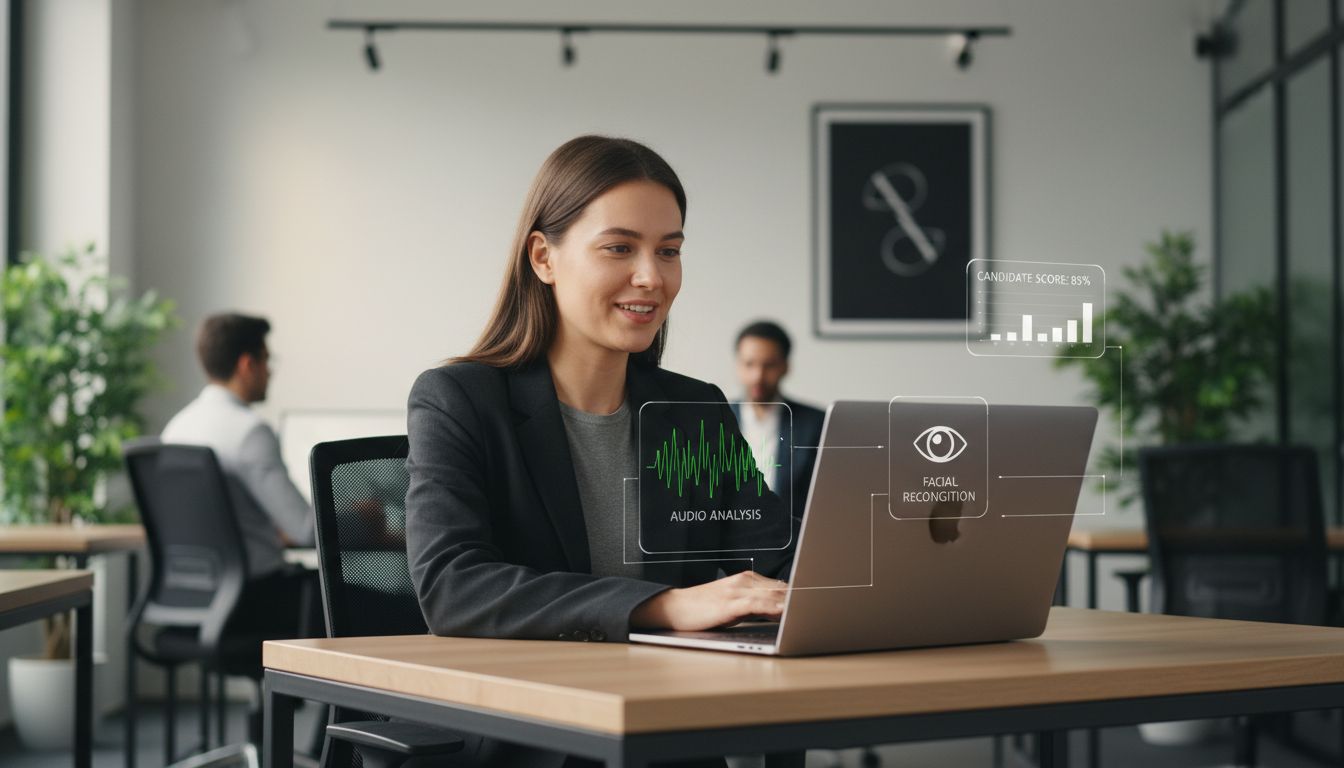
Most people still believe that AI video interviews are just about recording answers on screen. In reality, these systems use machine learning to evaluate everything from facial expressions to speaking style in ways no human recruiter can match. With over 60 percent of large companies now relying on AI-driven hiring tools, understanding how these technologies truly work is vital for any job seeker or hiring manager looking to stay ahead and avoid common pitfalls.
Table of Contents
- AI In Video Interviews Defined And Debunked
- Types Of AI Technologies Used In Interviews
- How AI Transforms The Interview Experience
- Privacy, Bias, And Legal Considerations
- Avoiding Common Pitfalls And Maximizing Success
Key Takeaways
| Point | Details |
|---|---|
| AI Enhances Recruitment | AI video interviews utilize advanced technologies to provide data-driven insights for better hiring decisions. |
| Diverse Analytical Approaches | Key AI technologies used in interviews include natural language processing, machine learning, and computer vision to evaluate candidates holistically. |
| Ethical Considerations | Implementation of AI in interviews must address legal and ethical issues such as data protection, consent, and bias prevention. |
| Effective Presentation | Candidates must prepare for AI interviews by ensuring clear communication, authentic responses, and awareness of non-verbal cues. |
AI in Video Interviews Defined and Debunked
AI video interviews represent a transformative technological approach in modern recruitment, leveraging artificial intelligence to analyze candidate interactions beyond traditional resume screening. According to research from Oxford University Press, these advanced systems go far deeper than simple video recording, employing sophisticated algorithms to evaluate candidate performance, communication skills, and potential cultural fit.
At its core, AI video interview technology uses machine learning models to decode complex human communication signals. HireNet research demonstrates how these systems can systematically break down video interviews into granular components, analyzing elements like:
- Verbal communication patterns
- Facial expressions
- Tone and speech cadence
- Emotional intelligence indicators
- Body language nuances
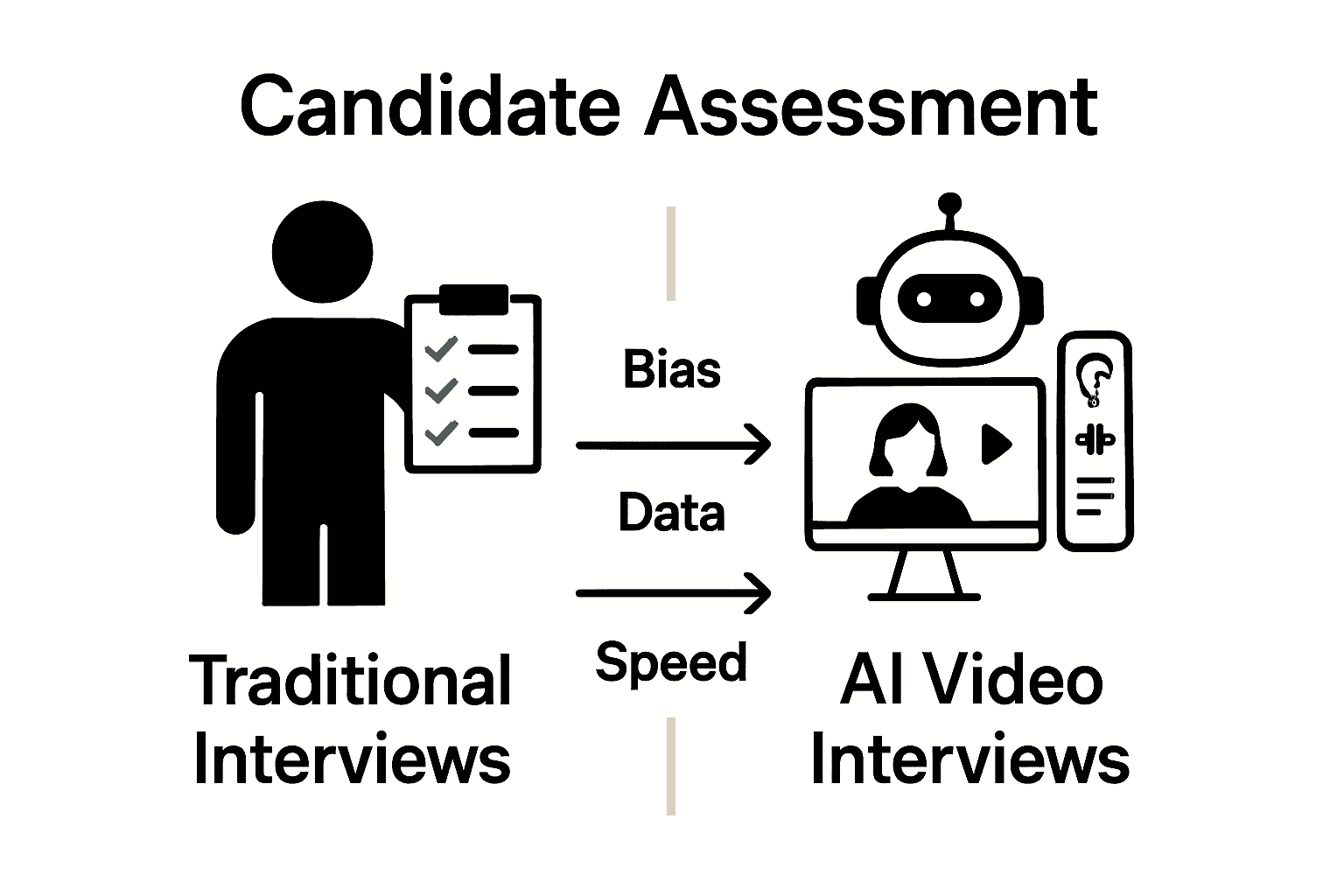
Contrary to popular misconceptions, AI video interviews are not designed to replace human judgment but to augment and streamline the recruitment process. These intelligent systems provide recruiters with data-driven insights, helping them make more informed hiring decisions. By reducing unconscious bias and providing objective performance metrics, AI video interviews represent a significant leap forward in talent acquisition technology.
While promising, these technologies are not infallible. Ethical implementation requires transparency about how AI evaluates candidates, ensuring the algorithms do not inadvertently perpetuate existing biases. For job seekers, understanding how to effectively present themselves in AI-evaluated interviews becomes crucial. Check out our video interview AI guide to learn strategies for success in this emerging landscape.
Types of AI Technologies Used in Interviews
Artificial intelligence has revolutionized the interview process by introducing sophisticated technologies that analyze candidate interactions with unprecedented depth. ArXiv research reveals that modern AI interview technologies leverage complex neural networks and machine learning models to assess candidate performance across multiple dimensions.
The primary AI technologies employed in interviews can be categorized into several key approaches:
Here’s a summary of the main AI technologies used in video interviews:
| Technology | What It Analyzes | Key Benefits |
|---|---|---|
| Natural Language Processing | Verbal responses Communication quality |
Content accuracy Coherence |
| Machine Learning Algorithms | Behavior patterns Performance prediction |
Data-driven insights Objective ratings |
| Computer Vision Technologies | Facial expressions Body language |
Non-verbal cues Cultural fit |
| Speech Recognition Systems | Tone Speech cadence Emotion |
Emotional nuance Clarity |
| Multimodal Analysis | Combined verbal & non-verbal signals | Comprehensive evaluation |
- Natural Language Processing (NLP): Analyzes verbal responses for content, coherence, and communication quality
- Machine Learning Algorithms: Evaluate candidate behaviors and predict potential job performance
- Computer Vision Technologies: Assess non-verbal communication through facial expression and body language analysis
- Speech Recognition Systems: Decode tone, emotional nuance, and communication effectiveness
- Multimodal Behavioral Analysis: Integrate multiple data streams for comprehensive candidate evaluation
Decision Support Research highlights how these AI technologies go beyond traditional assessment methods, utilizing unsupervised anomaly detection to identify unique candidate characteristics that might be overlooked by human recruiters. These intelligent systems can simultaneously process verbal and non-verbal communication signals, providing a holistic view of candidate potential.

Understanding the nuanced technologies behind AI interviews is crucial for both employers and job seekers. Want to dive deeper into how these technologies transform recruitment? Check out our article on why AI is critical for interviews to gain comprehensive insights into this cutting-edge approach.
How AI Transforms the Interview Experience
The landscape of job interviews is undergoing a radical transformation driven by artificial intelligence technologies. Wikipedia highlights how asynchronous interviews are revolutionizing traditional recruitment processes, enabling candidates to record responses at their convenience while providing employers with more flexible and efficient evaluation methods.
AI’s impact on interviews extends far beyond simple recording. Key transformative elements include:
- Flexible Scheduling: Candidates can complete interviews anytime, anywhere
- Standardized Evaluation: Consistent assessment criteria across all candidates
- Reduced Unconscious Bias: More objective candidate screening
- Enhanced Accessibility: Interviews become more inclusive for diverse candidates
- Comprehensive Performance Analysis: Detailed insights beyond traditional interview metrics
Additionally, cutting-edge research from ArXiv demonstrates the potential of human-like embodied AI interviewers, which can simulate nuanced conversational interactions. These advanced systems are not just technological novelties but represent a fundamental shift in how organizations approach talent acquisition and candidate assessment.
Navigating this new interview landscape requires understanding both its opportunities and limitations. Interested in learning more about how AI is reshaping recruitment? Explore our comprehensive guide on why AI is critical for interviews to gain deeper insights into this transformative technology.
Privacy, Bias, and Legal Considerations
The integration of artificial intelligence into interview processes introduces complex legal and ethical challenges that organizations must carefully navigate. AP News reports that the Massachusetts Attorney General has emphasized the critical requirement for AI systems to comply with existing consumer protection, anti-discrimination, and data privacy regulations.
Key legal and ethical considerations for AI-driven interviews include:
- Data Protection: Ensuring candidate information remains confidential
- Algorithmic Transparency: Making AI decision-making processes clear and explainable
- Consent Management: Obtaining explicit permission for AI-based assessments
- Bias Prevention: Actively identifying and mitigating potential discriminatory patterns
- Equal Opportunity Compliance: Maintaining fairness across diverse candidate pools
Reuters Legal Insights highlights how state attorneys general are proactively utilizing existing legal frameworks to regulate AI technologies in hiring processes. This emerging regulatory landscape underscores the importance of developing AI interview systems that are not just technologically advanced, but also legally and ethically robust.
Understanding these nuanced considerations is crucial for both employers and candidates. Curious about navigating the legal complexities of AI interviews? Explore our comprehensive guide on why AI is critical for interviews to gain deeper insights into responsible AI implementation.
Avoiding Common Pitfalls and Maximizing Success
AI-powered video interviews present unique challenges that require strategic preparation and nuanced understanding. ArXiv research highlights the critical importance of interpretability and transparency in navigating these technological assessments, emphasizing that success depends on understanding both technological capabilities and human interaction dynamics.
Key strategies for maximizing success in AI interviews include:
- Technical Preparation: Ensure stable internet connection and professional background
- Lighting and Camera Positioning: Optimize visual clarity and professional presentation
- Clear Communication: Speak directly, concisely, and with confidence
- Authentic Responses: Balance professionalism with genuine personality
- Non-Verbal Awareness: Maintain appropriate eye contact and positive body language
The most sophisticated AI interview systems are designed to assess not just your answers, but your overall communication style, emotional intelligence, and professional demeanor. This means going beyond memorized responses and demonstrating genuine engagement, adaptability, and self-awareness.
Mastering AI interviews requires continuous learning and adaptation. Want practical tips to enhance your performance? Explore our expert job interview tips for success and gain the confidence to excel in this new technological landscape.
Overcome AI Interview Challenges with Real-Time Support
Navigating AI video interviews can be overwhelming with all the new expectations around clear communication, emotional intelligence, and non-verbal cues. The pressure to perform perfectly while being evaluated by complex algorithms can leave even the most prepared candidates feeling uncertain. You deserve a smarter way to show your true potential during these futuristic hiring processes discussed in “The Essential Guide to AI in Video Interviews.”
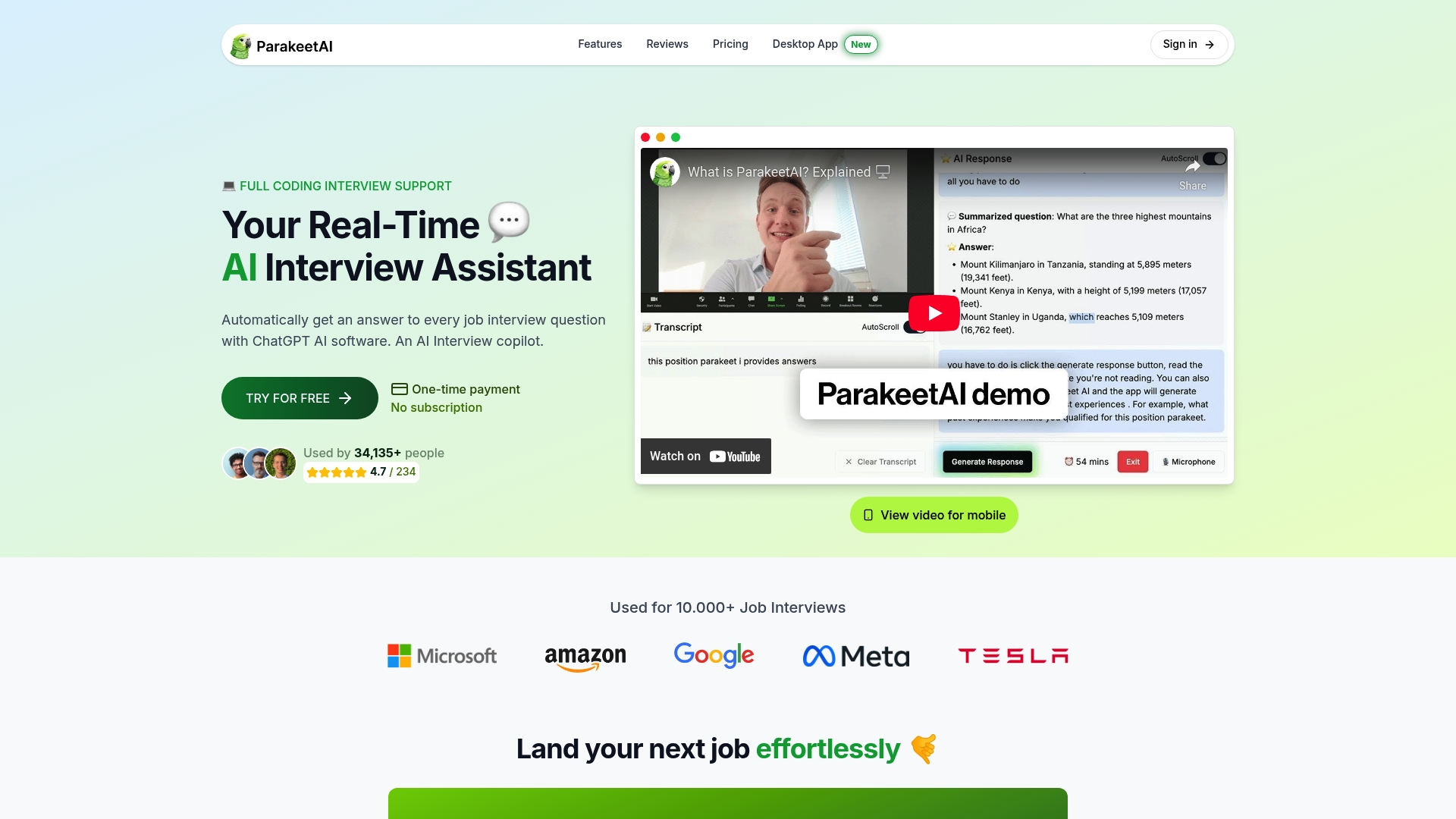
Take control of your AI interview experience now with a real-time AI assistant that listens and helps you respond effectively to every question. Our tool at Parakeet AI boosts your confidence by offering instant support designed specifically for this evolving interview format. Don’t miss your opportunity to prepare smarter and impress with authenticity and professionalism. Discover how AI can become your greatest ally in mastering interviews by visiting Parakeet AI and explore our expert job interview tips for success to transform anxiety into achievement today.
Frequently Asked Questions
What are AI video interviews?
AI video interviews utilize artificial intelligence technology to analyze candidates’ responses and interactions more deeply than traditional interviews by assessing communication skills, behavior patterns, and cultural fit.
How does AI analyze candidate performance in video interviews?
AI analyzes candidate performance using various technologies such as Natural Language Processing, Machine Learning algorithms, and Computer Vision to evaluate verbal and non-verbal cues like tone, facial expressions, and body language.
What are the benefits of AI in the recruitment process?
AI enhances the recruitment process by offering standardized evaluations, reducing unconscious bias, providing comprehensive performance analysis, and allowing for flexible scheduling of interviews for candidates.
How can candidates prepare for AI video interviews?
Candidates can prepare for AI video interviews by ensuring a stable internet connection, optimizing lighting and camera positioning, communicating clearly, maintaining positive body language, and providing authentic responses that showcase their personality.