
AI Interview Technology Explained: Smarter Job Conversations

Over eight out of ten American hiring managers report using some form of AI-powered interview technology, yet misconceptions continue to shape how these tools are perceived. The rapid spread of artificial intelligence in recruitment brings both promise and confusion for companies eager to attract top talent while minimizing bias. Understanding common myths and the real capabilities behind today’s AI interview platforms can help organizations make smarter, fairer hiring choices for the modern workforce.
Table of Contents
- Defining AI Interview Technology And Common Myths
- Types Of AI Interview Tools Used Globally
- How Real-Time AI Interview Assistants Work
- Key Features And Integration With Job Platforms
- Privacy, Data Security, And Legal Considerations
- Risks, Limitations, And Ethical Concerns
Key Takeaways
| Point | Details |
|---|---|
| AI Interview Technology Enhances Hiring | AI interview technology uses artificial intelligence to minimize biases and provide objective evaluations during recruitment processes. |
| Common Misconceptions | AI interview systems are often misunderstood as fully replacing human judgment, while they are designed to support and augment decision-making. |
| Integration with Job Platforms | These technologies facilitate seamless integration with job platforms to automate processes and improve candidate assessment efficiency. |
| Ethical and Legal Considerations | Organizations must navigate privacy, data security, and algorithmic fairness to ensure responsible usage of AI interview technologies. |
Defining AI Interview Technology and Common Myths
AI interview technology represents a groundbreaking approach to transforming traditional hiring processes through advanced computational techniques. At its core, this technology leverages artificial intelligence to analyze, evaluate, and provide insights during job interview interactions. Researchers investigating early-stage recruitment interviews have demonstrated how AI can systematically reduce inherent human biases, focusing more precisely on candidate skills rather than emotional sentiments.
The fundamental mechanics of AI interview technology involve complex algorithms that assess multiple dimensions simultaneously. These systems can analyze verbal communication, tone, body language, and content delivery with remarkable precision. By integrating machine learning models and natural language processing, AI interview tools can provide objective evaluations that go beyond traditional human assessments. Real-time human-AI collaboration systems have emerged to address cognitive challenges faced by interviewers, creating more structured and data-driven recruitment experiences.
However, several persistent myths surround AI interview technology that require clarification. Contrary to popular belief, these systems are not designed to replace human decision-making but to augment and support it. They do not make absolute hiring decisions but provide nuanced insights and standardized assessments. Key misconceptions include:
- AI interviews are completely impersonal
- These technologies can perfectly predict job performance
- Machine learning models are entirely free from bias
- AI can fully understand complex human communication
Understanding these technological capabilities and limitations is crucial for organizations seeking to integrate AI-powered interview tools effectively. While powerful, these systems remain sophisticated assistants that enhance human judgment rather than autonomous hiring mechanisms.
Types of AI Interview Tools Used Globally
AI interview tools have rapidly evolved, transforming recruitment strategies across industries worldwide. Comprehensive research on top AI interview technologies reveals a diverse ecosystem of sophisticated solutions designed to streamline hiring processes. These intelligent interview platforms range from comprehensive assessment systems to specialized screening tools, each addressing unique recruitment challenges.
The primary categories of AI interview tools include screening and assessment platforms, video interview analyzers, language and sentiment evaluation systems, and predictive performance models. Screening tools utilize advanced algorithms to parse resumes, match candidate profiles against job requirements, and generate initial candidate rankings. Video interview analyzers leverage computer vision and natural language processing to evaluate candidates’ verbal and non-verbal communication, assessing factors like tone, confidence, and emotional intelligence.
Moreover, specialized AI interview tools offer unique functionalities tailored to specific recruitment needs:
- Automated Screening Tools: Rapidly filter large candidate pools
- Video Interview Platforms: Provide comprehensive candidate assessments
- Non-verbal communication analysis
- Speech pattern evaluation
- Real-time linguistic sentiment tracking
- Skill Matching Algorithms: Precisely align candidate capabilities with job requirements
- Predictive Performance Models: Generate potential job success probability metrics
Understanding the nuanced landscape of AI-powered job interview tools enables organizations to select technologies that best complement their recruitment strategies. While these tools offer unprecedented insights, they remain supportive technologies designed to enhance human decision-making processes rather than replace them entirely.
How Real-Time AI Interview Assistants Work
Real-time AI interview assistants represent a sophisticated technological breakthrough in recruitment processes, leveraging complex algorithms to transform traditional interview interactions. Advanced human-AI collaboration systems have been designed to address cognitive challenges faced by interviewers, providing instantaneous support and analysis during interview encounters. These intelligent platforms operate through a multi-layered approach that combines natural language processing, machine learning, and real-time data interpretation.

The core functionality of AI interview assistants involves multiple intricate processes. First, they utilize advanced speech recognition technologies to capture and analyze verbal communication in real-time. Multimodal AI systems can simultaneously process linguistic content, tone, speech patterns, and non-verbal cues. Technical interview simulation technologies have demonstrated remarkable capabilities in creating realistic interview scenarios that can assess candidate performance across multiple dimensions, including technical knowledge, communication skills, and emotional intelligence.
Key operational mechanisms of real-time AI interview assistants include:
- Instant Speech Analysis
- Real-time language comprehension
- Sentiment and tone evaluation
- Contextual understanding
- Performance Tracking
- Candidate response quality assessment
- Skill and competency mapping
- Comparative performance metrics
- Cognitive Support
- Adaptive question generation
- Contextual feedback mechanisms
- Interview flow optimization
The integration of these AI technologies transforms interview processes from subjective human interactions to data-driven, objective assessment experiences. While these systems provide unprecedented insights, they remain collaborative tools designed to enhance human decision-making rather than replace human judgment entirely.
Key Features and Integration With Job Platforms
AI interview technologies are revolutionizing recruitment by offering sophisticated integration capabilities with existing job platforms. Advanced multimodal conversation systems demonstrate remarkable potential in combining speech-to-text, large language models, and text-to-speech components to create seamless interview experiences. These technologies enable job platforms to transform traditional hiring processes by providing intelligent, data-driven interaction mechanisms that extend far beyond standard application workflows.
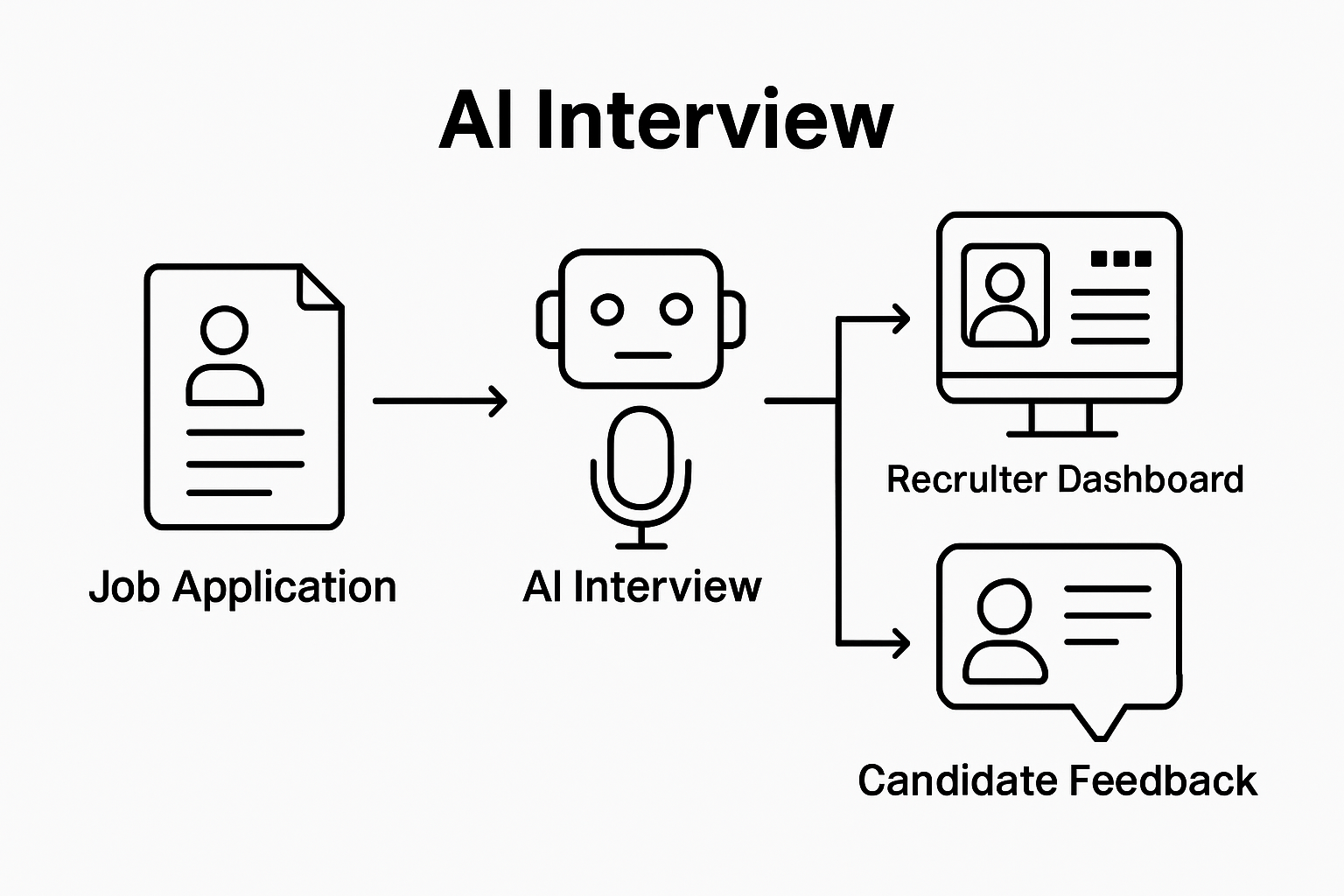
The integration of AI interview tools with job platforms typically involves complex technological infrastructure that allows for comprehensive candidate assessment. Top recruitment technology platforms have developed sophisticated APIs and integration protocols that enable smooth data exchange and synchronization. Key integration points include candidate profile matching, automated screening, real-time performance evaluation, and comprehensive skills assessment.
Critical features of AI interview platform integrations include:
- Candidate Profile Synchronization
- Automatic resume parsing
- Skills and experience matching
- Dynamic candidate scoring
- Interview Workflow Automation
- Scheduling optimization
- Intelligent candidate screening
- Customized interview path generation
- Performance Analytics
- Comprehensive candidate evaluation
- Comparative skills assessment
- Predictive hiring recommendations
The seamless integration of AI technologies with job platforms represents a significant leap forward in recruitment efficiency. These systems transform traditional hiring processes by providing nuanced, data-driven insights that help organizations make more informed hiring decisions while reducing administrative overhead and potential human bias.
Privacy, Data Security, and Legal Considerations
AI interview technologies introduce complex privacy and legal challenges that demand rigorous scrutiny and comprehensive protective mechanisms. Advanced recruitment interview systems demonstrate sophisticated approaches to reducing inherent biases by focusing on skill assessment while maintaining strict data protection protocols. The intersection of artificial intelligence and personal data collection requires meticulous attention to ethical guidelines, legal frameworks, and individual privacy rights.
The primary privacy concerns revolve around data collection, storage, processing, and potential algorithmic bias. Multimodal conversation systems must implement robust encryption, anonymization techniques, and transparent consent mechanisms to protect candidate information. Key legal considerations include compliance with data protection regulations, ensuring candidate rights, and maintaining clear boundaries between technological assessment and personal privacy.
Critical privacy and legal safeguards for AI interview technologies include:
- Data Protection Protocols
- Encrypted personal information storage
- Strict access control mechanisms
- Comprehensive data anonymization
- Consent and Transparency
- Clear user consent frameworks
- Explicit data usage explanations
- Optional participation options
- Algorithmic Fairness
- Bias detection and mitigation
- Regular algorithmic audits
- Diverse training data sets
The responsible implementation of AI interview technologies requires a delicate balance between technological innovation and fundamental human rights. Organizations must prioritize ethical considerations, maintain transparency, and continuously evolve their approach to protect candidate privacy and ensure fair, unbiased assessment processes.
Risks, Limitations, and Ethical Concerns
AI interview technologies introduce profound ethical challenges that extend far beyond traditional recruitment methodologies. Advanced interview research demonstrates the critical need to systematically reduce inherent human biases while maintaining rigorous ethical standards. The potential for algorithmic discrimination, unintentional psychological profiling, and inadvertent privacy violations represents significant risks that demand continuous scrutiny and proactive mitigation strategies.
Multimodal AI systems designed for technical interviews highlight the complex landscape of technological assessment, where nuanced human communication cannot be fully replicated by algorithmic processes. The primary limitations emerge from the inherent complexity of human interaction, including subtle emotional intelligence, contextual understanding, and non-verbal communication subtleties that current AI technologies struggle to comprehend completely.
Key ethical concerns and technological limitations include:
- Algorithmic Bias Risks
- Potential for systemic discrimination
- Unintended demographic filtering
- Reinforcement of existing societal prejudices
- Communication Limitations
- Inability to fully interpret emotional nuance
- Challenges in understanding complex cultural contexts
- Reduced empathy and interpersonal connection
- Psychological Impact
- Potential candidate anxiety
- Dehumanization of recruitment processes
- Reduced personal interaction quality
Navigating these ethical challenges requires a balanced approach that prioritizes technological innovation while maintaining fundamental human dignity. Organizations must implement rigorous oversight, continuous algorithmic auditing, and transparent assessment methodologies to ensure AI interview technologies remain tools of empowerment rather than instruments of inadvertent discrimination.
Experience Smarter Job Conversations with Real-Time AI Support
The article highlights the challenge of overcoming human biases and communication limitations during interviews while striving for objective and insightful candidate assessments. If you are seeking to enhance interview accuracy, reduce unconscious bias, and ensure every question finds a precise answer, then leveraging AI technology is the solution you need. Our real-time AI job interview assistant listens intently and provides instant, intelligent responses based on advanced natural language processing and machine learning. It bridges the gap between sophisticated AI interview technologies described in this article and practical hiring needs.
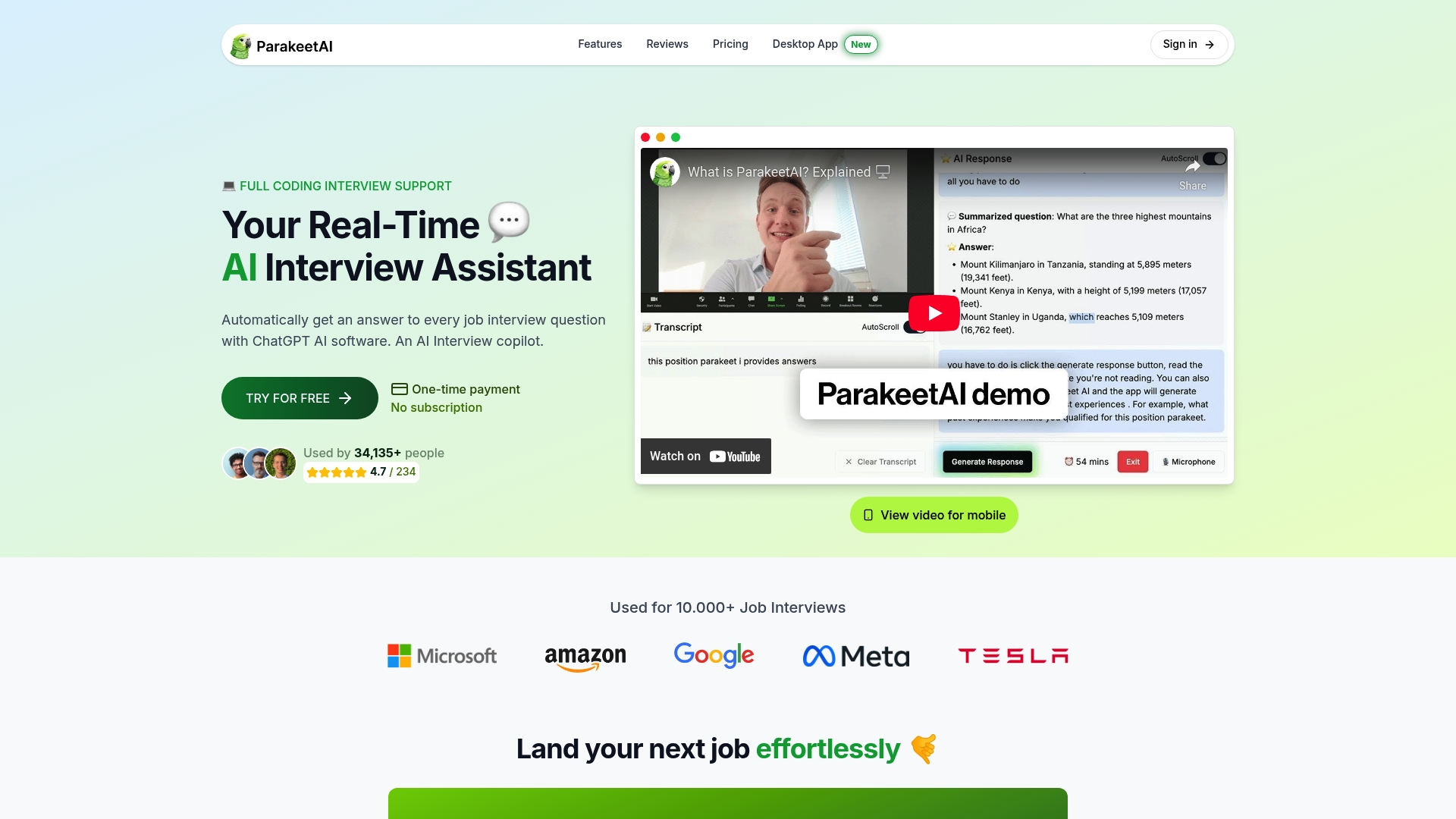
Discover how Parakeet AI elevates your hiring process by delivering unbiased, data-driven insights and seamless integration with your current workflows. Don’t let candidate evaluation become overwhelming or incomplete. Act now to transform every conversation into a smarter hiring decision with our cutting-edge real-time AI interview assistant. Visit us today and experience the future of interviewing firsthand.
Frequently Asked Questions
What is AI interview technology?
AI interview technology leverages artificial intelligence to analyze and evaluate job interviews, focusing on candidate skills to reduce human biases and provide objective assessments.
How do AI interview tools assess candidates during interviews?
AI interview tools use complex algorithms to analyze verbal and non-verbal communication, tone, body language, and content delivery, allowing for a comprehensive assessment of candidates’ performance.
What are the key advantages of using AI interview technology in recruitment?
The primary advantages include reduced bias in candidate evaluation, enhanced efficiency in screening large candidate pools, and the ability to provide data-driven insights that support human decision-making in hiring.
What are the limitations of AI interview technology?
Limitations include the potential for algorithmic bias, the inability to fully understand complex human communication, and reduced empathy in the recruitment process, which may lead to a more impersonal experience for candidates.