
AI Job Interview Ethics: Balancing Innovation with Integrity

Most American companies now use artificial intelligence in their hiring processes, but only a small percentage have formal ethical guidelines in place. As AI systems begin to shape interview outcomes, questions about fairness, privacy, and bias become impossible to ignore. Understanding the ethical challenges behind these technologies helps protect candidate rights while promoting truly unbiased opportunities in the American job market.
Table of Contents
- Defining AI Interview Ethics
- Recognizing Bias And Fairness Risks
- Ensuring Privacy And Data Protection
- Transparency And Explainability Needs
- Authenticity And Integrity Expectations
- Legal Responsibilities And Employer Policies
Key Takeaways
| Point | Details |
|---|---|
| Ethical Standards are Paramount | Organizations must establish ethical guidelines to address algorithmic biases and ensure fairness, transparency, and accountability in AI-driven interviews. |
| Bias Mitigation is Essential | Continuous monitoring, diverse training datasets, and human oversight are crucial in recognizing and addressing algorithmic biases in candidate evaluations. |
| Data Privacy Must be Prioritized | Robust data protection strategies, including consent management and secure storage, are vital to maintaining candidates’ trust and safeguarding personal information. |
| Transparency Builds Trust | Implementing explainable AI frameworks helps candidates understand decision-making processes, fostering a collaborative and informed hiring environment. |
Defining AI Interview Ethics
Artificial Intelligence (AI) in job interviews represents a complex technological frontier where innovation intersects with fundamental human rights and professional integrity. As organizations increasingly adopt AI-driven interview technologies, establishing clear ethical guidelines becomes paramount to ensure fair, transparent, and unbiased candidate evaluation processes.
Ethical AI interview practices fundamentally require addressing potential algorithmic biases that could inadvertently discriminate against candidates. Comprehensive research from the AAAI/ACM Conference on AI, Ethics, and Society highlights the critical need for systematic frameworks that prevent discriminatory outcomes. This means developing AI systems that can objectively assess candidate skills without introducing unconscious prejudices related to gender, race, age, or socioeconomic background.
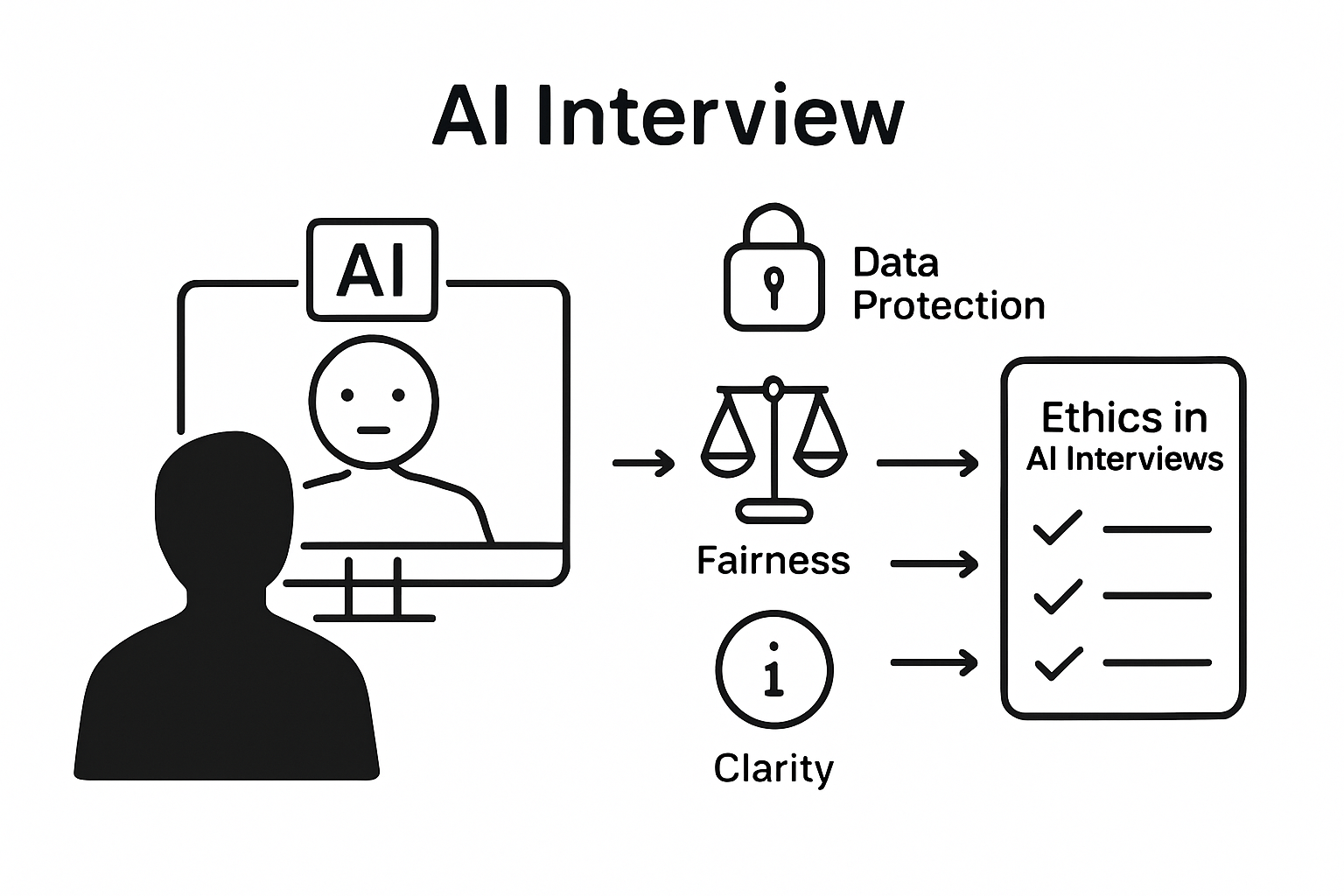
The core principles of AI interview ethics center on several key dimensions:
- Transparency: Candidates must understand how AI evaluates their performance
- Fairness: Algorithmic decision-making must remain neutral and unbiased
- Privacy: Personal candidate data requires robust protection mechanisms
- Accountability: Clear mechanisms for challenging AI-generated assessments must exist
Implementing these ethical standards requires a multifaceted approach that goes beyond simple technological solutions. AI for Interview Fairness research demonstrates that human oversight, continuous algorithmic auditing, and diverse training datasets are essential for maintaining integrity in AI-driven recruitment processes. By proactively addressing potential ethical challenges, organizations can leverage AI technologies while preserving candidate dignity and ensuring equitable opportunity evaluation.
Recognizing Bias And Fairness Risks
Algorithmic bias represents one of the most significant challenges in artificial intelligence, particularly within job interview technologies. These hidden prejudices can profoundly impact candidate evaluations, creating systemic barriers that undermine the fundamental principles of fair employment practices.

Comprehensive research analyzing AI practitioners’ understanding of fairness reveals the complex landscape of bias mitigation. The study highlights how unconscious algorithmic prejudices can emerge through training data, machine learning models, and decision-making frameworks. These biases frequently manifest in subtle ways, potentially discriminating against candidates based on demographic characteristics such as gender, race, age, or socioeconomic background.
Key dimensions of bias recognition in AI interview technologies include:
- Data Representation: Ensuring diverse and balanced training datasets
- Algorithm Transparency: Making decision-making processes comprehensible
- Continuous Monitoring: Regularly auditing algorithmic performance for potential discriminatory patterns
- Contextual Understanding: Recognizing cultural and individual nuances that pure statistical modeling might overlook
Extensive research examining the fragmented landscape of AI bias underscores the critical need for interdisciplinary approaches. Technical solutions alone cannot address the profound sociotechnical challenges inherent in AI-driven interview processes. Organizations must develop holistic strategies that combine technical expertise with robust ethical frameworks, ensuring that AI technologies enhance rather than compromise the fundamental principles of fair and equitable candidate evaluation.
Ensuring Privacy And Data Protection
Data privacy emerges as a critical cornerstone in AI-driven interview technologies, where personal information becomes both a valuable resource and a potential vulnerability. Candidates entrust organizations with sensitive personal details, expecting comprehensive protection and responsible handling of their most intimate professional information.
Systematic research on responsible AI practices reveals the intricate challenges surrounding data protection in artificial intelligence systems. The complexity of maintaining individual privacy while leveraging technological capabilities requires sophisticated multilayered strategies that go beyond traditional data protection frameworks.
Critical components of robust privacy protection in AI interview technologies include:
- Consent Management: Transparent processes for obtaining explicit candidate permissions
- Data Minimization: Collecting only essential information directly relevant to job evaluation
- Secure Storage: Implementing advanced encryption and access control mechanisms
- Anonymization Techniques: Removing personally identifiable information during algorithmic processing
- Compliance Frameworks: Adhering to regional and international data protection regulations
Effective privacy protection demands a proactive, holistic approach that balances technological innovation with fundamental human rights. Organizations must develop comprehensive protocols that not only protect candidate data but also build trust by demonstrating a genuine commitment to individual privacy and autonomy. This means creating clear, understandable data handling policies, providing candidates with meaningful control over their personal information, and maintaining rigorous standards of confidentiality throughout the entire interview process.
Transparency And Explainability Needs
Algorithmic transparency represents a fundamental ethical imperative in AI-driven interview technologies, where candidates have the right to understand how decisions impacting their professional opportunities are formulated. The opaque nature of complex machine learning models can create significant barriers to trust and meaningful engagement in the hiring process.
Groundbreaking research proposing tools for ensuring fair AI practices highlights the critical importance of developing explainable decision-making frameworks. These approaches go beyond traditional black-box algorithms, offering candidates clear insights into how their qualifications are evaluated, assessed, and interpreted by artificial intelligence systems.
Key dimensions of transparency in AI interview technologies include:
- Decision Traceability: Providing clear pathways showing how specific conclusions were reached
- Algorithmic Interpretability: Making complex machine learning processes comprehensible to non-technical stakeholders
- Contextual Explanation: Offering nuanced rationales behind algorithmic assessments
- Bias Disclosure: Proactively identifying and communicating potential algorithmic prejudices
- Performance Metrics: Sharing objective criteria used in candidate evaluation
Epistemological research focused on mitigating discrimination underscores the profound ethical responsibility of creating transparent AI systems. Organizations must move beyond mere technical compliance, developing interview technologies that not only make fair decisions but can articulate the reasoning behind those decisions. This approach transforms AI from an inscrutable black box into a collaborative, trustworthy partner in the hiring process, empowering candidates with genuine understanding and meaningful insights into their professional assessments.
Authenticity And Integrity Expectations
Authentic interactions represent the fundamental cornerstone of ethical AI-driven interview technologies, where technological innovation must seamlessly align with human values and professional dignity. The core challenge lies in creating systems that not only evaluate candidates objectively but also respect their inherent human complexity and individual potential.
Principles of academic integrity provide a critical framework for understanding authenticity in technological assessment processes. These principles emphasize the importance of honesty, transparency, and rigorous evaluation that goes beyond superficial metrics and captures the nuanced qualities of human potential.
Key elements of maintaining authenticity in AI interview technologies include:
- Human-Centered Design: Prioritizing candidate experience and emotional intelligence
- Contextual Understanding: Recognizing individual backgrounds and unique professional journeys
- Genuine Interaction: Creating assessment processes that feel respectful and meaningful
- Holistic Evaluation: Looking beyond quantitative metrics to understand candidate potential
- Ethical Decision-Making: Preventing moral outsourcing of critical human judgments to algorithmic systems
Ultimately, maintaining integrity in AI-driven interviews requires a profound commitment to viewing technology as a collaborative tool that enhances human potential rather than a replacement for genuine human interaction. Organizations must design systems that preserve candidate dignity, offer meaningful insights, and create opportunities for authentic professional representation beyond the limitations of traditional algorithmic assessments.
Legal Responsibilities And Employer Policies
Legal compliance in AI-driven interview technologies represents a complex landscape where technological innovation must carefully navigate intricate regulatory requirements and ethical standards. Organizations face increasingly sophisticated challenges in developing interview systems that not only meet technological objectives but also adhere to rigorous legal frameworks protecting candidate rights.
Comprehensive research examining technical and sociotechnical perspectives reveals the critical importance of multidisciplinary approaches in addressing potential legal vulnerabilities. The fundamental challenge lies in creating AI interview technologies that consistently demonstrate fairness, prevent discriminatory practices, and maintain transparent decision-making processes that withstand potential legal scrutiny.
Key legal responsibilities and policy considerations include:
- Non-Discrimination Compliance: Ensuring algorithmic processes do not introduce systemic biases
- Data Protection Regulations: Implementing robust mechanisms for candidate information security
- Informed Consent Protocols: Providing clear documentation about AI assessment methodologies
- Algorithmic Accountability: Establishing mechanisms for challenging and reviewing AI-generated assessments
- Regulatory Alignment: Maintaining consistency with evolving employment and technology laws
Organizational research on responsible AI practices underscores the importance of proactive policy development. Employers must view legal compliance not as a reactive obligation but as a strategic opportunity to demonstrate organizational integrity. This approach transforms potential legal risks into a competitive advantage, positioning companies as ethical leaders in technological innovation while protecting both candidate rights and organizational interests.
Elevate Your Interview Experience with Ethical AI Support
Navigating the complexities of AI interview ethics can feel overwhelming, especially when fairness, transparency, and privacy are at stake. The article highlights real challenges such as algorithmic bias and the need for authentic, accountable evaluations. If you want to ensure your interview answers reflect your true potential without compromising your dignity or privacy, you need innovative yet ethical assistance.

Discover how Parakeet AI offers a real-time AI job interview assistant that listens carefully and provides you with tailor-made answers designed to enhance your performance while respecting your individuality. Visit our landing page to experience a tool built with transparency and fairness in mind. Take control of your interview journey today to unlock new career possibilities with confidence and integrity.
Frequently Asked Questions
What are the ethical principles behind AI in job interviews?
The ethical principles of AI in job interviews include transparency, fairness, privacy, and accountability. These principles ensure that candidates are evaluated fairly and without bias, while their personal data is protected.
How can organizations mitigate algorithmic bias in AI recruitment?
Organizations can mitigate algorithmic bias by ensuring diverse and balanced training datasets, promoting algorithm transparency, regularly auditing algorithmic performance, and recognizing cultural nuances in candidate assessments.
What measures should be taken to protect candidate data during AI interviews?
To protect candidate data, companies should implement consent management processes, data minimization strategies, secure storage solutions, anonymization techniques, and adhere to compliance frameworks with data protection regulations.
Why is transparency important in AI-driven interview processes?
Transparency is crucial because it allows candidates to understand how decisions about their evaluations are made. Transparent AI systems can build trust and improve candidates’ engagement by clearly explaining how their qualifications were assessed.