
7 Essential Amazon Software Developer Interview Questions

Most American software developers know that just 2 percent of applicants land roles at Amazon, and the competition is fierce. For every candidate, the difference often comes down to mastering more than technical skills alone. Understanding Amazon’s unique leadership principles, problem-solving techniques, and communication strategies can set you apart and boost your confidence during the interview process. This guide reveals what truly helps candidates succeed and unlock opportunities at one of the world’s most influential companies.
Table of Contents
- Understand Amazon’s Leadership Principles
- Master Coding and Algorithm Questions
- Explain System Design Concepts Clearly
- Showcase Problem-Solving Abilities
- Prepare for Behavioral Interview Scenarios
- Communicate Technical Ideas Effectively
- Demonstrate Familiarity With Amazon Tools
Quick Summary
| Takeaway | Explanation |
|---|---|
| 1. Understand Leadership Principles | Focus on Amazon’s core values like Customer Obsession, as these drive decision-making and innovation. |
| 2. Master Coding Skills | Prepare for intensive coding interviews by practicing algorithms and data structures to demonstrate deep technical knowledge. |
| 3. Communicate Clearly in Interviews | Use clear language and structured thought processes to articulate technical concepts effectively during interviews. |
| 4. Employ Problem-Solving Strategies | Approach complex problems with structured methodologies; clarify, analyze, and evaluate solutions systematically. |
| 5. Familiarize with Amazon Tools | Gain knowledge about Amazon’s specific technologies such as AWS to show readiness and potential to contribute effectively. |
1. Understand Amazon’s Leadership Principles
Amazon’s leadership principles are not just corporate buzzwords they are the strategic framework that guides every decision and interaction within the company. These principles represent more than theoretical concepts they are practical guidelines that define how Amazon professionals approach challenges and drive innovation.
At the core of Amazon’s approach are foundational values that transform how leaders think and act. Customer Obsession stands as the primary principle where every decision centers around delivering exceptional value to customers. This means going beyond surface level satisfaction and truly understanding customer needs before they even articulate them.
The leadership principles also emphasize long term thinking, which encourages professionals to make strategic decisions that might not yield immediate results but create sustainable growth. By exploring Amazon’s leadership principles more deeply, you will discover how this approach differentiates top performers.
Key principles like Earn Trust, Have Backbone, and Deliver Results create a culture where accountability and innovation coexist. Amazon wants professionals who can disagree constructively while maintaining commitment to team goals. This means presenting alternative viewpoints respectfully and being willing to pivot when compelling evidence emerges.
For software developers specifically, understanding these principles means demonstrating how your technical skills align with Amazon’s broader mission. When preparing for an interview, reflect on specific scenarios where you embodied principles like Invent and Simplify or Dive Deep. Practical examples that showcase your problem solving approach will resonate more than generic statements.
Remember: Amazon’s leadership principles are not a checklist but a mindset. They want professionals who naturally think strategically, take ownership, and continuously seek ways to add meaningful value.
Pro Tip: During your interview, weave references to these principles into your responses. Show how your professional approach already mirrors Amazon’s core values.
2. Master Coding and Algorithm Questions
Amazon software developer interviews are notorious for their intense focus on coding and algorithmic problem solving skills. These interviews go far beyond simple coding challenges they test your ability to think critically, optimize solutions, and demonstrate deep technical expertise.
To succeed in Amazon’s technical interviews, you must develop a strategic approach to algorithm and data structure challenges. This means not just knowing how to code but understanding the underlying computational thinking required to solve complex problems efficiently. Practicing coding interview techniques can significantly improve your performance.
The interview typically includes multiple rounds of coding assessments where you will be expected to write clean, optimized code for challenging problems. Key areas of focus include:
Data Structures to Master: • Linked Lists • Trees and Graphs • Hash Tables • Arrays and Strings • Stacks and Queues
Algorithm Techniques to Practice: • Dynamic Programming • Breadth First Search • Depth First Search • Divide and Conquer • Greedy Algorithms
Amazon interviewers specifically look for candidates who can not only solve problems but explain their thought process. This means you should practice verbalizing your problem solving approach while coding. Walk through your solution step by step, discussing time and space complexity considerations.
Real world interview experiences reveal that Amazon often presents challenging scenarios involving cache mechanisms, data structure implementations, and algorithmic optimization. Technical questions might include designing efficient data structures, implementing complex algorithms, or solving intricate computational problems that test both your coding skills and system design thinking.
Pro Tip: Regularly practice coding challenges on platforms like LeetCode, focusing specifically on medium to hard level problems that mirror real world software engineering scenarios. Remember that Amazon values not just the correct solution but an elegant, efficient approach to problem solving.
3. Explain System Design Concepts Clearly
System design questions represent a critical component of Amazon software developer interviews, challenging candidates to demonstrate not just technical knowledge but strategic architectural thinking. These interviews evaluate your ability to design scalable, efficient software systems that can handle complex real world challenges.
Successful candidates understand that system design is more than drawing boxes and arrows it is about articulating a comprehensive approach to solving complex technical problems. Exploring system design interview strategies can help you develop the nuanced communication skills needed to excel.
Key Areas to Focus On: • Distributed Systems Architecture • Scalability Patterns • Performance Optimization • Database Design • Caching Mechanisms • Load Balancing Techniques • Fault Tolerance Strategies
When explaining system design concepts, Amazon interviewers want to see a structured communication approach. Break down your explanation into clear components:
- Problem Understanding: Clarify the specific system requirements
- High Level Design: Outline the core architectural components
- Detailed Design: Explain specific implementation strategies
- Tradeoff Analysis: Discuss potential limitations and optimization approaches
Practical communication matters as much as technical depth. Practice explaining complex architectural concepts in simple language. Use analogies that help non technical listeners understand your thought process. For example, compare a distributed system to a well organized restaurant where each section has a specific role but works seamlessly together.
Pro Tip: During your interview, think out loud. Interviewers want to understand your reasoning process. Show how you break down complex problems, consider multiple perspectives, and arrive at elegant solutions. Demonstrate that you can translate technical complexity into clear, understandable narratives.
4. Showcase Problem-Solving Abilities
Amazon software developer interviews are designed to reveal your problem solving capabilities far beyond simple coding skills. These interviews assess how you approach complex challenges, break down intricate problems, and develop innovative solutions that demonstrate strategic thinking.
Exploring programming interview strategies can help you understand the nuanced approach Amazon seeks in its candidates. The goal is not just to solve problems but to demonstrate a structured, analytical approach that reveals your cognitive process.
Key Problem Solving Strategies: • Understand the problem completely before coding • Ask clarifying questions • Think out loud • Discuss multiple solution approaches • Analyze time and space complexity • Consider edge cases • Demonstrate adaptability
Communication is Critical. When presented with a challenging problem, follow a clear methodology:
- Comprehension: Repeat the problem to confirm understanding
- Clarification: Ask specific questions about requirements
- Approach: Outline your proposed solution strategy
- Implementation: Write clean, efficient code
- Evaluation: Discuss potential improvements
Amazon interviewers want to see how you handle ambiguity. They are less interested in whether you immediately know the solution and more focused on observing your problem solving technique. Show them you can remain calm under pressure, break down complex scenarios, and develop creative solutions.
Pro Tip: Practice explaining your thought process as if you are teaching someone else. This demonstrates clear communication skills and helps interviewers understand your reasoning. Remember that successful problem solving is about showing intelligent, strategic thinking more than finding the perfect answer.
5. Prepare for Behavioral Interview Scenarios
Behavioral interviews at Amazon represent a critical assessment of your professional character and leadership potential. These interviews go beyond technical skills, exploring how you navigate complex workplace challenges and embody the company’s core leadership principles.
Understanding behavioral interview strategies can transform your approach from reactive to proactive. Amazon seeks candidates who can articulate their experiences with clarity, demonstrating problem solving skills and professional growth.
Behavioral Interview Focus Areas: • Leadership experiences • Conflict resolution • Customer focus • Innovation • Teamwork • Handling challenging situations • Personal growth and learning
The STAR Method: Your Secret Weapon
- Situation: Describe the context briefly
- Task: Explain your specific responsibility
- Action: Detail the steps you took
- Result: Share the outcome and what you learned
Prepare specific stories that showcase your ability to solve problems, work collaboratively, and drive results. Amazon interviewers want concrete examples that reveal your thought process and professional approach.
Key Preparation Strategies: • Review Amazon leadership principles • Practice storytelling with concrete examples • Reflect on challenging work experiences • Quantify your achievements • Show continuous learning and adaptability
Pro Tip: Your stories should demonstrate more than just success. Show how you learned, adapted, and grew from each professional experience. Interviewers want to see your potential for growth and your capacity to overcome challenges.
6. Communicate Technical Ideas Effectively
Technical communication is an art form that separates good software developers from exceptional ones. At Amazon, your ability to articulate complex technical concepts clearly and concisely can be just as important as your coding skills.
Mastering technical interview communication strategies requires a deliberate approach that transforms complicated ideas into digestible insights. The goal is not just to demonstrate knowledge but to showcase your thought process and problem solving approach.
Key Communication Strategies: • Use simple language • Avoid unnecessary technical jargon • Draw clear analogies • Explain complex concepts step by step • Demonstrate logical thinking • Show your reasoning • Be concise and precise
The Whiteboard Approach
- Start with Context: Frame the problem clearly
- Break Down Complexity: Divide intricate concepts into smaller components
- Visual Representation: Use diagrams or sketches
- Explain Reasoning: Walk through your thought process
- Invite Questions: Demonstrate openness to feedback
When explaining technical ideas, imagine you are teaching someone with no technical background. This approach forces you to distill complex concepts into their most fundamental elements. Practice translating technical terminology into everyday language.
Communication Framework: • Understand the core concept • Identify the most critical elements • Create a simple narrative • Use relatable examples • Anticipate potential questions
Pro Tip: Record yourself explaining technical concepts. Listen for unnecessary complexity, filler words, or unclear explanations. Refinement comes through deliberate practice.
7. Demonstrate Familiarity With Amazon Tools
Amazon’s technological ecosystem is vast and complex, requiring software developers to showcase more than just general programming skills. Understanding Amazon’s specific tools and platforms can significantly distinguish you from other candidates during the interview process.
Exploring Amazon software engineering tools reveals the importance of being conversant with their unique technological infrastructure. Familiarity demonstrates your potential to integrate quickly and contribute effectively.
Critical Amazon Tools to Understand: • Amazon Web Services (AWS) • Amazon EC2 • Amazon S3 • Amazon RDS • AWS Lambda • Amazon DynamoDB • Amazon SQS • Amazon CloudWatch
Strategic Preparation Approach
- Research Amazon’s Technology Stack
- Understand Core Cloud Services
- Explore Distributed Computing Platforms
- Learn Serverless Architecture Concepts
- Practice with Free Tier AWS Resources
Demonstrate your knowledge by discussing practical applications of these tools. Share examples of how you have used similar technologies or explain potential use cases that showcase your technical insight. Interviewers want to see that you can think beyond surface level understanding.
Knowledge Depth Indicators: • Explain service interactions • Discuss scalability considerations • Understand security implications • Recognize performance optimization strategies
Pro Tip: While deep expertise is not expected, showing genuine curiosity and foundational understanding can significantly improve your interview performance. Treat each tool as an opportunity to demonstrate your learning potential and technical adaptability.
This table summarizes Amazon’s interview preparation strategies, focusing on core competencies in leadership principles, technical skills, problem-solving abilities, communication, and tool familiarity.
| Strategy | Implementation | Expected Results |
|---|---|---|
| Leadership Principles | Understand core values such as Customer Obsession, Earn Trust, and Deliver Results; integrate into personal work ethos. | Improved alignment with Amazon’s mission and increased potential for job success. |
| Coding & Algorithm Questions | Master data structures (e.g., Linked Lists, Trees) and algorithms (e.g., Dynamic Programming); practice on platforms like LeetCode. | Enhanced problem-solving efficiency and coding performance. |
| System Design Concepts | Demonstrate scalability and architectural thinking; implement Distributed Systems and Fault Tolerance strategies. | Ability to create robust and scalable software solutions. |
| Behavioral Interview Scenarios | Use the STAR method, review leadership principles, and prepare examples of conflict resolution and innovation. | Clear demonstration of leadership potential and professional growth. |
| Technical Communication | Simplify complex concepts; use analogies and visual aids; practice concise explanations. | Effective communication of complex ideas to technical and non-technical audiences. |
| Familiarity with Amazon Tools | Research and understand AWS services such as EC2, S3, and Lambda; use free trials for hands-on experience. | Display of technical adaptability and quick integration into Amazon’s tech ecosystem. |
Elevate Your Amazon Interview Prep with Real-Time AI Support
Facing the challenge of mastering Amazon’s rigorous software developer interview questions requires more than knowledge it demands sharp problem-solving skills and instant clarity during high-pressure moments. From nailing Amazon’s leadership principles to confidently explaining system design concepts and coding solutions your success depends on demonstrating both deep technical expertise and clear communication.
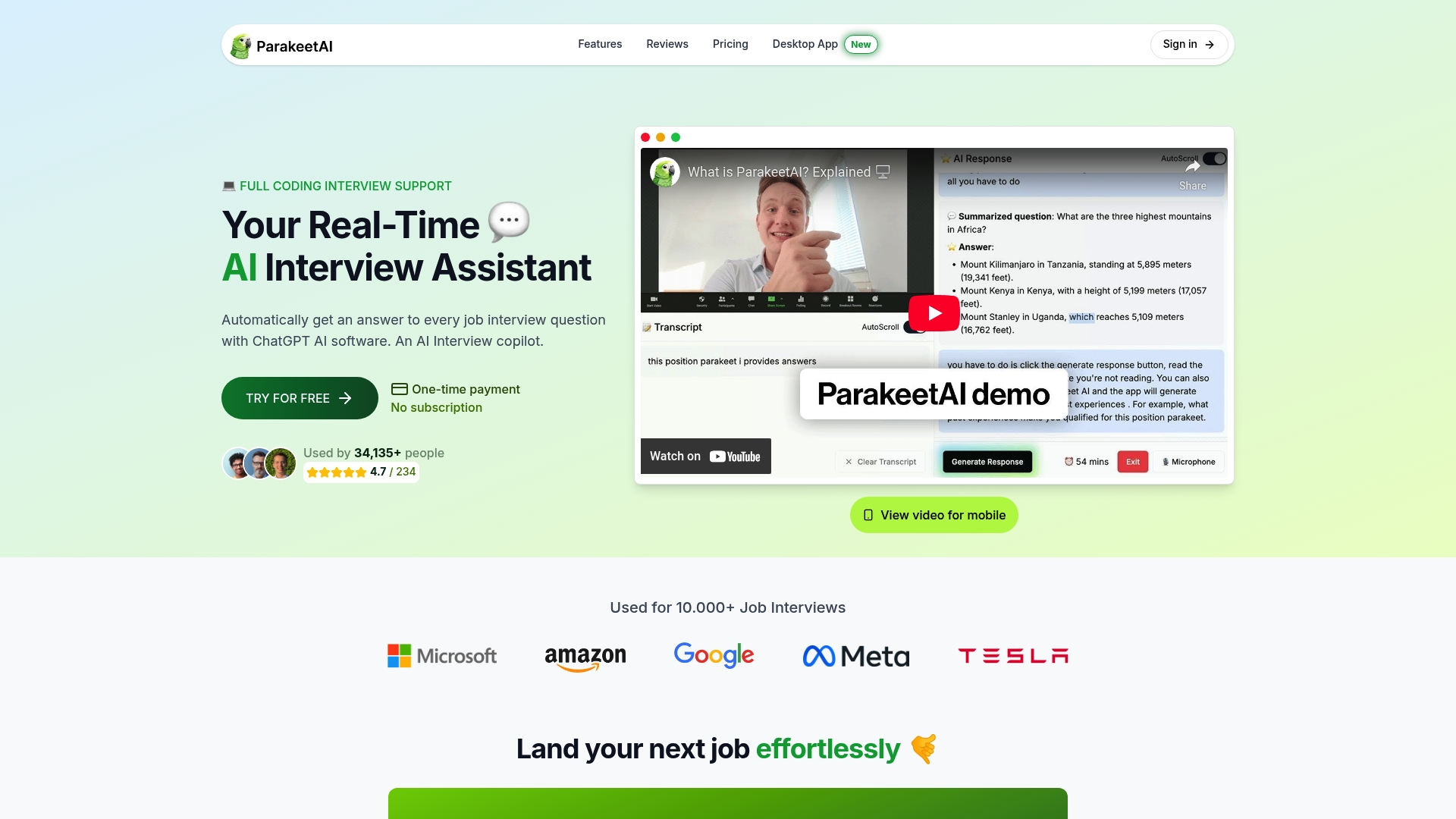
Take control of your preparation today with Parakeet AI, a real-time AI job interview assistant that listens and provides intelligent, on-the-spot answers tailored to the exact questions you face. Whether you are tackling behavioral scenarios or complex algorithm challenges our AI empowers you to practice effectively, build confidence, and adopt Amazon’s mindset seamlessly. Start a smarter, personalized interview journey at Parakeet AI and transform stress into success. Explore more interview strategies and gain the edge you need now.
Frequently Asked Questions
What are the key areas to focus on for Amazon’s software developer interviews?
To excel in Amazon’s software developer interviews, concentrate on coding skills, algorithmic thinking, system design, and behavioral questions related to Amazon’s leadership principles. Prioritize practicing data structures and algorithms in line with Amazon’s technical expectations.
How can I effectively showcase my problem-solving abilities during the interview?
Demonstrate your problem-solving skills by using a clear methodology to approach complex challenges. Practice explaining your thought process, breaking down problems, and discussing multiple solutions to illustrate your analytical and strategic thinking.
What types of questions can I expect in Amazon’s coding assessment?
Expect challenging coding problems that assess your knowledge of data structures and algorithms. Focus on mastering fundamental areas like linked lists, trees, and dynamic programming, and practice coding challenges that require efficient solutions.
How should I prepare for behavioral interview scenarios at Amazon?
Prepare for behavioral interviews by reflecting on your past work experiences and using the STAR method to structure your responses. Identify specific situations where you demonstrated leadership, innovation, or teamwork, and practice articulating them clearly.
What is the importance of Amazon’s leadership principles in the interview process?
Amazon’s leadership principles are crucial as they guide how the company expects professionals to think and act. Familiarize yourself with these principles and prepare to provide examples from your experience that align with each one during the interview.