
Benefits of Interviewing With AI: Enhanced Success

An estimated nine out of ten American companies now use Artificial Intelligence tools when interviewing candidates, changing the way people prepare and present themselves for new roles. This surge in AI-driven recruitment shapes not only how employers evaluate applicants but also impacts how job seekers experience the hiring process. By diving into how these systems work, their benefits, and their risks, you can better understand what to expect and how to adapt to the evolving field of American employment.
Table of Contents
- AI Job Interviews Defined And Debunked
- Types Of AI Interview Tools Available
- How AI Interview Assistants Work In Practice
- Key Advantages For Job Seekers Globally
- Privacy, Bias, And Limitations To Consider
Key Takeaways
| Point | Details |
|---|---|
| Adoption of AI in Recruitment | Most companies now integrate AI technologies in hiring, promoting efficiency but raising concerns about bias. |
| AI Interview Tools Available | Various advanced tools, such as HireVue and Sapia.ai, provide innovative hiring solutions that include real-time feedback and personalized coaching. |
| Advantages for Job Seekers | Job seekers benefit from objective performance analysis and customized training opportunities, helping to enhance their interview skills. |
| Ethical Considerations | The use of AI in job interviews presents challenges, including privacy risks and algorithmic biases that must be addressed for ethical implementation. |
AI Job Interviews Defined and Debunked
Artificial Intelligence job interviews represent a transformative approach to recruitment, leveraging advanced technology to assess candidates more efficiently. While these AI-powered interviews promise streamlined hiring processes, they also introduce complex challenges that job seekers and employers must carefully navigate.
Companies are increasingly adopting AI interview technologies, with research indicating that nine out of ten organizations now utilize some form of AI in their hiring mechanisms. These systems analyze candidates through multiple dimensions, including verbal responses, speech patterns, facial expressions, and linguistic nuances. However, the technology is not without significant concerns. Studies reveal that candidates frequently experience feelings of discomfort and detachment during AI-mediated interviews, highlighting the potential emotional disconnect inherent in these technological assessments.
The core mechanics of AI job interviews typically involve sophisticated algorithms that evaluate candidate responses through natural language processing and machine learning techniques. These systems aim to provide objective assessments by minimizing human bias, yet paradoxically, they can introduce their own set of algorithmic prejudices. Key evaluation parameters often include:
- Verbal communication clarity
- Emotional intelligence markers
- Professional tone and demeanor
- Contextual understanding of interview questions
- Consistency in response delivery
Despite their technological sophistication, AI interviews are not infallible. They struggle with nuanced human communication, potentially misinterpreting complex emotional contexts or cultural communication styles. Job seekers must recognize that while these tools offer efficiency, they cannot fully replicate the intricate human dynamics of traditional face-to-face interviews. Understanding their limitations and preparing strategically becomes crucial for successful navigation of AI-driven recruitment processes.
Types of AI Interview Tools Available
The landscape of AI interview tools has rapidly expanded, offering job seekers and recruiters sophisticated technologies designed to transform the traditional hiring process. Contemporary AI interview platforms represent a diverse ecosystem of innovative solutions that address multiple stages of candidate evaluation and preparation.
Research from HR technology sources reveals several prominent AI interview tools with unique capabilities:
- HireVue: Specializes in video interviewing and AI-driven candidate assessment
- Harver: Provides evidence-based candidate screening and predictive analytics
- Sapia.ai: Offers AI-powered conversational interviews and personality analysis
- InterviewBuddy AI: Delivers real-time interview coaching and practice simulations
These advanced tools leverage natural language processing, machine learning, and algorithmic analysis to evaluate candidates beyond traditional metrics. Innovative platforms now offer personalized coaching, providing instantaneous feedback on communication skills, emotional intelligence, and professional demeanor. By simulating complex interview scenarios, these AI tools help candidates refine their interview techniques and build confidence before critical professional interactions.

The next generation of AI interview technologies goes beyond simple assessment, integrating predictive analytics and comprehensive candidate profiling. These sophisticated systems analyze verbal and non-verbal communication, detecting nuanced insights about a candidate’s potential fit within an organizational culture. While not perfect, these tools represent a significant advancement in recruitment technology, offering more data-driven and potentially unbiased approaches to talent acquisition.
How AI Interview Assistants Work in Practice
AI interview assistants represent a sophisticated technological approach to professional skill development, transforming how candidates prepare for and navigate job interviews. Advanced interview technologies now leverage complex algorithms and machine learning to create immersive, personalized interview experiences that go far beyond traditional preparation methods.
Innovative research demonstrates how these systems simulate realistic interview scenarios through sophisticated language models. The Conversate platform, for instance, provides interactive interview simulations that analyze candidate responses in real-time, offering immediate feedback on communication style, content clarity, and professional demeanor. These AI assistants can:
- Generate contextually relevant interview questions
- Provide instantaneous performance analysis
- Simulate diverse interviewer personalities
- Offer personalized coaching recommendations
- Track verbal and non-verbal communication nuances
Multilingual interview training systems like SimInterview represent the cutting edge of AI interview assistance. These platforms integrate advanced technologies including speech recognition, natural language processing, and voice synthesis to create hyper-realistic interview experiences. By combining large language models with adaptive learning algorithms, these tools can generate personalized interview scenarios that adapt to individual candidate strengths and potential improvement areas.
The practical application of AI interview assistants extends beyond simple mock interviews. These sophisticated systems analyze communication patterns, emotional intelligence markers, and contextual understanding, providing candidates with comprehensive insights into their interview performance. While not a replacement for human interaction, these tools offer an unprecedented opportunity for candidates to refine their skills, build confidence, and develop nuanced communication strategies before critical professional interactions.
Key Advantages for Job Seekers Globally
Global job seekers are experiencing a transformative shift in interview preparation through advanced AI technologies that democratize professional skill development. These innovative tools provide unprecedented access to personalized interview training, breaking down traditional barriers that have historically limited candidates’ ability to refine their communication and presentation skills.
Interactive interview simulation platforms like Conversate offer job seekers critical advantages through intelligent, adaptive training technologies. These systems provide unique benefits that traditional preparation methods cannot match:
- Real-time performance analysis
- Personalized feedback mechanisms
- Unlimited practice opportunities
- Multilingual interview scenario generation
- Comprehensive communication skills assessment
Multilingual training systems such as SimInterview further expand global opportunities by adapting interview scenarios to individual candidate profiles and specific job requirements. These sophisticated platforms enable job seekers to develop nuanced communication strategies, build confidence, and understand cultural communication subtleties across different professional environments.
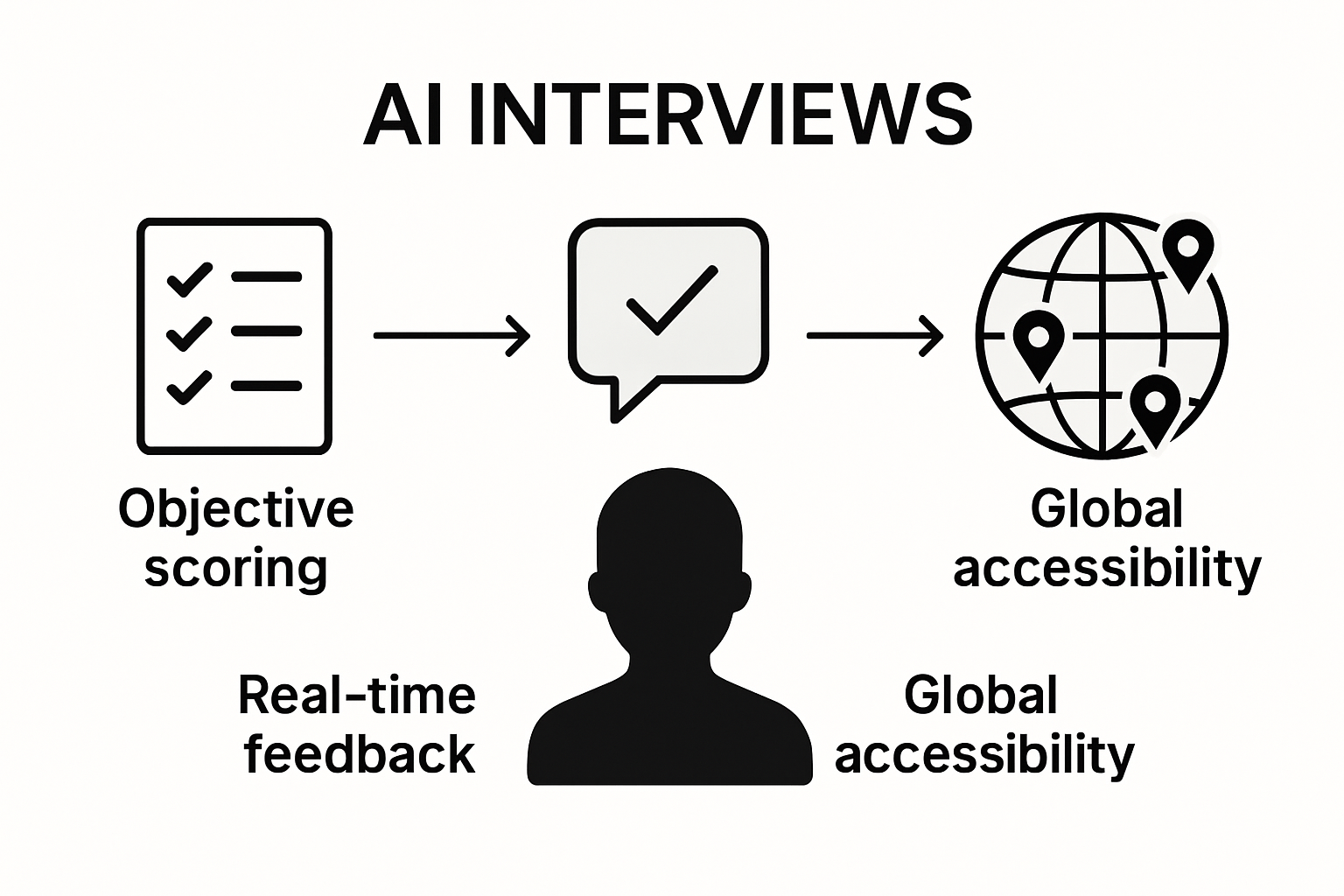
The most significant advantage for job seekers is the ability to receive objective, data-driven insights into their interview performance. Unlike human coaches with inherent biases, AI interview assistants provide consistent, detailed evaluations that help candidates identify precise areas for improvement. This technology empowers professionals worldwide to compete more effectively in an increasingly complex and competitive global job market, regardless of their geographic location or access to traditional interview preparation resources.
Privacy, Bias, and Limitations to Consider
Artificial intelligence in job interviews introduces complex ethical considerations that candidates and employers must carefully navigate. AI interview technologies represent powerful tools, but they are not without significant challenges that demand critical examination and proactive management.
Research highlights substantial concerns regarding potential biases embedded within these technological systems. The primary ethical challenges include:
- Potential algorithmic discrimination
- Lack of human emotional intelligence
- Reduced transparency in decision making
- Privacy risks with personal data collection
- Inconsistent evaluation criteria
Comprehensive studies reveal that while AI interviews offer efficiency, they frequently compromise the nuanced understanding that human recruiters provide. The impersonal nature of these interactions can inadvertently disadvantage candidates from diverse backgrounds, potentially reinforcing existing systemic inequalities in recruitment processes.
Mitigating these limitations requires a multifaceted approach. Job seekers and employers must demand algorithmic transparency, robust data protection protocols, and continuous refinement of AI evaluation mechanisms. Understanding these potential drawbacks does not negate the technology’s value, but instead encourages a more responsible and ethical implementation of AI interview assistants.
Elevate Your Interview Success With AI Assistance
Facing the emotional disconnect and bias challenges of AI job interviews can be overwhelming. Many candidates struggle with grasping the nuances of their verbal and non-verbal communication during automated interviews. If you want to overcome these barriers and gain clear, personalized insights into your interview performance, it is essential to leverage tools designed specifically to bridge this gap. At Parakeet AI, our real-time AI job interview assistant listens carefully to every question you face and instantly generates strong, tailored answers, helping you master your responses and build confidence.
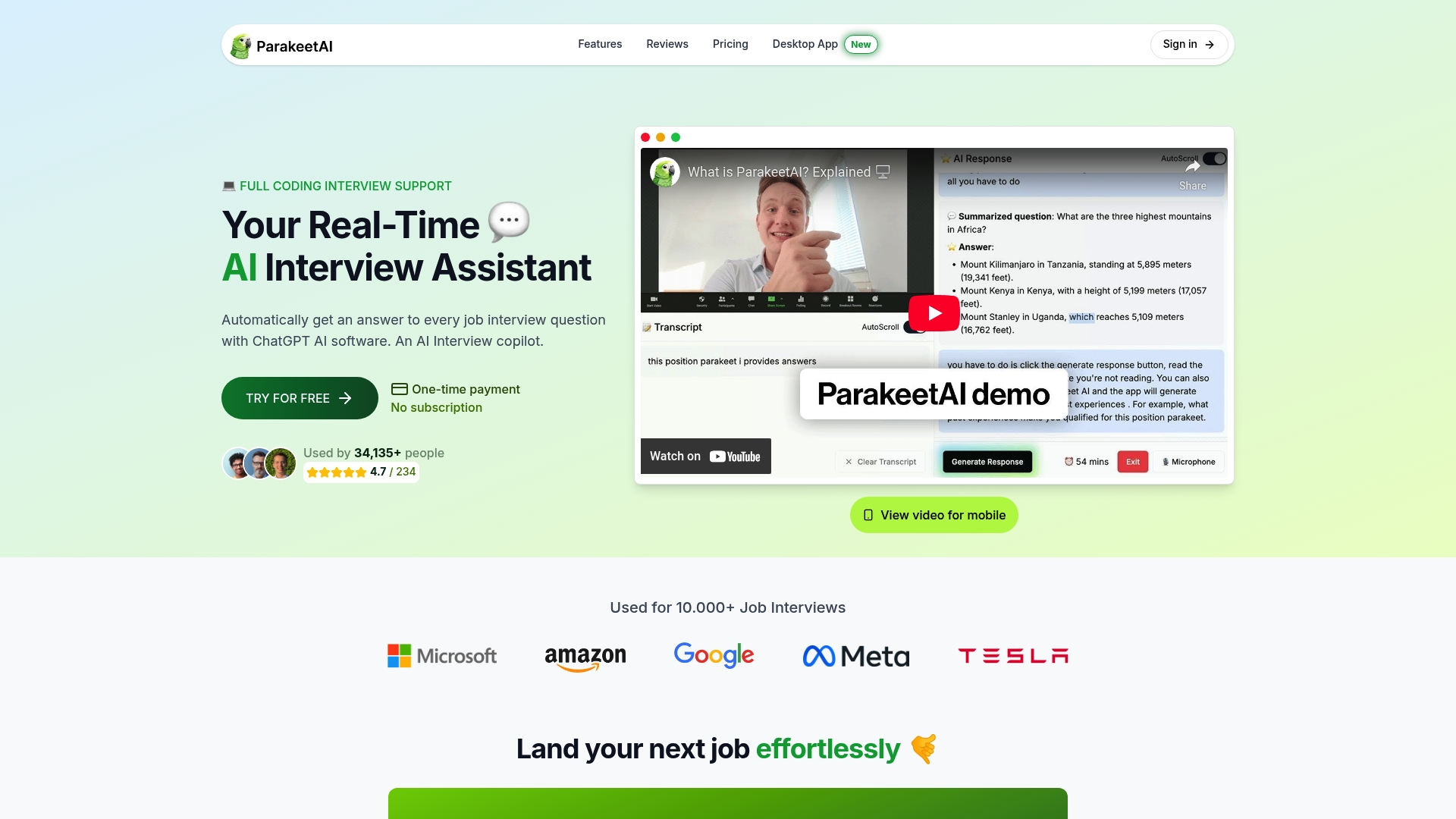
Transform your preparation with advanced AI coaching that goes beyond traditional practice methods. Discover how AI interview assistants provide immediate feedback, refine your communication skills, and simulate real interview conditions. Don’t let algorithmic bias or lack of human connection hold back your career progress—visit Parakeet AI today and start preparing smarter for your next opportunity.
Frequently Asked Questions
What are the benefits of using AI for job interviews?
AI offers numerous benefits for job interviews, including enhanced efficiency through automated assessments, real-time feedback, and personalized preparation experiences. It reduces biases and helps identify candidate strengths and weaknesses effectively.
How do AI interview tools assess candidates?
AI interview tools assess candidates using algorithms that analyze various aspects such as verbal communication, emotional intelligence, and consistency in responses. They utilize natural language processing and machine learning techniques for objective evaluations.
Can AI interviews accurately evaluate emotional intelligence?
While AI interviews can measure certain emotional intelligence markers, they may struggle with the nuanced understanding of human emotions and cultural communication styles, potentially leading to misinterpretation.
How can job seekers prepare for AI interviews?
Job seekers can prepare for AI interviews by engaging with AI interview assistants or simulation platforms that offer practice scenarios, provide real-time feedback, and help refine communication skills. Users should focus on improving clarity, professionalism, and emotional awareness during their practice.