
Common Retail Interview Questions: AI-Powered Preparation
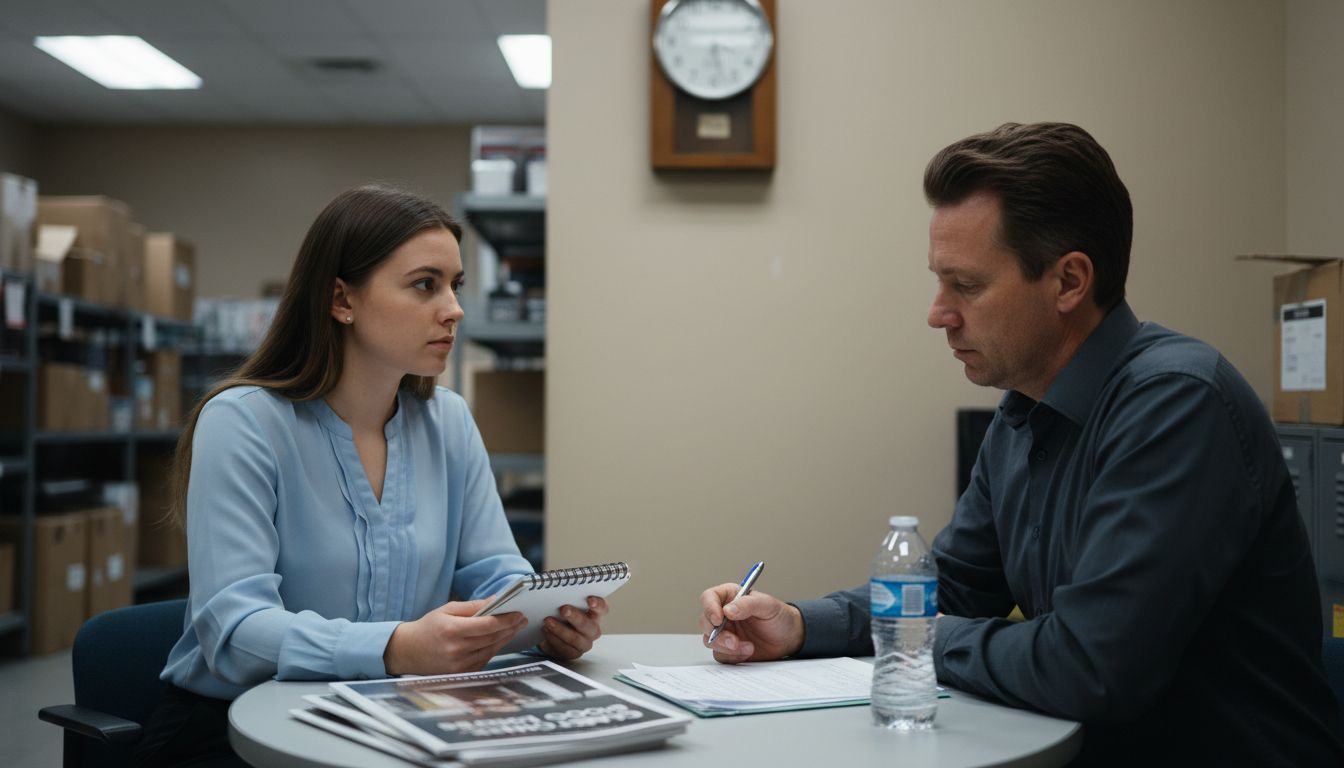
Facing a retail interview feels like stepping into a test of both your people skills and sales know-how. Managers are searching for candidates who blend strong customer engagement with adaptability and professionalism on the sales floor. By learning to answer common questions with clarity and confidence, you can demonstrate your readiness for diverse retail positions. This guide helps you craft answers and build skills using AI tools designed to boost your preparation and highlight your unique potential.
Table of Contents
- Understanding Common Retail Interview Questions
- Types of Retail Roles and Interview Scenarios
- Key Skills Retail Employers Seek
- Effective Answer Strategies for Retail Interviews
- How AI Transforms Interview Preparation
Key Takeaways
| Point | Details |
|---|---|
| Understanding Interview Dynamics | Retail interviews assess not just technical skills but also emotional intelligence and customer service orientation. Candidates must demonstrate their ability to enhance customer experiences. |
| Role-Specific Focus | Different retail roles require tailored skills; interview challenges align with the responsibilities of positions, from sales associates to store managers. |
| Behavioral Assessment Importance | Scenario-based questions are vital in revealing candidates’ problem-solving abilities and how they handle real-world retail challenges. |
| AI in Interview Preparation | AI tools enhance preparation through personalized questioning and real-time feedback, making the process more adaptive and effective. |
Understanding Common Retail Interview Questions
Retail interviews are complex evaluations designed to assess your potential as a customer service professional and sales representative. These conversations go far beyond simple questions about work history, instead probing your ability to handle real-world retail challenges. Retail interview questions systematically explore your interpersonal skills, problem-solving capabilities, and customer interaction strategies.
The primary objectives of retail interview questions typically revolve around understanding a candidate’s core competencies:
- Customer service orientation
- Sales technique proficiency
- Conflict resolution skills
- Adaptability in dynamic retail environments
- Communication and interpersonal effectiveness
Interviewers want to evaluate not just your technical skills, but your emotional intelligence and capacity to represent their brand effectively. They seek candidates who can transform routine transactions into positive customer experiences, demonstrating both technical knowledge and genuine human connection.
Key Performance Dimensions that retail managers consistently examine include:
- Product knowledge
- Customer engagement strategies
- Ability to work under pressure
- Team collaboration skills
- Personal motivation and professional goals
Behavioral Assessment plays a critical role in these interviews. Managers use scenario-based questions to understand how you might react in specific situations, revealing your problem-solving approach and customer service philosophy.
Pro tip: Practice telling concise, impactful stories that showcase your ability to handle challenging retail scenarios while maintaining a positive, solution-oriented attitude.
Types of Retail Roles and Interview Scenarios
Retail environments encompass a diverse range of roles, each requiring unique skills and presenting distinct interview challenges. Retail job positions span from entry-level customer-facing roles to sophisticated management and operational positions, creating a complex landscape of professional opportunities.
The primary retail roles typically include:
- Sales Associate: Front-line customer interaction and direct sales responsibilities
- Cashier: Transaction processing and financial accuracy
- Store Manager: Team leadership and overall store performance
- Visual Merchandiser: Product display and store aesthetic management
- Inventory Specialist: Stock management and supply chain coordination
- Loss Prevention Officer: Security and asset protection
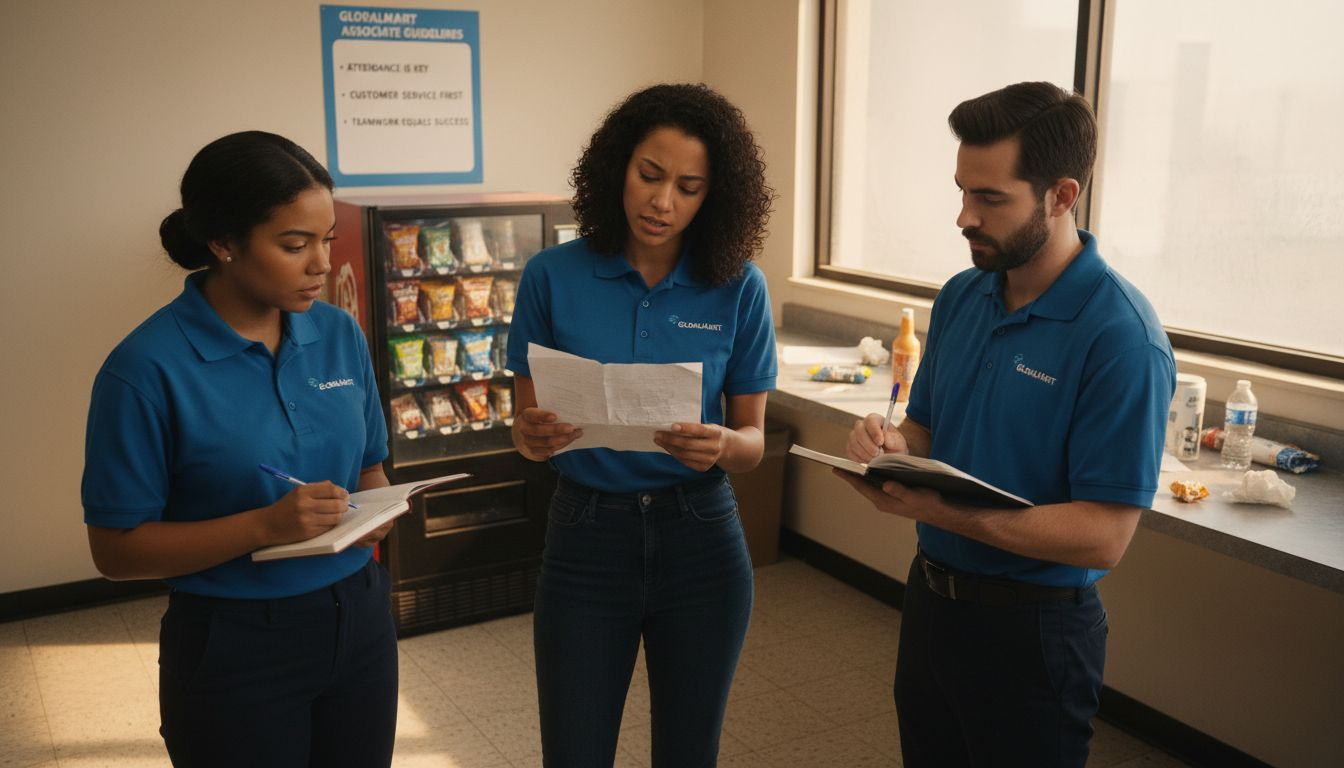
Each role demands a specific set of interview scenarios designed to evaluate not just technical competence, but also interpersonal skills, problem-solving abilities, and cultural fit. Interviews for these positions often include multiple assessment components such as:
Here’s a summary of how different retail roles focus on distinct core competencies:
| Retail Role | Primary Focus | Distinct Interview Challenge |
|---|---|---|
| Sales Associate | Customer persuasion | Handling objections gracefully |
| Cashier | Accuracy in transactions | Managing line stress effectively |
| Store Manager | Leadership | Developing team accountability |
| Visual Merchandiser | Creativity | Aligning displays with brand image |
| Inventory Specialist | Organization | Prioritizing inventory tasks |
| Loss Prevention Officer | Vigilance | De-escalating theft incidents |
- Behavioral questioning about past customer service experiences
- Situational judgment tests simulating real-world retail scenarios
- Role-specific skills assessments
- Personality and compatibility evaluations
- Performance potential and career trajectory discussions
Candidate Evaluation Dimensions vary significantly across different retail positions. Entry-level roles might focus more on attitude and trainability, while management positions require demonstrated leadership experience and strategic thinking.
Successful retail candidates understand that interviews are holistic assessments of their potential to represent a brand and create positive customer experiences.
Pro tip: Research the specific retail role you’re applying for and prepare targeted examples that showcase your relevant skills and customer service philosophy.
Key Skills Retail Employers Seek
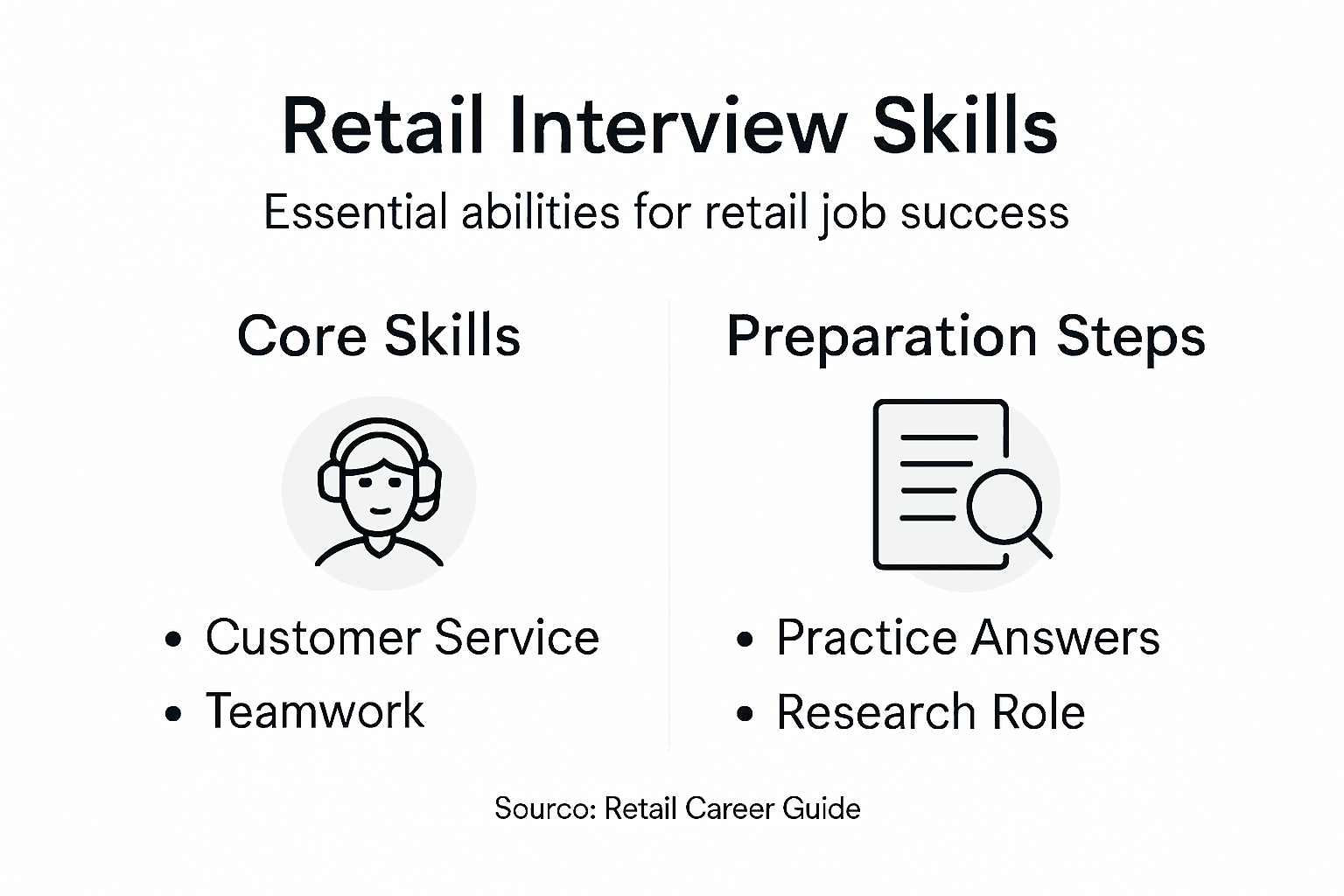
Retail skills represent a complex blend of interpersonal capabilities and technical competencies that employers carefully evaluate during recruitment. Retail career skills encompass a nuanced mix of soft and hard skills that demonstrate an individual’s potential to excel in dynamic customer service environments.
The core skills that retail employers consistently prioritize include:
- Communication Skills: Clear, empathetic, and professional verbal and nonverbal communication
- Customer Service Orientation: Ability to create positive customer experiences
- Problem-Solving: Quick and effective resolution of customer and operational challenges
- Adaptability: Flexibility in handling diverse scenarios and changing workplace dynamics
- Digital Literacy: Proficiency with point-of-sale systems and digital retail technologies
- Emotional Intelligence: Understanding and managing interpersonal interactions
Modern retail employers seek candidates who demonstrate a sophisticated understanding of both technical performance and human interaction. This requires a multifaceted skill set that goes beyond traditional transactional approaches:
- Technical proficiency with digital tools
- Strong emotional intelligence
- Proactive customer engagement
- Ability to work effectively in team environments
- Quick learning and adaptation
Emerging Skill Requirements reflect the rapidly transforming retail landscape. Contemporary retail roles increasingly demand digital proficiency, sustainability awareness, and advanced technological competence alongside traditional customer service skills.
Successful retail professionals understand that skills are dynamic and require continuous learning and adaptation.
Pro tip: Develop a portfolio of concrete examples demonstrating your skills that showcase your ability to solve real-world retail challenges effectively.
Effective Answer Strategies for Retail Interviews
Navigating retail interviews requires a strategic approach to demonstrating your skills and potential. Retail interview preparation involves mastering structured response techniques that showcase your ability to handle complex customer service scenarios effectively.
The most powerful strategy for crafting compelling interview responses is the STAR Method, which provides a structured framework for presenting your experiences:
- Situation: Briefly describe the context of a specific work-related challenge
- Task: Explain your specific responsibility or objective in that scenario
- Action: Detail the precise steps you took to address the challenge
- Result: Highlight the positive outcomes of your actions, preferably with quantifiable metrics
Key components of exceptional retail interview answers include:
- Demonstrating customer service excellence
- Showing problem-solving capabilities
- Highlighting adaptability
- Expressing genuine enthusiasm
- Providing specific, concrete examples
Non-verbal communication plays a crucial role in interview success. Your body language, eye contact, and overall presentation can be as important as the content of your answers. Maintaining a professional demeanor while expressing genuine passion for customer service will significantly enhance your interview performance.
Authentic storytelling combined with structured responses creates a powerful narrative that sets you apart from other candidates.
Pro tip: Practice your answers out loud, record yourself, and critically review your responses to identify areas for improvement and build confidence.
How AI Transforms Interview Preparation
The landscape of interview preparation is undergoing a radical transformation through artificial intelligence technologies. AI interview technologies are revolutionizing how job seekers practice, prepare, and perform during interview processes by providing sophisticated, adaptive learning tools.
Key capabilities of AI-powered interview preparation include:
- Generating personalized interview questions
- Analyzing response quality and providing real-time feedback
- Simulating diverse interview scenarios
- Identifying potential areas of improvement
- Offering industry-specific practice environments
- Helping candidates build confidence through repetitive practice
Modern AI systems go beyond traditional practice methods by offering dynamic, intelligent support throughout the interview preparation journey:
- Contextual question generation based on job descriptions
- Natural language processing for answer evaluation
- Emotional intelligence assessment techniques
- Personalized skill development recommendations
- Comprehensive performance tracking
Technological Limitations remain important to understand. While AI provides exceptional preparation support, it cannot entirely replace human intuition, nuanced communication skills, or deep personal research about specific roles and companies.
Below is a comparison of traditional versus AI-powered retail interview preparation approaches:
| Preparation Method | Personalization | Feedback Style | Limitation |
|---|---|---|---|
| Traditional (books, mock interviews) | Generic, less tailored | General, manual | Time-consuming, limited scenarios |
| AI-Powered Tools | Highly tailored, job-specific | Real-time, adaptive | May miss nuanced communication |
AI interview preparation tools are most effective when used as collaborative partners in your professional development, not as complete substitutes for personal effort and learning.
Pro tip: Combine AI-generated practice scenarios with human mentorship to create a comprehensive and balanced interview preparation strategy.
Accelerate Your Retail Interview Success With AI-Powered Support
Facing common retail interview questions can feel overwhelming as you try to showcase your customer service skills, adaptability, and problem-solving abilities all at once. This article highlights the challenge of mastering structured responses like the STAR Method while demonstrating genuine enthusiasm and professionalism. Many candidates struggle with personalization and real-time feedback during preparation, which can leave them uncertain or underprepared.
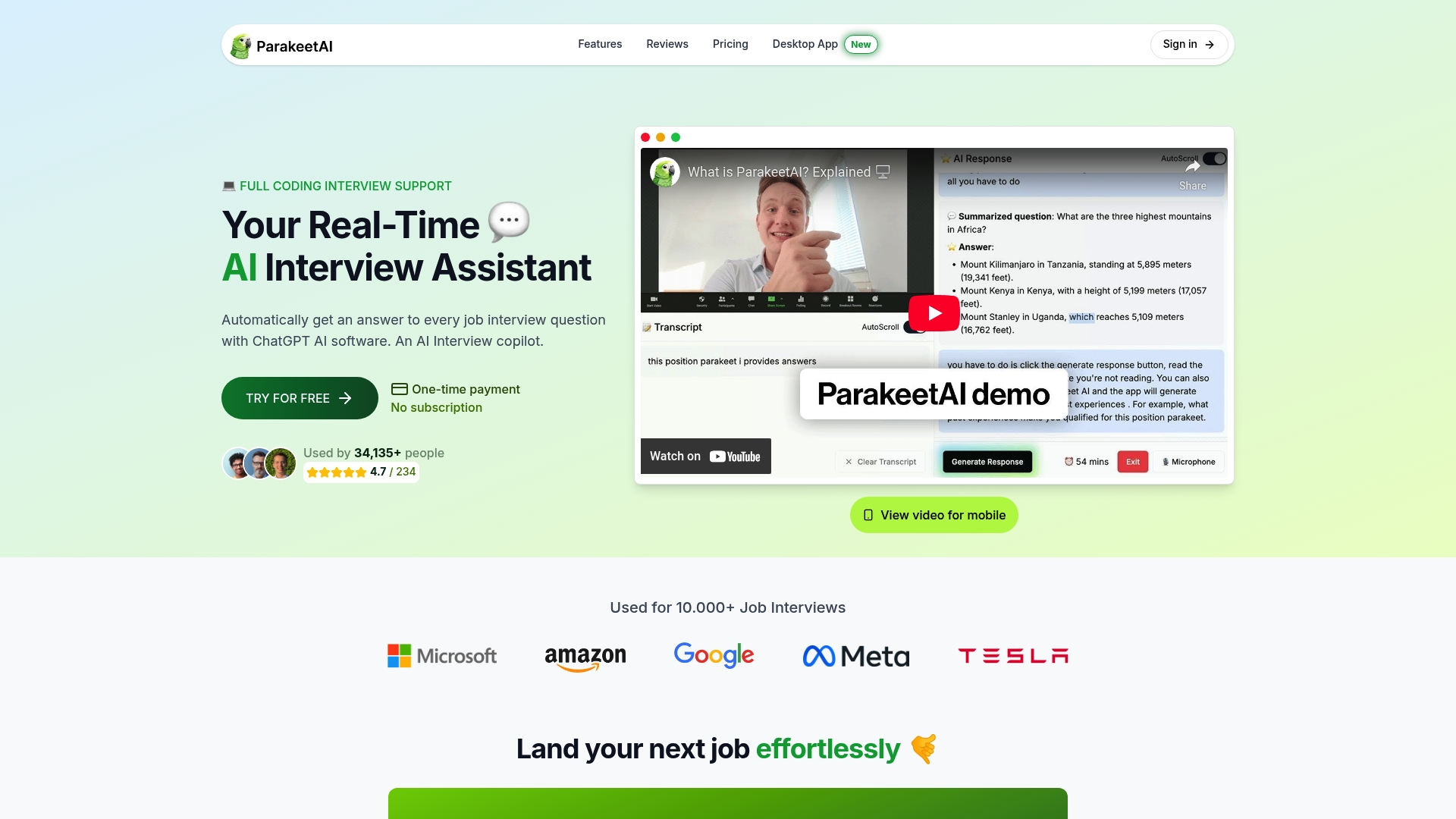
Boost your confidence by practicing with a real-time AI job interview assistant that listens carefully and provides instant suggestions for every retail interview question. Parakeet AI helps you craft concrete examples and fine-tune your answers to match what employers seek like communication skills and emotional intelligence. Don’t leave your retail career to chance—experience the difference of tailored, on-demand support by visiting Parakeet AI now and transforming your interview preparation into a winning edge.
Frequently Asked Questions
What are common retail interview questions I should prepare for?
Common retail interview questions often focus on customer service orientation, sales techniques, conflict resolution skills, adaptability, and interpersonal effectiveness. You might encounter scenario-based questions that explore your ability to handle real-world retail challenges.
How can I effectively answer behavioral questions in retail interviews?
Using the STAR method (Situation, Task, Action, Result) can help structure your responses. This approach allows you to clearly outline your experiences, showing how you managed challenges and the positive outcomes of your actions.
What skills should I highlight during a retail interview?
Focus on communication skills, customer service orientation, problem-solving abilities, adaptability, digital literacy, and emotional intelligence. These competencies are crucial for thriving in a retail environment and representing the brand positively.
How does AI technology enhance interview preparation for retail positions?
AI-powered interview preparation tools offer personalized questions, real-time feedback, and scenario simulations, which help candidates build confidence and improve their responses. They adapt to your needs and provide targeted practice opportunities, making preparation more effective.
Recommended
- Interview Prep Guide: Boost Confidence With AI Tools
- Job Interview Questions and Answers PDF: Confidence for Success
- Master Problem Solving for Interviews with AI Assistance
- Job Interview Strategy Guide: Master Every Question Fast
- Understanding Retail Delivery Services and Their Importance - Onyx Removals