
Common Situational Interview Questions: Strategies That Win Jobs

Landing a tech interview means you will likely face questions about hypothetical workplace challenges. For recent graduates and global job seekers, learning how to answer these situational interview questions can feel intimidating, since they test not just what you know but how you think on your feet. By mastering the strategies behind these unique questions, you can clearly show employers your adaptability, problem-solving process, and readiness for the unexpected in a fast-paced tech environment.
Table of Contents
- Situational Interview Questions Defined and Debunked
- Major Types of Situational Questions in Tech Roles
- Key Traits Assessed by Employers and Interviewers
- Effective Answer Strategies: Star and Soar Methods
- Common Mistakes and How to Avoid Them
- Real Tech Scenarios and Sample Responses
Key Takeaways
| Point | Details |
|---|---|
| Situational Interviewing | Situational interview questions assess a candidate’s problem-solving skills through hypothetical scenarios rather than past experiences. |
| Evaluation of Traits | Employers look for adaptability, critical thinking, and communication skills during situational interviews. |
| Response Techniques | Using structured frameworks like STAR and SOAR can help candidates articulate their responses more effectively. |
| Common Mistakes | Avoid vague answers and ensure to align responses with job-specific context to enhance communication clarity. |
Situational Interview Questions Defined and Debunked
Situational interview questions are strategic assessment tools designed to evaluate a candidate’s potential workplace problem-solving skills. Unlike traditional interviews that focus on past experiences, these questions explore hypothetical scenarios to understand how a candidate might react in future professional challenges. Situational interviews assess projected behaviors through carefully constructed workplace scenarios.
These questions differ fundamentally from behavioral interview questions by presenting candidates with imaginary yet realistic workplace challenges. Instead of asking “Tell me about a time when…” interviewers present hypothetical situations like “How would you handle…” The goal is to understand a candidate’s decision-making process, critical thinking skills, and potential workplace approach.
Key characteristics of situational interview questions include:
- Focusing on potential future actions
- Presenting hypothetical workplace scenarios
- Evaluating problem-solving and critical thinking abilities
- Testing adaptability and professional judgment
- Revealing candidate’s thought process and reasoning
Professional interviewers construct these questions to mirror real workplace challenges specific to the role. For instance, a marketing position might present a scenario about managing a client dispute, while a tech role could explore how a candidate would troubleshoot a complex system failure. These questions provide insight into candidate behaviors before actual workplace interactions occur.
Pro tip: Practice situational interview questions by creating realistic scenarios matching your target industry and rehearsing structured, professional responses that demonstrate strategic thinking.
Major Types of Situational Questions in Tech Roles
Tech interviews leverage specific situational questions designed to uncover a candidate’s problem-solving capabilities and professional approach. Situational questions assess tech professionals’ judgment by presenting complex, realistic workplace scenarios that test critical thinking, communication, and technical adaptability.
These questions typically fall into several distinct categories that evaluate different aspects of a tech professional’s skills:
- Technical Troubleshooting Scenarios: Exploring how candidates diagnose and resolve complex system failures
- Team Collaboration Challenges: Assessing interpersonal skills and conflict resolution in collaborative environments
- Project Management Dilemmas: Testing prioritization and decision-making under tight deadlines
- Client Communication Scenarios: Evaluating communication strategies for explaining technical concepts
- Resource Constraint Problems: Understanding how candidates optimize solutions with limited resources
Tech situational questions reveal candidate strategies by presenting nuanced scenarios that go beyond traditional technical knowledge testing. Interviewers want to understand not just what technical skills a candidate possesses, but how they apply those skills in unpredictable, real-world situations. A software engineer might be asked how they would handle a critical bug discovered just before a product launch, or a network administrator might need to explain their approach to managing a sudden server outage.
Below is a summary of common situational question types in tech interviews and the skills they evaluate:
| Scenario Type | Key Skill Evaluated | Practical Example |
|---|---|---|
| Troubleshooting | Analytical thinking | Debugging a failing server |
| Team Collaboration | Conflict resolution | Mediating a team disagreement |
| Project Management | Prioritization | Managing overlapping deadlines |
| Client Communication | Simplifying tech talk | Explaining issues to non-technical clients |
Pro tip: Develop a structured problem-solving framework that demonstrates logical thinking, adaptability, and clear communication when answering situational interview questions in tech roles.
Key Traits Assessed by Employers and Interviewers
Employers use situational interview questions as sophisticated tools to evaluate candidates beyond traditional skill assessments. Candidate competencies predict job performance through a comprehensive examination of behavioral indicators and problem-solving approaches.
The key traits interviewers systematically assess include:
- Adaptability: Capacity to adjust strategies in dynamic work environments
- Critical Thinking: Ability to analyze complex scenarios and develop strategic solutions
- Communication Skills: Clarity and effectiveness in explaining technical and interpersonal challenges
- Emotional Intelligence: Managing workplace relationships and navigating professional interactions
- Decision-Making: Demonstrating sound judgment under pressure
- Problem-Solving: Generating innovative and practical solutions to unexpected challenges
These traits are evaluated through carefully constructed scenarios that reveal a candidate’s underlying professional capabilities. Interviewers are not just listening to answers, but observing how candidates structure their thinking, communicate their reasoning, and demonstrate potential for growth and collaboration within the organization.

Pro tip: Practice articulating your thought process transparently, highlighting not just the solution but the reasoning behind your approach during situational interview questions.
Effective Answer Strategies: STAR and SOAR Methods
Situational interview responses require strategic frameworks that transform raw experiences into compelling narratives. Interview techniques help candidates structure responses effectively, with two primary methods emerging as powerful communication tools: STAR and SOAR.
The two frameworks provide distinct approaches to crafting interview responses:
STAR Method Components:
- Situation: Describe the specific context
- Task: Explain your specific responsibility
- Action: Detail the precise steps you took
- Result: Share quantifiable or qualitative outcomes
SOAR Method Components:
- Strength: Highlight personal capabilities
- Opportunity: Identify the specific challenge
- Action: Describe strategic interventions
- Result: Demonstrate meaningful impact
SOAR method enhances traditional interview strategies by emphasizing potential and proactive problem-solving. While STAR focuses on past experiences, SOAR provides a forward-looking framework that showcases adaptability and strategic thinking. The key difference lies in perspective: STAR is retrospective, examining what happened, while SOAR is prospective, exploring how you might approach future challenges.
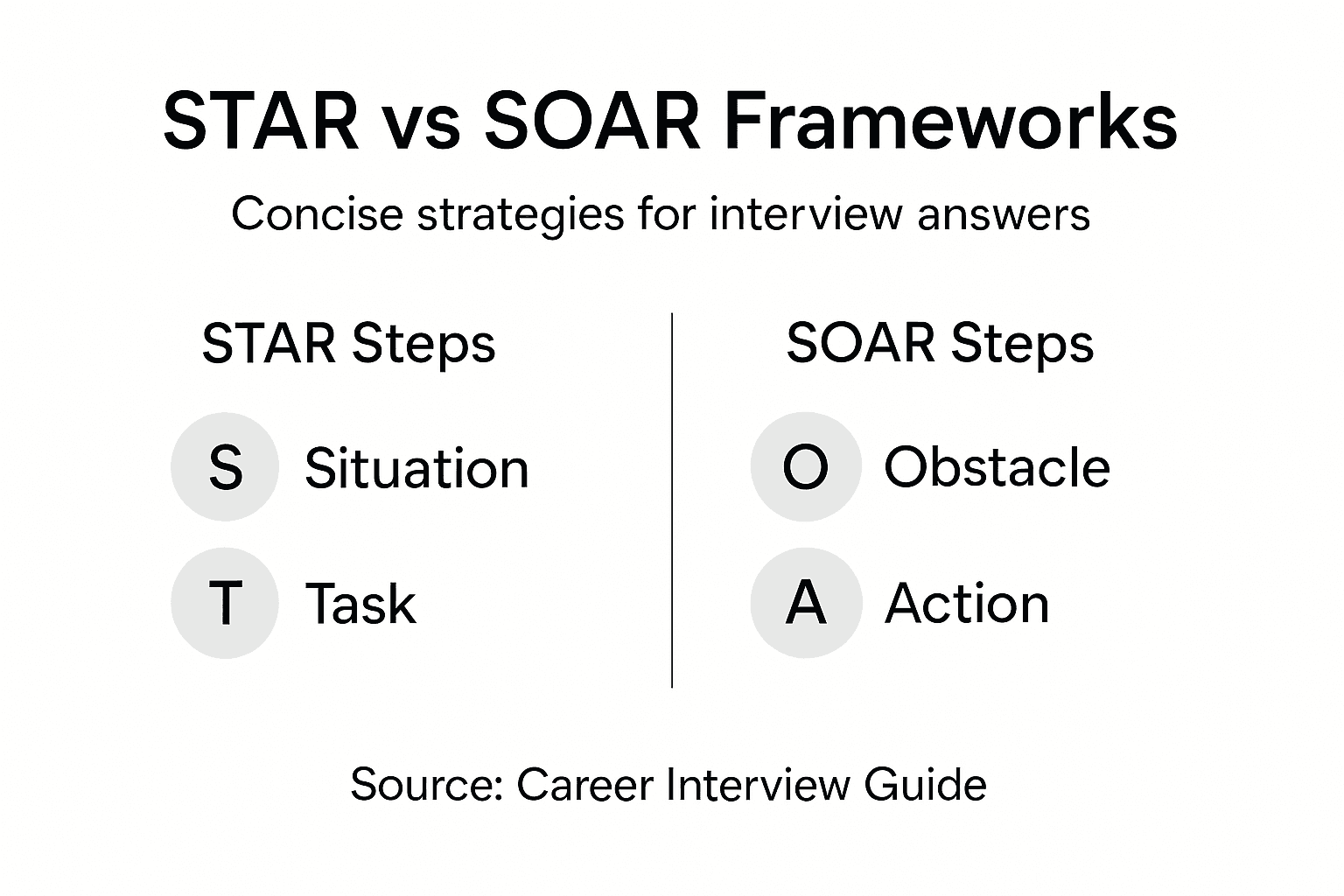
Here’s a comparison of the STAR and SOAR methods for answering situational interview questions:
| Framework | Focus | Example Use Case | Emphasis |
|---|---|---|---|
| STAR | Past experiences | Describing how you solved a previous problem | Clear outcomes and actions |
| SOAR | Future potential | Showing how you would handle a new challenge | Strengths and adaptability |
Pro tip: Practice transforming your professional experiences into concise, impactful narratives using STAR or SOAR frameworks, ensuring each response demonstrates your unique problem-solving approach.
Common Mistakes and How to Avoid Them
Situational interview responses are delicate communication opportunities that require precision and strategic thinking. Interview preparation prevents common mistakes by helping candidates anticipate and navigate potential pitfalls in their responses.
The most prevalent mistakes candidates make during situational interviews include:
- Providing Vague Responses: Lacking specific details or concrete examples
- Rambling or Over-Explaining: Losing the interviewer’s attention with unnecessary information
- Failing to Quantify Results: Neglecting to demonstrate measurable impact
- Ignoring Job-Specific Context: Not aligning answers with specific role requirements
- Displaying Negative Attitudes: Criticizing past employers or colleagues
- Lack of Structured Storytelling: Presenting disorganized or unfocused narratives
Successful candidates transform these potential pitfalls into opportunities by developing strategic communication techniques. This means practicing concise storytelling, preparing specific examples in advance, and understanding how to frame experiences that directly relate to the potential employer’s needs.
Pro tip: Record and review your practice interview responses, focusing on clarity, brevity, and direct alignment with the job description to eliminate common communication mistakes.
Real Tech Scenarios and Sample Responses
Technical interviews demand nuanced problem-solving demonstrations through carefully crafted scenario responses. Tech interview scenarios test problem-solving skills by presenting complex challenges that reveal a candidate’s technical and interpersonal capabilities.
Common technical scenario types include:
- System Failure Debugging
- Scenario: Critical bug discovered hours before product launch
- Key Response Elements:
- Immediate problem assessment
- Stakeholder communication strategy
- Proposed technical solutions
- Mitigation plan
- Urgent Client Request Handling
- Scenario: Last-minute feature modification request
- Key Response Elements:
- Scope and priority evaluation
- Resource allocation
- Deadline negotiation
- Quality maintenance
Technical scenarios reveal candidate adaptability by challenging professionals to demonstrate technical expertise, communication skills, and strategic thinking simultaneously. Interviewers want to understand not just technical knowledge, but how candidates navigate complex, high-pressure situations with professionalism and creativity.
Pro tip: Develop a versatile problem-solving framework that allows you to quickly analyze technical scenarios, communicate clearly, and demonstrate both technical competence and emotional intelligence.
Master Situational Interview Questions with Real-Time AI Support
Navigating situational interview questions requires clear strategic thinking and calm adaptability. This article highlights key challenges like structuring answers with frameworks such as STAR and SOAR while demonstrating critical thinking and communication skills. If you find yourself worrying about providing detailed yet concise responses that truly showcase your strengths and decision-making abilities, you are not alone.
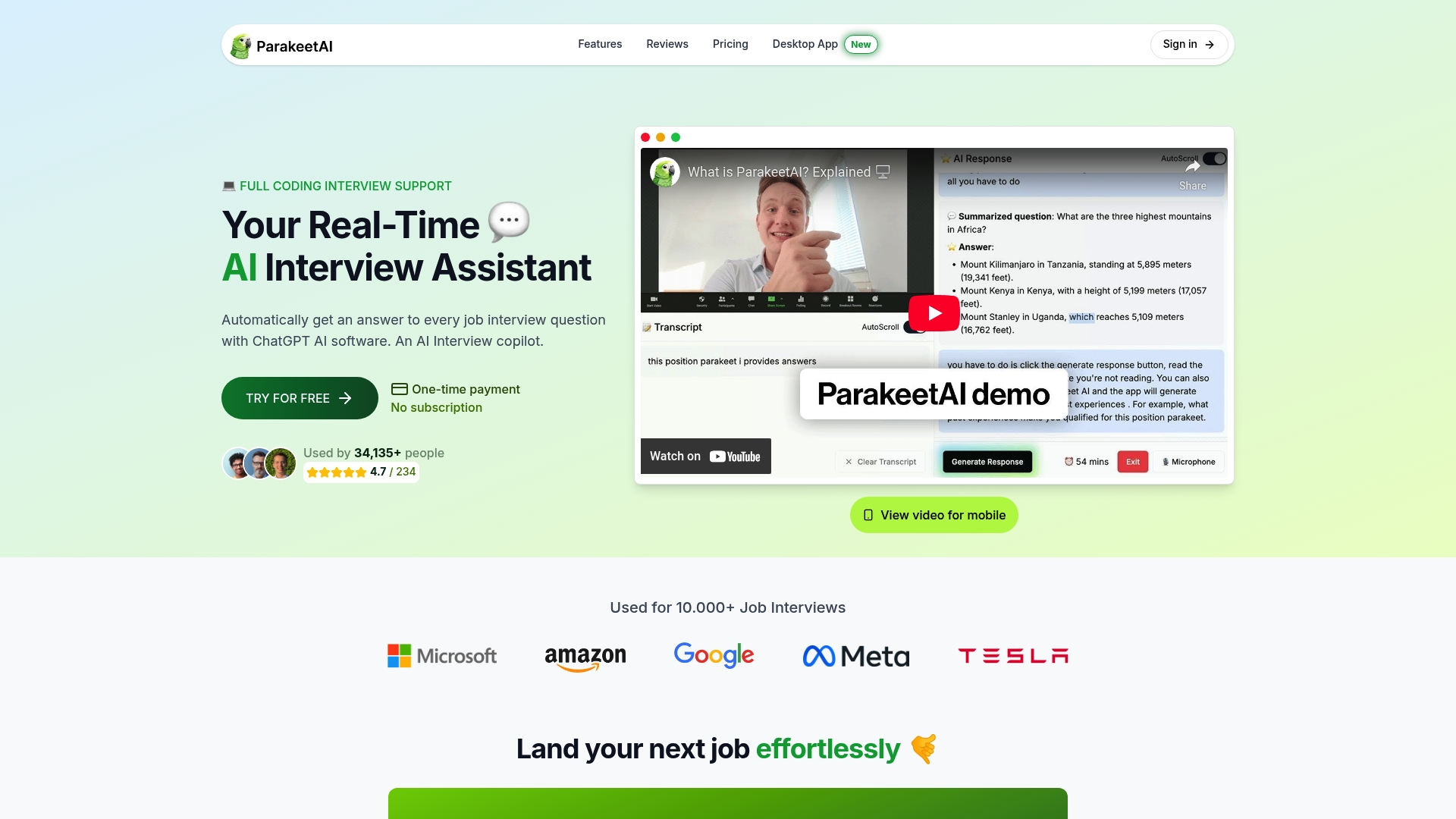
Take control of your interview preparation with a real-time AI assistant that listens and helps you craft winning answers on the spot. Visit Parakeet AI today to practice common situational interview questions, sharpen your storytelling, and boost your confidence. Don’t let uncertainty hold you back when every answer counts—experience the future of interview coaching now at real-time AI job interview assistant and advance your career with strategic guidance built for success.
Frequently Asked Questions
What are situational interview questions?
Situational interview questions are assessment tools used to evaluate how candidates might respond to hypothetical workplace scenarios, focusing on problem-solving skills and decision-making processes.
How should I prepare for situational interview questions?
Practice by creating realistic scenarios related to your industry and rehearse structured responses using frameworks like STAR or SOAR to demonstrate your thought process clearly.
What key traits do employers look for in situational interviews?
Employers assess traits such as adaptability, critical thinking, communication skills, emotional intelligence, decision-making, and problem-solving capabilities in candidates during situational interviews.
Can you give an example of a situational question in a tech interview?
An example might be: “How would you handle a critical bug discovered just before a product launch?” This question tests the candidate’s troubleshooting skills and ability to communicate effectively under pressure.