
First Time Manager Interview Questions: Real-Time AI Success

Stepping into your first management interview at a fast-paced tech startup can feel both exciting and unpredictable. As expectations shift from technical mastery to demonstrating leadership potential and decision-making skills, first-time managers face questions that test problem-solving, motivation, and communication—even without direct management experience. With AI-assisted tools now providing real-time feedback and reducing bias, knowing how to prepare for these strategic assessments can set you apart and highlight your readiness for leadership.
Table of Contents
- First Time Manager Interview Questions Defined
- Essential Types of Interview Questions Explained
- Evaluating Manager Skills With Real-Time AI
- Strengths And Pitfalls Of Common Question Types
- Avoiding Common First-Time Interview Mistakes
Key Takeaways
| Point | Details |
|---|---|
| Focus on Managerial Qualities | First-time manager interviews assess decision-making, leadership orientation, problem-solving, communication, and strategic thinking skills. |
| Preparation is Crucial | Candidates should conduct thorough company research, prepare achievement narratives, and practice responses to common questions. |
| Utilize the STAR Method | Employ the STAR method (Situation, Task, Action, Result) to structure compelling answers to competency and situational questions. |
| Adopt AI Tools for Evaluation | Leverage AI-driven tools for personalized feedback and insights into managerial skills and areas for development. |
First Time Manager Interview Questions Defined
First-time manager interview questions represent a unique assessment approach designed to evaluate potential leadership capabilities in candidates without extensive management experience. Fundamental managerial qualities assessment focuses on understanding how candidates might navigate complex workplace scenarios.
These interviews are strategically structured to probe several critical dimensions of managerial potential:
- Decision-making skills
- Leadership orientation
- Problem-solving capabilities
- Communication effectiveness
- Strategic thinking approach
Interviewers typically deploy hypothetical situational questions to simulate real-world management challenges. By presenting complex scenarios, they can observe how candidates would theoretically handle team dynamics, resource allocation, conflict resolution, and strategic planning.
Interview preparation strategies emphasize demonstrating leadership potential through compelling narrative and practical examples. Candidates must articulate their understanding of management principles, showcase adaptability, and communicate a clear vision for team development.
Key areas of focus include:
- Explaining personal leadership philosophy
- Describing approach to team motivation
- Detailing conflict resolution strategies
- Demonstrating strategic goal-setting techniques
- Illustrating collaborative problem-solving methods
Pro tip: Practice articulating management scenarios using the STAR method (Situation, Task, Action, Result) to provide structured, compelling interview responses.
Essential Types of Interview Questions Explained
Managerial interviews employ multiple strategic questioning approaches designed to comprehensively assess a candidate’s potential. Interview question analysis reveals three primary categories that recruiters systematically use to evaluate professional capabilities.
These primary interview question types include:
- Competency questions
- Motivation questions
- Strengths-based questions
Competency questions require candidates to provide concrete examples demonstrating specific professional skills. These questions typically follow the STAR method (Situation, Task, Action, Result), challenging applicants to narrate precise workplace scenarios that highlight their problem-solving and leadership abilities.
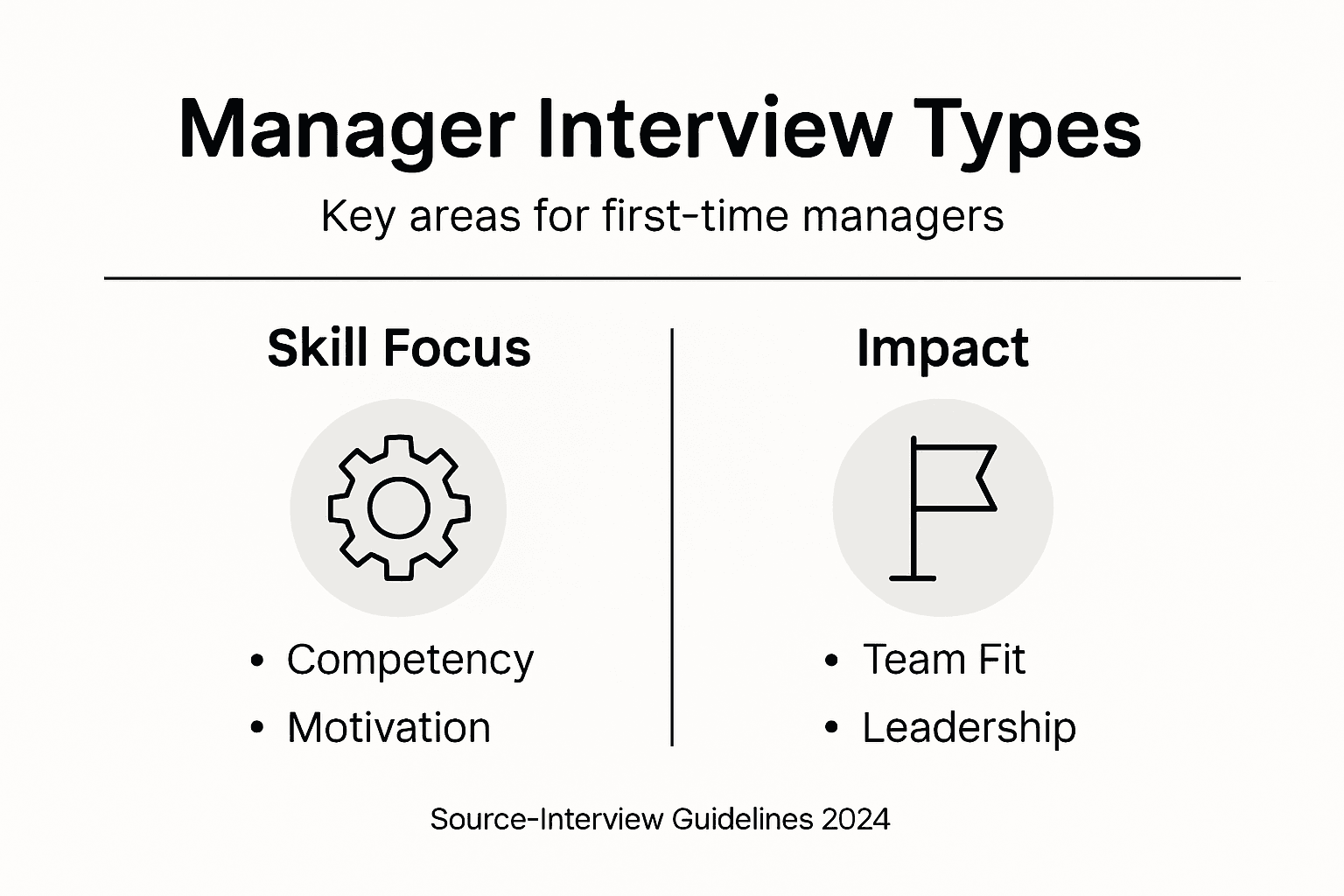
Motivation questions delve deeper into a candidate’s genuine interest in the specific role and organization. Recruiters seek to understand not just technical qualifications, but also cultural alignment and personal drive. These questions explore why candidates are passionate about the position and how their professional goals intersect with the company’s mission.
Strengths-based questions represent a more nuanced approach, focusing on what candidates naturally enjoy and excel at. Interviewers pay close attention to nonverbal cues, enthusiasm levels, and authentic engagement when candidates discuss their inherent talents and preferred work environments.
Additional interview question types managers might encounter include:
- Behavioral questions
- Situational judgment questions
- Technical skill assessment questions
- Leadership potential questions
- Cultural fit assessment questions
Pro tip: Prepare specific, measurable examples for each question type that demonstrate your unique professional capabilities and align with the role’s requirements.
Here’s a quick reference comparing interview question types and their business impact:
| Question Type | Focus Area | Typical Business Impact |
|---|---|---|
| Competency | Demonstrated skill use | Predicts role effectiveness |
| Motivation | Role enthusiasm | Drives team engagement |
| Strengths-Based | Natural talents | Enhances productivity and morale |
| Behavioral | Past experience analysis | Indicates future behavior reliability |
| Situational | Hypothetical response | Shows adaptability and flexibility |
Evaluating Manager Skills With Real-Time AI
The emergence of artificial intelligence has dramatically transformed how organizations assess managerial potential and performance. AI-driven performance insights are revolutionizing traditional evaluation methods by providing unprecedented levels of objective, real-time analysis.
Key capabilities of AI in managerial skill assessment include:
- Continuous performance monitoring
- Objective skill evaluation
- Personalized coaching recommendations
- Bias reduction in assessments
- Predictive talent management
Real-time AI tools enable organizations to capture nuanced performance data that traditional assessment methods might overlook. These advanced systems analyze multiple dimensions of managerial effectiveness, including communication patterns, decision-making speed, team engagement levels, and leadership potential.

AI-driven skill assessments provide managers with precise, actionable insights into their professional capabilities. By leveraging machine learning algorithms, these technologies can identify subtle strengths and potential development areas with remarkable accuracy, creating targeted improvement strategies.
The comprehensive evaluation process typically involves:
- Behavioral pattern recognition
- Communication effectiveness analysis
- Problem-solving skill mapping
- Leadership potential scoring
- Emotional intelligence assessment
Pro tip: Embrace AI assessment tools as developmental resources, not just evaluative instruments, to maximize your professional growth potential.
This table summarizes how real-time AI tools change managerial skill evaluations:
| AI Feature | Traditional Assessment Limitation | AI Assessment Advantage |
|---|---|---|
| Performance Monitoring | Periodic, subjective reviews | Continuous, objective feedback |
| Skill Evaluation | Manual, prone to bias | Automated, reduces bias |
| Coaching Recommendations | Generic, one-size-fits-all | Personalized, data-driven |
| Talent Management | Reactive, limited forecasting | Predictive, proactive improvement |
Strengths And Pitfalls Of Common Question Types
Managerial interviews employ diverse questioning strategies designed to comprehensively evaluate candidate potential. Interview question analysis reveals critical nuances in different questioning approaches, highlighting both their strengths and potential limitations.
Primary interview question categories include:
- Competency questions
- Motivation questions
- Strengths-based questions
- Behavioral questions
- Situational questions
Competency questions demand detailed examples demonstrating professional skills, effectively uncovering candidates’ actual capabilities. These questions require candidates to provide concrete scenarios that showcase problem-solving, leadership, and strategic thinking. While powerful, they demand extensive preparation and risk becoming overly rehearsed.
Common interview question strategies reveal that behavioral and situational questions offer unique insights into candidate potential. Behavioral questions assess past performance through specific experience narratives, providing reliable indicators of future actions. Situational questions test adaptability by presenting hypothetical challenges, revealing how candidates might respond to unexpected workplace scenarios.
Each question type presents distinct evaluation dimensions:
- Competency questions test specific skill demonstrations
- Motivation questions explore genuine professional passion
- Behavioral questions examine past performance patterns
- Situational questions assess hypothetical problem-solving
- Strengths-based questions uncover natural work preferences
Pro tip: Prepare versatile response strategies that can be adapted across different question types to demonstrate comprehensive professional capabilities.
Avoiding Common First-Time Interview Mistakes
First-time managers often encounter significant challenges during interviews that can dramatically impact their professional opportunities. Interview performance strategies are critical for navigating potential pitfalls and presenting a compelling professional narrative.
Common first-time interview mistakes include:
- Insufficient preparation
- Lack of company research
- Over-apologizing for limited experience
- Unclear communication of achievements
- Negative discussion of past roles
- Inconsistent professional messaging
Inadequate preparation represents one of the most significant barriers to interview success. First-time managers must thoroughly research the organization, understand job requirements, and develop clear narratives that demonstrate their potential leadership capabilities. Rehearsing responses and anticipating potential questions can help candidates appear confident and professional.
Nonverbal communication and emotional intelligence play crucial roles in overcoming interview challenges. Candidates should focus on maintaining positive body language, showing genuine enthusiasm, and articulating a clear vision for their professional development. Staying constructive about past experiences and emphasizing learning potential can help mitigate concerns about limited managerial background.
Key strategies for avoiding interview mistakes include:
- Conduct comprehensive company research
- Prepare specific, measurable achievement stories
- Practice confident, concise communication
- Demonstrate adaptability and learning mindset
- Align personal goals with organizational objectives
Pro tip: Record and review mock interview practice sessions to identify and correct potential communication weaknesses before the actual interview.
Master First-Time Manager Interviews with Real-Time AI Support
Stepping into your first managerial interview brings unique challenges like demonstrating leadership potential, navigating competency questions, and showcasing clear communication skills. The pressure to answer behavioral and situational questions confidently while presenting your strategic thinking can feel overwhelming. Parakeet AI understands these pain points and offers a real-time AI job interview assistant designed to boost your confidence and performance. By listening to your interview and instantly suggesting tailored answers, it helps you master key concepts like decision-making skills, conflict resolution strategies, and leadership orientation.
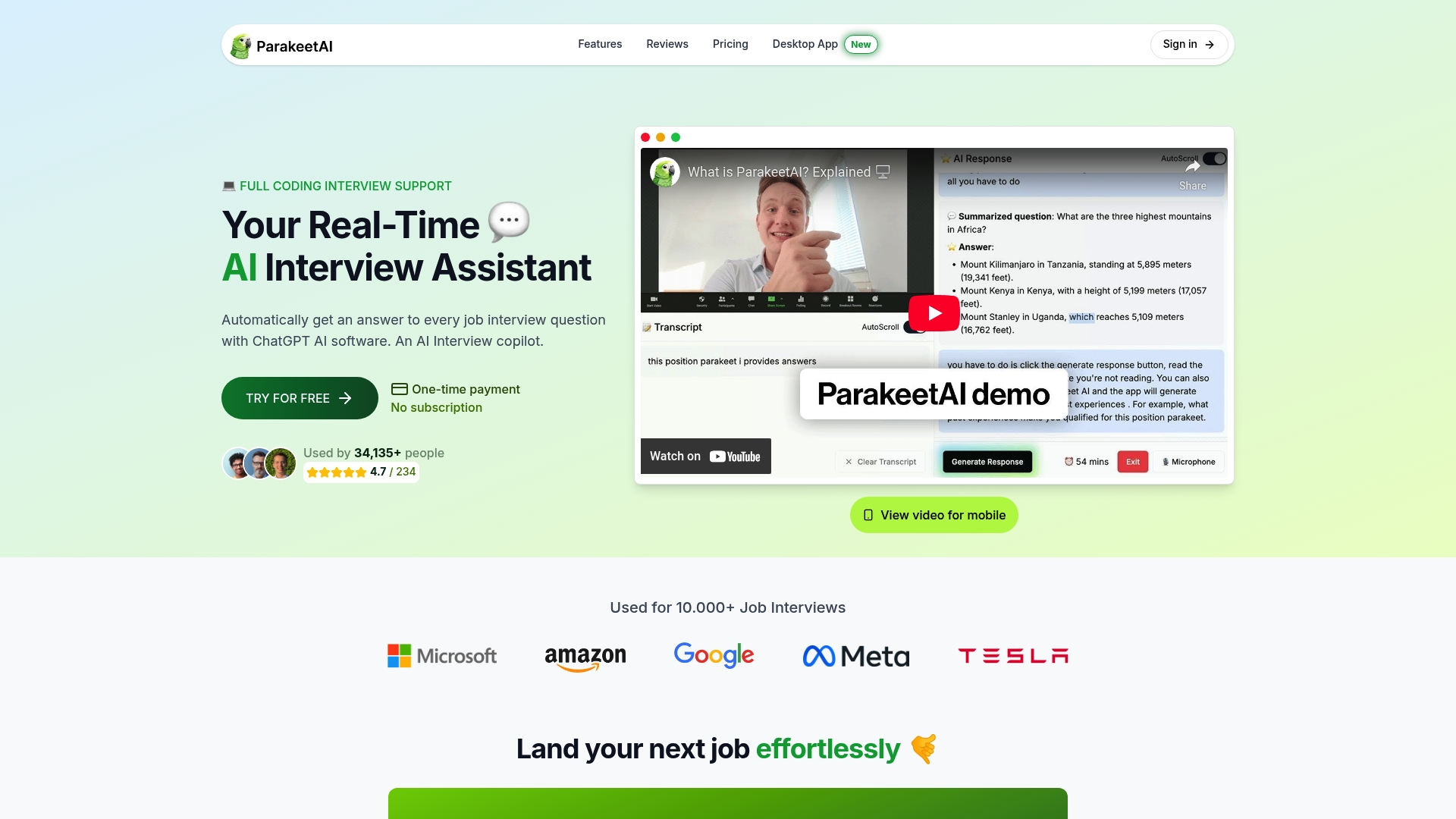
Unlock the power to prepare smarter and respond better. Visit Parakeet AI now and experience how real-time AI coaching can transform your first-time manager interview. Don’t let common mistakes or limited experience hold you back. Start practicing today and turn every question into an opportunity to impress your interviewers with clear, structured, and insightful answers.
Frequently Asked Questions
What are first-time manager interview questions?
First-time manager interview questions are designed to assess the potential leadership capabilities of candidates who may not have extensive management experience, focusing on decision-making skills, communication effectiveness, and strategic thinking, among other qualities.
How can I prepare for a first-time manager interview?
To prepare, research the organization, understand the job requirements, and practice articulating your leadership philosophy and problem-solving strategies using the STAR method. Additionally, anticipate potential scenarios you might face in a managerial role.
What types of questions should I expect in a first-time manager interview?
You can expect competency questions that require specific examples from your past experiences, motivation questions that explore your passion for the role, and strengths-based questions that assess your natural talents and preferences in a work environment.
How can AI tools help in evaluating managerial potential during interviews?
AI tools provide real-time insights into managerial performance by monitoring communication patterns, evaluating decision-making speed, and analyzing leadership potential. They offer objective data that can support development and skill improvement, enhancing traditional assessment methods.