
How to Improve Interview Answers for Confident Success

Over 60 percent of candidates say nerves prevent them from performing well in interviews. That first impression can make or break your next job offer, so improving your interview skills is a critical investment in your career growth. By using a step-by-step approach—assessing your performance, mastering question types, and practicing with AI-powered tools—you can transform anxiety into confidence and turn every interview into an opportunity to shine.
Table of Contents
- Step 1: Assess Your Current Interview Performance
- Step 2: Identify Common Question Types And Research Responses
- Step 3: Practice With Real-Time AI Feedback Tools
- Step 4: Refine Answers Using Personalized AI Suggestions
- Step 5: Verify Answer Quality For Clarity And Impact
Quick Summary
| Key Insight | Explanation |
|---|---|
| 1. Record and analyze mock interviews | Recording yourself helps identify strengths and weaknesses in communication skills. Focus on verbal, non-verbal, and content quality. |
| 2. Prepare for common question types | Familiarize yourself with traditional, behavioral, and role-specific questions to build effective responses. Use the STAR method for behavioral questions. |
| 3. Use AI tools for feedback | Implement AI feedback tools to receive real-time evaluations on your interview performance. This helps in recognizing patterns and areas for improvement. |
| 4. Refine answers with AI suggestions | Utilize AI recommendations to enhance the clarity and impact of your responses while ensuring your unique voice remains authentic. |
| 5. Verify answer quality systematically | Critically evaluate your answers for clarity and relevance, using behavior coding techniques and seeking feedback from mentors or coaches. |
Step 1: Assess your current interview performance
Assessing your interview performance is a critical first step in developing confident and compelling interview skills. According to research from arxiv, a comprehensive framework for evaluation requires analyzing multiple dimensions of communication beyond just verbal responses.
Start by recording yourself during mock interviews to gain objective insights. Focus on three key areas: verbal communication, body language, and content quality. Watch the recording and evaluate your performance systematically. Pay attention to how you structure answers, your tone of voice, eye contact, and overall presentation. 7 Essential Tips to Answer Interview Questions Confidently can provide additional guidance on refining your approach.
As behavior coding research from Wikipedia suggests, breaking down your performance into standardized observations helps identify specific areas for improvement. Create a simple scoring sheet where you rate aspects like clarity, confidence, technical accuracy, and storytelling ability. This methodical approach transforms subjective impressions into actionable insights you can systematically address in future interview preparations.
Remember that self assessment is an ongoing process. The more objectively you can analyze your performance, the faster you will improve your interview skills.
Step 2: Identify common question types and research responses
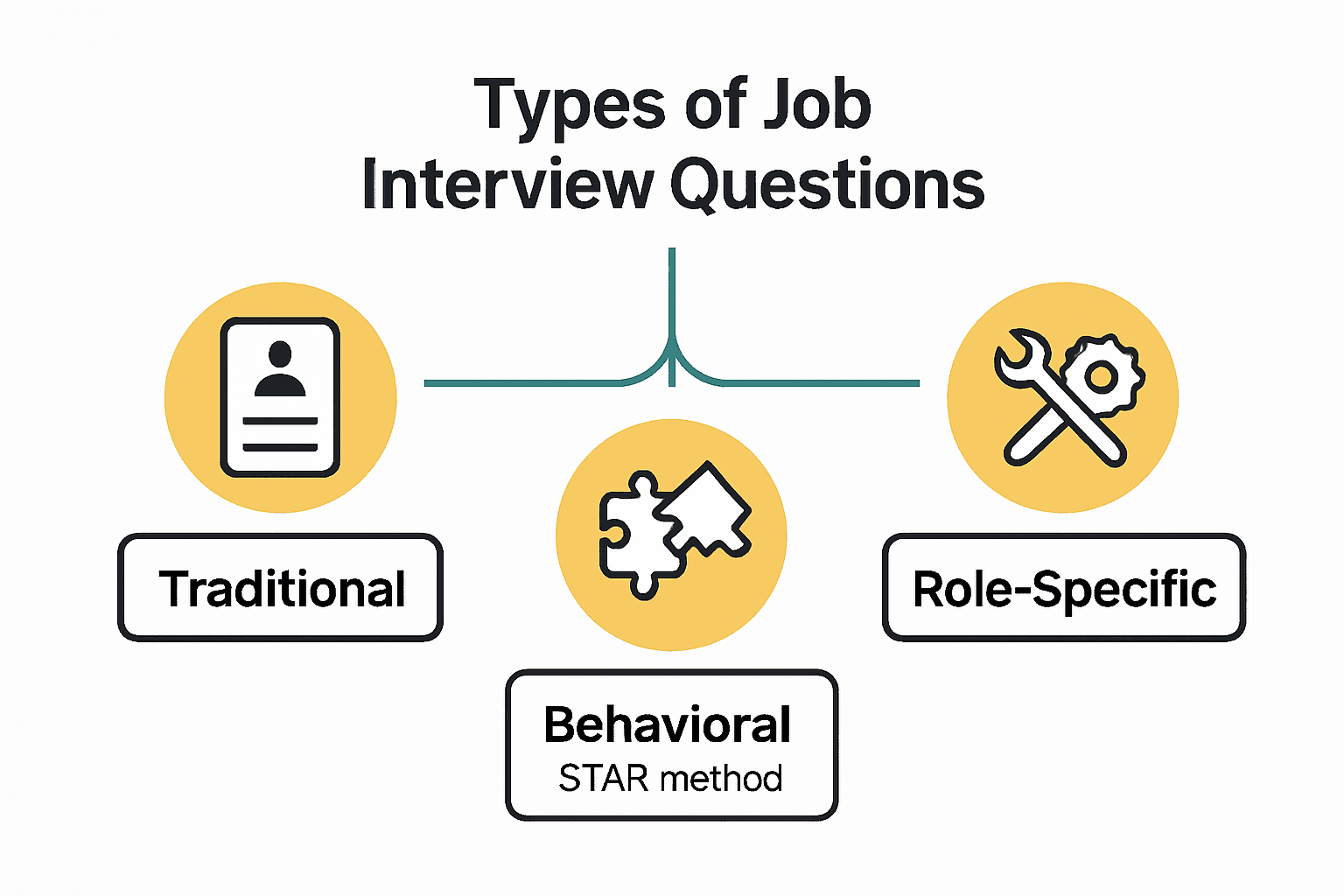
Identifying and preparing for common interview question types is crucial for building confident interview skills. According to research from the University of Illinois Graduate College, interview questions typically fall into three primary categories: traditional, behavioral, and role-specific inquiries.
Start by mapping out these question types. Traditional questions explore your background and qualifications. Behavioral questions require you to demonstrate past performance through specific examples. The STAR method is especially powerful for structuring behavioral responses by breaking down your answers into Situation, Task, Action, and Result. Role-specific questions dive deep into technical skills and industry knowledge relevant to the specific position.
To prepare effectively, collect a comprehensive list of potential questions for each category. Top 8 Common Job Interview Questions Answers for 2025 can provide an excellent starting point for building your preparation strategy. Practice crafting concise, compelling responses that highlight your unique strengths and professional experiences. Remember that while preparation is key, your answers should feel natural and authentic rather than overly rehearsed.
Your goal is to develop a flexible framework that allows you to adapt your responses to different question styles while maintaining confidence and clarity.
Step 3: Practice with real-time AI feedback tools
Practicing with real-time AI feedback tools offers an innovative approach to refining your interview skills. According to research from arxiv, advanced AI frameworks now employ sophisticated feature extractors and ensemble learning strategies to provide comprehensive performance assessments across video, audio, and text data.
Begin by selecting an AI-powered interview practice platform that offers nuanced feedback. AI-Driven Mock Interviews Explained: Key Features and Benefits can help you understand what to look for in these tools. As Wikipedia notes, computer-assisted interviewing techniques enable real-time data collection and immediate performance insights, allowing you to identify and address areas of improvement instantly.
When using these tools, approach each practice session with intentionality. Record multiple iterations of your responses, carefully analyzing the AI-generated feedback on aspects like verbal communication, body language, answer structure, and content depth. Pay close attention to patterns in your performance and be open to making incremental adjustments. The goal is not perfection but continuous improvement and increased confidence.

Remember that AI tools are supportive resources, not definitive judges. They provide valuable insights, but your unique personality and authentic communication remain your greatest interview strengths.
Step 4: Refine answers using personalized AI suggestions
Refining your interview answers through personalized AI suggestions represents a powerful strategy for improving your communication skills. According to research from arxiv, advanced AI frameworks can now integrate multimodal data analysis to provide nuanced feedback that captures both explicit and implicit communication cues.
Start by using interview answer generator tools that offer detailed, personalized recommendations. As Wikipedia explains, cognitive pretesting techniques help evaluate how you interpret and respond to interview questions, enabling you to understand and address potential comprehension gaps. Focus on AI suggestions that highlight areas like answer structure, clarity, relevance, and overall communication effectiveness.
When reviewing AI generated feedback, approach the suggestions with an open and analytical mindset. Look for patterns in the recommendations across multiple practice sessions. Pay special attention to suggestions about your communication style, such as reducing filler words, improving answer conciseness, or adding more specific examples.
The goal is not to create robotic responses but to enhance your natural communication strengths.
Remember that AI suggestions are guides, not rigid rules. Your authentic voice and unique professional experiences remain the most compelling aspects of your interview performance.
Step 5: Verify answer quality for clarity and impact
Ensuring the highest quality of your interview answers requires a systematic approach to evaluation. Research from arxiv highlights the importance of multimodal data analysis in assessing the clarity and impact of interview responses, identifying critical areas for improvement in communication strategy.
Implement a rigorous verification process by applying behavior coding techniques to your interview responses. This method involves systematically analyzing your communication patterns, focusing on key elements such as answer structure, verbal precision, and overall message delivery. Break down each response into specific components: relevance to the question, depth of information, storytelling effectiveness, and professional tone.
Conduct multiple review cycles where you critically evaluate your answers from different perspectives. Listen to recordings of your responses, paying close attention to your pacing, tone, and ability to communicate complex ideas succinctly. Consider seeking feedback from mentors, colleagues, or professional interview coaches who can provide an objective perspective on your communication style. The goal is to refine your answers so they are crisp, compelling, and authentically represent your professional capabilities.
Remember that answer quality is not about perfection but about clear, confident communication that showcases your unique professional strengths.
Boost Your Interview Confidence with Real-Time AI Assistance
Improving your interview answers involves clear communication, personalized feedback, and ongoing practice. This article highlights key challenges like self-assessment, refining answers using AI suggestions, and verifying response clarity. If you want to overcome these hurdles and develop answers that truly stand out, personalized AI guidance makes all the difference. Our real-time AI job interview assistant listens, analyzes, and even generates effective answers so you can practice with confidence and clarity.
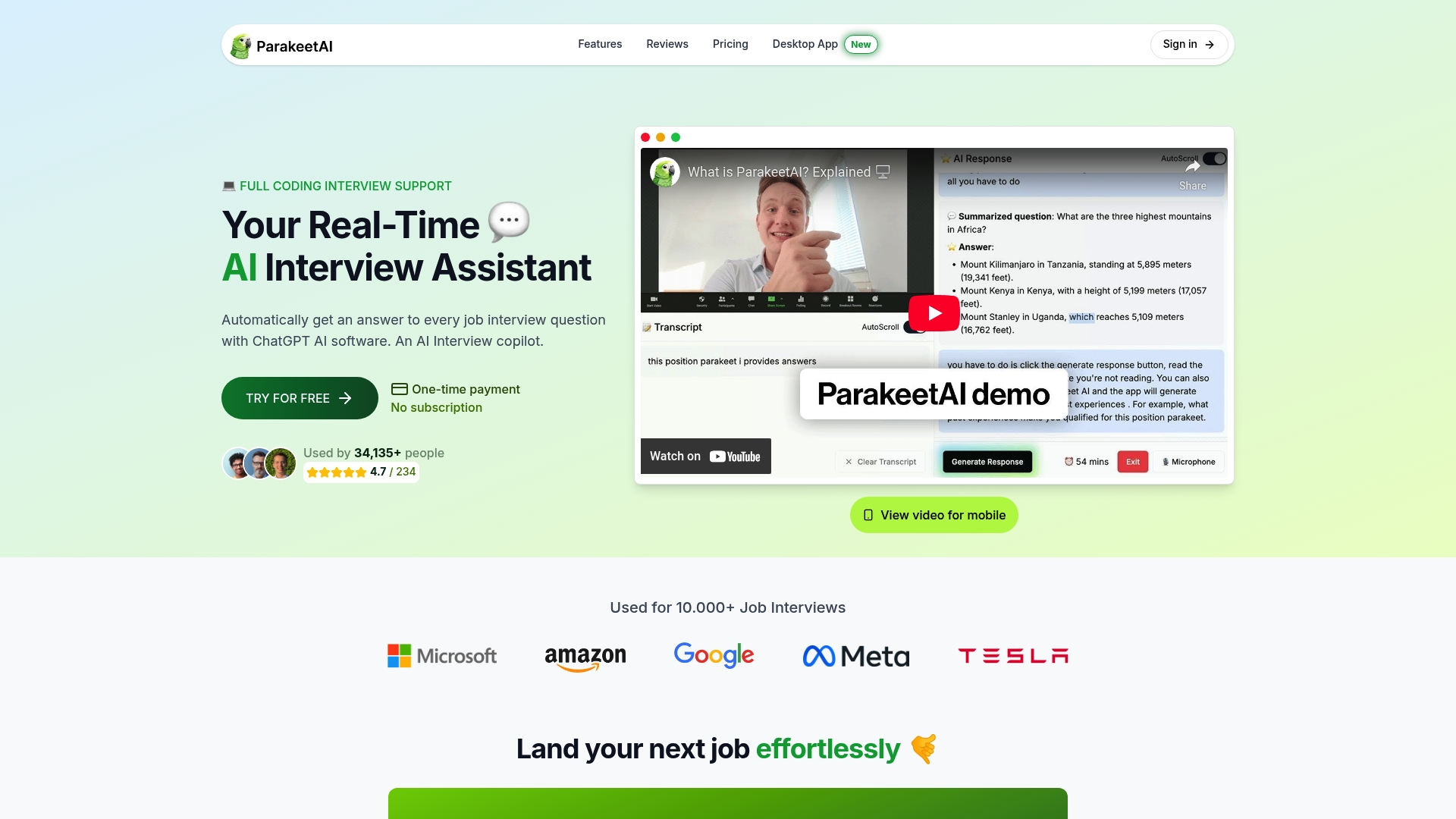
Take control of your interview journey now. Experience how Parakeet AI transforms your preparation by providing instant, tailored feedback on your verbal communication, body language, and answer quality. Visit https://parakeet-ai.com to start practicing smarter today and move closer to interview success with every session.
Frequently Asked Questions
How can I assess my current interview performance?
Begin by recording yourself during mock interviews. Focus on evaluating verbal communication, body language, and content quality to identify specific areas for improvement.
What are common interview question types I should prepare for?
Common interview questions typically fall into three categories: traditional, behavioral, and role-specific inquiries. Map these question types out and craft responses that highlight your qualifications and experiences.
How can I practice effectively with AI feedback tools?
Select an AI-powered platform that provides real-time feedback. Record multiple practice sessions and analyze the AI-generated insights on aspects like clarity and body language to make targeted improvements.
What strategies can I use to refine my interview answers?
Utilize personalized AI suggestions from interview answer generators to enhance your responses. Review the feedback critically and identify patterns to improve areas such as structure and clarity.
How do I verify the quality of my interview answers?
Implement a systematic verification process by analyzing your communication patterns with behavior coding techniques. Conduct multiple review cycles to ensure your answers are clear, engaging, and representative of your professional strengths.
What should I focus on to ensure confident communication during interviews?
Aim for concise and compelling answers that reflect your unique experiences and strengths. Practice responses regularly, making adjustments based on both self-assessment and external feedback to enhance your confidence.