
Interview Best Practices: Elevating Startup Hiring Success

Hiring in a fast-paced startup often means facing unpredictable interviews and tough choices about what truly predicts a great hire. For technology leaders, understanding the core principles of effective interviewing is crucial to move beyond basic question lists and uncover genuine candidate strengths. As you look to transform your process, this article explores actionable strategies that combine respected research, innovative tools, and human insight, helping you make smarter, fairer hiring decisions from first impression to final offer.
Table of Contents
- Core Principles Of Effective Interviewing
- Types Of Interviews And Their Uses
- Integrating AI Tools In The Interview Process
- Common Interview Mistakes To Avoid
- Legal Risks And Compliance In Interviewing
Key Takeaways
| Point | Details |
|---|---|
| Effective Interviewing | Involves active listening, rapport building, and structured questioning to gather meaningful insights. |
| Interview Types | Different formats like structured, behavioral, and cultural fit interviews serve specific purposes in evaluating candidates. |
| AI Integration | Utilizing AI tools can streamline the process, reduce bias, and enhance the objective assessment of candidates. |
| Legal Compliance | Adhering to legal standards is essential for creating a respectful hiring environment and avoiding potential risks. |
Core Principles Of Effective Interviewing
Effective interviewing represents a complex interaction far beyond simple question-and-answer exchanges. At its core, interviewing demands strategic preparation, ethical considerations, and a nuanced approach to gathering meaningful information. Comprehensive interviewing techniques require understanding key principles that transform conversations into valuable insights.
Startup hiring managers must recognize that effective interviewing involves multiple critical dimensions:
- Active Listening: Carefully absorbing candidate responses beyond surface-level answers
- Rapport Building: Creating a comfortable environment for genuine communication
- Structured Questioning: Using strategic queries aligned with role requirements
- Ethical Considerations: Maintaining professionalism and legal compliance
- Objective Assessment: Evaluating candidates through standardized, fair criteria
Professional interviews demand more than technical skill evaluation. They require understanding human dynamics, communication patterns, and potential cultural alignment. Interview preparation fundamentals emphasize that gathering accurate information depends on creating trust and psychological safety.
Successful startup interviews integrate multiple assessment layers. Beyond technical competence, interviewers must evaluate soft skills, adaptability, problem-solving capabilities, and team compatibility. This holistic approach transforms interviews from mere screening processes into strategic talent acquisition opportunities.
Pro tip: Develop a consistent interview scorecard that objectively measures candidates across predetermined competency dimensions to minimize unconscious bias and standardize evaluation.
Types Of Interviews And Their Uses
Startup hiring processes demand sophisticated interview strategies that go beyond traditional question-and-answer formats. Interview research methodologies reveal multiple approaches designed to extract comprehensive candidate insights across different organizational contexts.
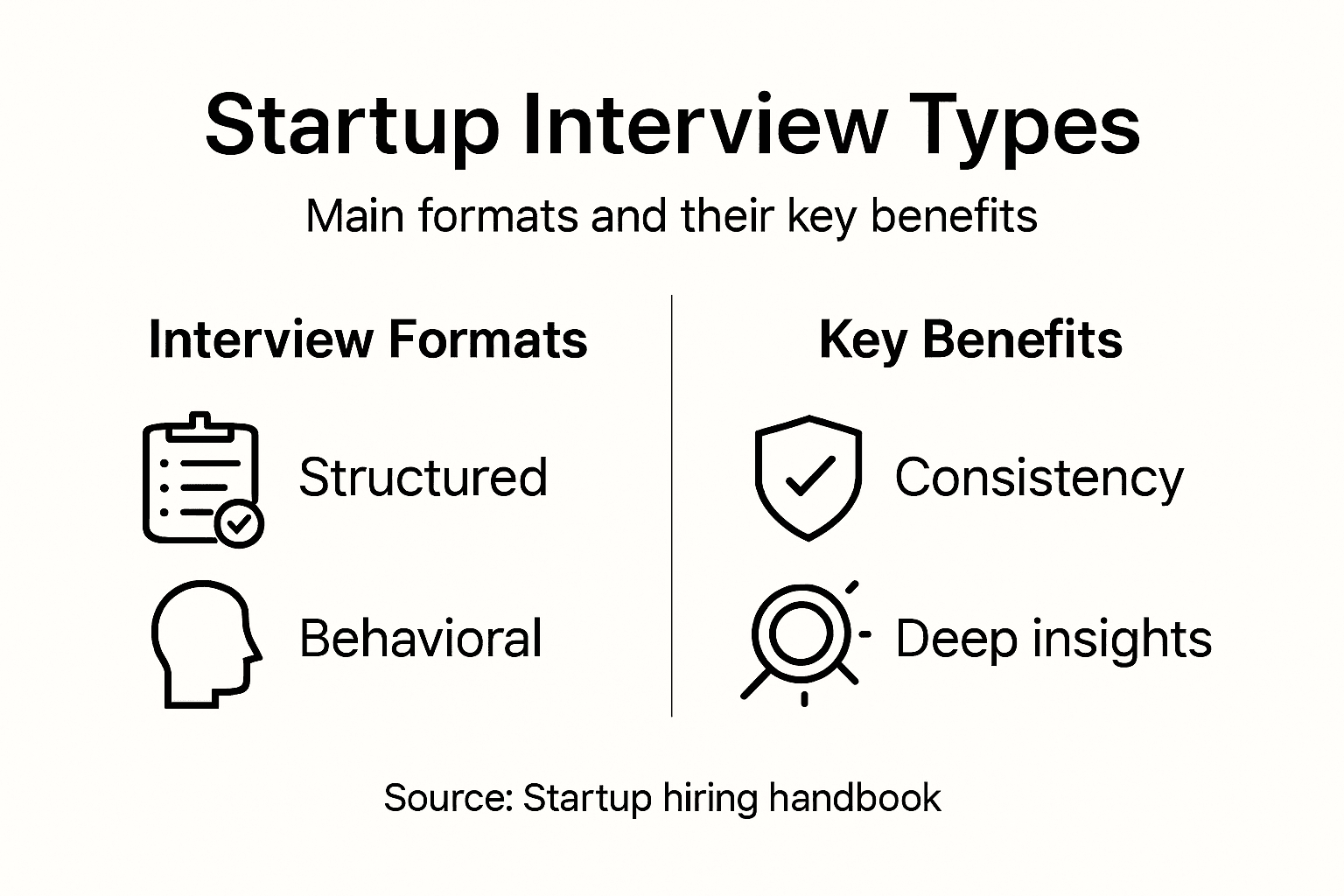
Primary interview types for startup hiring include:
- Structured Interviews: Standardized questions with predetermined scoring criteria
- Behavioral Interviews: Exploring past performance through specific scenario questioning
- Technical Interviews: Assessing specific skill competencies through practical challenges
- Cultural Fit Interviews: Evaluating candidate alignment with company values and team dynamics
- Panel Interviews: Multiple interviewers evaluating candidate from diverse perspectives
Each interview format serves unique purposes in talent acquisition. Research interview techniques demonstrate that interview selection depends on specific organizational goals, desired information depth, and candidate assessment requirements. Structured interviews provide quantitative comparability, while unstructured formats offer deeper narrative exploration of candidate potential.
Here’s a quick comparison of major interview types and when to use them:
| Interview Type | Best For | Key Benefit |
|---|---|---|
| Structured | Objective evaluations | Standardized scoring and fairness |
| Behavioral | Past performance insights | Reveals problem-solving approaches |
| Technical | Skill verification | Validates job-related expertise |
| Cultural Fit | Team integration | Assesses alignment with values |
| Panel | Diverse perspectives | Reduces individual biases |
Successful startup interviews integrate multiple interview types to create a holistic candidate evaluation process. By combining technical assessments, behavioral insights, and cultural alignment checks, organizations can make more informed hiring decisions that go beyond surface-level qualifications.
Pro tip: Design a multi-stage interview process that strategically combines different interview types to comprehensively assess candidate capabilities and potential fit.
Integrating AI Tools In The Interview Process
Artificial Intelligence is transforming the startup hiring landscape, offering unprecedented capabilities for enhancing interview effectiveness. AI-powered interview technologies are revolutionizing how organizations approach talent acquisition by providing dynamic support throughout the recruitment process.
Key AI integration strategies for interviews include:
- Automated Question Generation: Creating contextually relevant interview questions
- Real-Time Response Analysis: Evaluating candidate communication and technical skills
- Bias Reduction: Implementing objective assessment mechanisms
- Performance Scoring: Quantifying candidate potential using advanced algorithms
- Adaptive Interviewing: Dynamically adjusting interview flow based on candidate responses
AI interview preparation systems represent a significant breakthrough in talent acquisition technology. These sophisticated platforms leverage natural language processing and machine learning to streamline candidate evaluation, providing unprecedented insights into individual potential beyond traditional assessment methods.
Successful AI integration requires a balanced approach that combines technological capabilities with human judgment. By strategically implementing AI tools, startups can create more efficient, objective, and comprehensive interview processes that identify top talent more effectively than ever before.
Below is an overview of how AI enhances the interview process for startups:
| AI Function | Description | Business Impact |
|---|---|---|
| Automated Questioning | Generates dynamic, relevant questions | Saves recruiter time |
| Real-Time Response Analysis | Assesses skills as candidates answer | Provides instant decision feedback |
| Bias Detection | Flags inconsistent evaluations | Improves fairness and compliance |
| Adaptive Flow | Customizes follow-up questions | Increases candidate engagement |
| Performance Scoring | Quantifies responses using algorithms | Enables data-driven hiring choices |
Pro tip: Start with pilot AI interviewing tools in specific departments to validate effectiveness and gradually expand implementation across your organization.
Common Interview Mistakes To Avoid
Startup hiring processes demand meticulous preparation and strategic communication. Common interview mistakes can derail even the most qualified candidates, transforming potentially successful opportunities into missed connections.
Key interview mistakes startup candidates frequently encounter include:
- Insufficient Company Research: Demonstrating lack of genuine interest
- Overscripted Responses: Sounding rehearsed instead of authentic
- Inappropriate Communication Style: Failing to match organizational culture
- Inadequate Question Preparation: Not asking insightful follow-up questions
- Unprofessional Digital Presence: Misaligned online professional profiles
Professional interview preparation requires understanding nuanced communication dynamics. Successful candidates recognize that interviews are bilateral conversations demanding mutual engagement, not one-sided interrogations. This means actively listening, responding thoughtfully, and demonstrating genuine curiosity about the role and organization.

Navigating interview challenges demands emotional intelligence and strategic self-presentation. Candidates must balance showcasing technical competencies with demonstrating cultural adaptability, interpersonal skills, and authentic professional passion. By anticipating potential pitfalls and preparing comprehensive responses, startup job seekers can differentiate themselves in competitive hiring landscapes.
Pro tip: Record and review mock interview recordings to identify unconscious communication habits and refine your professional presentation strategy.
Legal Risks And Compliance In Interviewing
Startup hiring managers must navigate a complex landscape of legal requirements to protect both organizational interests and candidate rights. Investigative interview techniques demand rigorous adherence to legal and ethical standards that safeguard all parties involved in the recruitment process.
Critical legal compliance considerations include:
- Discrimination Prevention: Avoiding questions that could be perceived as discriminatory
- Privacy Protection: Maintaining strict confidentiality of candidate information
- Consent Requirements: Obtaining explicit permission for background checks
- Equal Opportunity Standards: Ensuring uniform evaluation criteria
- Documentation Integrity: Maintaining accurate and unbiased interview records
Ethical interviewing principles emphasize the importance of transparent, voluntary participation and informed consent. Legal risks emerge when organizations fail to establish clear boundaries, ask inappropriate questions, or compromise candidate autonomy during the hiring process.
Successful startups recognize that legal compliance is not just about avoiding potential lawsuits, but about creating a respectful, professional hiring environment. This approach requires ongoing training, robust interview protocols, and a commitment to understanding evolving employment regulations and candidate protection standards.
Pro tip: Develop a standardized interview scorecard and training program that explicitly outlines legal boundaries and acceptable questioning techniques.
Transform Your Startup Hiring with Real-Time AI Support
Hiring managers know that effective interviewing requires active listening, structured questioning, and objective assessment to identify the best talent. Yet, balancing these core principles while avoiding common pitfalls can be overwhelming. If you want to elevate your startup’s hiring success by integrating advanced tools that help create trust, reduce bias, and provide dynamic candidate insights, it is time to explore innovative solutions.
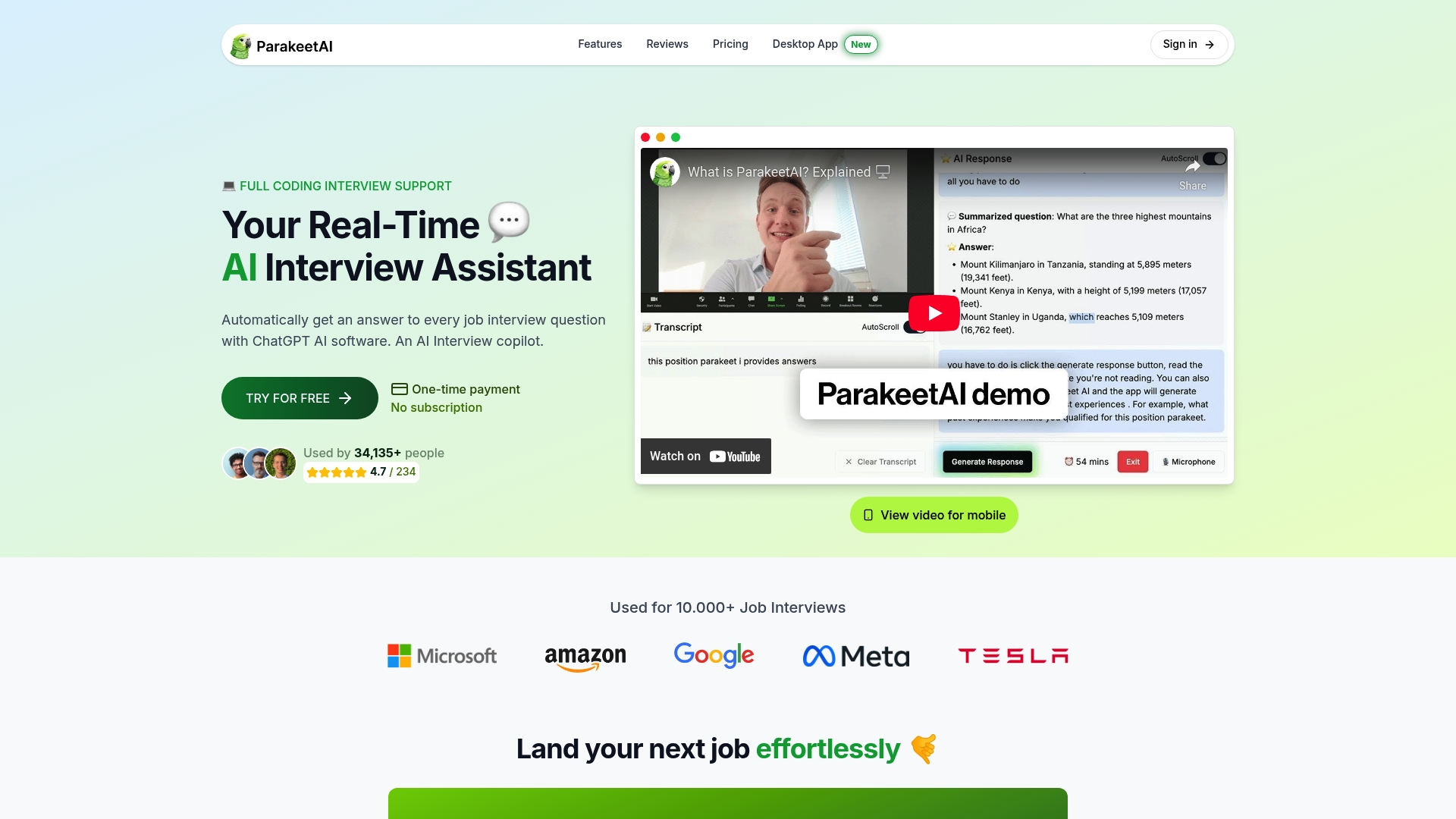
Experience how a real-time AI job interview assistant can revolutionize your process by listening closely and generating instant, AI-powered answers to every interview question. Visit Parakeet AI to see how this cutting-edge technology supports structured interviews, enhances candidate evaluation, and empowers you to make data-driven hiring decisions faster. Don’t wait to streamline your talent acquisition and stay ahead in the competitive startup landscape. Start your transformation today at Parakeet AI.
Frequently Asked Questions
How can active listening improve the interview process?
Active listening allows interviewers to fully absorb candidate responses, leading to deeper insights and better-informed hiring decisions.
What are the main types of interviews used in startup hiring?
The main types include structured interviews, behavioral interviews, technical interviews, cultural fit interviews, and panel interviews, each serving different purposes in candidate assessment.
How can AI tools enhance the interview process for startups?
AI tools can automate question generation, provide real-time response analysis, reduce bias, and dynamically adjust interview flows, resulting in a more efficient and objective hiring process.
What common mistakes should candidates avoid during interviews?
Candidates should avoid insufficient company research, overscripted responses, inappropriate communication styles, inadequate question preparation, and maintaining an unprofessional digital presence.
Recommended
- interview questions to ask interviewee - ParakeetAI
- 7 Must-Ask Interview Questions to Ask Interviewee for Startups
- interview best practices - ParakeetAI
- interview process best practices - ParakeetAI
- 7 Essential Branding Tips for Startups Seeking Rapid Growth | Reddog Consulting Group
- Pete Ketchum | Organizational Psychologist & Author