
Interview Guide Template: Consistency and Confidence

Landing an interview often feels like the biggest hurdle, but facing unclear or inconsistent questions can leave even the most prepared candidates second guessing their answers. For recent graduates and entry-level professionals, understanding how a well-structured interview guide levels the playing field is key. This article breaks down the true purpose and major misconceptions of these guides, revealing how a standardized interview process supports fairness and helps you bring your best self to each conversation.
Table of Contents
- Interview Guide Template Explained And Misconceptions
- Types Of Interview Guide Templates For Job Seekers
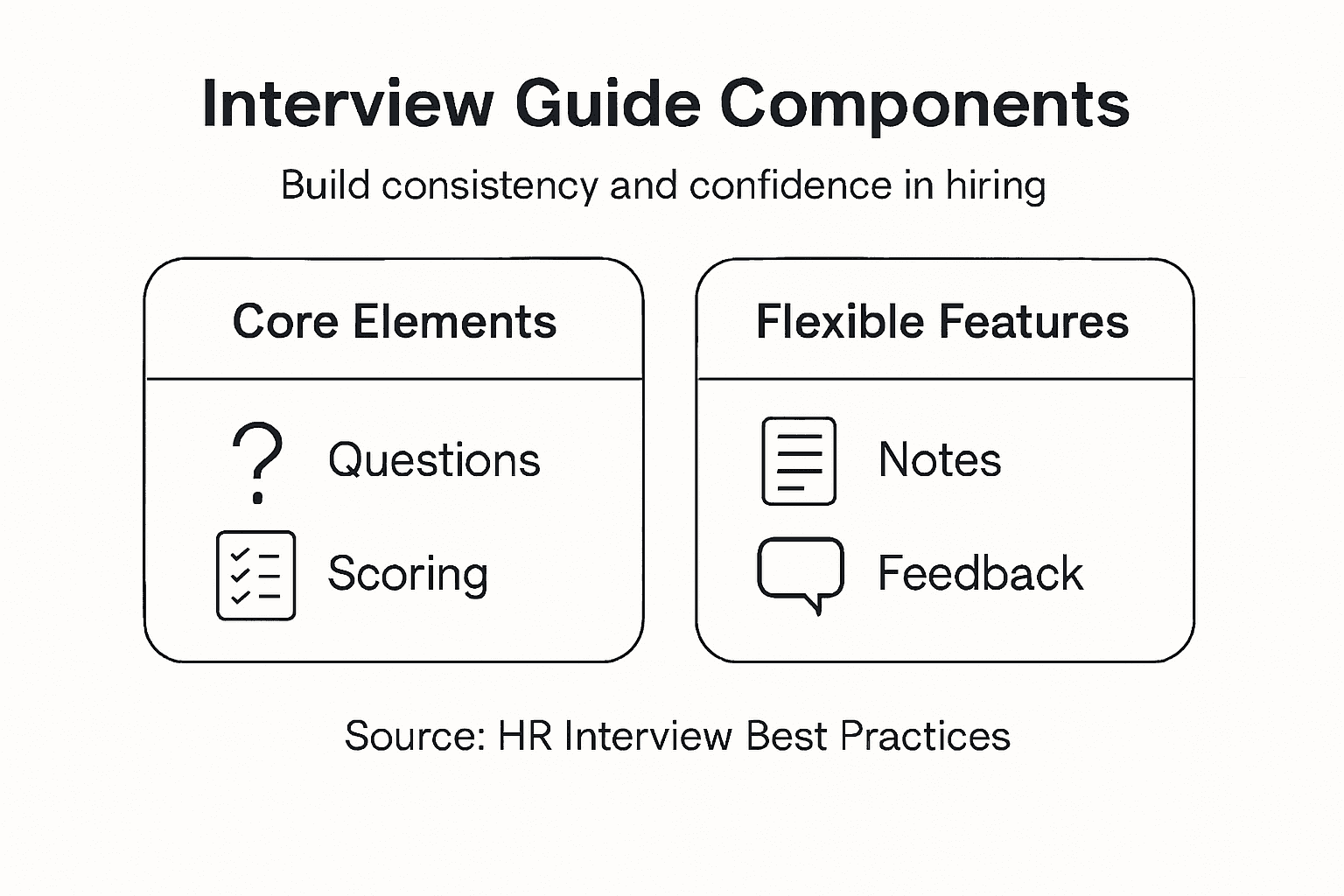
- Components Of An Effective Interview Guide Template
- Legal Compliance And Ethical Interview Practices
- Common Pitfalls And How To Avoid Them
Key Takeaways
| Point | Details |
|---|---|
| Effective Interview Guides Lead to Fair Assessments | Structured interview guides help minimize bias and ensure consistency during candidate evaluations. |
| Dynamic Tools, Not Static Checklists | Interview guides require ongoing refinement and active engagement from hiring teams to remain effective. |
| Flexible Frameworks Facilitate Meaningful Conversations | Despite misconceptions, structured guides promote authenticity and deeper interactions in interviews. |
| Ethical Practices are Essential | Adhering to ethical standards in interviews ensures respect for candidates and aligns with legal compliance. |
Interview Guide Template Explained and Misconceptions
An interview guide represents a strategic blueprint for conducting fair, consistent, and effective candidate evaluations. These structured frameworks transform traditional hiring processes by standardizing questions and reducing unconscious bias. By creating a systematic approach, organizations can ensure every candidate experiences an equitable assessment aligned with core job requirements.
Key components of an effective interview guide typically include:
- Predefined questions targeting specific skills and competencies
- Consistent scoring rubrics for objective candidate comparison
- Clear documentation protocols
- Alignment with job description requirements
- Mechanisms to minimize interviewer prejudice
Contrary to common misconceptions, interview guide development involves much more than creating a simple checklist. These guides represent dynamic tools that require regular refinement and active engagement from hiring teams. They are not static documents but living resources that evolve with organizational needs and changing recruitment landscapes.
Understanding interview guide misconceptions is crucial for effective implementation. Many professionals mistakenly believe that structured interviews limit authentic candidate interactions or reduce flexibility. In reality, these guides provide a standardized framework that actually enables more meaningful conversations by ensuring comprehensive skill assessments.
Structural Benefits:
- Improved candidate experience
- Enhanced fairness in evaluation
- Clearer communication of organizational expectations
- Systematic skill assessment
- Reduced individual interviewer bias
Pro tip: Create a living document that gets reviewed and updated quarterly to maintain relevance and effectiveness in your interview processes.
Types of Interview Guide Templates for Job Seekers
Navigating the complex landscape of job interviews requires understanding the diverse interview guide templates available to job seekers. Different interview formats demand unique preparation strategies, making it essential to recognize the specific types of interview guides that can enhance your chances of success.
Primary interview guide templates include:
- Screening Interview Guide
- Quick candidate evaluation
- Typically conducted by HR or recruiter
- Focuses on basic qualifications and initial fit
- Behavioral Interview Guide
- Explores past professional experiences
- Uses situational and competency-based questions
- Assesses problem-solving and interpersonal skills
- Technical Interview Guide
- Specialized for technical roles
- Tests specific professional knowledge
- Includes practical skills assessments
- Panel Interview Guide
- Multiple interviewers assess candidate simultaneously
- Comprehensive evaluation from different perspectives
- Requires strategic communication skills
Each interview guide template serves a unique purpose in the candidate assessment process. Screening guides help recruiters quickly filter candidates, while behavioral guides dive deeper into a candidate’s professional narrative and potential cultural fit. Technical interview guides are particularly critical in specialized fields like technology, engineering, and scientific research, where specific skill verification is paramount.
Here’s a quick comparison of interview guide template types for various job scenarios:
| Guide Type | Best For | Key Benefit |
|---|---|---|
| Screening | Initial candidate filtering | Saves recruiter time |
| Behavioral | Exploring past experiences | Identifies practical skills |
| Technical | Specialized and technical roles | Validates expert abilities |
| Panel | Comprehensive evaluations | Provides multiple viewpoints |
Professional preparation transforms interview guides from simple questionnaires into powerful assessment tools that reveal a candidate’s true potential.
Successful job seekers recognize that interview guides are not rigid scripts but flexible frameworks designed to facilitate meaningful professional conversations. Understanding the nuanced differences between these templates allows candidates to tailor their preparation, highlight relevant skills, and demonstrate their unique value proposition.
Key Considerations:
- Understand the specific template being used
- Prepare targeted responses aligned with guide’s focus
- Practice adaptability across different interview styles
- Research company culture and interview approach
Pro tip: Develop a versatile interview preparation strategy that can be quickly adapted to different guide templates and interview formats.
Components of an Effective Interview Guide Template
Constructing an effective interview guide requires strategic planning and meticulous attention to detail. Interview preparation techniques demand a comprehensive framework that ensures thorough candidate evaluation while maintaining fairness and consistency.
Core components of an effective interview guide template include:
- Invitation and Candidate Briefing
- Clear communication of interview details
- Logistical information
- Expectations and format explanation
- Role-Specific Question Structure
- Targeted questions aligned with job requirements
- Skill and competency assessment
- Performance potential evaluation
- Behavioral Assessment Framework
- Situational questioning techniques
- Competency-based exploration
- Cultural fit assessment
- Standardized Evaluation Criteria
- Objective scoring rubrics
- Consistent rating mechanisms
- Comparative candidate analysis
The most sophisticated interview guide templates go beyond simple question lists. They represent dynamic tools that capture nuanced candidate insights while minimizing unconscious bias. Each component serves a strategic purpose in creating a comprehensive candidate assessment process that is both fair and revealing.

This summary shows how critical guide components impact the interview process:
| Component | Impact on Hiring | Business Value |
|---|---|---|
| Candidate Briefing | Sets clear expectations | Boosts candidate satisfaction |
| Structured Questions | Ensures relevant skill focus | Improves hiring accuracy |
| Behavioral Assessment | Reveals true competencies | Reduces hiring risks |
| Standardized Criteria | Promotes fairness | Supports compliance |
An expertly designed interview guide transforms a standard conversation into a powerful talent discovery mechanism.
Successful interview guides require careful calibration between structured questioning and conversational flexibility. They must provide enough guidance to ensure comprehensive evaluation while allowing natural dialogue that reveals a candidate’s true potential. This delicate balance separates exceptional interview processes from merely transactional interactions.
Critical Design Elements:
- Consistent question framework
- Adaptive conversation pathways
- Objective evaluation mechanisms
- Comprehensive candidate insights
Pro tip: Develop a flexible interview guide template that provides structure without sacrificing the human element of personal interaction.
Legal Compliance and Ethical Interview Practices
Ethical interviewing represents a critical cornerstone of professional talent acquisition, demanding rigorous adherence to legal standards and human dignity. AI interview ethics have become increasingly complex, requiring nuanced understanding of consent, fairness, and candidate protection.
Key ethical interview practice principles include:
- Informed Consent
- Clear communication of interview purpose
- Transparent data usage explanation
- Voluntary participation guarantee
- Candidate Privacy Protection
- Strict confidentiality protocols
- Secure personal information handling
- Limited data retention policies
- Non-Discriminatory Assessment
- Standardized evaluation criteria
- Bias mitigation strategies
- Equal opportunity considerations
- Transparent Evaluation Process
- Consistent scoring mechanisms
- Clear performance assessment standards
- Objective candidate comparison
Legal compliance goes beyond mere procedural checklists. It demands a holistic approach that respects candidate autonomy, protects individual rights, and maintains organizational integrity. Interviewers must navigate complex regulatory landscapes while preserving human dignity and professional standards.
Ethical interviewing transforms talent assessment from a transactional process into a respectful human interaction.
The most sophisticated organizations recognize that legal compliance is not about avoiding penalties but creating genuine opportunities for meaningful professional connections. This approach requires continuous education, regular policy updates, and a commitment to evolving best practices that prioritize both organizational needs and individual rights.
Fundamental Ethical Pillars:
- Respect for human dignity
- Transparent communication
- Objective evaluation
- Continuous learning and improvement
Pro tip: Develop a comprehensive ethical interview framework that treats each candidate as a valuable individual, not just a potential resource.
Common Pitfalls and How to Avoid Them
Interview preparation demands strategic awareness of potential missteps that can derail even the most promising candidate’s performance. Common interview pitfalls represent critical learning opportunities for professionals seeking to navigate complex hiring landscapes effectively.
Most frequent interview mistakes include:
- Inadequate Preparation
- Minimal research about company
- Lack of role-specific knowledge
- Unprepared responses to standard questions
- Communication Failures
- Overly rehearsed or scripted answers
- Insufficient detail in explanations
- Poor narrative coherence
- Nonverbal Communication Errors
- Inconsistent eye contact
- Weak body language
- Inappropriate dress or presentation
- Strategic Interaction Mistakes
- Failing to ask meaningful questions
- Not demonstrating genuine interest
- Neglecting professional rapport building
Successful candidates recognize that interviews are dynamic interactions requiring adaptability, authenticity, and strategic self-presentation. Each potential pitfall represents an opportunity to distinguish oneself through thoughtful, genuine communication and thorough preparation.
Mastering interview dynamics transforms potential mistakes into opportunities for meaningful professional connection.
The most effective interview strategies involve proactive preparation, genuine self-representation, and a comprehensive understanding of both personal strengths and potential areas of improvement. Candidates who approach interviews as collaborative conversations rather than interrogations typically demonstrate superior performance and leave more lasting impressions.
Critical Performance Strategies:
- Comprehensive pre-interview research
- Authentic communication
- Strategic self-presentation
- Continuous learning mindset
Pro tip: Practice interview responses with a trusted mentor who can provide objective feedback on your communication style and content delivery.
Build Consistency and Confidence with AI-Powered Interview Practice
Mastering an interview guide template requires more than understanding the structure it offers. The real challenge is delivering confident and authentic answers while adapting to different interview types like behavioral or technical formats. Common preparation pitfalls include lacking tailored responses and difficulty maintaining natural conversation flow. That is where a real-time AI assistant can transform your practice and boost your readiness.
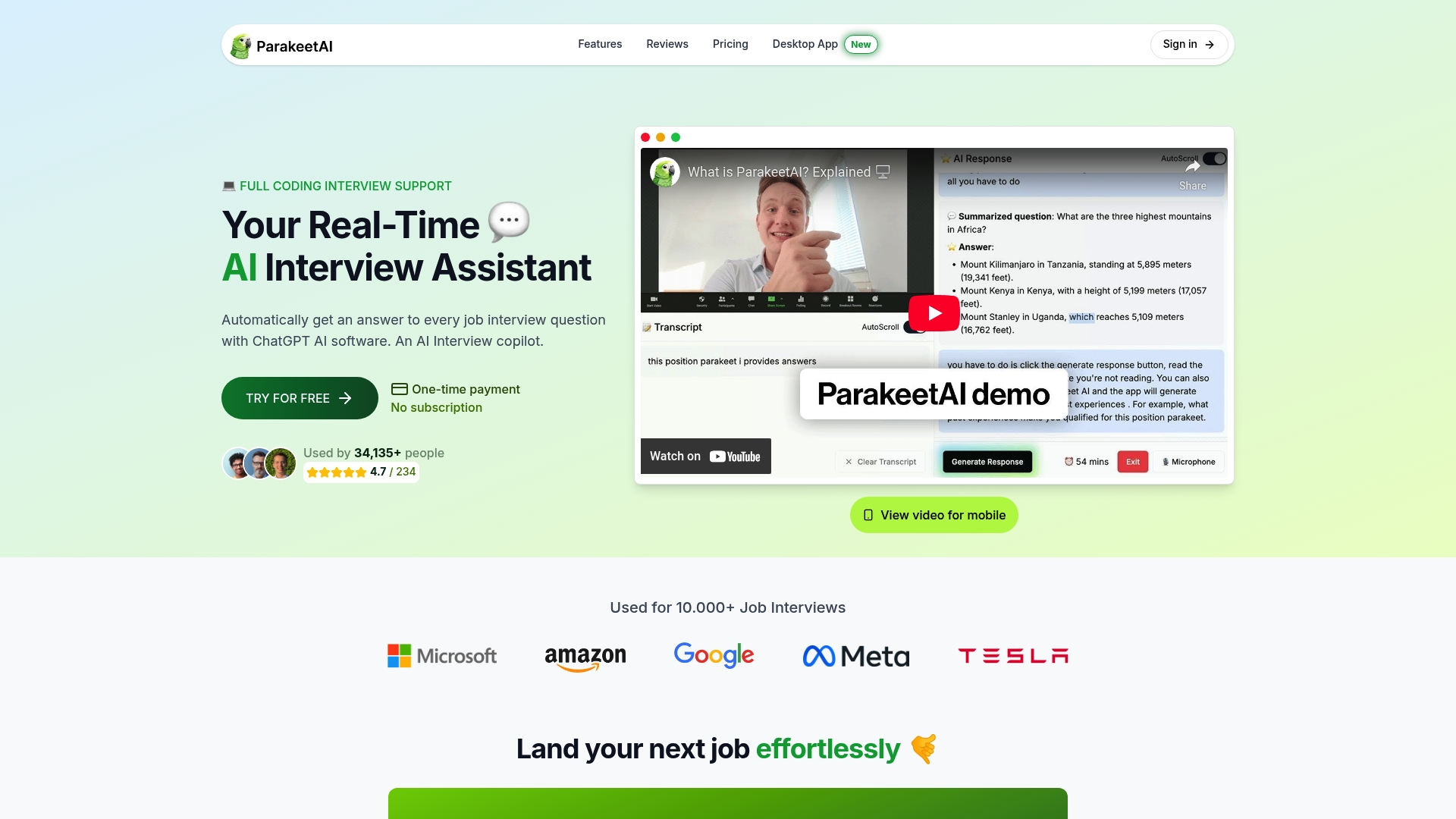
Experience how the AI Interview Assistant listens to your responses and provides instant, personalized answer suggestions. This dynamic tool helps you refine your communication, reduce hesitation, and align with the critical components of effective interview guides. Say goodbye to generic rehearsals and build a strategy that fits screening, panel, or behavioral interviews perfectly. Get ready to approach every question with clarity and live your best interview by visiting Parakeet AI today and turn preparation into opportunity.
Frequently Asked Questions
What is the purpose of an interview guide template?
An interview guide template serves as a strategic framework to ensure fair, consistent, and effective evaluations of job candidates. It standardizes questions, minimizes bias, and aligns assessments with job requirements.
How do I create an effective interview guide template?
An effective interview guide template should include predefined questions, a consistent scoring rubric, documentation protocols, role-specific structures, and mechanisms to ensure a fair assessment while enabling meaningful conversations.
What are the different types of interview guide templates?
The primary types of interview guide templates include screening guides for initial evaluations, behavioral guides exploring past experiences, technical guides for specialized roles, and panel guides that involve multiple interviewers assessing candidates simultaneously.
Why is ethical interviewing important in the hiring process?
Ethical interviewing is crucial because it ensures fair treatment of candidates, respects their privacy, and maintains compliance with legal standards. It fosters genuine professional connections and enhances the overall candidate experience.