
Real-Time AI Answers: Transforming Job Interviews

More than 90 percent of American tech professionals say they feel anxious before interviews, even with years of experience. For job seekers everywhere, the pressure to deliver flawless answers on the spot can feel daunting. Real-time AI interview assistants promise to ease this stress, but their complex capabilities—and surprising limitations—deserve careful attention. This guide offers answers to help candidates understand the risks, benefits, and best practices for using AI tools to support authentic, confident performance.
Table of Contents
- Real-Time AI Answers Defined and Debunked
- How AI Listens and Delivers Responses
- Types of Real-Time AI Interview Assistants
- Benefits for Job Seekers and Real-World Use Cases
- Risks, Limitations, and Ethical Considerations
- Mistakes to Avoid When Using AI Assistants
Key Takeaways
| Point | Details |
|---|---|
| Limitations of AI | Real-time AI answers are not infallible; they rely on pattern recognition and can produce inaccurate outputs. Users should verify critical information through multiple authoritative sources. |
| Prepare with AI | Preparation AI assistants can help candidates build interview skills through resume analysis and mock interviews, enhancing confidence before actual meetings. |
| Dynamic Support | Real-time response AI assistants provide instant feedback and contextually relevant suggestions during live interviews, improving communication effectiveness. |
| Critical Thinking Required | Users should avoid complete dependence on AI, using it as a supportive tool rather than a definitive guide for interview strategies and responses. |
Real-Time AI Answers Defined and Debunked
Real-time AI answers are sophisticated computational responses generated instantly by artificial intelligence systems, leveraging complex machine learning algorithms to process and synthesize information in milliseconds. These systems, particularly large language models like GPT, can rapidly generate human-like text by analyzing massive datasets and recognizing intricate language patterns. However, their capabilities are often misunderstood and require nuanced examination.
Contrary to popular belief, real-time AI answers are not infallible oracles of absolute truth. Recent academic research demonstrates that these models fundamentally operate through pattern recognition rather than genuine comprehension. This means AI can produce coherent responses that might sound authoritative but could contain subtle inaccuracies or contextual misunderstandings. The technology essentially predicts likely word sequences based on statistical probabilities, which can sometimes lead to what researchers call “hallucinations” - plausible-sounding but factually incorrect statements.
Understanding the limitations of real-time AI answers is crucial for responsible use. While these systems excel at processing and synthesizing information rapidly, they lack true critical thinking capabilities. AI language models essentially function as advanced prediction engines, generating responses by analyzing statistical relationships in training data. This means their outputs are probabilistic approximations rather than definitive facts. Users should approach AI-generated answers with healthy skepticism, verifying critical information through multiple authoritative sources.
Pro tip: When using real-time AI answers, always cross-reference important information with multiple expert sources to validate accuracy and context.
How AI Listens and Delivers Responses
Artificial Intelligence has revolutionized how interview responses are processed and generated, transforming traditional communication paradigms through advanced speech recognition and natural language understanding technologies. AI-powered speech-to-text tools convert spoken language into precise digital text, enabling rapid comprehension and analysis of complex verbal interactions with unprecedented accuracy.
The listening process involves multiple sophisticated technological layers. Machine Learning algorithms capture audio input, transcribe spoken words, and simultaneously analyze contextual nuances, tone, and potential underlying meanings. These systems go beyond simple word-for-word translation, employing advanced Natural Language Processing techniques to understand semantic intent, detecting subtle linguistic cues that might escape human perception.
Delivering responses requires equally complex computational processes. AI systems like Askademia demonstrate how Vision-Language Models can rapidly retrieve contextually relevant information and generate human-like responses within milliseconds. The technology synthesizes information from massive training datasets, creating responses that are not just grammatically correct but also contextually appropriate and tailored to the specific interview scenario. This intricate process involves real-time language generation, semantic understanding, and predictive modeling that adapts to conversational dynamics.
Pro tip: Practice speaking clearly and maintaining a consistent communication style to help AI systems more accurately capture and process your interview responses.
Types of Real-Time AI Interview Assistants
Real-time AI interview assistants have emerged as transformative tools in the job application landscape, offering diverse capabilities that cater to different stages of the interview process. These intelligent systems range from preparation platforms to live interview support technologies, each designed to address specific challenges job seekers encounter during professional interactions. Interview AI-ssistant technologies represent a cutting-edge approach to enhancing human interview performance through adaptive computational support.
Preparation AI Assistants focus on helping candidates build foundational interview skills before the actual meeting. These tools typically analyze resume content, generate potential interview questions, provide mock interview experiences, and offer personalized feedback on communication style and response quality. They use machine learning algorithms to simulate various interview scenarios, allowing job seekers to practice and refine their responses in a controlled, low-pressure environment.
During live interviews, Real-Time Response AI Assistants offer more dynamic support. These advanced systems can provide instant feedback, suggest contextually appropriate responses, and help candidates navigate complex conversational dynamics. Some sophisticated AI tools can even analyze interviewer body language, tone, and verbal cues to provide real-time guidance on communication strategies. These assistants leverage natural language processing to understand nuanced communication contexts, helping candidates present their most professional and articulate selves.
Here’s a comparison of preparation versus real-time response AI interview assistants:
| Assistant Type | Main Purpose | Typical Features | Ideal Use Case |
|---|---|---|---|
| Preparation AI | Skill-building before interviews | Resume analysis, mock questions, feedback | Practicing answers, reducing nerves |
| Real-Time Response AI | Support during live interviews | Instant suggestions, body language analysis | Navigating complex interviews |
Pro tip: Select an AI interview assistant that matches your specific career field and interview preparation needs, and practice consistently to maximize its potential benefits.
Benefits for Job Seekers and Real-World Use Cases
Real-time AI interview assistants are revolutionizing the job search process by providing unprecedented support and insights for candidates navigating complex professional interactions. Real-time AI technologies aid interviewers in managing cognitive challenges while simultaneously empowering job seekers to present their most compelling professional narratives with enhanced confidence and strategic preparation.
Anxiety Reduction and Performance Optimization represent critical benefits for job candidates. AI interview assistants help individuals overcome interview nervousness by offering structured practice environments, personalized feedback mechanisms, and adaptive learning techniques. These tools analyze communication patterns, suggest improvements in body language and verbal responses, and provide real-time coaching that transforms potentially stressful interactions into opportunities for professional growth. By simulating diverse interview scenarios, candidates can develop muscle memory for handling unexpected questions and presenting information more coherently.
In practical application, AI interview technologies deliver tangible advantages across multiple professional domains. Transcription and analysis tools enable candidates to receive detailed insights into their interview performance, capturing nuanced communication elements that might otherwise go unnoticed. Academic and research sectors have been particularly quick to adopt these technologies, using AI assistants to streamline candidate evaluation processes, ensure consistent interview standards, and provide data-driven insights into candidate potential. These systems support multilingual interactions, speaker identification, and comprehensive performance tracking, making them invaluable resources for both job seekers and hiring professionals.

Pro tip: Experiment with multiple AI interview preparation tools to find the one that best matches your specific communication style and career objectives.
Risks, Limitations, and Ethical Considerations
Artificial Intelligence interview assistants, while revolutionary, present a complex landscape of potential risks and ethical challenges that demand careful scrutiny. Ethical AI-assisted technologies require rigorous human oversight to mitigate potential inaccuracies, biases, and unintended consequences in professional interactions. Understanding these limitations is crucial for responsible and effective implementation.
One primary concern is the Accuracy and Reliability Risk. AI systems generate responses based on probabilistic pattern recognition, which can lead to contextually inappropriate or factually incorrect recommendations. These technologies may produce responses that sound convincing but lack genuine understanding, potentially misleading job seekers about appropriate interview strategies. The risk of AI-generated content containing subtle biases or perpetuating problematic communication patterns remains significant, necessitating continuous human verification and critical evaluation.
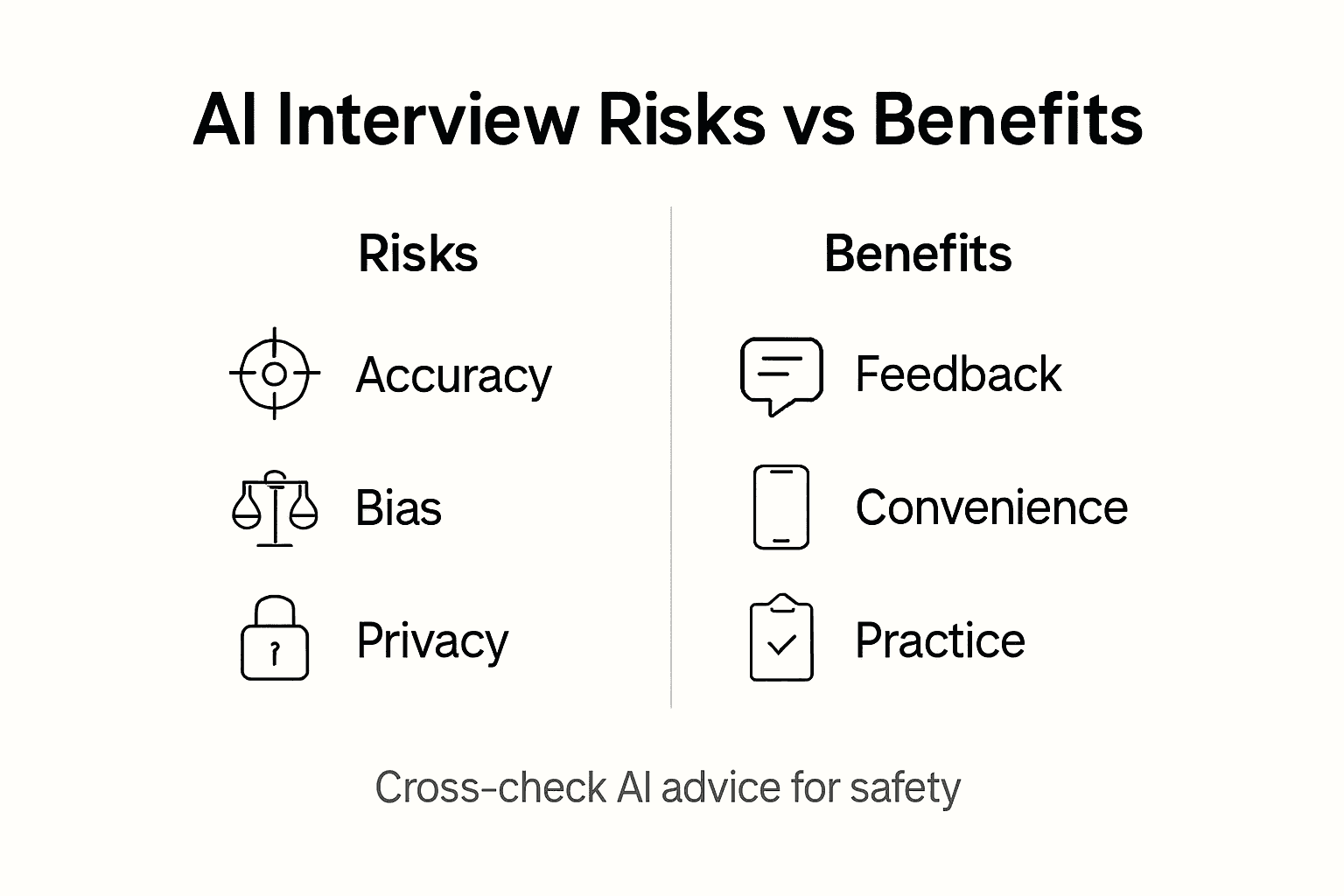
Ethical considerations extend beyond mere technical limitations. AI models are inherently prone to hallucinations and misrepresentations that could compromise professional integrity. Privacy concerns emerge around data collection, storage, and potential misuse of personal communication data. Moreover, over-reliance on AI assistants might inadvertently homogenize interview preparation, reducing individual authenticity and unique communication styles. Job seekers must recognize AI as a supportive tool rather than an infallible guide, maintaining personal agency in their professional presentation.
Below is a summary of key risks and ethical considerations with AI interview assistants:
| Risk/Ethical Concern | Why It Matters | Recommended Safeguard |
|---|---|---|
| Accuracy of responses | Can lead to misinformation | Always verify with trusted sources |
| Data privacy | Sensitive information might be used | Limit personal data sharing |
| Bias and fairness | May perpetuate existing prejudices | Cross-check advice with human mentors |
| Loss of authenticity | Can make answers sound robotic | Personalize AI-generated content |
Pro tip: Always cross-reference AI-generated interview advice with human mentors and industry professionals to ensure balanced and authentic preparation.
Mistakes to Avoid When Using AI Assistants
Navigating the complex world of AI interview assistance requires strategic awareness and a nuanced understanding of technological limitations. Common mistakes in using AI assistants can significantly undermine their potential benefits, creating potential pitfalls that could compromise interview performance and professional credibility.
One critical error job seekers frequently make is Complete Dependence on AI Generated Content. Treating AI responses as definitive scripts rather than collaborative suggestions can lead to robotic, inauthentic interview presentations. AI tools should function as intelligent brainstorming partners, not verbatim response generators. Each recommendation requires careful personalization, ensuring that the fundamental essence of individual communication style remains intact. Candidates must invest time in understanding, modifying, and integrating AI suggestions into their unique professional narrative.
Another significant mistake involves neglecting comprehensive fact-checking and context validation. Ethical AI use demands rigorous output verification to prevent potential misrepresentations or contextually inappropriate responses. AI systems, while sophisticated, can produce plausible-sounding but potentially inaccurate information. Job seekers must develop a critical approach, cross-referencing AI-generated interview strategies with industry knowledge, personal experience, and professional mentorship. This approach transforms AI from a potentially risky shortcut into a valuable preparation tool that enhances rather than replaces human judgment.
Pro tip: Treat AI interview assistants as collaborative partners, not infallible oracles, and always filter recommendations through your personal professional lens.
Enhance Your Interview Confidence with Real-Time AI Support
The article highlights the challenges of navigating job interviews with AI-generated answers that must be accurate, contextually relevant, and personalized. Many job seekers struggle with anxiety, trusting AI outputs, and maintaining their authenticity while using real-time AI interview assistants. If you want to avoid common pitfalls like over-dependence on AI or receiving generic responses that do not fit your unique style, our solution at Parakeet AI is designed specifically to address these pain points. It listens carefully to your interview in real time and provides tailored answers that blend AI efficiency with your genuine communication style.
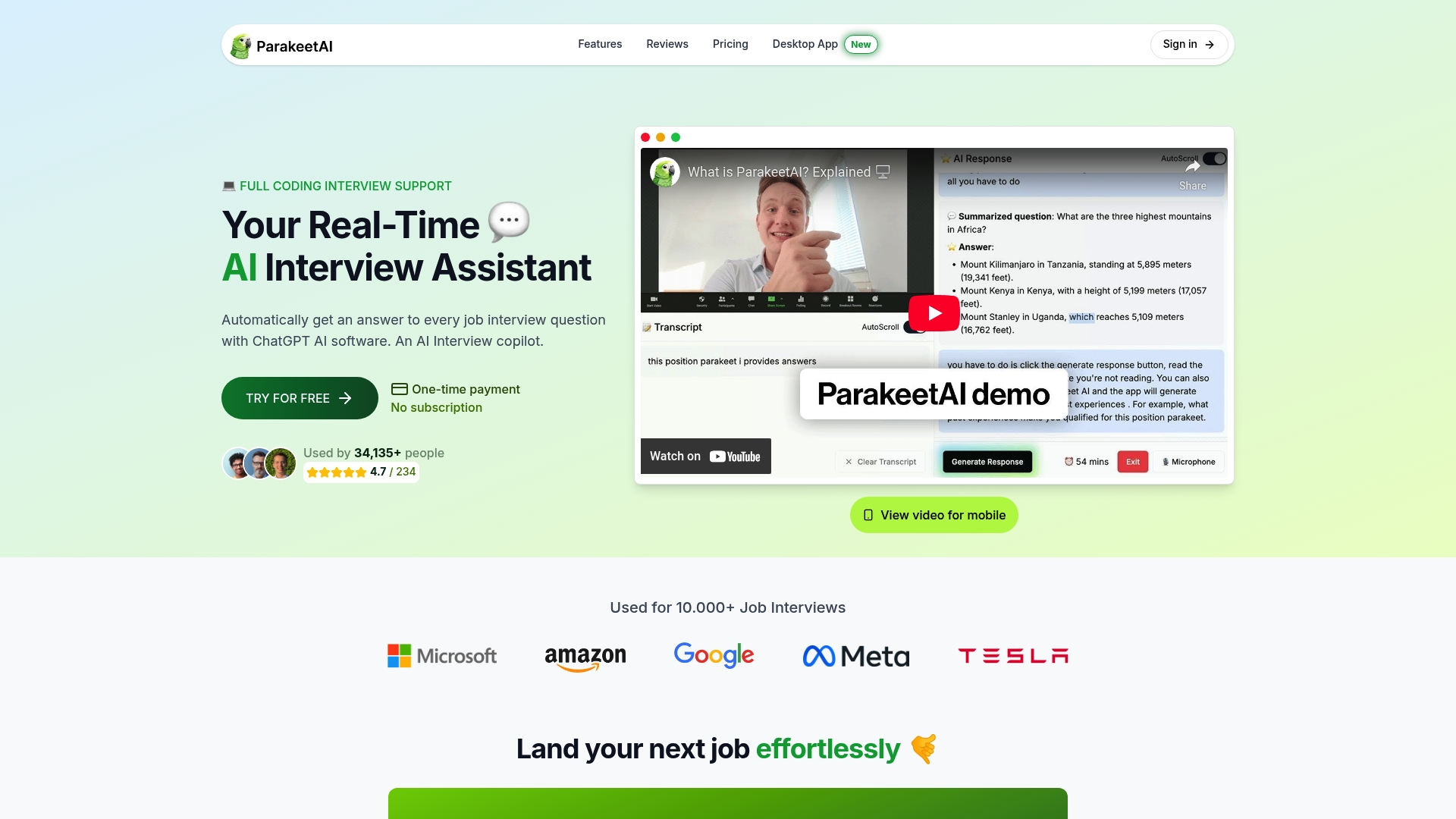
Experience the power of a real-time AI job interview assistant that understands subtle conversational cues and supports you through every question. Act now to elevate your interview performance with confidence and strategic preparation. Learn more about how AI listens and delivers responses at How AI Listens and Delivers Responses and see why Parakeet AI is the trusted choice for transforming your interview experience. Visit Parakeet AI today to start your journey toward successful, authentic interviews.
Frequently Asked Questions
What are real-time AI interview assistants?
Real-time AI interview assistants are advanced tools that provide support during job interviews, offering instant feedback, contextually appropriate responses, and guidance based on a candidate’s communication style.
How can I effectively use AI interview assistants for preparation?
To effectively use AI interview assistants, engage with them in simulated mock interviews, analyze generated questions, and incorporate feedback to refine your answers while maintaining your personal communication style.
What are the main benefits of using AI interview assistants?
The main benefits include reduced interview anxiety, performance optimization, and structured feedback that help candidates develop coherent responses and navigate complex interview scenarios with confidence.
What are the risks associated with using AI interview assistants?
The risks include potential inaccuracies in AI-generated responses, data privacy concerns, and the possibility of losing personal authenticity in communication if candidates overly rely on AI suggestions.