
Remote Interview Platforms: Enhancing Job Candidate Success

Online interviews have become the norm for many American companies, with over 60 percent now relying on remote platforms to screen candidates. This shift matters because both employers and job seekers must adapt to new ways of presenting skills and assessing talent. Understanding remote interview platforms means fewer surprises and greater opportunities—if you know what sets each option apart and how to avoid common virtual pitfalls.
Table of Contents
- Remote Interview Platforms Defined And Debunked
- Key Types And Unique Platform Features
- How AI Job Interview Assistants Work
- Privacy, Security, And Data Protection Issues
- Common User Mistakes And Success Strategies
Key Takeaways
| Point | Details |
|---|---|
| Remote Interview Platforms Transform Hiring | Remote interview platforms utilize technology to streamline candidate evaluations and improve recruitment efficiency. |
| AI Enhances Candidate Assessments | AI-driven tools analyze verbal and non-verbal cues, providing nuanced insights into candidate suitability. |
| Strategic Preparation is Crucial | Candidates must develop digital communication skills and ensure technical readiness to succeed in virtual interviews. |
| Privacy and Data Security are Imperative | Organizations must address privacy challenges and implement robust data protection protocols to safeguard candidate information. |
Remote Interview Platforms Defined and Debunked
Remote interview platforms have fundamentally transformed how organizations evaluate job candidates, leveraging technology to transcend traditional hiring limitations. At their core, these digital systems enable employers to conduct interviews through computer-mediated communication methods, ranging from video conferencing to asynchronous screening tools. Online interviews represent a sophisticated research method that requires nuanced approaches compared to traditional face-to-face interactions.
The landscape of remote interviewing encompasses multiple formats, with one-way interviews emerging as a particularly innovative screening technique. These asynchronous interviews allow employers to automate initial candidate evaluations, presenting standardized questions that candidates record responses to independently. This approach streamlines recruitment processes, enabling hiring managers to review candidate presentations more efficiently and consistently.
Key characteristics of modern remote interview platforms include:
- Seamless video communication technologies
- Automated candidate assessment tools
- Real-time and recorded interview capabilities
- Advanced candidate screening algorithms
- Integration with applicant tracking systems
Despite technological advancements, successful remote interviews demand strategic preparation. Candidates must understand that digital platforms require distinct communication skills. Maintaining eye contact with the camera, managing lighting and background, and demonstrating technical proficiency become critical success factors. Employers, meanwhile, must design interview experiences that accurately assess candidate potential while creating engaging, human-centered interactions.
Key Types and Unique Platform Features
Remote interview platforms have evolved into sophisticated systems with diverse capabilities tailored to modern recruitment needs. These platforms can be categorized into several distinct types, each serving specific organizational objectives. Live video platforms enable real-time interactions, while asynchronous screening tools allow candidates to record responses at their convenience, providing flexibility for both employers and job seekers.

Modern platforms are distinguished by their advanced technological features. Virtual interview platforms now offer intelligent scheduling capabilities that transform traditional recruitment workflows. These sophisticated systems include smart scheduling mechanisms, automated confirmation processes, and comprehensive calendar synchronization tools that dramatically reduce administrative overhead.
Key platform types include:
- Live Video Interview Platforms
- Real-time communication
- Multi-participant interview support
- Screen sharing capabilities
- Asynchronous Interview Tools
- One-way video recording
- Standardized question sets
- Automated candidate evaluation
- AI-Enhanced Assessment Platforms
- Sentiment analysis
- Communication skills evaluation
- Behavioral pattern recognition
Technological innovation continues to reshape remote interviewing landscapes. Advanced platforms now integrate artificial intelligence to assess candidate communication skills, body language, and emotional intelligence. These tools go beyond traditional assessment methods, providing nuanced insights that help organizations make more informed hiring decisions. Candidates benefit from increased transparency, while employers gain deeper understanding of potential team members through comprehensive digital interaction frameworks.
How AI Job Interview Assistants Work
AI job interview assistants represent a groundbreaking technological approach to streamlining recruitment processes, leveraging advanced algorithms and machine learning to transform candidate evaluation. These intelligent systems go beyond traditional screening methods, analyzing verbal and non-verbal communication cues with unprecedented precision. AI-powered virtual interviewers like cutting-edge platforms such as ‘Molly’ are designed to conduct asynchronous video interviews while potentially reducing human bias in candidate selection.
The core functionality of AI interview assistants revolves around sophisticated data processing and pattern recognition technologies. These systems typically employ multiple analytical layers to assess candidate responses, including:
- Natural language processing for verbal communication analysis
- Sentiment detection algorithms
- Emotional intelligence evaluation mechanisms
- Behavioral pattern recognition
- Contextual understanding capabilities
Technical architecture of these AI assistants involves complex machine learning models trained on extensive datasets of successful professional interactions. By analyzing thousands of interview scenarios, these systems develop nuanced understanding of communication effectiveness, professional demeanor, and potential job fit. The algorithms can detect subtle linguistic patterns, emotional resonance, and communication skills that might escape traditional human evaluation methods.
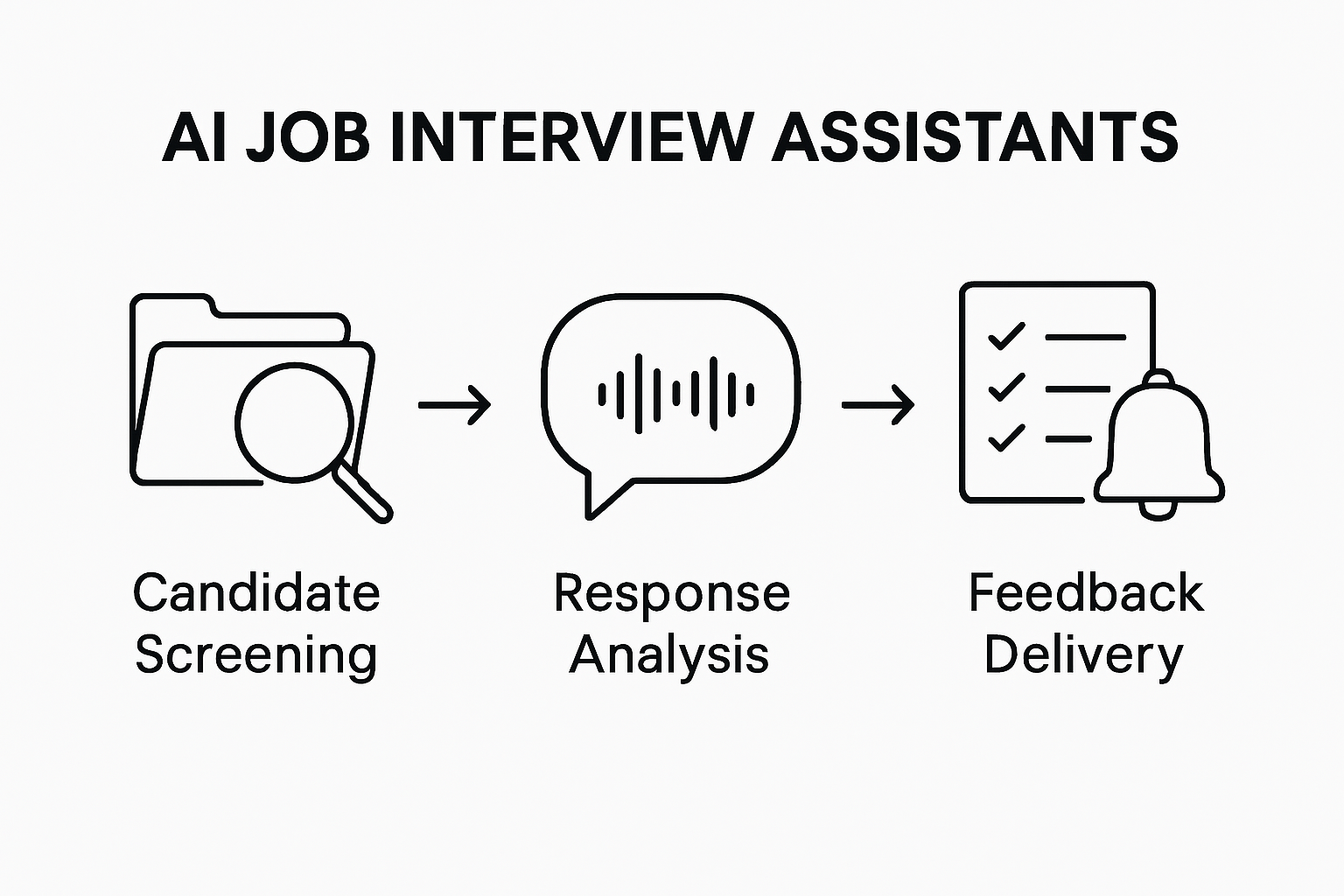
Key operational stages of AI job interview assistants include initial candidate screening, comprehensive response analysis, and predictive performance modeling. These platforms provide organizations with data-driven insights, transforming subjective interview processes into objective, measurable candidate assessments. Candidates benefit from standardized evaluation criteria, while employers gain deeper, more comprehensive understanding of potential team members through advanced technological interpretation of interview interactions.
Privacy, Security, and Data Protection Issues
Remote interview platforms introduce complex privacy challenges that demand rigorous security protocols and transparent data management strategies. Candidate data protection has become a critical concern as digital interview technologies collect increasingly sensitive personal information. Online proctoring and interview services have raised significant questions about the extent and nature of personal information shared during digital recruitment processes.
The primary privacy concerns in remote interview platforms center on several critical dimensions:
- Biometric data collection and storage
- Video and audio recording retention policies
- Algorithmic bias in candidate assessment
- Consent mechanisms for data usage
- Cross-border data transfer regulations
Organizations must implement comprehensive data protection frameworks that prioritize candidate consent, data minimization, and robust security infrastructure. This involves developing transparent policies that clearly communicate how candidate information will be collected, processed, analyzed, and ultimately deleted. Advanced encryption technologies, secure cloud storage solutions, and strict access controls become essential in protecting sensitive personal and professional information shared during digital interview processes.
Legal and ethical considerations surrounding remote interview platforms require continuous adaptation. Companies must navigate complex regulatory landscapes, including privacy regulations like GDPR and CCPA, which mandate strict guidelines for personal data handling. Candidates increasingly demand greater transparency and control over their digital interview footprint, pushing organizations to develop more sophisticated, consent-driven approaches to technological recruitment methods.
Common User Mistakes and Success Strategies
Successful remote interviews demand strategic preparation and nuanced digital communication skills that go beyond traditional in-person interactions. Candidates frequently underestimate the technical and interpersonal complexities of virtual interview environments, leading to potentially costly performance mistakes. Remote user interview techniques emphasize the critical importance of clear communication and proactive technical preparedness.
Common mistakes that can derail remote interview success include:
- Inadequate technology preparation
- Poor lighting and background settings
- Inconsistent internet connectivity
- Lack of non-verbal communication awareness
- Unprofessional digital presentation
Strategic preparation involves comprehensive technical and personal readiness. Candidates should conduct thorough equipment checks, including camera positioning, audio quality, and stable internet connection. Practicing with video communication platforms helps reduce anxiety and builds confidence in navigating digital interview interfaces. Professional backgrounds, appropriate lighting, and minimizing potential interruptions demonstrate technical competence and personal discipline.
Successful remote interview strategies require candidates to develop enhanced digital communication skills. This includes maintaining direct eye contact with the camera, speaking clearly and concisely, and projecting professional energy through a digital medium. Advanced candidates learn to leverage technology as an opportunity, using screen sharing, digital portfolios, and interactive presentation tools to distinguish themselves from other applicants.
Boost Your Remote Interview Success with Real-Time AI Support
Navigating the challenges of remote interviews requires more than just technical readiness. As the article highlights, maintaining clear communication, managing digital presence, and mastering asynchronous formats can feel overwhelming. Candidates often face issues like inconsistent internet, lack of non-verbal cues, and the need for precise answers under pressure. That is where an AI job interview assistant can transform your preparation by listening carefully and instantly providing tailored responses to every question you encounter.
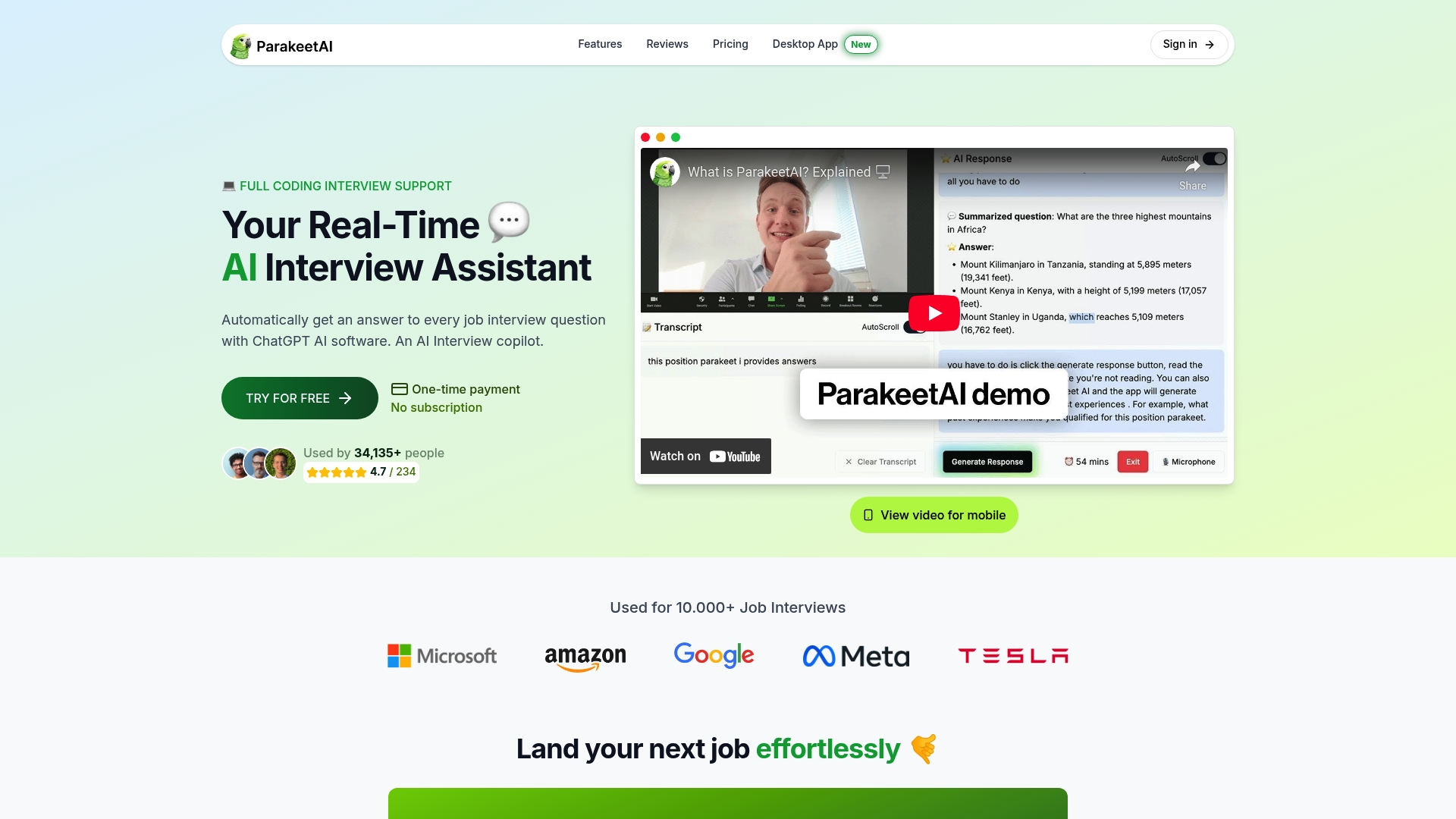
Experience how Parakeet AI redefines your interview journey. Our real-time AI assistant empowers you to present your best self by offering intelligent support that adapts to your unique answers. Don’t let anxiety or technical hurdles hold you back when the stakes are high. Visit Parakeet AI to start practicing smarter today and elevate your confidence for any remote interview platform you face.
Frequently Asked Questions
What are remote interview platforms?
Remote interview platforms are digital systems that allow employers to conduct interviews through computer-mediated communication, such as video conferencing or asynchronous screening tools. They aim to streamline the hiring process and provide an efficient way to evaluate job candidates.
How do AI job interview assistants enhance the interview process?
AI job interview assistants use advanced algorithms to analyze both verbal and non-verbal communication during interviews. They provide data-driven insights, reducing human bias and enabling organizations to make more informed hiring decisions by objectively assessing candidate responses.
What are the key features of live video interview platforms?
Live video interview platforms offer real-time communication, support for multiple participants, and screen sharing capabilities. These features facilitate dynamic interactions between candidates and interviewers, enhancing the overall interview experience.
How can candidates prepare for a remote interview?
Candidates can prepare for remote interviews by checking their technology setup, ensuring good lighting and a professional background, maintaining stable internet connectivity, and practicing clear communication skills. They should also learn to leverage digital tools, such as screen sharing, to enhance their presentation.