
Role of AI in Job Matching: Complete Guide

Over 96 percent of Fortune 500 companies rely on AI tools for hiring and job matching, reshaping how talent connects with opportunity. As competition heats up in the job market, both candidates and employers need smarter ways to find the right fit. Understanding the power and pitfalls of AI-driven recruitment helps you make sense of the rapid changes, offering fresh insights into what really drives success in today’s job matching landscape.
Table of Contents
- Defining AI in Modern Job Matching
- Types of AI-Powered Job Matching Solutions
- How AI Algorithms Match Jobs and Candidates
- Real-World Applications and Success Stories
- Bias, Ethics, and Legal Considerations in Job Matching
- Common Challenges and How to Avoid Pitfalls
Key Takeaways
| Point | Details |
|---|---|
| AI-Driven Recruitment Transformation | AI technologies are revolutionizing recruitment by automating candidate screening, enhancing predictive matching, and continuously refining job recommendations. |
| Ethical Implementation | Organizations must prioritize algorithmic fairness, transparency, and human oversight to mitigate biases in AI-driven hiring practices. |
| Advanced Matching Techniques | AI job matching utilizes sophisticated methods like skills mapping and semantic analysis to improve compatibility predictions beyond traditional methods. |
| Real-World Effectiveness | AI-powered solutions are enabling organizations to reduce hiring times, enhance candidate diversity, and better align talent with industry-specific needs. |
Defining AI in Modern Job Matching
Artificial Intelligence (AI) in job matching represents a sophisticated technological approach that transforms traditional recruitment processes by leveraging advanced algorithms and machine learning techniques. According to en.wikipedia.org, AI is now being applied to automate critical aspects of job recruitment, including candidate screening and predicting potential employee success.
At its core, AI job matching goes beyond simple keyword matching. The mathematical framework from arxiv.org reveals a groundbreaking decomposition of skills into decision-level and action-level subskills. This innovative approach reflects the complementary strengths between human capabilities and generative AI technologies, creating more nuanced and intelligent job placement strategies.
The modern AI job matching process typically involves several key components:
- Advanced Data Analysis: Scanning and interpreting vast amounts of candidate and job data
- Predictive Matching: Using machine learning algorithms to predict job compatibility
- Skills Mapping: Identifying transferable and precise skill alignments between candidates and roles
- Dynamic Recommendation: Continuously refining job suggestions based on ongoing learning
By integrating these sophisticated technologies, AI job matching represents a powerful evolution in recruitment, offering more precise, efficient, and data-driven approaches to connecting talented professionals with ideal career opportunities.

Benefits of AI in job search continue to demonstrate how these intelligent systems are revolutionizing talent acquisition strategies worldwide.
Types of AI-Powered Job Matching Solutions
AI-powered job matching solutions have rapidly evolved to address the complex challenges of modern recruitment, offering a diverse range of sophisticated technologies designed to connect talent with opportunities more efficiently. These solutions leverage advanced algorithms and machine learning techniques to transform traditional hiring processes.
Algorithmic Matching Systems represent the first generation of AI job matching technologies. These platforms analyze candidate profiles, resumes, and job descriptions using complex pattern recognition and semantic matching techniques. By breaking down skills, experiences, and job requirements into granular data points, these systems can identify potential matches with unprecedented precision.
The primary types of AI-powered job matching solutions include:
- Predictive Candidate Screening: AI systems that evaluate candidate potential beyond traditional qualifications
- Skill Mapping Platforms: Technologies that create detailed skill taxonomies and match candidates based on precise competency alignments
- Behavioral Matching Engines: Solutions that analyze candidate behavior, personality traits, and workplace compatibility
- Dynamic Recommendation Systems: AI tools that continuously learn and refine job recommendations based on ongoing interactions
Moreover, AI-powered job interview tools are becoming increasingly sophisticated, integrating natural language processing and advanced analytics to provide more comprehensive candidate assessments. These intelligent systems not only match candidates with jobs but also help organizations identify potential talent that might have been overlooked by traditional recruitment methods.
How AI Algorithms Match Jobs and Candidates
AI algorithms for job matching represent a groundbreaking approach to talent acquisition, employing sophisticated computational techniques to bridge the gap between job seekers and potential employers. According to research from arxiv.org, these algorithms utilize advanced two-stage training frameworks that leverage contrastive learning and preference-based fine-tuning to create more precise talent matching mechanisms.
Machine Learning Models are at the heart of these algorithmic matching systems. The research demonstrates how large language models can be trained to understand the nuanced relationships between job descriptions and candidate profiles. By breaking down complex job requirements and candidate skills into granular data points, AI can create remarkably accurate matching predictions that go far beyond traditional keyword-based approaches.
The job matching process typically involves several critical algorithmic stages:
- Profile Parsing: Extracting and standardizing candidate and job description information
- Semantic Analysis: Understanding contextual meanings beyond literal job descriptions
- Skill Mapping: Identifying transferable and relevant skills across different domains
- Predictive Scoring: Calculating compatibility and potential success probabilities
Moreover, cutting-edge research from arxiv.org introduces generative job recommendation approaches that use supervised fine-tuning and reinforcement learning. These advanced techniques allow AI systems to generate highly personalized job suggestions without relying on predefined candidate sets. Understanding the Benefits of AI in Job Search continues to showcase how these intelligent systems are revolutionizing talent acquisition strategies, making job matching more intelligent, efficient, and precise than ever before.
Real-World Applications and Success Stories
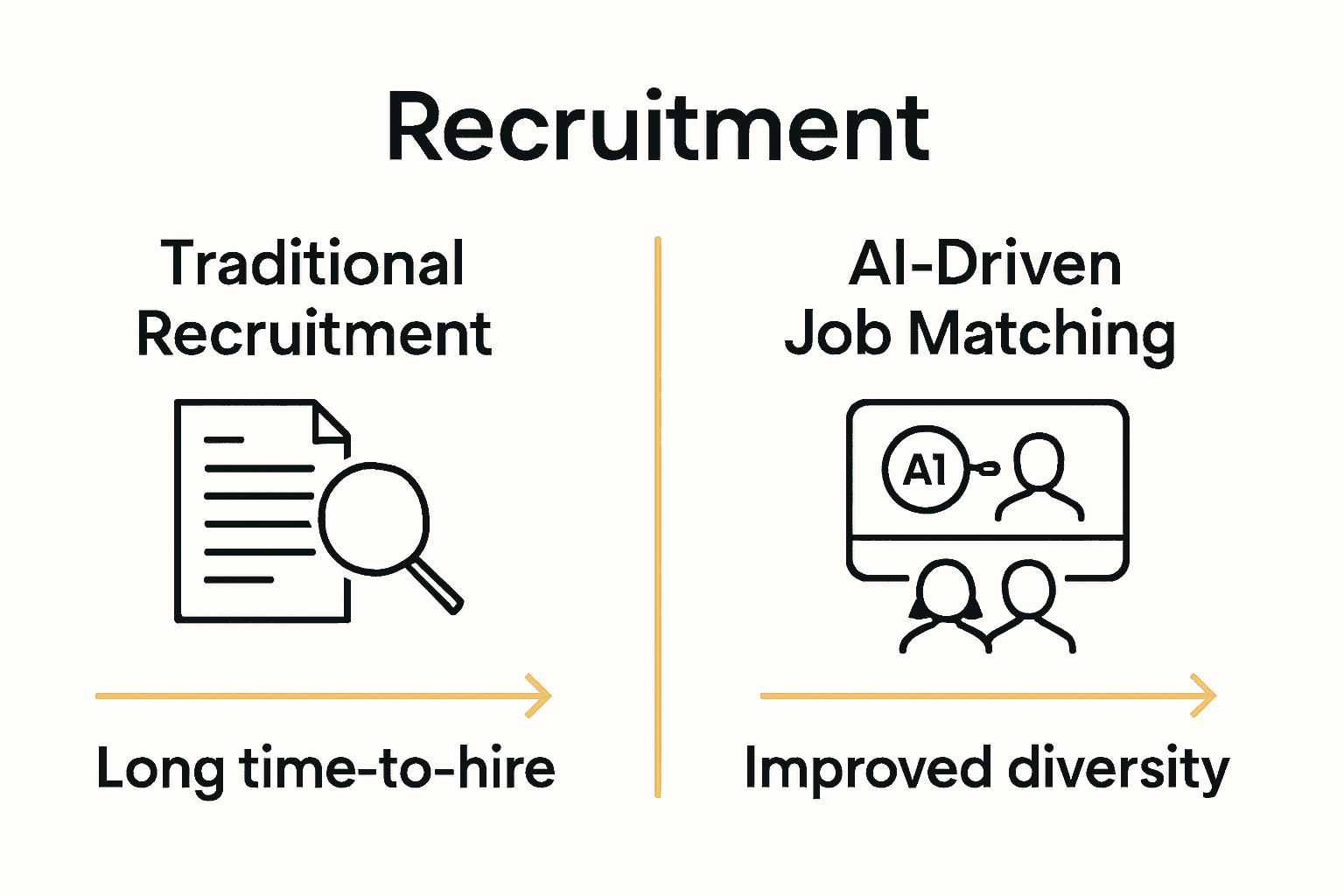
AI-powered job matching has transformed recruitment strategies across multiple industries, demonstrating remarkable effectiveness in connecting talented professionals with ideal career opportunities. Organizations are increasingly leveraging intelligent technologies to overcome traditional hiring limitations and create more dynamic, responsive talent acquisition processes.
In the tech sector, several pioneering companies have implemented sophisticated AI matching systems that dramatically improve hiring efficiency. These advanced platforms analyze candidate profiles with unprecedented depth, considering not just technical skills but also soft skills, cultural fit, and potential for growth. Machine learning algorithms can now predict candidate success with accuracy rates significantly higher than traditional recruitment methods.
Key real-world success stories include:
- Technology Companies: Reducing recruitment time by up to 60% through AI-driven candidate screening
- Healthcare Organizations: Matching specialized medical professionals with complex role requirements
- Financial Services: Creating more diverse candidate pools by eliminating unconscious bias in initial screening
- Startup Ecosystems: Enabling faster talent acquisition for rapidly growing organizations
These transformative applications highlight how AI in the Hiring Process is revolutionizing traditional recruitment. By combining advanced data analysis, predictive modeling, and intelligent recommendation systems, AI-powered job matching is creating more efficient, accurate, and inclusive hiring landscapes that benefit both employers and job seekers.
Bias, Ethics, and Legal Considerations in Job Matching
The integration of AI in job matching presents complex ethical challenges that demand careful scrutiny and responsible implementation. According to en.wikipedia.org, there are critical concerns surrounding algorithmic transparency and the need for ongoing oversight to ensure fair and unbiased decision-making throughout the recruitment process.
Ethical AI Recruitment requires a multifaceted approach to address potential systemic biases. Machine learning algorithms can inadvertently perpetuate historical discrimination by replicating past hiring patterns, which means organizations must implement rigorous checks and balances. This involves continuously auditing AI systems for potential discriminatory outcomes, ensuring that candidate evaluation remains objective and inclusive.
Key ethical and legal considerations include:
- Algorithmic Fairness: Preventing discriminatory patterns based on gender, race, age, or background
- Data Privacy: Protecting candidate information and obtaining appropriate consent
- Transparency: Providing clear explanations of how AI-driven decisions are made
- Human Oversight: Maintaining human intervention and review in critical hiring decisions
Interestingly, some jurisdictions are already developing legal frameworks to address these challenges. Why AI Is Critical for Interviews highlights how regulations like the Artificial Intelligence Video Interview Act in Illinois demonstrate the growing recognition of the need to establish guidelines that protect job candidates’ rights while leveraging technological innovations.
Common Challenges and How to Avoid Pitfalls
AI-powered job matching technologies, while revolutionary, face significant challenges that require careful navigation. According to research from arxiv.org, privacy-oriented job matching systems must address complex coordination failures and minimize personal data disclosure while maintaining high-quality candidate matching.
Technological Limitations represent a critical challenge in AI job matching. Machine learning algorithms can inadvertently create systemic biases, potentially perpetuating historical inequalities in hiring processes. According to en.wikipedia.org, organizations must implement robust mechanisms to ensure algorithmic transparency and prevent discriminatory outcomes.
Key challenges and mitigation strategies include:
- Data Quality: Ensuring comprehensive and unbiased training datasets
- Algorithm Transparency: Creating interpretable machine learning models
- Privacy Protection: Implementing strict data anonymization techniques
- Continuous Monitoring: Regularly auditing AI matching algorithms for potential biases
- Human Oversight: Maintaining critical human intervention in decision-making processes
7 Best Interview Questions and How to Answer Them can provide additional insights into navigating the complex landscape of AI-driven recruitment, helping both employers and candidates understand the nuanced challenges in modern job matching technologies.
Unlock Your Best Interview with AI-Powered Support
The “Role of AI in Job Matching” reveals how sophisticated algorithms can make the hiring process more efficient but also points out the challenges candidates face, like navigating complex interviews and understanding how AI evaluates skills and behavior. If you want to feel confident and prepared against these new AI-driven hiring methods, you need real-time support that adapts to your needs.
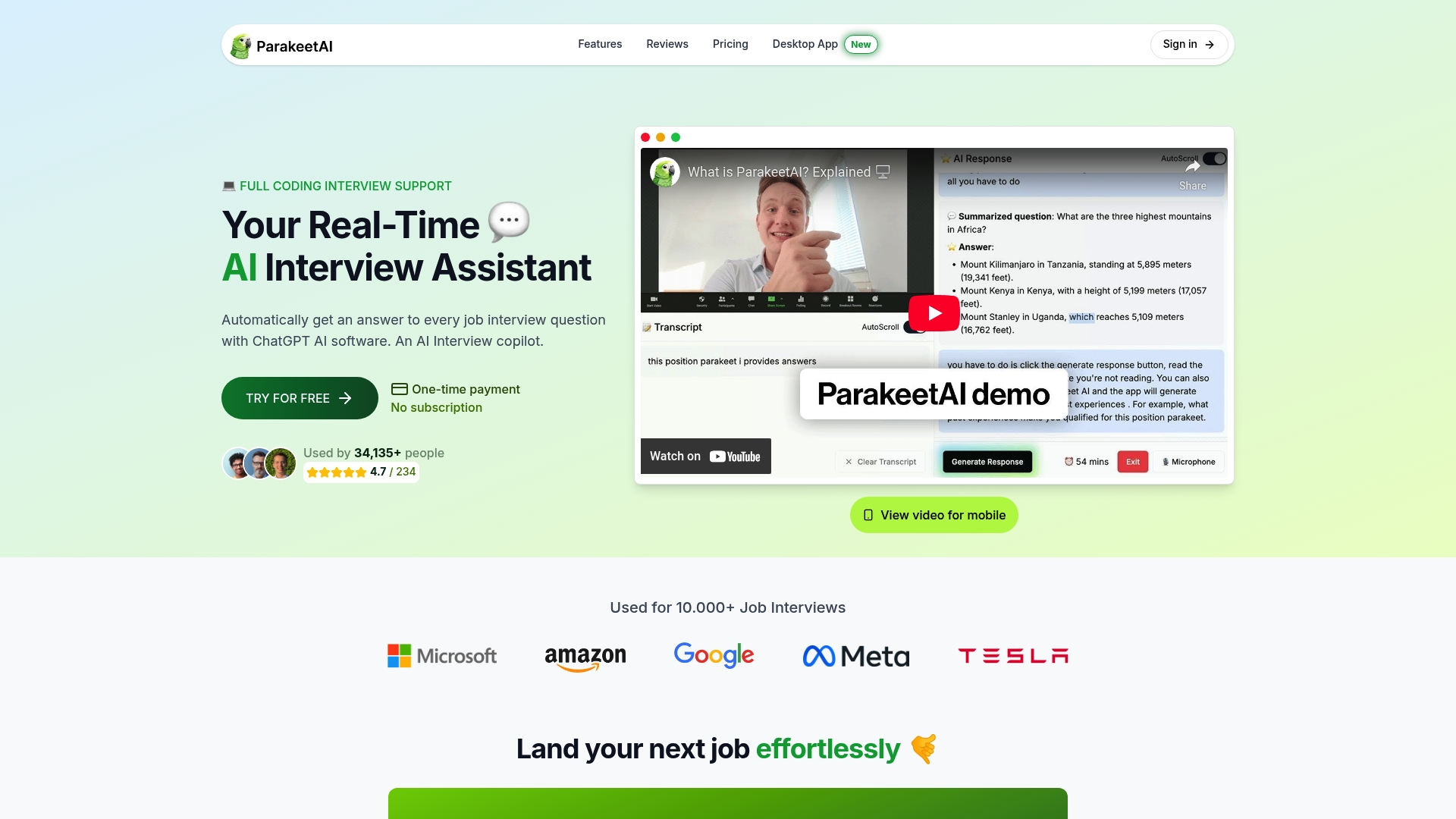
Discover how our real-time AI job interview assistant at Parakeet AI listens to every question and instantly crafts smart, personalized answers to help you impress employers. Don’t leave your success to chance when AI is shaping recruitment. Act today to gain the edge and see how technology can work for you by visiting https://parakeet-ai.com. For an even deeper dive, explore AI in the Hiring Process Explained and experience firsthand how AI tools are revolutionizing interviews.
Frequently Asked Questions
What is AI in job matching?
AI in job matching refers to the use of advanced algorithms and machine learning techniques to enhance the recruitment process. It automates candidate screening and predicts potential employee success, thereby improving efficiency and accuracy in hiring.
How do AI algorithms improve job matching accuracy?
AI algorithms enhance job matching accuracy by employing machine learning models to analyze candidate profiles and job descriptions. They utilize semantic analysis and predictive scoring to understand the relationships between skills and job requirements, allowing for precise talent matching beyond simple keyword searches.
What are the benefits of using AI in recruitment?
The benefits of using AI in recruitment include reduced hiring time, improved quality of matches, elimination of unconscious bias, and the ability to identify candidates’ potential beyond traditional qualifications, ultimately leading to more efficient and diverse hiring processes.
What ethical considerations are associated with AI in job matching?
Ethical considerations include ensuring algorithmic fairness to prevent discrimination, protecting candidate data privacy, providing transparency in AI decision-making processes, and maintaining human oversight to ensure objective evaluations during recruitment.