
Importance of AI for Job Candidates: Complete Guide

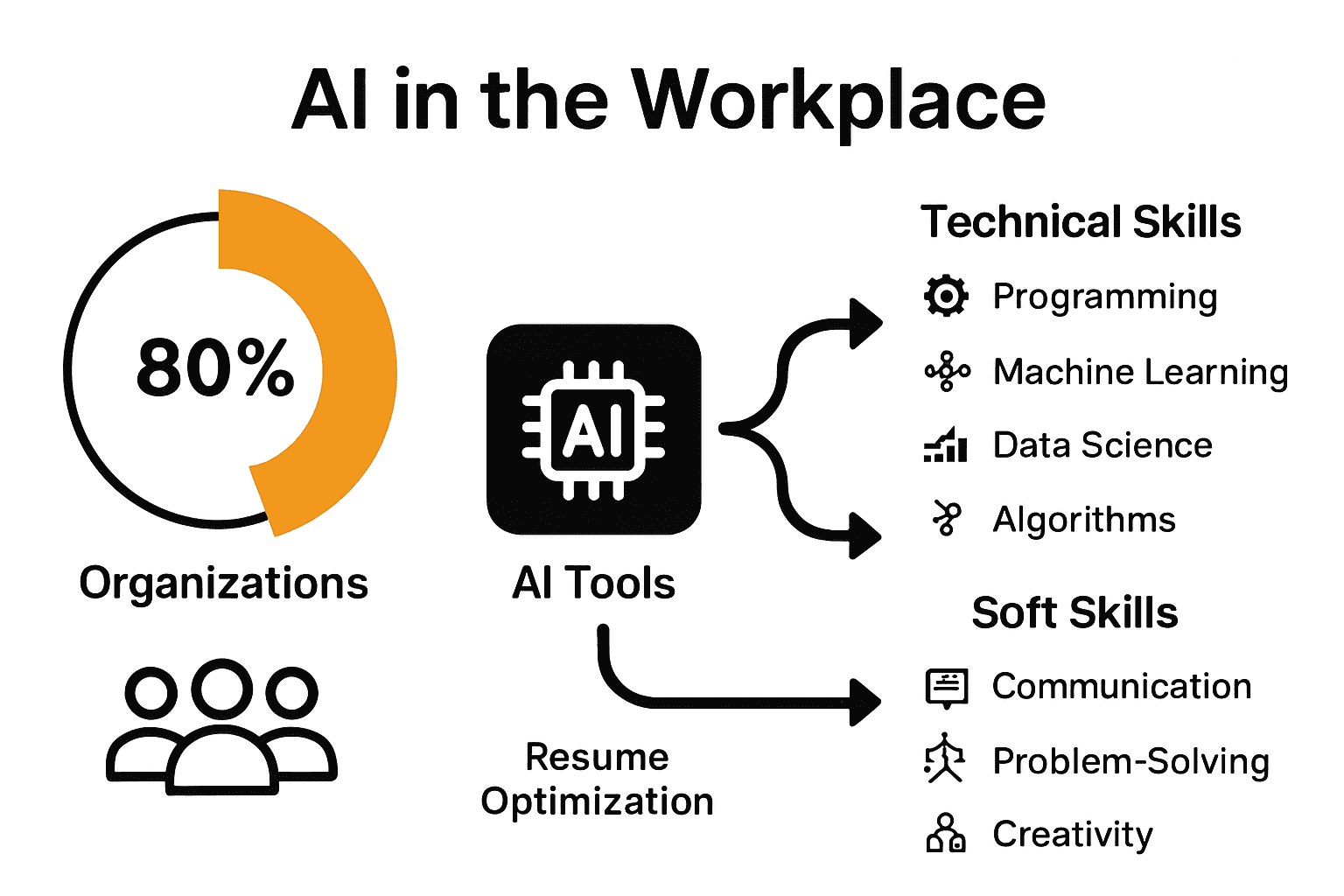
Nearly 80 percent of organizations report that artificial intelligence is already reshaping their workplaces in powerful ways. As AI becomes more integrated into daily operations, the way people approach careers, job searches, and professional development is changing fast. Whether you are building technical skills or navigating new digital tools, understanding AI’s influence will help you stay ahead and position yourself for success in a rapidly evolving job market.
Table of Contents
- Understanding AI and Its Role in Careers
- AI Tools for Job Search and Interviews
- Key AI Skills in High Demand Today
- Practical Applications of AI in Job Hunting
- Risks, Limitations, and Ethical Concerns
Key Takeaways
| Point | Details |
|---|---|
| AI Augments Human Potential | AI enhances workforce capabilities by automating routine tasks and enabling professionals to engage in strategic and creative roles. |
| Continuous Learning is Essential | Professionals must adopt ongoing learning to adapt to AI-driven environments, focusing on technical prowess and soft skills. |
| AI Tools Enhance Job Searching | AI-powered tools offer personalized job search assistance, improving resume optimization and interview preparation strategies. |
| Ethical Considerations are Crucial | The integration of AI raises significant ethical concerns, including algorithmic bias and data privacy, necessitating responsible implementation. |
Understanding AI and Its Role in Careers
Artificial Intelligence (AI) is dramatically transforming professional landscapes, reshaping how we work, learn, and develop our careers. According to AIR Research, AI is revolutionizing workforce dynamics by automating routine tasks and enabling professionals to concentrate on more strategic and creative activities.
The emergence of AI is not about replacing human workers, but augmenting their capabilities. Machine learning and intelligent systems are creating new opportunities across industries, generating roles that previously did not exist. As IABAC highlights, professions like AI engineers and data scientists are now at the forefront of career innovation, while traditional sectors are being reimagined through technological integration.
Professionals today must embrace a continuous learning mindset to thrive in this AI-driven environment. Key skills for success include:
- Technical proficiency in emerging technologies
- Adaptability and rapid skill acquisition
- Critical thinking and complex problem solving
- Emotional intelligence and interpersonal communication
- Understanding of AI’s potential and limitations
By viewing AI as a collaborative tool rather than a competitive threat, job candidates can position themselves as valuable assets who leverage technology to drive organizational success. The future belongs to those who can seamlessly integrate human creativity with artificial intelligence’s computational power.
AI Tools for Job Search and Interviews
The job search landscape is rapidly evolving, with AI-powered tools transforming how candidates approach job hunting and interview preparation. According to Career Services, employers are increasingly utilizing AI to evaluate candidates during interviews, analyzing everything from verbal responses to presentation skills.
Several cutting-edge AI tools have emerged to support job seekers throughout their career journey. Careers Research highlights platforms like Joby and Crystal Knows that offer innovative solutions such as:
- Skill-to-opportunity matching
- Personality insight generation
- Personalized job recommendation algorithms
- Interview preparation assistance
- Communication style optimization
These intelligent tools go beyond traditional job search methods by providing nuanced insights and personalized guidance. Key AI-powered capabilities include:
- Resume optimization
- Interview response analysis
- Skill gap identification
- Predictive job market trends
- Targeted application strategies
By leveraging these sophisticated AI tools, job candidates can gain a significant competitive edge. Discover more about AI-powered job interview tools to transform your job search strategy and maximize your professional potential. The future of job hunting is intelligent, personalized, and powered by advanced technological solutions.

Key AI Skills in High Demand Today
The rapidly evolving technological landscape demands a new breed of professionals equipped with advanced artificial intelligence skills. According to EdX, certain technical competencies have become critically important, with high demand for expertise in machine learning, natural language processing, and neural networks driving career opportunities in AI and machine learning engineering.
Institute of Coding emphasizes that AI integration across industries requires professionals to develop a comprehensive skill set. The most sought-after capabilities include:
- Technical Skills
- Data analysis and interpretation
- Programming languages (Python, R, Java)
- Machine learning algorithm development
- Cloud computing platforms
- Statistical modeling
- Soft Skills
- Critical thinking
- Complex problem solving
- Adaptability
- Creative technological innovation
- Interdisciplinary communication
Advanced technical proficiencies are complemented by essential cognitive abilities that enable professionals to leverage AI technologies effectively. Successful candidates will distinguish themselves by combining deep technical knowledge with strategic thinking and innovative problem-solving approaches.
Explore the benefits of AI in job search to understand how developing these skills can transform your professional trajectory. The future belongs to those who can seamlessly integrate human creativity with artificial intelligence’s transformative potential.
Practical Applications of AI in Job Hunting
The job search landscape is being revolutionized by artificial intelligence, transforming how candidates approach career opportunities. Career Services highlights the critical role of AI tools in interview preparation, offering sophisticated platforms that provide real-time feedback on candidate responses and presentation skills.
AI-powered platforms are delivering unprecedented support throughout the job hunting process. According to Career Research, innovative tools like Joby and Crystal Knows are helping job seekers in multiple dimensions:
- Resume Optimization
- Automated keyword matching
- Skills gap analysis
- Formatting recommendations
- Personalized content suggestions
- Interview Preparation
- Mock interview simulations
- Response analysis
- Body language insights
- Confidence building techniques
- Communication style refinement
These intelligent tools go beyond traditional job search methods by providing nuanced, personalized guidance. They analyze everything from communication patterns to skill compatibility, giving job candidates a significant competitive advantage in a complex job market.
Understand more about AI-powered job interview tools to unlock your full potential in today’s technology-driven recruitment landscape. The future of job hunting is smart, strategic, and powered by artificial intelligence.
Risks, Limitations, and Ethical Concerns
Artificial intelligence is transforming employment landscapes, but not without significant challenges. CDC Blogs highlight critical risks associated with AI integration, including potential job displacement and complex ethical dilemmas that demand careful consideration and proactive management.
According to IJERT Research, several key ethical concerns emerge in AI-driven employment processes:
- Algorithmic Bias Challenges
- Potential discrimination in candidate selection
- Unintended demographic prejudices
- Lack of transparency in decision-making
- Perpetuation of existing workplace inequalities
- Privacy and Data Concerns
- Unauthorized personal data collection
- Potential misuse of candidate information
- Insufficient data protection mechanisms
- Risk of algorithmic profiling
- Unclear consent boundaries
Navigating these complex issues requires a balanced approach that maximizes AI’s potential while protecting individual rights. Job candidates and employers must collaborate to develop ethical frameworks that ensure fair, transparent, and responsible technological integration.
Learn more about understanding AI in the hiring process to develop a nuanced perspective on these critical challenges. The future of work depends on our collective ability to harness AI’s power while maintaining fundamental human values.
Master Your Job Interview with Real-Time AI Support
The article highlights the challenges job candidates face such as interview preparation, communication style refinement, and effectively answering complex questions. Many professionals struggle to keep up with evolving AI-driven hiring processes and the pressure of presenting their best selves in interviews. You deserve a tool that helps you overcome uncertainty and boosts your confidence by delivering precisely tailored responses as the interview unfolds.
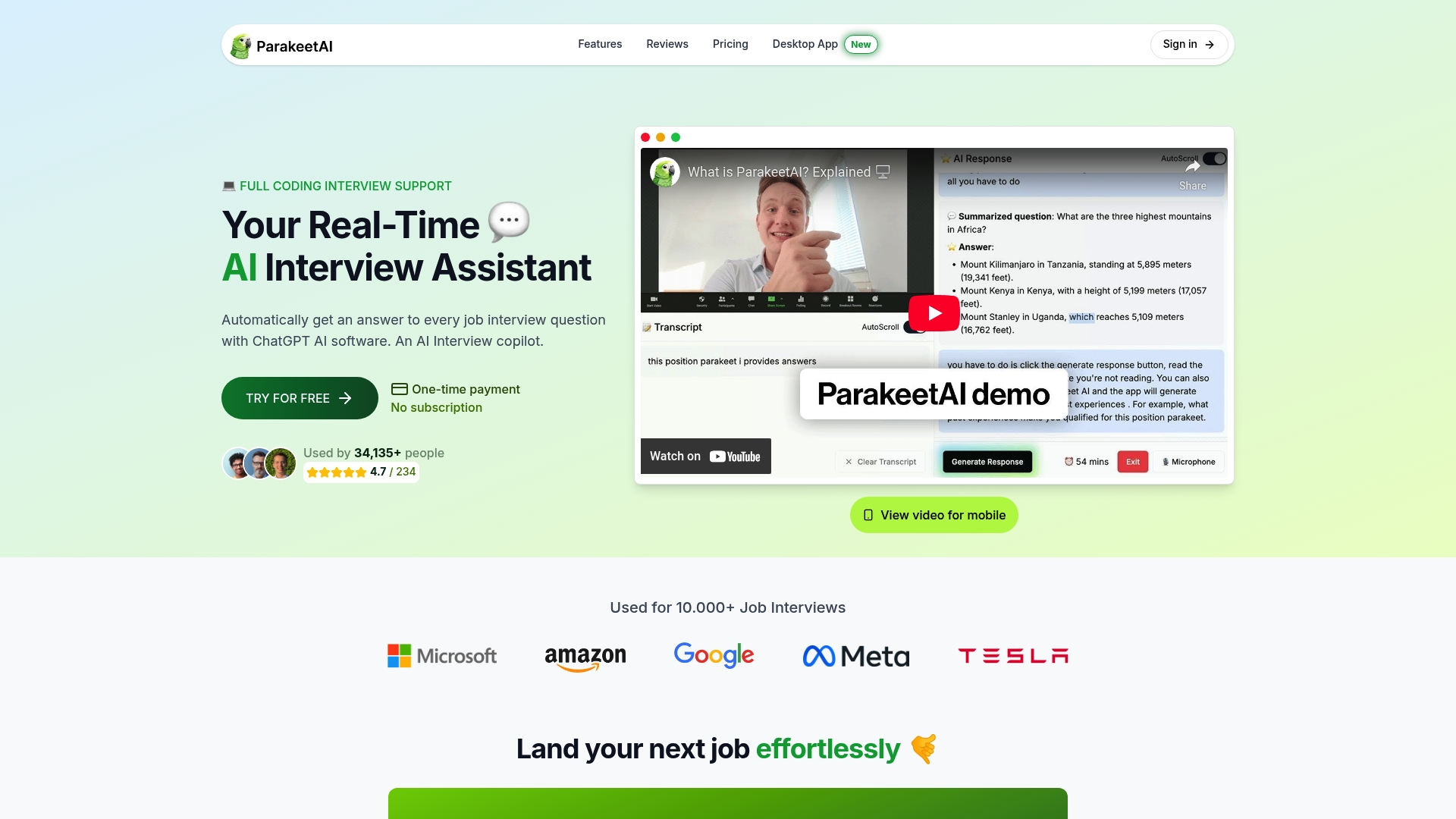
Discover how Parakeet AI transforms interview preparation through its innovative real-time AI job interview assistant. It listens to your interview questions and automatically provides accurate answers customized to your needs. This cutting-edge solution addresses crucial points raised in the article like enhancing your communication style and mastering complex problem solving with ease. Don’t wait to leverage AI’s power today and turn every interview into a winning opportunity. Get started now at Parakeet AI and elevate your career prospects with smart technology designed just for job seekers.
Frequently Asked Questions
What role does AI play in job searching for candidates?
AI plays a vital role in job searching by enhancing the application process with AI-powered tools that offer personalized job recommendations, resume optimization, and interview preparation assistance, helping candidates to stand out in a competitive job market.
How can candidates leverage AI tools for interview preparation?
Candidates can leverage AI tools by using platforms that provide mock interview simulations, real-time feedback on responses, and insights into communication styles, which help improve confidence and presentation skills during actual interviews.
What key skills should job candidates develop to succeed in an AI-driven employment landscape?
To succeed in an AI-driven environment, candidates should develop both technical skills, such as programming and data analysis, and soft skills, including critical thinking, adaptability, and emotional intelligence, to effectively collaborate with AI technologies.
What are some ethical concerns related to AI in hiring processes?
Ethical concerns in AI hiring processes include algorithmic bias, which can lead to discrimination in candidate selection, and privacy issues related to unauthorized data collection, emphasizing the need for transparency and fair practices in AI applications.