
Fit Interview Questions: Job Seeker's 2026 Guide

TL;DR:Fit interview questions evaluate how well your values and work style align with a company’s culture and role requirements. Preparing structured stories using frameworks like STAR and understanding industry-specific formats increase your chances of success. Authentic storytelling and deep research foster genuine connections and demonstrate genuine fit during the interview process.
Fit interview questions are defined as structured queries that assess how well your values, work style, and motivations align with a company’s culture and role requirements. These questions appear in nearly every interview, from startup screenings to McKinsey Personal Experience Interviews, and they carry more weight than most candidates expect. Behavioral, motivational, situational, and cultural fit questions each reveal a different dimension of your suitability. Preparing with frameworks like the STAR method (Situation, Task, Action, Result) or the SPAR method (Situation, Problem, Action, Result) gives you a repeatable structure that turns vague memories into compelling stories.
1. What are the main types of fit interview questions?
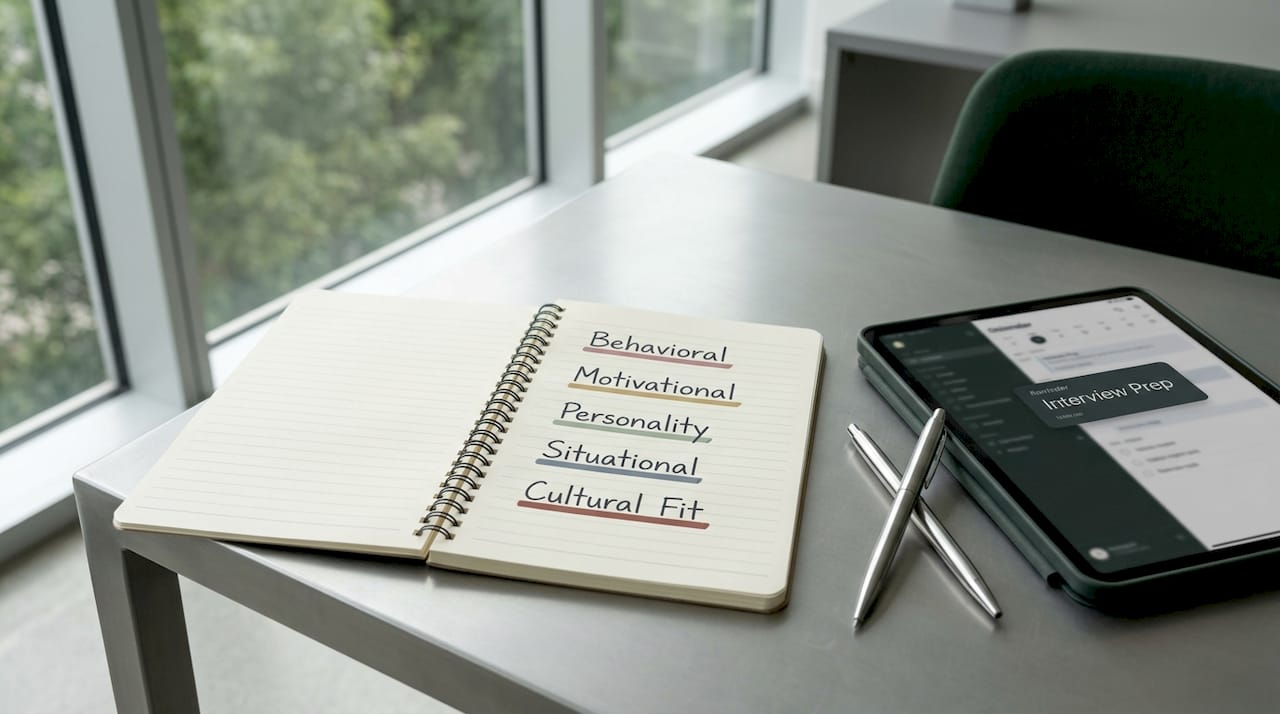
Fit interview questions fall into five distinct categories, and knowing which type you are facing changes how you answer. Each category probes a different aspect of your professional identity.
Behavioral questions ask you to describe past experiences. Prompts like “Tell me about a time you led a team through conflict” or “Describe a project where you missed a deadline” are designed to predict future behavior from past patterns. These are the most common type across industries.
Motivation questions dig into why you want this specific role at this specific company. “What draws you to this organization?” and “Where do you see yourself in five years?” are not small talk. They test whether your career goals genuinely align with what the company offers.
Personality and self-awareness questions reveal how you think about yourself. Questions like “What is your biggest weakness?” or “How would your last manager describe you?” expose your level of self-reflection and emotional intelligence.
Situational questions present hypothetical scenarios. “If you disagreed with your manager’s decision, what would you do?” These evaluate your judgment and problem-solving approach before you have any track record at the company.
Cultural fit questions are the most direct form of workplace fit interview. They probe your preferences around collaboration, feedback, pace, and values. Examples include “Do you prefer working independently or on a team?” and “How do you handle a fast-changing environment?” Culture-specific questions should reference actual company values rather than generic slogans, which means your preparation needs to go beyond reading the company’s “About” page.
2. How to structure your answers for maximum impact
The STAR method is the standard framework for behavioral fit interviews, and using it correctly separates strong candidates from forgettable ones. STAR stands for Situation, Task, Action, Result. You set the scene briefly, explain your specific responsibility, describe exactly what you did, and close with a measurable outcome.
The critical word in STAR is “I.” Strong STAR answers isolate your individual actions and link them to concrete results, rather than describing what “the team” did. Interviewers probe missing Actions or Results specifically because vague team-based answers signal that you may not have owned the outcome.
Here is a practical four-step process for building your answer bank:
- Identify six to eight stories from your career that cover themes like leadership, conflict resolution, failure, growth, and collaboration.
- Map each story to multiple question types so one experience can answer several different prompts.
- Rehearse out loud, not just in your head. Spoken rehearsal reveals where your story loses clarity or momentum.
- Prepare follow-up details. Interviewers will ask “Why did you choose that approach?” or “What would you do differently?” Having a second layer of reflection ready shows genuine self-awareness.
The SPAR method (Situation, Problem, Action, Result) is a consulting-focused alternative that places the obstacle front and center. It works especially well for roles where problem-solving is the core competency.
Pro Tip: Record yourself answering one behavioral question and play it back. Most candidates are surprised by how often they say “we” when the interviewer wants to hear “I.”
3. Top 20 fit interview questions to prepare for
These are the questions that appear most frequently across behavioral, cultural, and motivational fit assessments. Treat each one as a prompt that requires a prepared, specific story.
Behavioral and leadership questions:
- Tell me about a time you led a project under significant pressure.
- Describe a situation where you had to influence someone without direct authority.
- Give me an example of a time you failed and what you learned from it.
- Tell me about a conflict with a colleague and how you resolved it.
- Describe a time you had to adapt quickly to a major change.
Teamwork and collaboration questions:
- Tell me about a time you worked with a difficult team member.
- Describe a project where you had to coordinate across multiple departments.
- Give an example of when you supported a colleague’s success over your own.
Motivation and values questions:
- Why do you want to work here specifically?
- What type of work environment brings out your best performance?
- Describe the manager who got the most out of you and why.
- What does professional growth look like to you in the next three years?
Cultural fit interview questions:
- How do you handle feedback that you disagree with?
- Describe your ideal company culture.
- How do you prioritize when everything feels urgent?
- Tell me about a time you upheld a value that was unpopular in the moment.
Remote and hybrid workplace questions:
- How do you stay connected and productive when working remotely?
- Describe how you manage communication across time zones.
- How do you build trust with teammates you rarely see in person. For remote work interview questions, preparation requires specific examples of asynchronous collaboration tools and outcomes.
Self-awareness questions:
- What is the piece of feedback you have received most consistently throughout your career?
- How do you know when you are doing your best work?
4. Questions you should ask employers to assess culture and role fit
Asking company culture questions at the end of an interview is not just polite. It signals engagement and gives you real data to evaluate whether this company is right for you. The “Do you have any questions for us?” moment is your turn to interview them.
Generic questions like “What does success look like here?” are fine but forgettable. The questions that reveal authentic culture are process-based and specific:
- “How is feedback typically delivered on this team, and can you give me a recent example?”
- “How does the team decompress after a high-pressure project or product launch?”
- “What happens when someone raises a concern about a deadline or workload?”
- “How are decisions made when the team disagrees?”
- “What does a typical Monday morning look like for someone in this role?”
For hybrid and remote roles, operational questions produce far more honest answers than policy questions. Asking about communication rituals and how cross-time-zone decisions are made reveals the actual infrastructure supporting distributed work, not just the company’s stated remote-work policy.
Work-life balance questions like “How does the team celebrate wins?” and “How does the company support recovery after an intense sprint?” produce meaningful insight that perks-focused questions never will. Avoid asking about vacation policy or salary at this stage. Save those for the offer conversation.
Pro Tip: Prepare four to five questions and plan to ask two or three. Having extras shows you did your research, and it gives you flexibility if the interviewer covers some topics during the conversation.
5. How fit interviews differ across industries and formats
Fit interview styles vary significantly by industry. What McKinsey expects in a Personal Experience Interview is structurally different from what a Google engineering manager expects in a behavioral screen.
| Industry | Format | Focus | Key frameworks |
|---|---|---|---|
| Management consulting | Personal Experience Interview (PEI), 10 to 20 minutes | One deep story covering leadership, drive, impact, and growth | STAR, SPAR; sustained follow-up probing on motivations |
| Technology | Behavioral screen plus technical round | Role competencies, collaboration, and culture alignment | STAR; competency matrices tied to company values |
| Finance | Competency-based interview | Analytical rigor, resilience, and client focus | STAR with quantified outcomes |
| Startups | Informal culture interview | Adaptability, ownership, and mission alignment | Conversational; values-based storytelling |
| Healthcare | Situational and values-based interview | Ethics, patient focus, and team communication | Scenario-based; STAR for past clinical decisions |
The McKinsey PEI format lasts 10 to 15 minutes and focuses entirely on one story, with interviewers probing motivations, emotions, and reasoning at every step. This means a vague story collapses under questioning. Candidates who perform well prepare six to eight stories mapped to themes like leadership, growth, and communication, so they can pivot when an interviewer redirects.
Tech behavioral interviews follow a different rhythm. Companies like Google, Meta, and Amazon use structured competency frameworks tied to their stated values. For tech-specific fit answers, your stories need to map directly to the company’s published leadership principles or cultural values, not just generic professional skills.
Cultural fit interview questions in tech roles often blend behavioral and situational formats, asking both “Tell me about a time you disagreed with a product decision” and “What would you do if a teammate consistently missed deadlines?” Preparing for both past-tense and hypothetical prompts is non-negotiable in this sector.
Key takeaways
Fit interview questions reward candidates who prepare specific stories, understand the company’s culture deeply, and treat the interview as a two-way evaluation.
| Point | Details |
|---|---|
| Know the five question types | Behavioral, motivational, personality, situational, and cultural questions each require a different preparation approach. |
| Use STAR with “I” statements | Isolate your individual actions and measurable results to avoid vague team-based answers that invite probing. |
| Ask operational culture questions | Process-based questions about feedback, workload, and team rituals reveal authentic culture better than generic queries. |
| Tailor prep to your industry | Consulting PEI, tech behavioral screens, and startup culture interviews each follow distinct formats and depth expectations. |
| Prepare stories in advance | Six to eight adaptable stories mapped to themes like leadership, conflict, and growth cover most fit interview scenarios. |
What I have learned about fit interviews after watching hundreds of them
Most candidates treat fit interview questions as a performance. They rehearse polished scripts, hit their STAR beats cleanly, and walk out feeling confident. Then they do not get the offer. The reason is almost always the same: the story was technically correct but emotionally flat.
Interviewers are not just scoring your answer structure. They are deciding whether they want to work with you for the next three years. Authentic storytelling, including the moments where you were uncertain or made a mistake, creates more connection than a flawless narrative ever will. The candidates I have seen perform best are the ones who treat the interview as a genuine conversation rather than a one-way presentation.
Deep research on company culture matters more than most job seekers realize. Reading Glassdoor reviews, listening to the CEO’s recent podcast interviews, and studying the company’s public statements on values gives you the raw material to make your answers feel specific rather than generic. When you reference something real about the company’s culture in your answer, interviewers notice immediately.
The other thing worth saying directly: 53% of Gen Z candidates report that interviewer preparation with their application materials positively changed their view of the company. That statistic cuts both ways. You should expect the same standard from them. If an interviewer has not read your resume, that tells you something real about how the company operates. Treat the interview as a two-way fit evaluation, not an audition.
— Jure
Prepare smarter with AI-powered interview support
Knowing the right fit interview questions is only half the work. Answering them clearly and confidently under pressure is where most candidates struggle. Parakeet-ai is a real-time AI interview assistant that listens to your interview as it happens and automatically generates answers to every question using AI, so you always have a structured, relevant response ready.
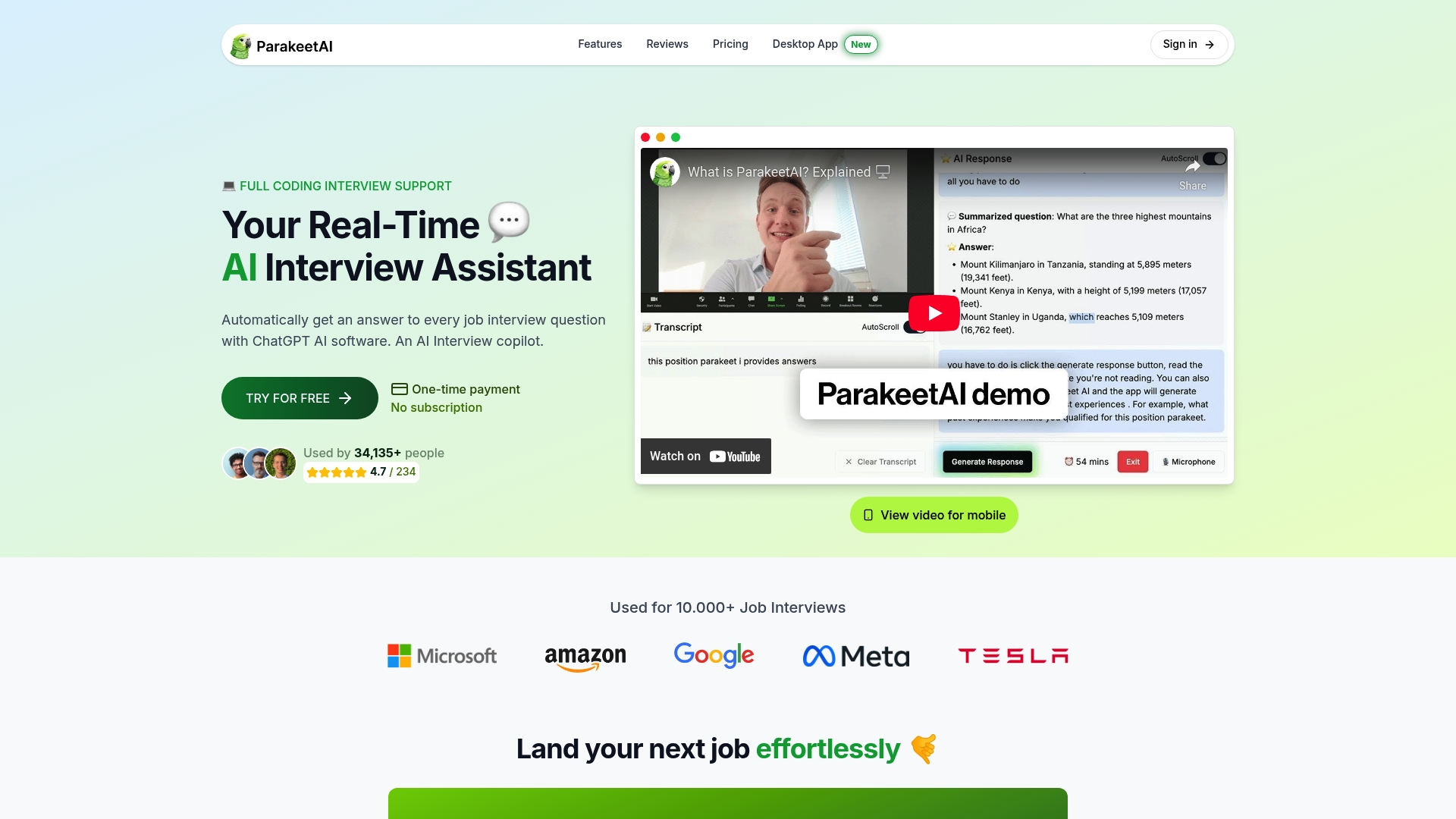
Whether you are preparing for a McKinsey PEI, a tech behavioral screen, or a startup culture interview, Parakeet-ai gives you a live safety net that keeps your answers on track. You can also use it during practice sessions to build your story bank and sharpen your STAR responses before the real thing. Stop leaving fit interviews to chance.
FAQ
What are fit interview questions?
Fit interview questions assess how well your values, work style, and motivations align with a company’s culture and role requirements. They include behavioral, situational, motivational, and cultural queries.
How do I answer behavioral fit questions?
Use the STAR method: Situation, Task, Action, Result. Focus on your individual actions and measurable outcomes rather than describing what the team did collectively.
What culture questions should I ask in an interview?
Ask process-based questions like “How is feedback delivered on this team?” or “How does the team handle workload spikes?” These reveal authentic culture better than questions about perks or stated values.
How long is a consulting fit interview?
The McKinsey Personal Experience Interview typically lasts 10 to 15 minutes and focuses on one story with sustained follow-up probing on your motivations, decisions, and growth.
How many stories should I prepare for fit interviews?
Prepare six to eight adaptable stories covering themes like leadership, conflict, failure, and collaboration. Mapping one story to multiple question types gives you flexibility across different interview formats.