
Master common interview questions to ace your 2026 job search

Master common interview questions to ace your 2026 job search
Preparing for job interviews can feel overwhelming when you’re faced with dozens of potential questions and limited time to practice. Understanding the most common interview questions and how to answer them effectively gives you a significant competitive advantage. With AI-assisted interview preparation tools becoming more accessible, job seekers can now practice responses, receive personalized feedback, and build confidence before stepping into the interview room. This guide breaks down the essential question types, provides a practical list of frequently asked questions, compares how these questions vary across industries, and shows you how to leverage technology for better preparation.
Table of Contents
- How To Recognize And Categorize Common Interview Questions
- Top 10 Common Interview Questions And How To Approach Them
- Comparing Common Interview Questions Across Industries And Roles
- Using AI Tools To Enhance Your Interview Preparation
- Boost Your Interview Success With Parakeet AI
- Frequently Asked Questions
Key takeaways
| Point | Details |
|---|---|
| Question categories matter | Common questions fall into behavioral, technical, situational, and personal types that require different response strategies. |
| STAR method works | Structure behavioral answers using Situation, Task, Action, Result to deliver clear, compelling responses. |
| Industry variations exist | Technical roles emphasize coding skills while managerial positions focus on leadership and decision-making abilities. |
| AI tools accelerate learning | Platforms provide realistic practice, instant feedback, and personalized improvement suggestions to boost confidence. |
| Preparation drives success | Regular practice with varied questions and targeted feedback significantly improves interview performance and outcomes. |
How to recognize and categorize common interview questions
Understanding question categories such as behavioral, technical, and situational helps job seekers prepare effective responses. Interviewers design questions strategically to assess different aspects of your qualifications, personality, and problem-solving abilities. Recognizing these patterns allows you to tailor your preparation and deliver more focused answers.

Behavioral questions explore your past experiences and how you handled specific situations. These questions typically start with phrases like “Tell me about a time when” or “Describe a situation where.” They reveal your soft skills, decision-making process, and ability to learn from experiences.
Technical questions assess job-specific knowledge and practical skills. For software developers, this might include coding challenges or system design problems. For accountants, you might face questions about tax regulations or financial reporting standards. These questions verify that you possess the hard skills necessary to perform the role.
Situational questions present hypothetical scenarios to test your problem-solving approach and adaptability. Interviewers want to see how you think through challenges, prioritize tasks, and make decisions under pressure. These questions often begin with “What would you do if” or “How would you handle.”
Personal questions help interviewers understand your motivations, career goals, and cultural fit. Questions about your strengths, weaknesses, and reasons for applying fall into this category. They reveal whether your values align with the company’s mission and work environment.
Pro Tip: Create a spreadsheet organizing questions by category as you research. This visual organization helps you identify preparation gaps and ensures balanced practice across all question types.
Top 10 common interview questions and how to approach them
Interviewers consistently rely on a core set of questions that appear across industries and experience levels. Common questions like ‘Tell me about yourself’ and ‘What are your strengths?’ dominate initial interviews and require thoughtful preparation. Mastering these questions creates a strong foundation for any interview.
- Tell me about yourself: Structure your response chronologically, focusing on relevant experiences that connect to the target role. Keep it under two minutes and emphasize achievements rather than just listing responsibilities.
- What is your greatest strength?: Choose a strength directly relevant to the job requirements and support it with a specific example demonstrating measurable impact. Avoid generic answers like “I’m a hard worker.”
- What is your greatest weakness?: Select a genuine weakness you’re actively working to improve, explain your improvement strategy, and show progress you’ve made. This demonstrates self-awareness and commitment to growth.
- Why do you want this job?: Research the company thoroughly and connect specific aspects of the role, company culture, or mission to your career goals. Show genuine enthusiasm backed by concrete reasons.
- Why should we hire you?: Summarize your unique value proposition by highlighting how your skills, experience, and approach solve the company’s specific needs. Reference job posting requirements directly.
- Where do you see yourself in five years?: Demonstrate ambition while showing realistic career progression within the company. Focus on skill development and increasing responsibility rather than specific titles.
- Describe a challenging situation and how you handled it: Use the STAR method to structure your response. Choose an example showing problem-solving skills, resilience, and positive outcomes.
- Tell me about a time you failed: Select a real failure, explain what you learned, and describe how you applied those lessons to subsequent situations. Honesty and growth mindset matter more than perfection.
- How do you handle stress and pressure?: Provide specific coping strategies you use and illustrate with an example of successfully managing a high-pressure situation. Show you remain productive under stress.
- Do you have any questions for us?: Always prepare thoughtful questions about team dynamics, growth opportunities, or company challenges. This demonstrates genuine interest and helps you evaluate cultural fit.
Pro Tip: Record yourself answering these questions and watch the playback. You’ll notice verbal tics, pacing issues, and areas where your answers lack clarity that you wouldn’t catch otherwise.
Comparing common interview questions across industries and roles
Technical questions vary greatly among software engineering, IT, and management roles, affecting preparation focus. Understanding these differences helps you prioritize practice time and develop role-specific examples. While some questions appear universally, the depth and context shift significantly based on your target position.
Technical roles like software engineering emphasize coding challenges, algorithm optimization, and system architecture discussions. Interviewers probe your ability to write clean code, debug problems, and explain complex technical concepts clearly. You’ll face whiteboard challenges, take-home assignments, or live coding sessions that test practical skills under time constraints.
Managerial interviews emphasize leadership and conflict resolution questions. Hiring managers want to understand your management philosophy, how you motivate teams, and your approach to difficult personnel situations. You’ll discuss delegation strategies, performance management experiences, and how you balance competing priorities across multiple projects.
General roles across industries focus heavily on cultural fit, communication skills, and adaptability. These positions value your ability to collaborate, learn quickly, and represent the company professionally. Questions explore your work style preferences, how you handle feedback, and your comfort with ambiguity.
| Role Type | Primary Question Focus | Example Questions | Key Skills Assessed | | — | — | — | | Technical | Coding, problem-solving, architecture | “Optimize this algorithm” or “Design a scalable system” | Technical proficiency, analytical thinking | | Managerial | Leadership, team dynamics, strategy | “How do you handle underperforming team members?” | People management, decision-making | | General | Culture fit, communication, flexibility | “Describe your ideal work environment” | Collaboration, adaptability |
Customer-facing roles add another dimension, emphasizing interpersonal skills and conflict resolution. You’ll encounter scenarios testing your patience, empathy, and ability to turn negative situations into positive outcomes. Questions often involve handling difficult customers or explaining complex information to non-technical audiences.
Pro Tip: Review job postings for your target roles and note which skills appear most frequently. This reveals what interviewers will prioritize and helps you select the strongest examples for your preparation.
Using AI tools to enhance your interview preparation
AI-assisted platforms can simulate interviews, analyze answers, and offer improvement suggestions, boosting candidate confidence and performance. These tools have transformed interview preparation from passive studying to active, personalized practice. You can now receive immediate feedback on your responses, identify patterns in your delivery, and track improvement over time.
AI interview platforms offer several distinct advantages over traditional preparation methods:
- Realistic simulation: Practice with voice recognition and natural language processing that mimics actual interview conditions without the pressure of a live audience.
- Instant feedback: Receive immediate analysis of your answer content, delivery speed, filler word usage, and confidence level after each response.
- Personalized improvement: AI identifies your specific weaknesses, whether it’s rambling answers, lack of concrete examples, or poor structure, and suggests targeted improvements.
- Unlimited practice: Repeat questions as many times as needed without scheduling conflicts or imposing on friends and mentors for mock interviews.
- Performance tracking: Monitor your progress across practice sessions, seeing measurable improvements in response quality and delivery confidence.
These platforms support both technical and behavioral question preparation. For technical roles, some tools integrate coding environments where you can practice live coding while explaining your thought process. For behavioral questions, AI analyzes whether your responses follow the STAR method and include sufficient detail.
“The key to interview success isn’t memorizing perfect answers but developing the ability to think clearly under pressure and articulate your value confidently. AI tools accelerate this skill development through repetition and objective feedback.”
Regular use builds muscle memory for structuring responses quickly. You’ll develop a natural rhythm for answering questions, reducing the cognitive load during actual interviews. This frees your mind to focus on connecting with the interviewer and reading the room rather than struggling to organize your thoughts.
Pro Tip: Schedule AI practice sessions at the same time of day as your actual interview. Your energy levels and mental clarity vary throughout the day, so practicing under similar conditions improves performance consistency.
Consider exploring AI interview preparation tools that offer real-time assistance during live interviews. These advanced platforms can listen to interview questions and provide instant answer suggestions, acting as a safety net while you build confidence.
Boost your interview success with Parakeet AI
Now that you understand common interview questions and effective preparation strategies, it’s time to put that knowledge into practice with the right tools. Parakeet AI offers a comprehensive platform designed specifically for job seekers who want to master interview questions across any industry or role. The platform provides personalized practice sessions, analyzes your responses in real time, and offers actionable feedback to refine your delivery.
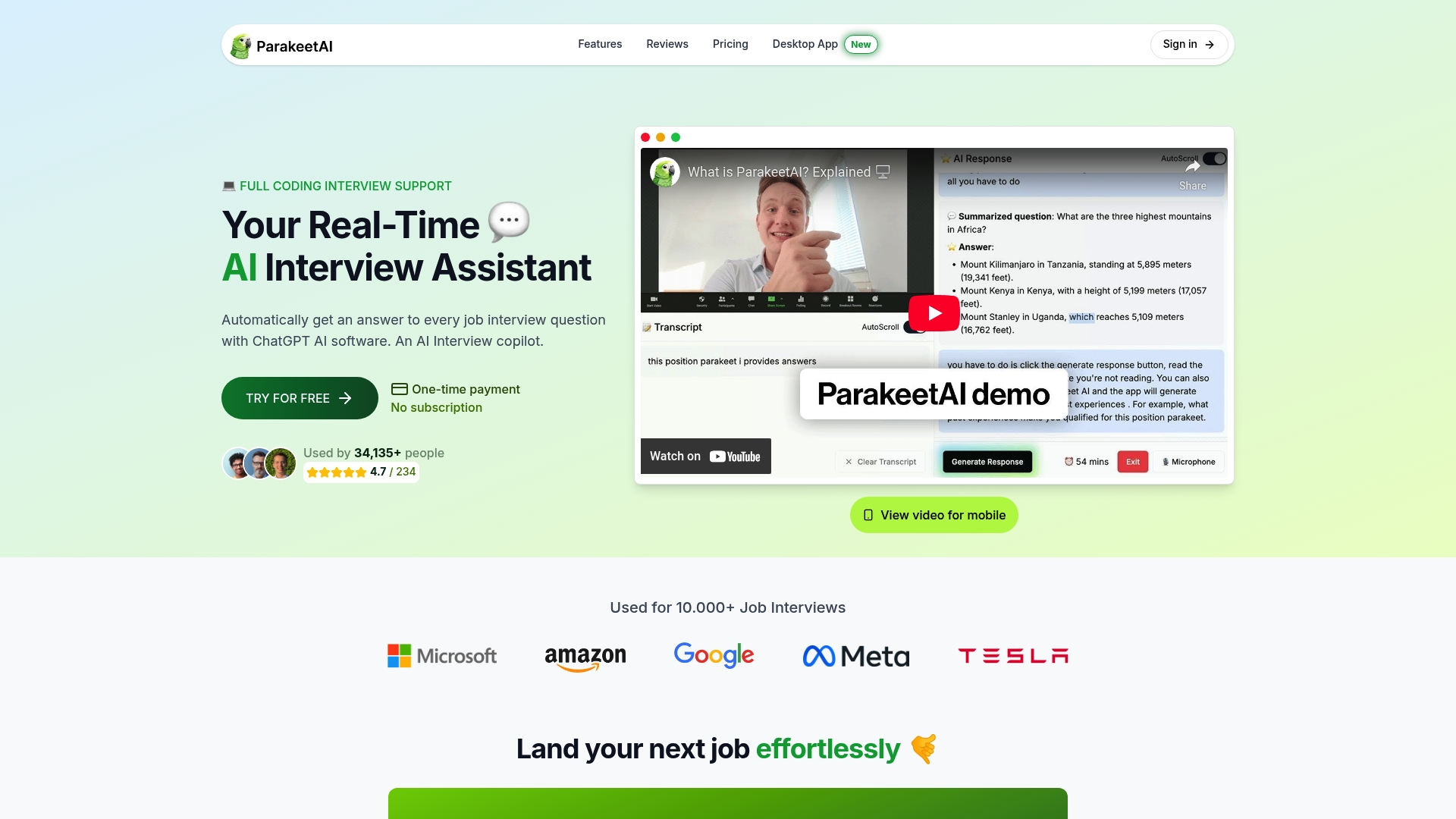
Whether you’re preparing for technical coding interviews, behavioral questions, or managerial discussions, Parakeet AI adapts to your specific needs and experience level. The AI-powered system tracks your progress over multiple sessions, helping you identify improvement areas and build genuine confidence before your next interview. With realistic simulations and intelligent feedback, you’ll walk into every interview prepared to showcase your best self and land the job you deserve.
Frequently asked questions
What are the most common interview questions I should prepare for?
The most frequently asked questions include “Tell me about yourself,” “What are your greatest strengths and weaknesses,” “Why do you want this job,” and “Where do you see yourself in five years.” Behavioral questions using the “Tell me about a time when” format also appear consistently across industries. Preparing structured responses to these core questions creates a strong foundation for any interview.
How does the STAR method improve my interview answers?
The STAR method (Situation, Task, Action, Result) provides a clear framework that keeps your answers focused and compelling. By describing the context, explaining your responsibility, detailing your specific actions, and quantifying the outcome, you demonstrate problem-solving skills with concrete evidence. This structure prevents rambling and ensures interviewers understand both what you did and why it mattered.
What’s the difference between technical and behavioral interview questions?
Technical questions assess job-specific hard skills like coding ability, industry knowledge, or specialized expertise through practical challenges or knowledge-based queries. Behavioral questions explore soft skills, past experiences, and how you handle various workplace situations to predict future performance. Most interviews combine both types to evaluate candidates holistically.
How can AI tools help me prepare for interviews more effectively?
AI platforms simulate realistic interview conditions, provide instant feedback on your responses, and identify specific areas for improvement like pacing, structure, or content depth. They offer unlimited practice opportunities without scheduling constraints and track your progress over time. This technology-driven approach accelerates skill development and builds confidence through objective, personalized coaching.
How do interview questions differ between industries?
Technical fields like software engineering emphasize coding challenges, system design, and problem-solving abilities. Managerial roles focus on leadership philosophy, team management, and strategic thinking. General business positions prioritize cultural fit, communication skills, and adaptability. Understanding these variations helps you prepare relevant examples and practice the question types most likely to appear in your target field.
What strategies help overcome nervousness during interviews?
Thorough preparation through repeated practice significantly reduces anxiety by building confidence in your ability to answer questions effectively. Deep breathing exercises before the interview calm your nervous system. Reframing the interview as a conversation rather than an interrogation shifts your mindset positively. Using AI tools for realistic practice helps you develop comfort with the interview format and reduces fear of the unknown.