
Common Interview Questions in 2026: STAR & AI for 81% Confidence

Interview preparation can feel overwhelming, especially when you’re unsure which questions to prioritize or how to structure compelling answers. Studies show that 81% of candidates feel more confident when they prepare answers to common interview questions in advance. This guide provides a comprehensive roadmap to selecting and mastering key interview questions using proven frameworks and AI-driven insights for 2026 success.
Table of Contents
- How To Choose Which Interview Questions To Prepare For
- Top 5 Classic Interview Questions And How To Answer Them
- Behavioral Interview Questions And Star/Soar Method
- Adapting To Ai And Technology-Focused Interview Questions
- What Questions To Ask The Interviewer To Stand Out
- Summary Comparison Of Common Interview Questions And Their Benefits
- Situational Recommendations: Choose Questions Based On Your Job Search
- Enhance Your Interview Prep With Parakeetai’s Ai-Powered Tools
Key Takeaways
| Point | Details |
|---|---|
| Question selection criteria | Focus on behavioral, classic, and AI-focused questions based on your role and industry trends. |
| STAR and SOAR frameworks | Structured answer methods increase clarity and demonstrate impact effectively to hiring managers. |
| AI adaptability matters | 65% of employers now assess technology familiarity and continuous learning capabilities. |
| Ask smart questions | Inquiring about team dynamics and role expectations significantly improves hiring outcomes. |
| Tailored preparation wins | Customize question focus based on job function, seniority level, and interview stage. |
How to Choose Which Interview Questions to Prepare For
Selecting the right questions to prepare separates confident candidates from scattered ones. Employers in 2026 emphasize behavioral questions over technical ones depending on role requirements and AI adaptability needs.
Behavioral questions dominate hiring manager focus, accounting for roughly 90% of interview assessments across industries. Classic questions like “Tell me about yourself” remain essential for initial stages, establishing rapport and communication skills. AI and technology-related questions increasingly appear, particularly in tech-forward sectors.
Preparing thoughtful questions to ask interviewers demonstrates engagement and helps you evaluate cultural fit. Prioritize questions based on your specific job function and interview stage:
- Entry-level roles require mastery of motivation and classic questions
- Mid-career positions demand behavioral examples showcasing leadership
- Senior roles need strategic thinking and problem-solving demonstrations
- Tech positions emphasize AI tool familiarity and adaptability
You can improve your interview answers by analyzing job descriptions for recurring themes and researching company-specific challenges. Boost your confidence with AI interview tools that provide personalized question recommendations based on your target role.
Top 5 Classic Interview Questions and How to Answer Them
Mastering classic questions builds a foundation for interview success. These timeless queries assess communication skills, self-awareness, and cultural alignment.
The most common interview question is “Tell me about yourself” answered using the Present-Past-Future structure in under two minutes. Start with your current role and key skills, briefly cover relevant past experiences, then connect your future goals to the position.
- Tell me about yourself: Use Present-Past-Future format. Keep it to 60-90 seconds focusing on professional highlights relevant to the role.
- Why do you want to work here: Research company mission and recent initiatives. Align your career goals with their values and growth trajectory.
- What are your strengths and weaknesses: Choose strengths that match job requirements with specific examples. For weaknesses, show self-awareness and active improvement efforts.
- Tell me about a time you failed: Apply STAR or SOAR framework emphasizing lessons learned and subsequent growth. Focus 60% of your answer on actions taken.
- Where do you see yourself in five years: Frame your career plan around growth opportunities the role offers while showing commitment and realistic ambition.
Pro Tip: Practice your “Tell me about yourself” answer until it flows naturally without sounding rehearsed. Record yourself to identify filler words and pacing issues.
Structure your interview responses effectively by preparing 3-5 versions of each answer tailored to different company cultures and role levels. This flexibility helps you adjust tone and emphasis during actual interviews.
Behavioral Interview Questions and STAR/SOAR Method
Behavioral questions dominate modern hiring because they reveal how you handle real workplace situations. These questions typically start with “Tell me about a time when” and assess soft skills through past experiences.
The STAR method provides a proven framework: Situation sets context, Task defines your responsibility, Action details steps you took, and Result quantifies the outcome. STAR improves clarity by focusing 60% on actions, demonstrating your direct impact.
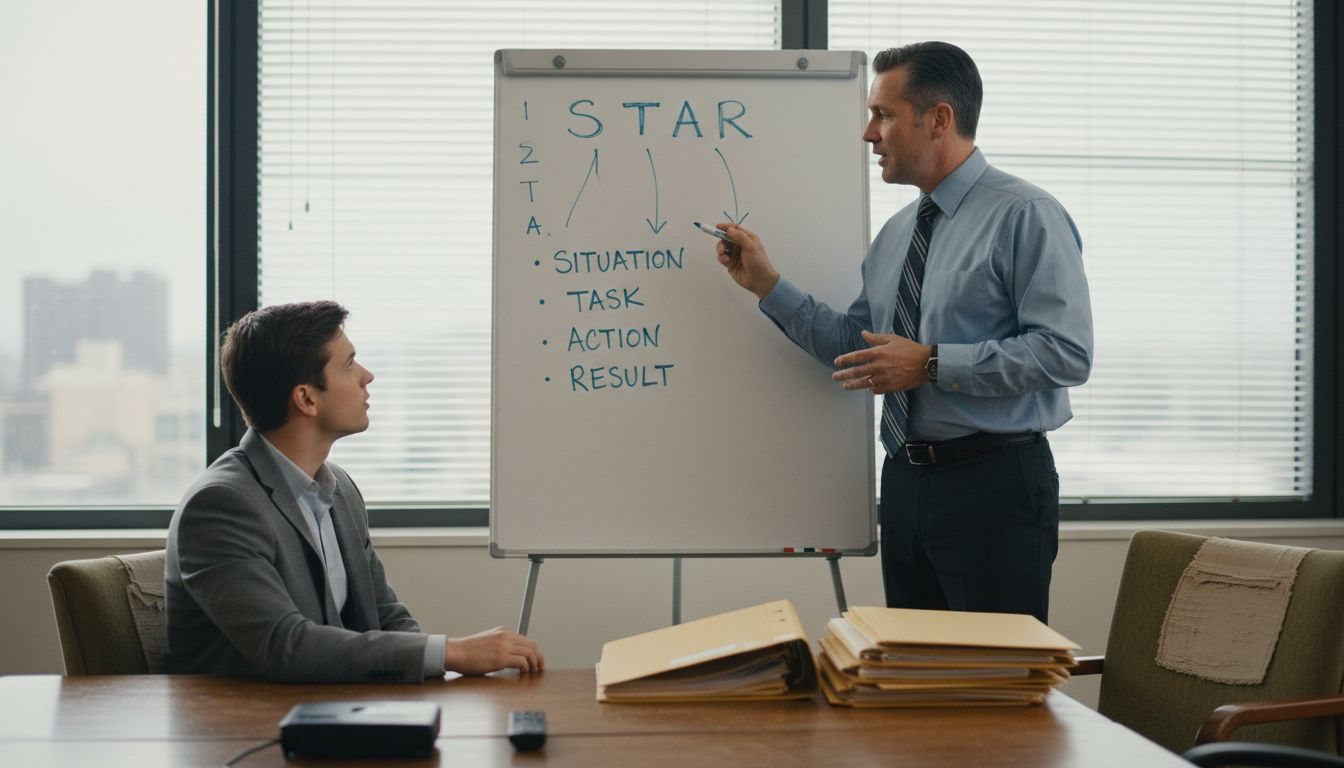
SOAR offers clearer communication than traditional STAR by replacing Task with Obstacle. This adjustment emphasizes challenges you overcame, making your problem-solving skills more apparent. SOAR components are Situation, Obstacle, Action, Result.
90% of hiring managers prioritize behavioral questions when evaluating candidates. Prepare stories covering these common themes:
- Teamwork and collaboration across diverse groups
- Conflict resolution with colleagues or stakeholders
- Problem-solving under tight deadlines or resource constraints
- Leadership and mentoring experiences
- Adaptability to unexpected changes or setbacks
Pro Tip: Prepare 6-8 versatile stories that can answer multiple behavioral questions. A single teamwork example might also demonstrate problem-solving or communication skills depending on how you frame it.
Structure your behavioral interview answers by writing out full STAR/SOAR responses for each story, then practice delivering them conversationally. Master best answers to behavioral questions by quantifying results whenever possible using percentages, dollar amounts, or time saved.
Adapting to AI and Technology-Focused Interview Questions
Technology adaptation questions assess your readiness for evolving workplace tools. 65% of employers emphasize skills-based hiring including technology adaptability and AI tool familiarity in 2026 interviews.
Interviewers increasingly ask about specific AI tools you use, like GitHub Copilot for developers or ChatGPT for content creators. They want to understand how you integrate technology into workflow improvements and productivity gains.
Showcase continuous learning through recent courses, certifications, or self-directed upskilling efforts. Prepare concrete examples:
- Describe an AI tool you adopted and measurable benefits achieved
- Explain how you stay current with emerging technologies in your field
- Share instances of successful collaboration between human expertise and AI assistance
- Discuss ethical considerations you apply when using AI tools
Emphasize openness to learning new systems rather than claiming expertise in every tool. Employers value adaptability over current knowledge because technology changes rapidly. Highlight your learning methodology and how quickly you master new platforms.
Demonstrate AI knowledge in interviews by researching tools commonly used in your target industry. Improve answers for technology questions by connecting technology adoption to business outcomes rather than just listing tools you’ve used.
What Questions to Ask the Interviewer to Stand Out
Asking thoughtful questions demonstrates engagement and helps you evaluate whether the role matches your career goals. Effective questions focus on role expectations, team dynamics, and culture to assess fit and impress interviewers.
Tailor questions to the specific industry, company stage, and role level. Avoid easily searchable information about the company. Instead, dig deeper into day-to-day realities and team culture.
Smart questions to consider:
- What does success look like in this role during the first 90 days?
- How does the team handle disagreements or conflicting priorities?
- What professional development opportunities does the company provide?
- What challenges is the team currently facing that this role would address?
- How do you measure performance and provide feedback?
- For team dynamics: Ask about collaboration styles, team size, and reporting structures to understand your daily work environment.
- For growth potential: Inquire about career progression paths and skill development support to assess long-term opportunities.
- For culture fit: Question work-life balance expectations, communication norms, and company values in action rather than theory.
Demonstrate your research by referencing recent company news or initiatives when framing questions. This shows genuine interest beyond the job posting. Asking strategic questions increases your chances of receiving offers because it signals serious consideration and cultural awareness.
Structure questions to ask for impact by preparing 8-10 questions and selecting 3-5 based on what’s already been covered during the interview. Save compensation and benefits questions for later interview stages unless the interviewer raises them first.
Summary Comparison of Common Interview Questions and Their Benefits
Understanding question categories and optimal answer frameworks helps you prepare strategically. This comparison clarifies when to apply different techniques based on interview context and question type.
| Question Type | Best Framework | Ideal Use Case | Key Benefit | Preparation Focus |
|---|---|---|---|---|
| Classic (Tell me about yourself) | Present-Past-Future | Opening conversations, phone screens | Establishes rapport quickly | Concise 60-90 second narrative |
| Behavioral (Past experiences) | STAR or SOAR | Assessing soft skills, problem-solving | Demonstrates real-world impact | 6-8 versatile stories with metrics |
| AI/Technology | Example-based narrative | Tech roles, innovation positions | Shows adaptability and learning | Specific tools and outcomes |
| Candidate questions | Tailored inquiries | All interview stages | Evaluates fit, shows engagement | Research-based, role-specific |
| Strengths/Weaknesses | Self-awareness framework | Initial and final rounds | Reveals honest reflection | Match strengths to job, show growth |
Classic questions build foundational communication and cultural alignment assessment. Behavioral questions dominate mid to late interview stages when employers evaluate how you handle challenges. AI-focused questions increasingly appear across all industries as technology integration accelerates.
Your preparation should allocate roughly 40% of time to behavioral stories, 30% to classic questions, 20% to technology adaptability, and 10% to crafting smart questions for interviewers. This distribution reflects current hiring priorities while maintaining flexibility for role-specific adjustments.
Situational Recommendations: Choose Questions Based on Your Job Search
Your interview preparation should align with your specific career stage, industry, and target role. Different positions require emphasis on different question categories for maximum interview success.
For tech and AI-driven roles, prioritize technology adaptability questions and prepare detailed examples of AI tool usage. Emphasize continuous learning and specific projects where you integrated emerging technologies. Research the company’s tech stack and mention relevant experience during your answers.
Leadership and management positions demand strong behavioral question preparation, particularly around conflict resolution, team building, and strategic decision-making. Use SOAR framework to highlight obstacles you’ve overcome while managing teams or projects. Prepare examples demonstrating emotional intelligence and stakeholder management.
New graduates and entry-level candidates should master classic questions and motivation-focused responses. Your limited work experience means emphasizing transferable skills from internships, volunteer work, or academic projects. Focus on learning agility and cultural fit rather than extensive past achievements.
Always prepare thoughtful questions to ask interviewers regardless of role or seniority. This demonstrates engagement and helps you evaluate whether the opportunity aligns with your career trajectory. Tailor questions based on interview stage, asking broader culture questions early and specific role details in final rounds.
Boost your interview prep with AI tools that provide personalized question recommendations based on job descriptions and industry trends. Practice delivery until answers feel natural rather than memorized, maintaining authenticity while demonstrating preparation.
Enhance Your Interview Prep with ParakeetAI’s AI-Powered Tools
Mastering interview questions requires practice, feedback, and continuous refinement. ParakeetAI offers AI-driven interview coaching tailored to your specific question preparation needs, whether you’re focusing on behavioral STAR answers or demonstrating AI adaptability.
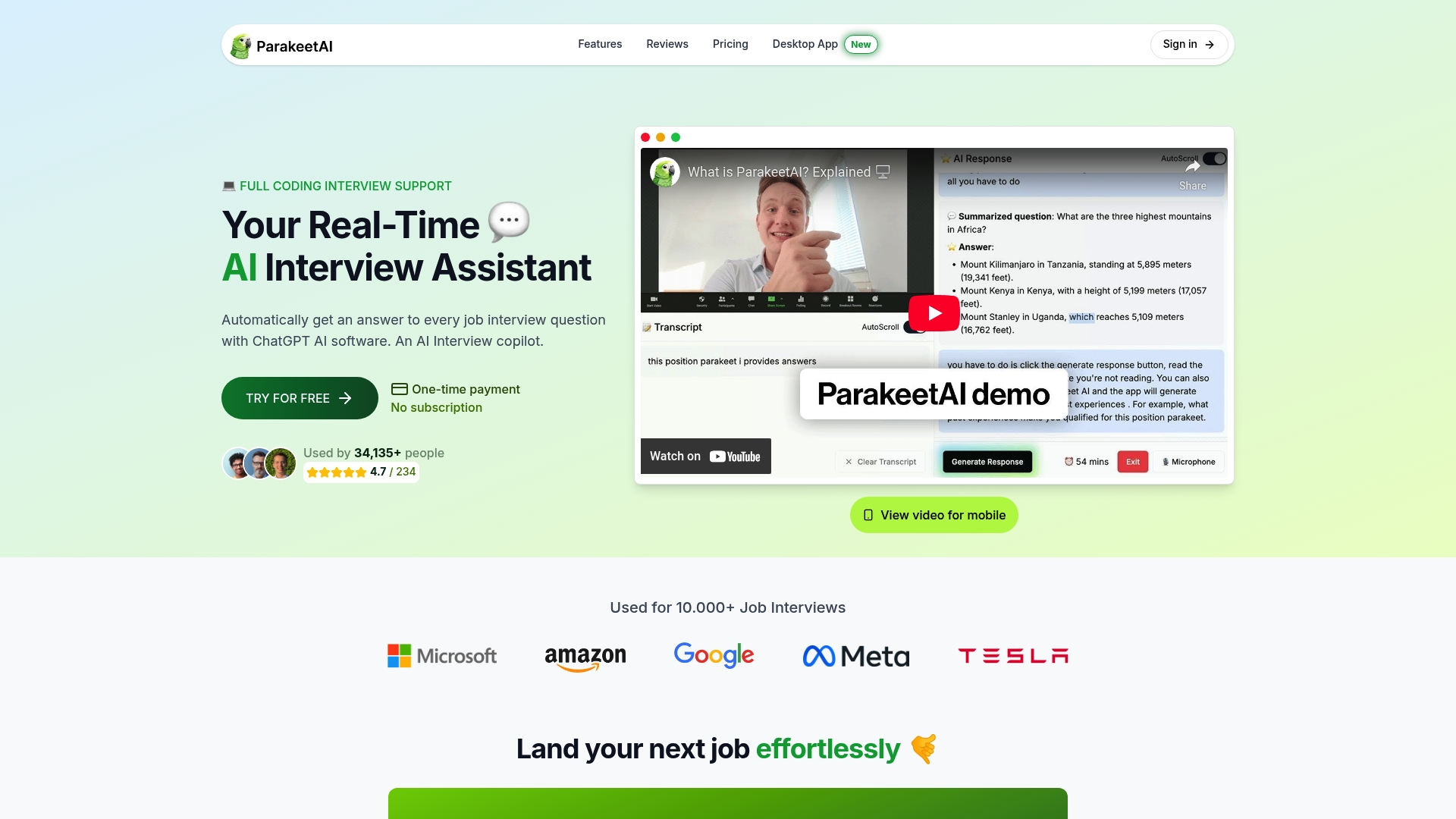
Real-time feedback helps you improve answer structure using STAR, SOAR, and modern AI-focused frameworks that employers value in 2026. Our platform analyzes your responses, identifies improvement areas, and suggests refinements that increase clarity and impact.
Why use an AI job interview assistant becomes clear when you experience personalized coaching that adapts to your industry, role level, and specific challenges. AI-based coaching for real-time interview success provides instant insights during practice sessions and actual interviews.
Use ParakeetAI platform to boost confidence, refine your answers, and stand out in competitive 2026 job markets. Our tools help you practice common questions, prepare role-specific responses, and develop the adaptability that modern employers seek.
Frequently Asked Questions
What are the most common interview questions in 2026?
“Tell me about yourself,” behavioral questions using STAR method, and AI adaptability queries dominate 2026 interviews. Employers increasingly ask about technology familiarity, continuous learning habits, and specific tools you’ve used to improve productivity. Classic motivation questions about why you want the role and your five-year plan remain essential across all industries and career stages.
How does the STAR method improve interview answers?
STAR breaks answers into Situation, Task, Action, and Result components, creating clear narrative structure. Focusing 60% of your answer on Actions demonstrates your direct impact and problem-solving approach rather than just describing circumstances. This method helps interviewers quickly understand your capabilities and remember your examples during candidate evaluations.
What questions should I ask the interviewer to make a good impression?
Ask about role expectations, success metrics within the first 90 days, and team dynamics to show genuine interest. Smart questions about role, team, and culture increase hiring success by demonstrating engagement and helping you evaluate fit. Tailor questions to company-specific challenges or recent initiatives you discovered through research, avoiding generic queries about information easily found on their website.
How do I prepare for AI-focused interview questions in 2026?
Research relevant AI tools used in your target industry and prepare specific examples of how you’ve applied them. 65% of employers ask about AI tools and adaptability skills when evaluating candidates in 2026. Highlight continuous learning through recent courses, certifications, or self-directed exploration of emerging technologies. Emphasize your learning methodology and openness to adopting new systems rather than claiming expertise in every platform.