
Interview Improvement Checklist: Boost Confidence With AI

Nearly 80 percent of American job seekers admit to feeling anxious before interviews, especially when entering fast-paced tech industries. That sense of uncertainty is universal, whether you are navigating your first interview in Silicon Valley or preparing for a software role in London. With technology like AI providing real-time feedback, candidates can now decode their strengths and weaknesses and build the confidence they need to stand out in any competitive global market.
Table of Contents
- Defining The Interview Improvement Checklist
- Types Of Checklist Strategies And Tools
- Using Ai For Real-Time Interview Feedback
- Common Interview Mistakes To Avoid
- Mastering The Star Method For Answers
- Tracking Progress And Continuous Improvement
Key Takeaways
| Point | Details |
|---|---|
| Interview Improvement Checklist | A structured checklist enhances interview readiness by identifying strengths, weaknesses, and opportunities for growth. |
| AI-Enhanced Feedback | Utilizing AI tools provides real-time feedback on interview performance, helping candidates refine their skills with precision. |
| Common Mistakes | Understanding and addressing frequent interview errors can significantly improve candidates’ professional presentation. |
| STAR Method | The STAR method helps structure responses, making narratives clear and impactful, which is crucial for behavioral interviews. |
Defining the Interview Improvement Checklist
An interview improvement checklist is a strategic roadmap designed to transform your interview performance by systematically identifying strengths, weaknesses, and opportunities for professional growth. This structured approach helps job seekers methodically prepare, execute, and reflect on their interview experiences with precision and confidence.
The foundational elements of an effective interview improvement checklist involve comprehensive preparation across multiple dimensions. Academic interview guides from the University of Toronto emphasize three critical stages: pre-interview research, strategic self-evaluation, and post-interview reflection. These stages ensure candidates develop a holistic understanding of their performance and create targeted improvement plans.
A well-constructed interview improvement checklist typically includes key components such as:
- Background research on the company and role
- Anticipating potential interview questions
- Practicing communication and body language skills
- Recording and analyzing mock interview performances
- Documenting personal feedback and areas for development
- Creating actionable strategies for continuous skill enhancement
Implementing such a checklist transforms interview preparation from a passive activity into an active, intentional process of professional development. By systematically tracking progress and implementing targeted improvements, job seekers can significantly boost their confidence and performance.
Pro tip: Create a digital or physical tracking document where you can log interview experiences, document feedback, and monitor your skill progression over time.
Types Of Checklist Strategies And Tools
Interview improvement checklists encompass diverse strategies tailored to different professional contexts and individual learning styles. These tools range from comprehensive preparation frameworks to targeted skill assessment techniques, each designed to enhance a candidate’s interview readiness and performance.
Academic interview preparation resources highlight multiple checklist approaches that can be categorized into several key types:
- Comprehensive Preparation Checklists
- Full interview cycle documentation
- Pre-interview research protocols
- Post-interview reflection templates
- Skill-Specific Assessment Tools
- Communication effectiveness trackers
- Body language evaluation frameworks
- Technical competency mapping
- Digital and AI-Enhanced Checklists
- Automated performance feedback systems
- Real-time interview question generators
- Machine learning-powered skill gap analysis
These strategic tools transform interview preparation from a passive activity into an active, data-driven process of professional development. By systematically documenting, analyzing, and improving interview skills, candidates can develop a more nuanced and confident approach to professional interactions.
Here is a comparison of different interview checklist strategies and their unique benefits:
| Strategy Type | Primary Focus | Typical Users | Core Benefit |
|---|---|---|---|
| Comprehensive Checklists | Full interview lifecycle | Entry-level professionals | Ensures holistic preparation |
| Skill-Specific Assessment | Targeted skill analysis | Technical or senior candidates | Pinpoints communication weaknesses |
| Digital & AI-Enhanced Tools | Automated feedback | Tech-savvy job seekers | Offers instant, objective insights |
Pro tip: Create a dynamic digital checklist that evolves with your professional growth, incorporating lessons learned from each interview experience.
Using AI For Real-Time Interview Feedback
Real-time AI interview feedback represents a groundbreaking approach to professional skill development, transforming traditional interview preparation into an interactive, responsive learning experience. By leveraging advanced machine learning algorithms, these intelligent systems provide immediate, nuanced insights into communication performance, body language, and conversational dynamics.
Advanced AI interviewing technologies enable candidates to receive instantaneous, objective feedback across multiple critical dimensions. These systems analyze verbal and nonverbal communication patterns, offering precise recommendations for improvement that go far beyond traditional coaching methods. The AI can detect subtle communication nuances such as:
- Tone and vocal modulation
- Confidence levels in response delivery
- Clarity and structure of verbal communication
- Nonverbal communication signals
- Emotional intelligence during interactions
- Technical content accuracy
The integration of AI into interview preparation represents a significant technological leap in professional skill development. By providing real-time, data-driven insights, these intelligent systems help candidates identify blind spots, build confidence, and develop more sophisticated communication strategies. Candidates can now practice and refine their interview skills with unprecedented precision and personalized guidance.
Pro tip: Record multiple practice interviews using AI feedback tools, creating a comparative portfolio that tracks your communication skill progression over time.

Common Interview Mistakes To Avoid
Interviews represent high-stakes professional interactions where even minor missteps can significantly impact career opportunities. Understanding and proactively addressing common interview mistakes is crucial for presenting a confident, competent professional image that resonates with potential employers.
Professional interview research reveals several critical errors candidates consistently make that can undermine their chances of success. These mistakes often stem from nervousness, inadequate preparation, or a lack of strategic communication skills:
- Verbal Communication Pitfalls
- Over-apologizing unnecessarily
- Using filler words like “um” and “like”
- Speaking too quickly or hesitantly
- Providing overly lengthy or unfocused responses
- Professional Conduct Errors
- Arriving late or unprepared
- Negative speaking about previous employers
- Demonstrating lack of research about the company
- Poor nonverbal communication signals
- Strategic Presentation Mistakes
- Failing to highlight specific achievements
- Lack of clear, concise storytelling
- Inability to connect personal experience to job requirements
- Appearing uncommitted or unenthusiastic
Successful interview performance requires a holistic approach that combines self-awareness, strategic preparation, and confident communication. By recognizing and systematically addressing these common mistakes, candidates can transform potential weaknesses into opportunities for genuine, impactful professional dialogue.
This table summarizes common interview mistakes and effective ways to address them:
| Mistake Type | Example Error | Impact on Interview | Correction Approach |
|---|---|---|---|
| Verbal Communication | Overusing filler words | Appears unprepared | Practice structured responses |
| Conduct & Etiquette | Arriving late | Reduces credibility | Plan logistics ahead |
| Presentation | Unclear storytelling | Weakens competence display | Use STAR method for answers |
Pro tip: Practice recording mock interviews to objectively identify and eliminate your specific communication patterns that might negatively impact your professional presentation.
Mastering The STAR Method For Answers
Behavioral interview questions demand a structured, strategic approach that allows candidates to showcase their professional capabilities through compelling storytelling. The STAR method offers a powerful framework for transforming complex professional experiences into clear, impactful narrative responses that resonate with interviewers.
Comprehensive interview preparation resources reveal the STAR method as a systematic technique for crafting memorable interview answers. This approach breaks down responses into four critical components:
- Situation: Provide context and background
- Describe the specific scenario
- Highlight relevant professional environment
- Set the stage for your experience
- Task: Explain your specific responsibility
- Define your role in the scenario
- Clarify expectations and challenges
- Demonstrate understanding of professional duties
- Action: Detail your specific steps
- Describe precise actions taken
- Highlight problem-solving skills
- Showcase individual contribution
- Result: Quantify and articulate outcomes
- Present measurable achievements
- Connect actions to positive results
- Demonstrate professional impact
Successful implementation of the STAR method transforms interview responses from generic statements to powerful, evidence-based narratives that demonstrate professional competence. By practicing this structured approach, candidates can consistently deliver clear, compelling stories that effectively communicate their skills and experiences.
Pro tip: Develop a repertoire of 4-5 versatile STAR stories that can be adapted to multiple interview scenarios, ensuring you have robust examples ready for different competency questions.
Tracking Progress And Continuous Improvement
Continuous improvement in interview performance requires systematic tracking, thoughtful reflection, and strategic adaptation. By implementing a structured approach to monitoring professional development, candidates can transform sporadic experiences into meaningful, data-driven growth opportunities.
Progress monitoring techniques reveal multiple sophisticated strategies for tracking interview skill progression. These approaches go beyond simple record-keeping and provide nuanced insights into performance evolution:
- Performance Documentation
- Create detailed interview experience logs
- Record specific feedback and observations
- Note areas of strength and potential improvement
- Quantitative Skill Tracking
- Develop numerical scoring for communication skills
- Track confidence levels across interview attempts
- Measure response clarity and structure
- Comparative Analysis
- Compare performance across multiple interview scenarios
- Identify consistent patterns and emerging strengths
- Recognize recurring communication challenges
Effective progress tracking transforms interview preparation from a reactive process to a proactive, strategic development journey. By systematically collecting, analyzing, and responding to performance data, candidates can create targeted improvement plans that incrementally enhance their professional communication skills.
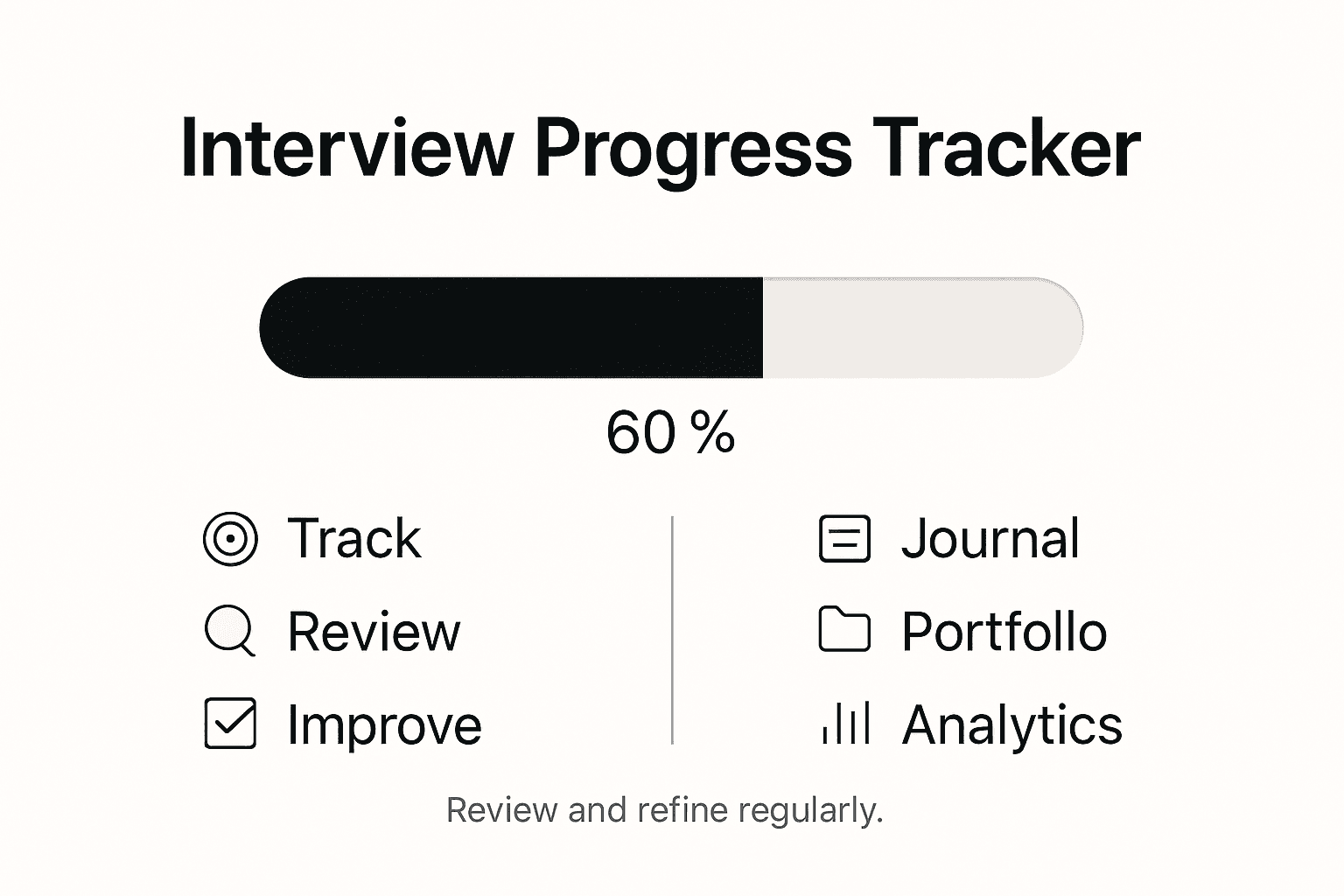
Pro tip: Establish a quarterly self-review process where you comprehensively assess your interview performance, setting specific, measurable goals for communication skill enhancement.
Elevate Your Interview Performance with AI-Powered Support
Navigating interview challenges like preparing thorough company research, mastering communication skills, and avoiding common pitfalls can feel overwhelming. This article highlights the power of structured checklists and real-time feedback to boost confidence and sharpen your responses using the STAR method. Imagine having an intelligent assistant that listens carefully during your interview practice and instantly provides tailored answers and actionable advice to address your personal growth areas.
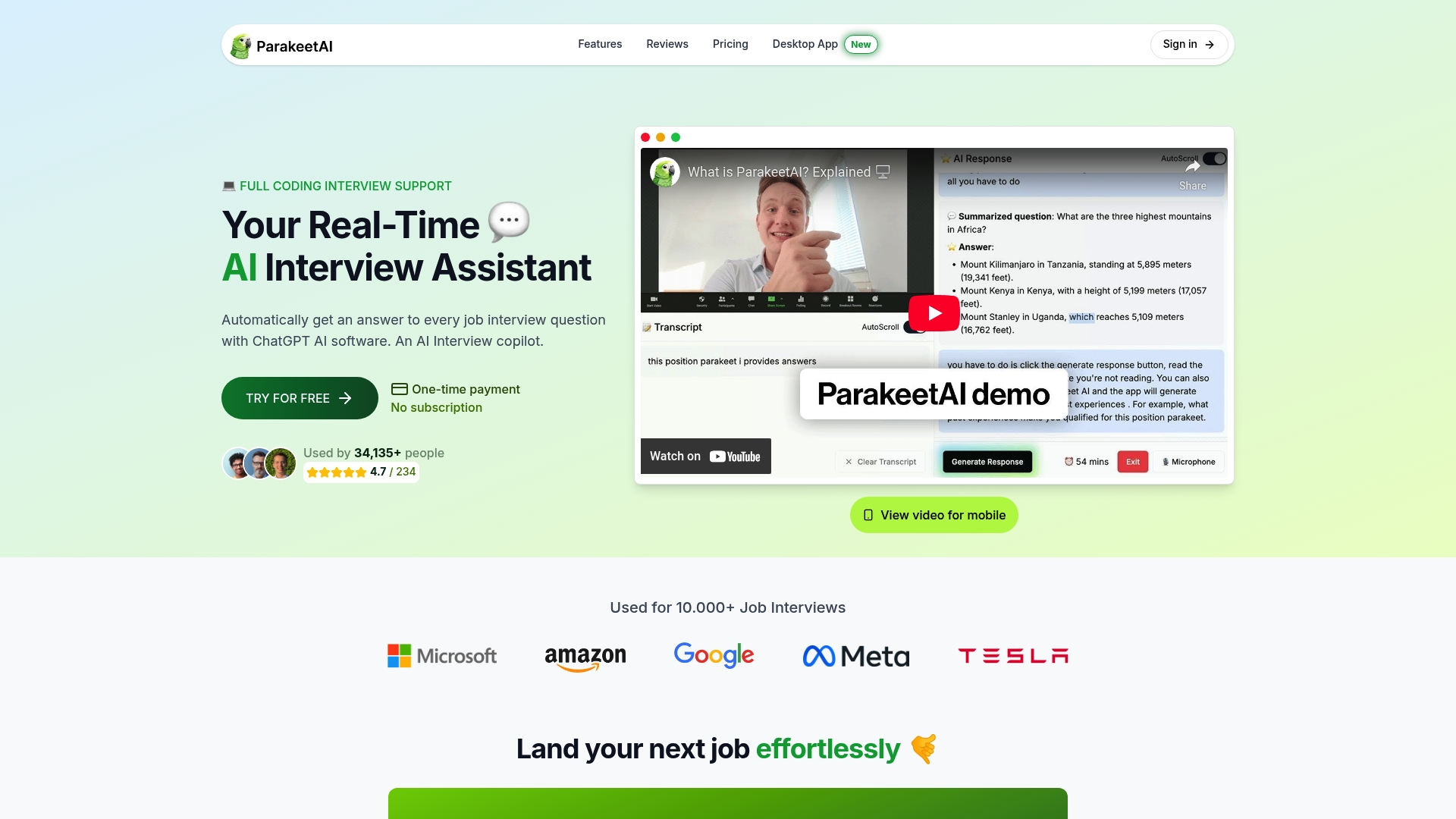
Experience the future of interview preparation today with Parakeet AI. Our real-time AI job interview assistant offers precise, on-the-spot feedback that helps you track progress, correct mistakes, and polish your storytelling with ease. Don’t wait to turn every interview opportunity into a confident success. Visit Parakeet AI now and start enhancing your skills with the smartest interview partner you can have. Discover how to apply practical strategies from the Interview Improvement Checklist and integrate AI-powered insights for continuous growth.
Frequently Asked Questions
What is an Interview Improvement Checklist?
An Interview Improvement Checklist is a structured roadmap that helps job seekers systematically identify their strengths and weaknesses to improve interview performance. It includes elements like background research, anticipated questions, practice techniques, and post-interview reflection.
How can AI enhance my interview preparation?
AI can provide real-time feedback on your communication and body language during practice interviews. It analyzes verbal cues, tone, and clarity, offering personalized insights that help you refine your approach and build confidence.
What common interview mistakes should I avoid?
Common mistakes include over-apologizing, using filler words, arriving late, and failing to research the company. Addressing these pitfalls can significantly improve your presentation and overall interview performance.
How do I effectively use the STAR method in interviews?
The STAR method helps structure your answers to behavioral questions by guiding you to cover the Situation, Task, Action, and Result of your experiences. This framework enables you to provide clear, impactful responses that demonstrate your capabilities.