
Interview Prep Guide: Boost Confidence With AI Tools

Getting ready for a job interview can feel overwhelming, especially when your career is just beginning. The pressure to impress, answer tough questions, and manage nerves is real for graduates and young professionals worldwide. Solid preparation goes beyond memorizing responses—it means researching the company, rehearsing your story, and practicing with modern tools like AI interview assistants. These strategies help you communicate with confidence, reduce anxiety, and show your genuine strengths to any employer.
Table of Contents
- Interview Preparation Explained For Job Seekers
- Types Of Job Interviews And AI Integration
- How AI Interview Assistants Work In Real Time
- Essential Strategies To Succeed In Interviews
- Common Interview Pitfalls And How AI Helps
Key Takeaways
| Point | Details |
|---|---|
| Thorough Research is Essential | Understanding the company’s mission and recent achievements sets you apart. It demonstrates genuine interest and prepares you for specific questions. |
| Practice is Key | Rehearsing answers out loud prepares you for pressure, enabling you to articulate effectively during the interview. Recording your responses can help identify areas for improvement. |
| Use Structured Responses | Employ the STAR method to organize answers for behavioral questions, highlighting relevant experiences and demonstrating decision-making skills. |
| AI Tools Enhance Preparation | Leveraging AI interview assistants provides real-time feedback and helps refine responses, making practice more efficient and effective. |
Interview Preparation Explained For Job Seekers
Interview preparation is the process of getting ready for a job conversation with an employer. It goes beyond just showing up and hoping for the best. You’re essentially learning about the role, the company, and yourself to present the strongest version of your professional story.
The core of preparation involves three interconnected activities. First, you research the organization and understand what they actually do, their recent achievements, and their strategic direction. Second, you anticipate the questions you’ll face and develop thoughtful responses. Third, you practice your delivery to manage nervousness and build genuine confidence in how you communicate.
What makes effective preparation different from surface-level cramming is understanding what interviewers actually assess. They’re evaluating your fit for the specific role, your technical knowledge, how you solve problems, and whether you align with company culture. Different interview formats require different preparation approaches. A phone screening demands concise answers and active listening. A technical interview requires hands-on practice with job-related tasks. A panel interview, common in many fields, means researching the key university figures or department leaders who’ll be present.
Your preparation also addresses the psychological dimension. Interview anxiety peaks when you feel unprepared or unsure about how to respond under pressure. Working through potential scenarios, practicing your talking points, and understanding the goals of interview conversations reduces that mental load significantly.
Most job seekers underestimate how much their preparation shows during the actual interview. Interviewers notice when you know specific details about their company. They recognize when you’ve thought through how your experience connects to their needs. They hear confidence when you’ve practiced your responses, not scripted them word for word.
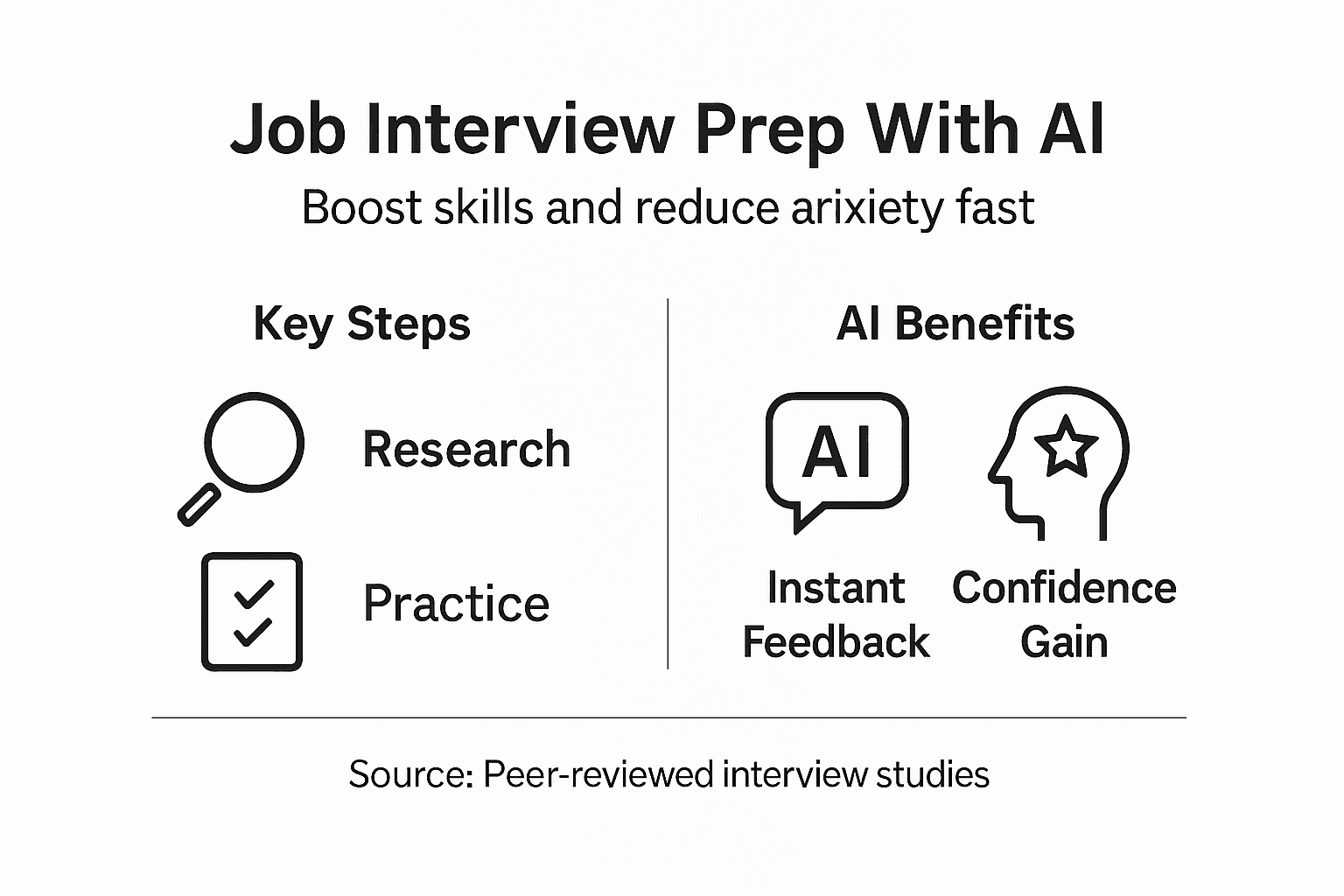
Pro tip: Create a simple one-page profile of the company with their recent news, key leaders, and 2-3 strategic priorities, then review it the morning of your interview to anchor your knowledge and reduce last-minute anxiety.
Types Of Job Interviews And AI Integration
Job interviews come in multiple formats, each designed to assess different skills and competencies. Understanding what to expect from each type helps you prepare strategically and respond with confidence.
Phone and video interviews are typically screening rounds. Employers use these to confirm basic qualifications, assess communication skills, and decide who moves forward. You’re often given 20 to 30 minutes to discuss your background and answer situational questions. Video adds a visual element, so your appearance and body language matter alongside your words.
Technical interviews test your ability to solve problems in real time. Engineers might write code, designers present portfolios, or analysts work through data scenarios. The interviewer watches your thought process as much as your final answer. These require hands-on practice with tools and frameworks relevant to your field.
Behavioral interviews use questions like “Tell me about a time when…” to understand how you handle real workplace situations. Interviewers want to see your decision-making, leadership style, and how you collaborate. These conversations reveal patterns in your professional judgment.
Panel interviews bring together multiple stakeholders like hiring managers, team leads, and executives. Each person evaluates you from their perspective. AI interview technology is increasingly used alongside traditional panel formats, allowing organizations to analyze responses consistently while interviewers focus on interpersonal dynamics and fit.
AI tools now support preparation across all these formats. Real-time AI assistants can listen during your mock interviews and suggest better answers. They analyze your pacing, word choice, and clarity. Some tools provide instant feedback on how you answered common questions, helping you refine your delivery before the actual interview.
The key advantage is practicing in realistic conditions. AI won’t get tired of hearing your answers or judge you harshly. You can run through scenarios as many times as needed until your responses feel natural and confident.
Pro tip: Practice your responses for each interview type separately since phone interviews reward conciseness while panel interviews benefit from more detailed storytelling and examples.
Here’s a summary comparing popular interview types and the optimal preparation strategy for each:
| Interview Format | Main Focus | Optimal Prep Method | Common Challenge |
|---|---|---|---|
| Phone Interview | Communication Clarity | Practice concise answers | Keeping responses focused |
| Video Interview | Visual Presence | Simulate environment | Managing technology issues |
| Technical Interview | Problem Solving Skills | Hands-on task rehearsal | Showing your thinking |
| Behavioral Interview | Past Experiences | STAR method responses | Giving specific examples |
| Panel Interview | Influence Multiple Viewpoints | Learn interviewer roles | Engaging the full panel |
How AI Interview Assistants Work In Real Time
Real-time AI interview assistants operate through a series of synchronized processes that happen in milliseconds. When you’re in an interview, the AI system is simultaneously listening to your words, analyzing your delivery, and generating suggestions to improve your responses.
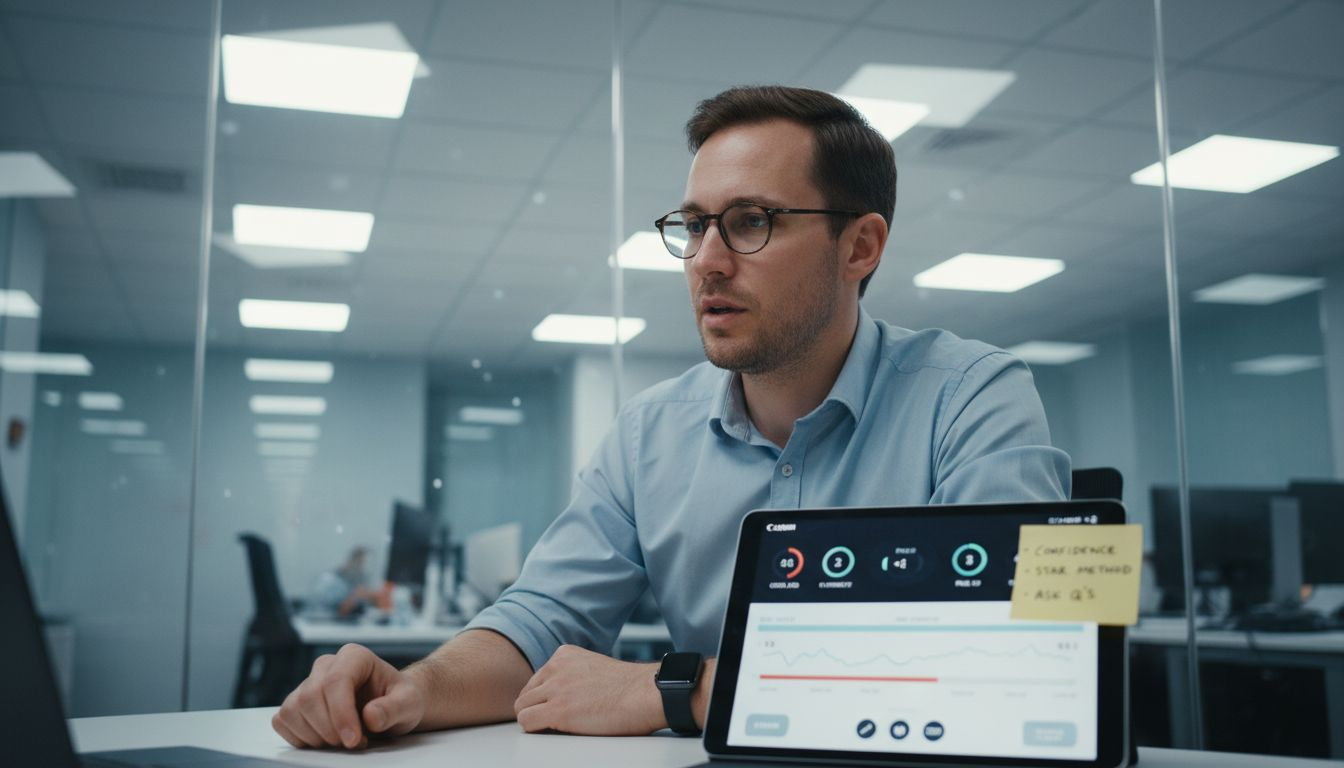
The foundation relies on natural language processing. The AI converts your spoken words into text, then analyzes meaning, context, and relevance to the question asked. It identifies gaps in your answer and understands what additional information would strengthen your response. This isn’t simple keyword matching, it’s semantic understanding of your actual message.
Beyond words, the system captures communication patterns. It measures your pacing, tone, and confidence levels through voice analysis. Real-time AI-driven systems also evaluate facial expressions and sentiment when using video, recognizing nervousness, engagement, and authenticity. These non-verbal cues matter tremendously because they signal your genuine confidence and interest.
What makes this genuinely useful is the immediate feedback loop. As you’re answering, the AI doesn’t wait until you finish to generate suggestions. It provides real-time guidance on what to add or clarify. You might see a prompt suggesting you provide a specific example or emphasize a particular achievement. This allows you to adjust mid-answer, making your response stronger without restarting.
The system learns from patterns. It recognizes which answer structures work best for different question types. If you tend to ramble, it flags that. If you miss opportunities to showcase relevant experience, it highlights where those gaps occurred. Over multiple practice sessions, you receive increasingly personalized coaching tailored to your specific weaknesses.
Machine learning models continuously improve the suggestions based on what actually works. The AI understands cultural and industry variations, so recommendations for a tech startup interview differ from those for a corporate finance role.
Pro tip: Record your practice sessions and review the AI’s feedback notes afterward to identify patterns in your answers, then practice the same questions again to see how much you improve with each repetition.
The following table shows how AI interview assistants enhance traditional preparation steps:
| Prep Activity | Traditional Method | With AI Assistant | Key Benefit |
|---|---|---|---|
| Practicing answers | Mock interview partner | Real-time feedback session | Instant improvement tips |
| Reviewing performance | Manual note-taking | Automated analytics report | Tracks progress over sessions |
| Managing anxiety | Solo repetition | Supportive practice prompts | Builds confidence quickly |
| Identifying weak points | Self-assessment | AI-driven pattern detection | Finds hidden improvement areas |
Essential Strategies To Succeed In Interviews
Success in interviews requires more than just hoping the conversation goes well. You need a concrete strategy combining preparation, communication skills, and stress management to perform confidently when it matters.
Research thoroughly before you arrive. Know the company’s mission, recent news, key products, and strategic direction. Understand the specific role you’re interviewing for and how your skills align with their needs. When you walk in with this knowledge, you immediately stand out from candidates who offer generic responses.
Practice your answers out loud. Reading notes silently doesn’t prepare you for speaking under pressure. Evidence based strategies to succeed emphasize rehearsing responses to common questions and behavioral scenarios. Record yourself or practice with a friend to hear how you actually sound and identify awkward phrasing or rushed delivery.
Use the STAR method for behavioral questions. Structure answers around Situation, Task, Action, and Result. This framework keeps you organized and ensures you’re showcasing your actual accomplishments rather than vague descriptions of what you might do. Interviewers want concrete examples that demonstrate your decision-making and problem-solving.
Manage your stress intentionally. Nervousness shows through your voice, body language, and answers. Practice breathing techniques before you enter the interview room. Take a few deep breaths, stretch your shoulders, and remind yourself that you’ve prepared for this. The interviewer wants you to succeed because they’re looking to fill the role with a capable person.
Ask thoughtful questions at the end. Don’t sit passively waiting for the interview to finish. Ask about team dynamics, success metrics for the role, or company culture. These questions show genuine interest and help you assess whether the position is actually right for you.
Pro tip: Practice with AI interview tools before your actual interview to receive real-time feedback on your pacing, clarity, and answer strength, then refine weak areas based on the specific coaching you receive.
Common Interview Pitfalls And How AI Helps
Most job seekers make predictable mistakes during interviews. Recognizing these pitfalls and knowing how to avoid them dramatically improves your chances of success.
Rambling without structure is the most common error. You start answering and keep talking, adding irrelevant details while losing the main point. Interviewers tune out when answers lack clear direction. They want concise, focused responses that directly address the question.
Failing to provide specific examples weakens your credibility. Saying “I work well with teams” means nothing without proof. Interviewers need concrete stories showing you actually led a project, resolved conflict, or achieved measurable results. Vague claims get forgotten instantly.
Showing visible nervousness undermines your message. Shaking hands, avoiding eye contact, or speaking too quickly signals you lack confidence in your abilities. AI tools reduce human error and bias in interview assessment by providing standardized evaluation, but they also help you practice until nervousness fades naturally.
Not researching the company is inexcusable today. Walking in with generic answers about why you want the job suggests you applied to dozens of positions without genuine interest. Specific knowledge about their mission, recent wins, and challenges shows you actually care.
Forgetting to ask questions leaves interviewers with the impression you’re passive. Your questions demonstrate curiosity, critical thinking, and genuine interest in the role. They also help you assess fit before accepting an offer.
AI interview assistants address multiple pitfalls simultaneously. They flag when you’re rambling and suggest you refocus. They identify moments where you could add concrete examples. They monitor your pacing and tone, helping you sound more confident. By practicing with real-time feedback, you eliminate these mistakes before your actual interview.
The consistency AI provides matters globally where cultural biases sometimes influence traditional interviews. You receive objective feedback focused on answer quality and communication clarity, not subjective impressions.
Pro tip: Use AI practice sessions to identify your three biggest pitfalls, then record yourself answering the same five questions multiple times until you naturally correct those specific habits.
Boost Your Interview Confidence with Real-Time AI Support
Preparing for interviews often feels overwhelming due to the pressure of delivering clear, concise answers and managing anxiety. This guide highlights challenges like rambling, lacking specific examples, and the need to practice different interview types using frameworks such as the STAR method. What if you could overcome these hurdles with a tool designed to listen, analyze, and guide you instantly during practice sessions
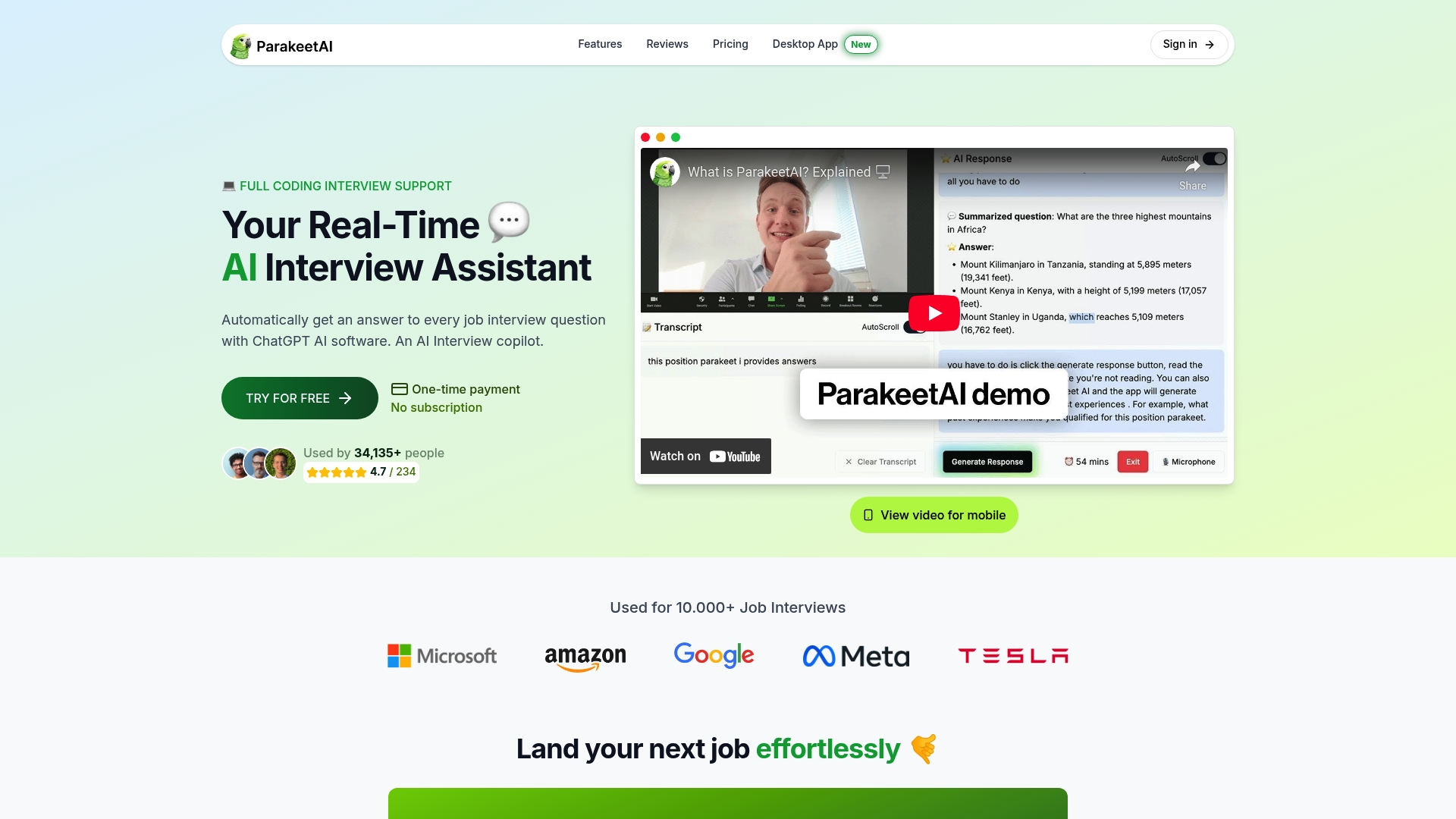
Take control of your interview journey with the real-time AI job interview assistant that offers instant feedback on your pacing, clarity, and answer strength. Whether preparing for phone screenings, panel interviews, or technical rounds, our AI technology helps you identify pitfalls and boost confidence fast. Start practicing smarter today and experience how targeted coaching transforms nervous energy into natural, confident responses by visiting Parakeet AI to begin your personalized preparation.
Frequently Asked Questions
What is the importance of interview preparation?
Interview preparation helps you present your professional story confidently by researching the company, anticipating questions, and practicing your responses.
How can AI tools assist in interview preparation?
AI tools provide real-time feedback during practice interviews, helping you refine your delivery, manage anxiety, and pinpoint weak areas to improve your answers.
What are some common interview formats and how should I prepare for each?
Common formats include phone interviews, video interviews, technical interviews, behavioral interviews, and panel interviews. Each format requires tailored preparation techniques, such as concise answers for phone interviews and detailed storytelling for panel interviews.
Why is using the STAR method beneficial for behavioral interview questions?
The STAR method helps structure your responses by outlining the Situation, Task, Action, and Result, ensuring you provide concrete examples that demonstrate your skills and experiences.