
Interview Skills Checklist: Boost Your AI Readiness

Most American companies now rely on structured interview checklists and advanced AI tools to screen tech candidates, raising the stakes for global job seekers. In this competitive environment, missing critical steps can mean losing out despite strong technical skills. This guide draws from proven strategies and the latest AI-driven feedback platforms to help recent graduates and tech professionals master every aspect of the interview process while avoiding the common mistakes that trip up even experienced applicants.
Table of Contents
- Interview Skills Checklist Defined Clearly
- Types of Job Interviews and AI Integration
- Core Competencies for Tech Interview Success
- AI Tools for Interview Skill Improvement
- Common Pitfalls and Mistakes to Avoid
Key Takeaways
| Point | Details |
|---|---|
| Interview Preparation | Create a personalized interview skills checklist to systematically assess competencies and improve performance. |
| Embrace AI Technologies | Utilize AI tools for mock interviews and feedback to adapt to modern interview formats and techniques. |
| Understand Core Competencies | Focus on technical expertise, problem-solving, and communication skills essential for tech interviews. |
| Avoid Common Mistakes | Be punctual, professionally dressed, and prepared to articulate experiences clearly without negative remarks about past employers. |
Interview Skills Checklist Defined Clearly
An interview skills checklist represents a systematic approach to preparing for professional interactions that evaluate a candidate’s potential fit for a specific role. Structured interview guidelines from the U.S. Department of the Interior reveal that effective checklists cover critical competencies including communication, problem-solving, teamwork, and leadership skills.
Effective interview skill checklists typically break down preparation into several key components. These include researching the company, understanding the job description, preparing targeted responses, practicing common questions, selecting appropriate attire, and developing confident non-verbal communication strategies. Each component serves as a strategic building block for presenting oneself as a compelling candidate who understands both the technical requirements and cultural nuances of the potential workplace.
Professional interview checklists also help candidates systematically evaluate their performance across multiple dimensions. They allow job seekers to assess their technical knowledge, communication clarity, emotional intelligence, and ability to articulate professional experiences concisely. By creating a structured approach, candidates can transform potentially nerve-wracking interactions into opportunities for meaningful professional dialogue.
Pro tip: Create a personalized interview preparation checklist in a digital document at least one week before your scheduled interview, allowing time for comprehensive review and practice.
Types of Job Interviews and AI Integration
Job interviews have dramatically evolved with technological advancements, particularly through AI-driven interviewing systems that expand traditional evaluation methods. Modern interview formats now include sophisticated approaches ranging from rule-based assessments to immersive virtual reality experiences, each designed to comprehensively evaluate a candidate’s professional capabilities.
The landscape of interview types now encompasses multiple innovative formats. Traditional in-person interviews have been complemented by video interviews, phone screenings, AI-powered chatbot assessments, and interactive technical evaluations. These new approaches leverage artificial intelligence to provide adaptive feedback, analyze communication patterns, and assess emotional intelligence with unprecedented depth and precision.
Technical and professional sectors are increasingly integrating AI technologies to create more nuanced candidate evaluation processes. These advanced systems can simultaneously assess multiple dimensions of a candidate’s potential, including technical skills, problem-solving abilities, communication effectiveness, and cultural fit. By utilizing machine learning algorithms, AI-enhanced interviews can provide more objective, comprehensive insights that go beyond traditional human-only interview limitations.
Here’s a concise comparison of common job interview types and their unique features:
| Interview Type | Technology Used | Candidate Experience |
|---|---|---|
| In-Person Interview | Face-to-face interaction | Direct conversation, personal connection |
| Video Interview | Video conferencing tools | Remote participation, visual cues |
| Phone Screening | Telephone | Voice-only, convenient, brief |
| AI Chatbot Assessment | Conversational AI | Automated Q&A, instant feedback |
| Virtual Reality Interview | VR platforms | Immersive, simulated environments |
Pro tip: Practice with AI-powered mock interview platforms to familiarize yourself with emerging interview technologies and develop comfort with adaptive questioning techniques.
Core Competencies for Tech Interview Success
Tech interviews demand a sophisticated blend of technical prowess and interpersonal skills, with core competencies defined by comprehensive professional assessment frameworks that go beyond traditional technical knowledge. Successful candidates must demonstrate a robust combination of hard skills, problem-solving abilities, and nuanced communication techniques that showcase their potential to excel in dynamic technological environments.

The most critical competencies for tech interview success include deep technical expertise, adaptive problem-solving, effective communication, and collaborative teamwork. Employers seek candidates who can articulate complex technical concepts clearly, demonstrate intellectual curiosity, and show an ability to translate technical challenges into strategic solutions. This requires candidates to prepare concrete examples that illustrate their technical skills, leadership potential, and capacity to innovate under pressure.
Modern tech interviews evaluate candidates across multiple dimensions, assessing not just coding abilities but also emotional intelligence, critical thinking, and cultural alignment. Professionals must be prepared to showcase their technical skills through practical demonstrations, explain their thought processes transparently, and highlight their capacity to learn and adapt in rapidly changing technological landscapes. The ability to communicate technical concepts to both technical and non-technical audiences has become as important as the technical skills themselves.
Pro tip: Develop a portfolio of specific, quantifiable achievements that demonstrate your technical competencies and problem-solving approach across different professional scenarios.
AI Tools for Interview Skill Improvement
Artificial intelligence has revolutionized interview preparation through advanced technologies that provide personalized feedback and skill enhancement. AI-powered transcription services now transform interview recordings into detailed, analyzable insights, enabling candidates to critically examine their communication patterns, verbal responses, and overall presentation strategies with unprecedented precision.
Modern AI tools offer comprehensive interview skill development through multiple innovative approaches. These technologies include natural language processing algorithms that analyze speech patterns, machine learning systems that provide real-time feedback on communication effectiveness, and virtual interview simulation platforms that recreate realistic interviewing scenarios. Candidates can now receive detailed evaluations of their body language, tone, confidence levels, and semantic content, allowing for targeted and data-driven skill improvement.
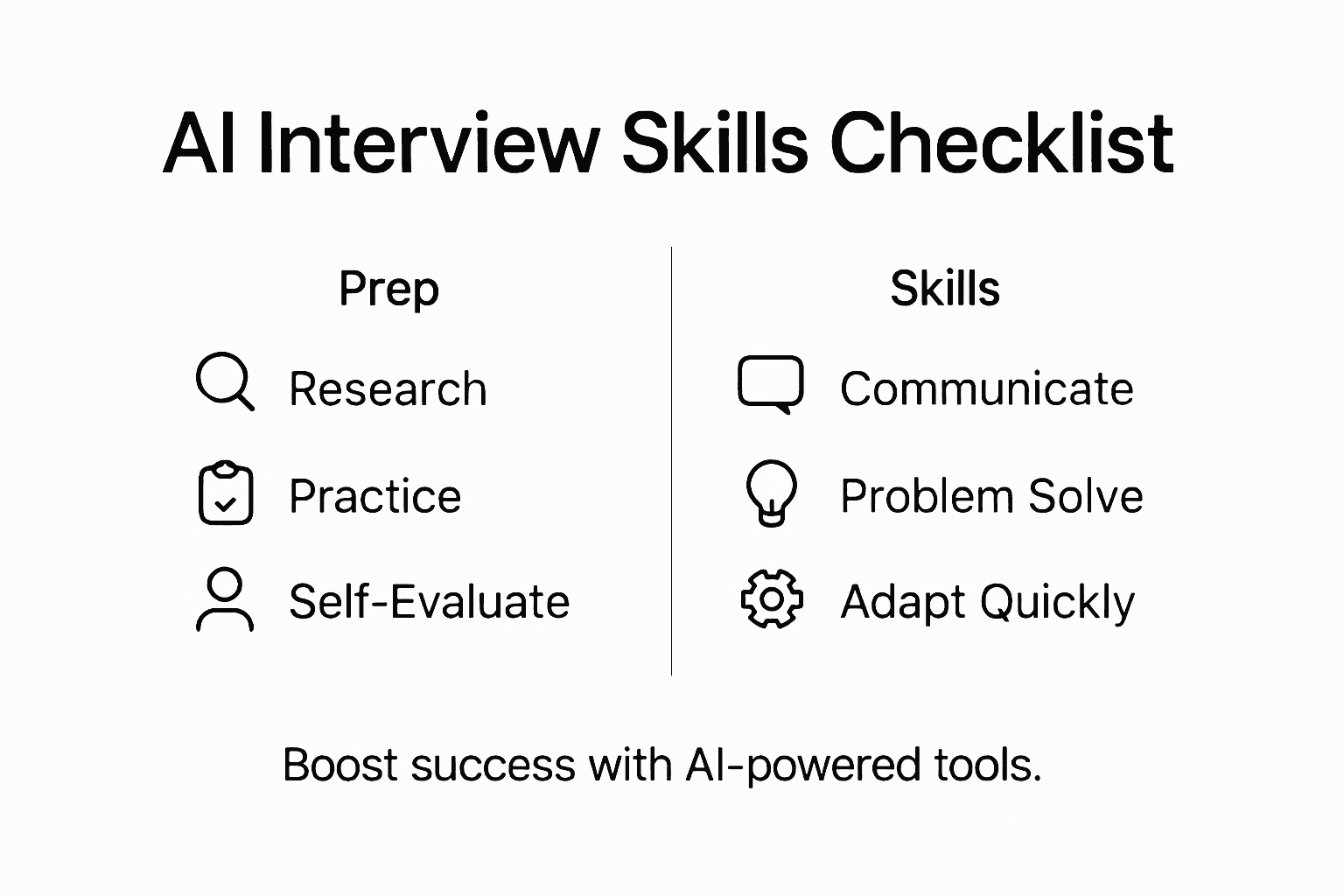
The most sophisticated AI interview tools integrate multiple assessment dimensions, combining technical skill evaluation with emotional intelligence analysis. These platforms can detect nuanced communication challenges, recommend specific improvement strategies, and help candidates develop a more compelling professional narrative. By leveraging advanced algorithms, these tools provide personalized coaching that adapts to individual communication styles and professional backgrounds, making interview preparation more accessible and effective than traditional methods.
Below is a summary of advanced AI tools that support interview preparation:
| Tool Type | Main Function | Added Value for Candidates |
|---|---|---|
| AI-Powered Transcription | Converts speech to text | Detailed response analysis |
| Real-Time Feedback Systems | Analyzes speech and mannerisms | Instant improvement suggestions |
| Virtual Interview Simulation | Replicates interview scenarios | Practice under realistic conditions |
| Emotional Intelligence Analysis | Detects tone and communication | Tailors improvement strategies |
| Semantic Content Evaluators | Analyzes meaning and coherence | Enhances clarity and persuasiveness |
Pro tip: Record multiple practice interviews using AI tools and systematically analyze your performance to identify and address specific communication weaknesses.
Common Pitfalls and Mistakes to Avoid
Navigating job interviews successfully requires understanding and avoiding critical mistakes that can undermine your professional presentation. Comprehensive interview mistake research reveals over 26 common errors that candidates frequently make, ranging from inadequate preparation to poor communication strategies that can instantly disqualify otherwise qualified professionals.
The most significant interview pitfalls typically fall into several key categories. Punctuality and professional appearance remain foundational, with arriving late or dressing inappropriately immediately signaling unprofessionalism to potential employers. Communication mistakes such as speaking negatively about previous employers, providing vague or rambling answers, and failing to demonstrate genuine interest in the role can critically damage a candidate’s chances. Technical professionals must be especially cautious about appearing overconfident or underselling their actual capabilities.
Preparing effectively means anticipating and mitigating potential interview risks through strategic self-assessment and practice. Candidates should develop a nuanced understanding of their professional narrative, practice articulating their experiences concisely, and research the specific company and role thoroughly. This involves not just memorizing potential answers but developing a flexible communication approach that demonstrates adaptability, technical competence, and genuine professional enthusiasm.
Pro tip: Record and critically review your mock interviews, focusing on identifying and eliminating unconscious communication habits that might negatively impact your professional presentation.
Master Your Interview Skills with Real-Time AI Support
The challenge of preparing an effective interview skills checklist can feel overwhelming. You need to master communication clarity, demonstrate emotional intelligence, and showcase your technical expertise while anticipating AI-powered interview formats. It is easy to worry about forgetting key answers or stumbling on complex questions during these high-stakes moments. That is why using a real-time AI job interview assistant that listens carefully and provides instant, tailored answers will give you the edge to impress any employer.
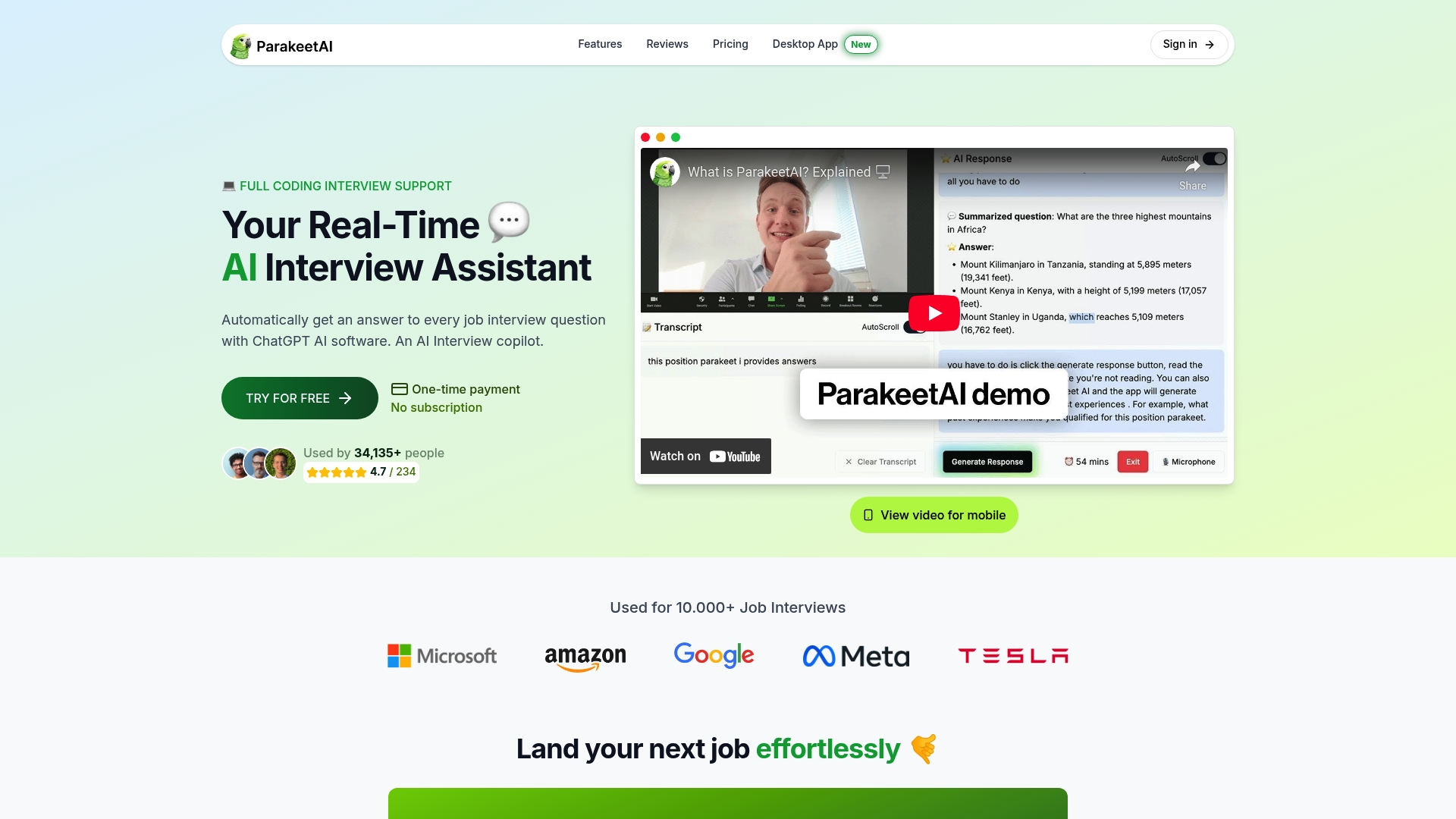
Boost your interview confidence by practicing with Parakeet AI. Our innovative platform helps you overcome common pitfalls by delivering precise, on-the-spot responses that adapt to your unique interview context. Don’t wait to transform nervousness into poise. Start preparing with the most advanced AI assistant designed to enhance your communication and technical demonstration skills. Visit Parakeet AI now to experience smarter, more effective interview training that elevates your readiness in today’s AI-driven hiring world.
Frequently Asked Questions
What is an interview skills checklist?
An interview skills checklist is a systematic guide to help candidates prepare for interviews by covering essential competencies such as communication, problem-solving, teamwork, and leadership skills.
How can I create a personalized interview skills checklist?
To create a personalized interview skills checklist, you should research the company, understand the job description, prepare targeted responses to commonly asked questions, practice, choose appropriate attire, and develop confident non-verbal communication strategies.
What types of interviews are commonly used today?
Today’s interviews include traditional in-person interviews, video interviews, phone screenings, AI chatbot assessments, and virtual reality interviews, each leveraging technology for comprehensive candidate evaluation.
How can AI tools improve my interview skills?
AI tools can improve interview skills by providing personalized feedback through transcription analysis, real-time speech evaluation, virtual interview simulations, and emotional intelligence assessments, helping candidates enhance their communication and presentation strategies.