Phone Interview Tips to Land Your Next Job
TL;DR:Preparing thoroughly for phone interviews by setting up a distraction-free environment, researching the company extensively, and practicing the STAR method significantly increases your chances of success. Strong vocal presence, clear communication, and strategic follow-up within 24 hours further enhance your candidacy. Consistent preparation and mindful communication turn the phone screen into an opportunity to stand out and advance in the hiring process.
Phone interviews are the first real test in most hiring processes, and how you perform in those 15 to 30 minutes determines whether you advance or get filtered out. Most candidates treat them as casual conversations. The ones who get callbacks treat them as high-stakes performances with a script, a setup, and a strategy. This article covers the phone interview tips that actually move the needle: environment setup, company research, the STAR method, vocal presence, and follow-up. Apply all five, and you show up to every screening call ready to compete.
What are the best phone interview tips for 2026?
Phone screening interviews typically last 15 to 30 minutes and cover basic qualification filters like availability, salary expectations, and cultural fit. That short window is enough to make or break your candidacy. Recruiters decide fast, and a disorganized or flat response in the first two minutes signals exactly the wrong things.
The most effective telephone interview tips share one common thread: preparation done before the call removes the cognitive load during it. When your environment is set, your notes are visible, your STAR stories are rehearsed, and your questions are ready, you free up mental bandwidth to actually listen and respond well. That is the difference between a candidate who sounds polished and one who sounds like they are figuring it out in real time.
Phone interview questions typically range from 8 to 12 in a 30-minute call, covering general fit, behavioral scenarios, and technical topics. That means you have roughly two to three minutes per question. Knowing this in advance lets you pace yourself instead of rambling or cutting yourself short.
How to set up your environment before the call
Your physical setup is the foundation of every other tip for phone interviews. A dropped call, a barking dog, or a dead battery can derail a strong candidate before they finish their first answer.
Here is what to lock in before the call:
- Choose a quiet, private room and tell anyone in your home the exact time of your interview. Close doors, silence notifications, and remove distractions.
- Use a wired headset. A wired headset improves audio clarity and signals professionalism. Speakerphone picks up room noise and makes your voice sound distant.
- Charge your phone to 100% the night before. Do a test call with a friend the morning of the interview to catch any audio issues early.
- Print or open your resume, the job description, and your notes on a second screen or a printed sheet. Have them visible but do not read from them word for word.
- Prepare 3 to 4 thoughtful questions to ask the interviewer. Blank silence when they ask “Do you have any questions?” reads as disengagement.
Technical issues are a leading cause of lost phone interviews. A pre-call equipment check takes ten minutes and eliminates one of the most common failure points entirely.
Pro Tip: Place a small mirror on your desk and glance at it during the call. Seeing yourself smile reminds you to keep your energy up, which directly affects how you sound.
How to research the company before a phone interview
Researching the company is not optional prep. It is the single fastest way to separate yourself from candidates who send generic answers. Spending 30 to 45 minutes on targeted research gives you enough material to reference specific details that signal genuine interest.
Focus your research on four areas:
- Company values and mission: Read the About page and any recent press releases. Know what the company says it stands for.
- Recent news: Search the company name on Google News and filter to the last 90 days. Find one specific milestone, product launch, or partnership to mention naturally during the call.
- The job description, line by line: Map every listed requirement to a skill or experience you can speak to. This is your answer blueprint.
- Industry context: Know the one or two biggest trends affecting the company’s market. This shows you understand the business, not just the role.
The table below shows the difference between surface-level and targeted research:
| Research type | What it looks like | What it signals |
|---|---|---|
| Surface level | “I know you’re a software company.” | Minimal effort, low engagement |
| Targeted | “I saw your Q1 expansion into the European market.” | Preparation, genuine interest |
| Deep | “Your shift toward enterprise clients mirrors what Salesforce did in 2018.” | Strategic thinking, industry awareness |
For deeper company insights before your call, the Parakeet-ai guide on researching companies before interviews covers how to find information that most candidates miss entirely. You should also prepare smart questions to ask based on what you find, because informed questions land far better than generic ones.
How to structure strong answers using the STAR method
The STAR method is the most reliable framework for answering behavioral questions in any phone job interview. STAR stands for Situation, Task, Action, and Result. Each element does specific work: Situation and Task set the context, Action shows your thinking and behavior, and Result proves the impact.
Here is how to build and deliver a STAR answer effectively:
- Identify the key competencies in the job description. Leadership, problem-solving, collaboration, and communication are the most common. Build one STAR story per competency.
- Write out 2 to 3 STAR stories before the interview. Keep each one focused on a single event, not a general habit. “I always do X” is not a STAR story. “In Q3 at my last company, I did X” is.
- Practice each story out loud. Practicing out loud reduces hesitation and makes delivery feel natural rather than rehearsed. Record yourself once and listen back for filler words.
- Keep answers to 60 to 90 seconds. The STAR method works best within this window. Longer answers lose the interviewer’s attention. Shorter answers feel incomplete.
- Pause before you answer. A brief pause before responding demonstrates composure and prevents you from talking over the interviewer due to audio lag.
Pro Tip: After each STAR answer, add one sentence connecting the result back to the role you are applying for. “That experience is exactly why I’m drawn to this position” closes the loop and reinforces fit.
One factor most candidates overlook: AI bots increasingly conduct initial phone screens in 2026. AI systems prioritize clear, structured answers over emotional tone. The STAR method is particularly well-suited for AI-led screens because it produces organized, descriptive responses that parse well. For more on how AI is reshaping first-stage interviews, the Parakeet-ai overview of AI chatbots in interviews is worth reading before your next call.
How to communicate clearly and build rapport over the phone
Without visual cues, your voice carries 100% of your presence. Tone, pacing, and energy do the work that body language handles in person. Candidates consistently underestimate vocal expressiveness, yet it profoundly affects how interviewers perceive confidence and competence.
These communication habits make a measurable difference:
- Smile throughout the call. Smiling changes your vocal tone, making you sound more energetic and approachable. Interviewers rate smiling candidates more favorably even when they cannot see them.
- Speak at a moderate pace. Nervousness speeds up speech. Slow down deliberately, especially when delivering key points.
- Use verbal affirmations. Phrases like “I see,” “Absolutely,” and “That makes sense” replace the nodding and eye contact that signal engagement in person.
- Open with a professional greeting. “Hi, this is [your name], thanks for calling” sets a confident, prepared tone from the first second.
- Eliminate filler words. Record a practice call and count your “um,” “like,” and “you know” instances. Awareness alone reduces frequency significantly.
“The phone strips away everything except your words and your voice. Candidates who treat that as a limitation lose. Candidates who treat it as a focus advantage win.”
The phone screening checklist from Parakeet-ai covers the full communication prep sequence, including how to handle unexpected questions without losing your composure.
What to do after the phone interview
The call ends, but your candidacy does not. What you do in the next 24 hours affects your advancement rate more than most candidates realize.
Follow these steps immediately after hanging up:
- Write down every question you were asked while your memory is fresh. Note which answers felt strong and which felt weak. This debrief takes five minutes and compounds over multiple interviews.
- Send a tailored thank-you email within 24 hours. Tailored thank-you emails that reference specific interview details increase advancement rates. Generic “thanks for your time” emails do not. Mention one specific topic from the conversation and reaffirm your interest in the role.
- Review your voicemail greeting. If the recruiter calls back and reaches a voicemail with background noise or an unprofessional message, that impression sticks. Record a clean, professional greeting.
- Prepare for the next stage. Research what typically follows a phone screen at that company. LinkedIn, Glassdoor, and company review sites often reveal the interview structure in advance.
Key takeaways
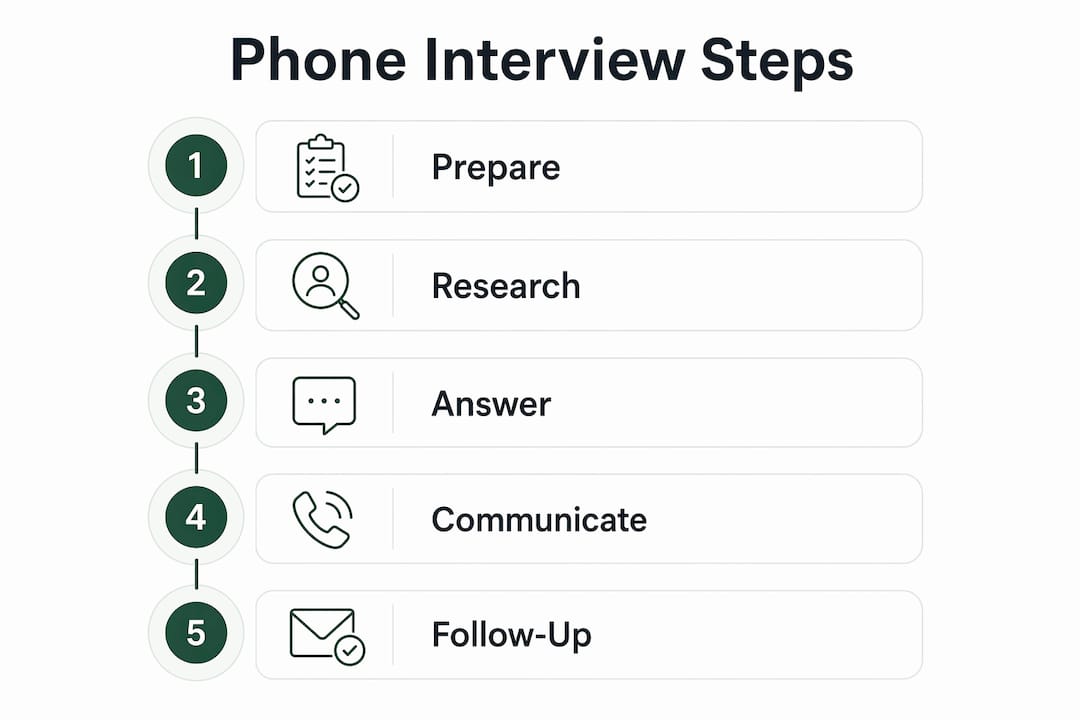
Mastering phone interviews requires preparation across five areas: environment, research, answer structure, vocal communication, and follow-up.
| Point | Details |
|---|---|
| Set up your environment | Use a wired headset, charge your phone fully, and do a test call before the interview. |
| Research with specificity | Spend 30 to 45 minutes finding one concrete company detail to reference during the call. |
| Use the STAR method | Build 2 to 3 STAR stories targeting the job’s key competencies and keep each answer under 90 seconds. |
| Leverage your voice | Smile, slow your pace, and use verbal affirmations to replace the body language you cannot show. |
| Follow up within 24 hours | Send a tailored thank-you email referencing a specific conversation point to reinforce your candidacy. |
What I’ve learned from watching candidates win and lose on phone calls
I have reviewed hundreds of interview transcripts and debriefs, and the pattern is consistent. Candidates who treat a phone screen as “just a quick call” almost always underperform. Candidates who prepare for it with the same seriousness as an in-person interview almost always advance.
The most counterintuitive thing I have observed: vocal energy matters more than content quality in the first 60 seconds. A candidate with a slightly weaker resume but strong, warm delivery gets more benefit of the doubt than a highly qualified candidate who sounds flat or distracted. Recruiters are human. They respond to energy.
The other habit that separates repeatable success from luck is the post-interview debrief. Writing down every question immediately after the call builds a personal question bank over time. By your fifth or sixth phone screen, you have seen most of the common phone interview questions before. That familiarity removes anxiety and sharpens answers.
One more thing: do not fear the pause. Most candidates rush to fill silence because it feels awkward. A two-second pause before answering reads as thoughtful, not slow. It also prevents the audio lag problem that causes candidates to talk over the interviewer, which is one of the fastest ways to lose rapport on a call.
Phone interviews are not a hurdle. They are a filter that rewards preparation. Prepare more than the other candidates, and the filter works in your favor.
— Jure
Practice smarter with Parakeet-ai
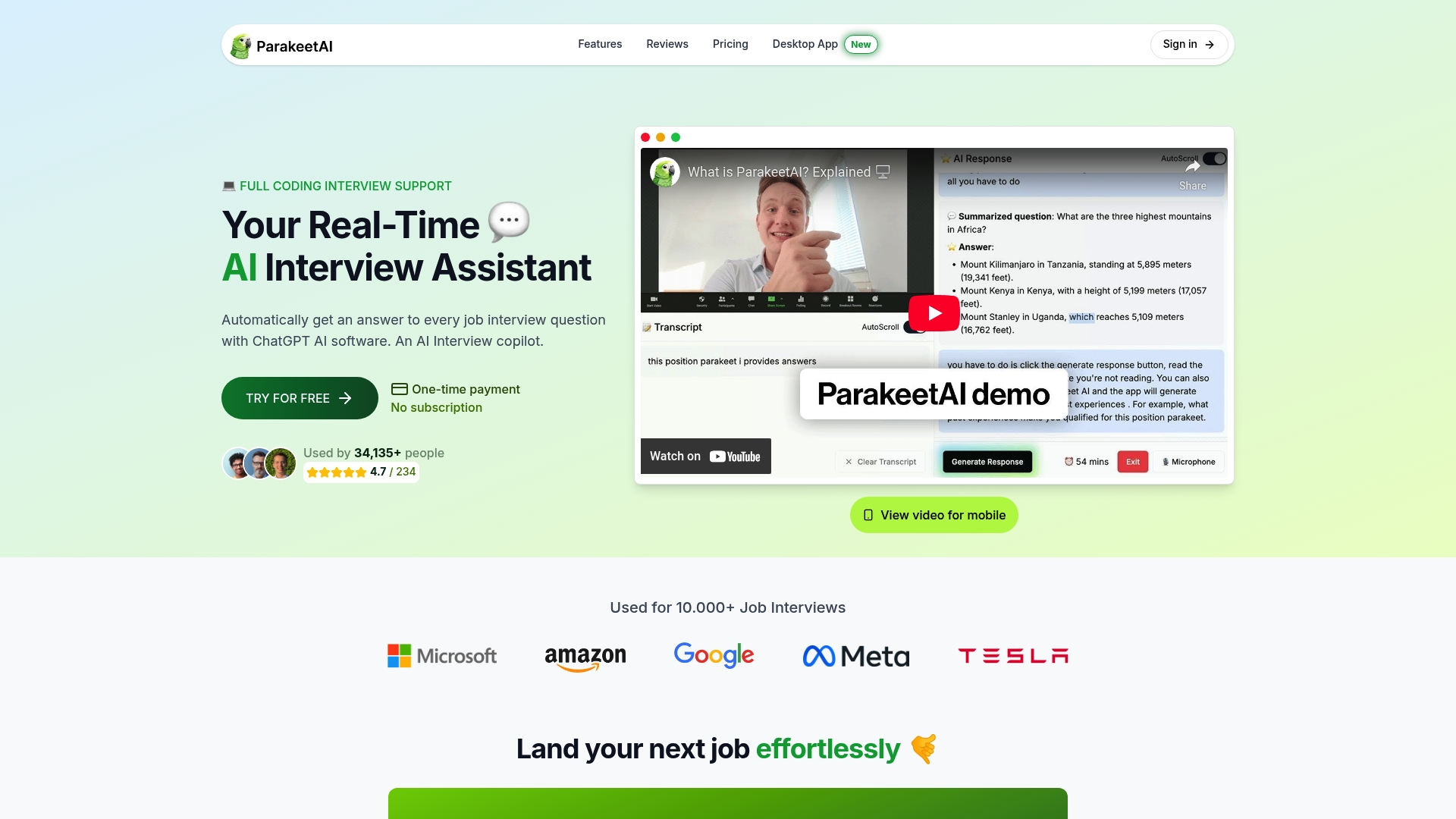
Knowing the right phone interview tips is one thing. Executing them under pressure is another. Parakeet-ai is a real-time AI interview assistant that listens to your interview and automatically provides answers to every question as it happens. Whether you are preparing for a phone screen or a full panel interview, Parakeet-ai gives you the support to respond with clarity and confidence. It works alongside you during live calls, so you never blank on a behavioral question or lose your place mid-answer. Visit Parakeet-ai to see how it works and start your next interview better prepared than every other candidate in the room.
FAQ
How long does a typical phone interview last?
Phone screening interviews last 15 to 30 minutes and cover qualifications, availability, and salary expectations. Expect 8 to 12 questions in a standard 30-minute call.
What is the STAR method for phone interviews?
The STAR method structures behavioral answers using Situation, Task, Action, and Result. Keep each answer to 60 to 90 seconds to maintain interviewer engagement.
How do I prepare for a phone interview the day before?
Charge your phone fully, do a test call with a wired headset, review your STAR stories out loud, and research one specific recent company detail to mention during the call.
Should I send a thank-you email after a phone interview?
Yes. Send a tailored thank-you email within 24 hours that references a specific topic from the conversation. Generic thank-you emails have little impact; specific ones reinforce your candidacy.
How do I handle an AI-conducted phone screen?
AI phone screens prioritize clear, structured verbal responses over emotional tone. Use the STAR method, speak in complete sentences, and avoid vague or rambling answers.