Best Interview Tips to Land Your Next Job
TL;DR:Effective interview success relies on thorough preparation, confident delivery, and professional follow-up. Candidates should research the company, tailor responses using the STAR method, and adapt their approach to different interview formats. Prompt, personalized thank-you notes and respectful follow-ups further enhance their prospects.
The best interview tips are proven, repeatable strategies that help job seekers demonstrate their qualifications, communicate confidence, and leave a lasting impression on hiring managers. Whether you are preparing for your first interview or your fifteenth, the gap between candidates who get offers and those who don’t usually comes down to preparation, delivery, and follow-up. The U.S. Department of Labor, the Emily Post Institute, and career centers like UC Davis all point to the same core truth: structured practice and professional conduct are what separate good candidates from great ones.
1. Research the company and role before anything else
Preparation is the single most controllable variable in any interview. Before you walk into a room or join a video call, you need to know the company’s mission, recent news, key competitors, and the specific skills the job description demands. Hiring managers notice immediately when a candidate has done their homework, and they notice just as fast when someone hasn’t.

Start with the company’s website, LinkedIn page, and any recent press coverage. Then read the job description line by line and map each required skill to a specific example from your own experience. Tools like LinkedIn Interview Prep offer role-specific practice questions that help you connect your background to what employers are actually looking for.
Pro Tip: Save three to five bullet points about the company in a notes app and review them the morning of your interview. Recalling a specific product launch or company value mid-conversation signals genuine interest.
2. Practice with the STAR method for behavioral questions
The STAR method is a four-step structure recommended by the U.S. Department of Labor: Situation, Task, Action, Result. It gives behavioral answers a clear shape that interviewers can follow and evaluate. Without it, answers tend to ramble or miss the point entirely.
Write out five to eight STAR stories that cover your strongest accomplishments. Each story should include a quantified result wherever possible. “I reduced onboarding time by 30%” is far more persuasive than “I improved the process.” The UC Davis Career Center confirms that tailoring stories to job criteria using SAR or STAR structures consistently produces stronger interview outcomes.
Pro Tip: Practice a compressed version of each STAR story. The full version might take two minutes; the compressed version should land in 60 to 90 seconds. This flexibility lets you adapt to fast-paced interviews without losing impact.
3. Tailor every answer to the employer’s specific needs
Interviewers use open-ended questions to map your past experiences to core job competencies like communication, leadership, and problem-solving. Generic answers that could apply to any company signal a lack of preparation. Specific answers that reference the employer’s actual challenges signal a candidate who is already thinking like a team member.
Before each interview, identify the top three skills the role demands. Then select STAR stories that directly address those skills. If the job description emphasizes cross-functional collaboration, lead with a story about coordinating across departments, not one about individual achievement. The UC Davis Career Center notes that story-first alignment is the key to answering competency-based questions effectively.
4. Plan your logistics with precision
Arriving flustered or late can undo hours of preparation in seconds. The Emily Post Institute advises arriving 5 to 15 minutes early for in-person interviews, which means planning your route in advance and building in buffer time for traffic or transit delays. This is not just courtesy. It is a signal that you respect the interviewer’s time.
Lay out your outfit the night before. Confirm the interview location, parking situation, or video link. If you need accessibility accommodations, the Emily Post Institute notes that asking proactively is both appropriate and professionally respected. Candidates who handle logistics smoothly arrive calm, and calm candidates perform better.
5. Dress for the role you want
A CareerBuilder survey found that 70% of hiring managers reject candidates based on inappropriate dress. That number is a reminder that appearance communicates professionalism before you say a single word. The standard rule is to dress one level above the company’s typical dress code.
Research the company culture through its website, social media, and LinkedIn employee photos. A startup may expect business casual while a law firm expects formal attire. When in doubt, err on the side of more polished. Clean, well-fitted clothing with minimal distractions lets the interviewer focus on what you are saying rather than what you are wearing.
6. Control your body language throughout
Positive body language including a firm handshake, relaxed posture, and intentional eye contact significantly influences interviewer perceptions. Most candidates focus entirely on what they say and ignore how they say it. The two are equally weighted in a hiring manager’s evaluation.
Sit up straight without being rigid. Make eye contact naturally rather than staring. Avoid crossing your arms, fidgeting with a pen, or touching your face repeatedly. These habits signal anxiety or disengagement even when your words are strong. Practice in front of a mirror or record yourself on video to catch nervous habits before the interview does.
7. Ask smart questions at the end
Asking thoughtful questions at the close of an interview signals genuine interest and strategic thinking. Candidates who ask nothing send the message that they are passive or indifferent. Candidates who ask about team dynamics, success metrics, or current challenges show they are already thinking about how to contribute.
Prepare three to five questions in advance. Prioritize questions that cannot be answered by a quick Google search. “What does success look like in this role after 90 days?” or “What is the biggest challenge the team is working through right now?” are far more memorable than “What are the benefits?” Save compensation questions for after an offer is made unless the interviewer raises them first.
8. Adapt your approach for different interview formats
Phone, video, in-person, and group interviews each require a different set of adjustments. Using the same approach across all formats is one of the most common mistakes candidates make.
| Format | Key adjustment |
|---|---|
| Phone | Control your environment, eliminate background noise, and speak clearly with deliberate pacing |
| Video | Test your tech 30 minutes before, check your background and lighting, and look at the camera not the screen |
| In-person | Arrive early, bring printed copies of your resume, and lead with a confident handshake |
| Group | Engage with all interviewers equally, contribute without dominating, and reference others’ points |
For video and phone formats specifically, the DOL interview guide details technical logistics as a required preparation step, not an afterthought. Parakeet-ai’s resources on remote interview preparation cover the specific adjustments that matter most for virtual formats.
9. Send a personalized thank-you email within 24 hours
A thank-you email is not a formality. It is a second opportunity to reinforce your fit for the role and demonstrate professionalism. The U.S. Department of Labor’s interview guide includes post-interview follow-up as a required step in the full interview process, not an optional add-on.
Here is a simple structure that works:
- Open with a genuine thank-you for the interviewer’s time and the specific conversation you had.
- Reference one topic from the interview that reinforced your interest in the role.
- Briefly restate why your background makes you a strong fit.
- Close with a clear, low-pressure expression of enthusiasm for next steps.
Send the email within 24 hours while the conversation is still fresh. If you interviewed with multiple people, send individual emails to each one with slightly different references to your conversations. Generic mass thank-you notes are easy to spot and easy to ignore. For more guidance on this step, Parakeet-ai’s interview follow-up tips cover the nuances of timing and tone.
10. Know when and how to follow up again
If you have not heard back within the timeline the interviewer gave you, a brief, professional follow-up is appropriate. Wait at least five business days past the stated decision date before reaching out. Keep the message short: restate your interest, ask politely about the timeline, and leave the door open without applying pressure.
One follow-up after the stated deadline is professional. Two or more in quick succession reads as impatience. If you receive no response after a second follow-up, redirect your energy to other opportunities rather than waiting on a single company.
Key takeaways
Consistent interview success comes from structured preparation, confident delivery, and professional follow-up at every stage of the process.
| Point | Details |
|---|---|
| Use the STAR method | Structure behavioral answers with Situation, Task, Action, and Result to deliver clear, evidence-backed responses. |
| Tailor every story | Match your examples directly to the skills listed in the job description for maximum relevance. |
| Control logistics and appearance | Arrive 5 to 15 minutes early, dress one level above the company norm, and manage body language deliberately. |
| Adapt to the interview format | Adjust your preparation for phone, video, in-person, and group interviews since each format has distinct demands. |
| Follow up with purpose | Send a personalized thank-you email within 24 hours and follow up once more if no response arrives after the stated deadline. |
What I’ve learned after watching hundreds of interviews go wrong
Most candidates lose interviews not because they lack qualifications but because they underestimate the preparation required. I have seen strong resumes fall apart in the room because the candidate had no compressed STAR stories ready and started rambling the moment a behavioral question landed. The STAR method is not just a storytelling template. It is a discipline that forces you to prove skill application with actual evidence, and that discipline shows under pressure.
The other mistake I see constantly is treating the interview as a one-way evaluation. The best candidates I have observed treat it as a conversation about mutual fit. They ask sharp questions. They listen carefully. They reference what the interviewer said earlier in the conversation. That behavior signals emotional intelligence, and hiring managers remember it long after the interview ends.
One more thing: neglecting etiquette costs candidates offers they would otherwise win. Showing up late, dressing carelessly, or skipping the thank-you email are not minor oversights. They are data points that tell an employer how you will show up on the job. The Emily Post Institute’s guidance on professional conduct is not outdated formality. It reflects how seriously you take the opportunity in front of you.
— Jure
How Parakeet-ai helps you prepare and perform
Preparing for interviews takes time, and even well-prepared candidates can freeze when an unexpected question lands in real time. Parakeet-ai is a real-time AI interview assistant that listens to your interview and automatically generates answers to every question as it happens.
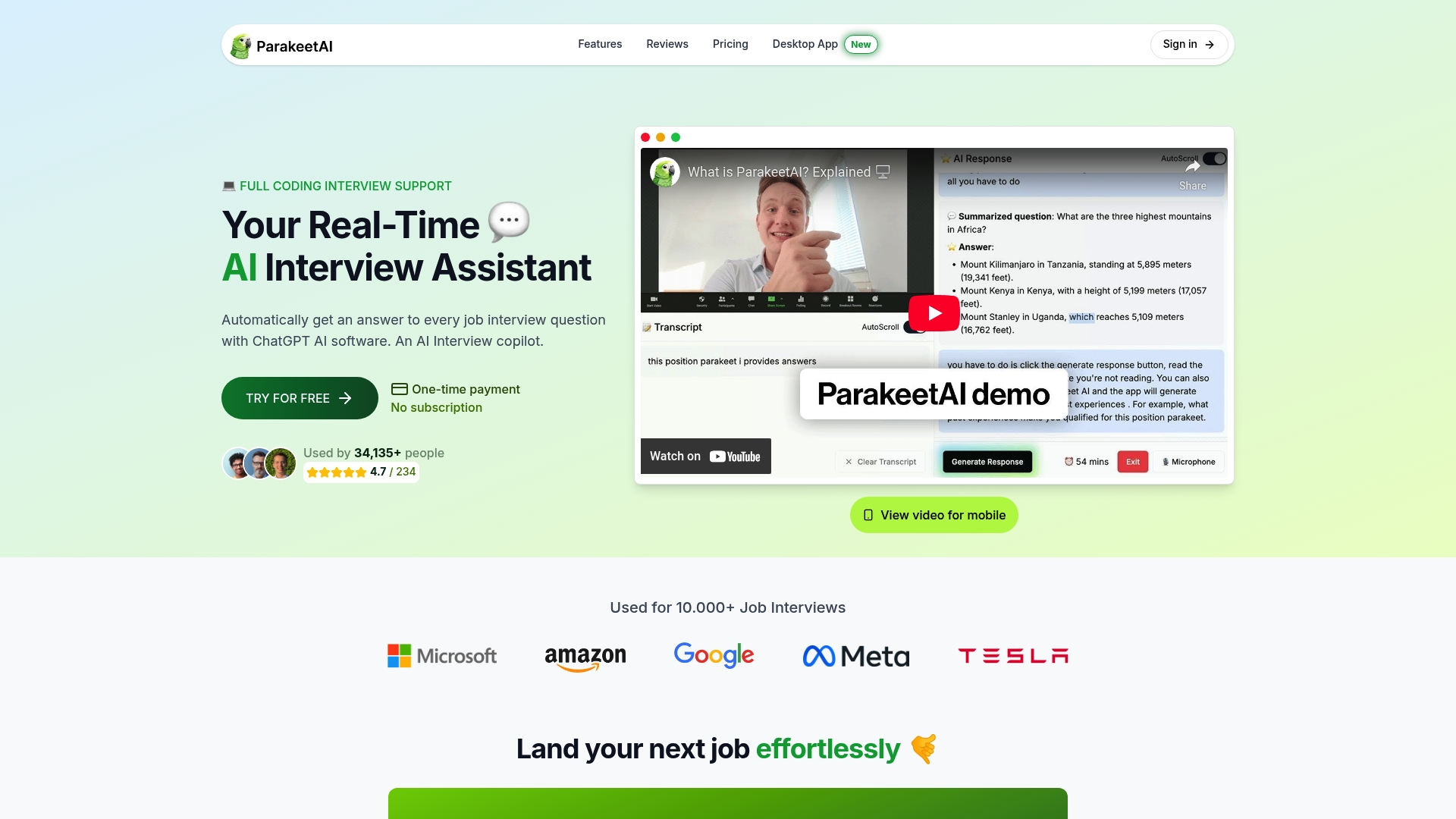
Whether you are preparing for a technical role or a general position, Parakeet-ai’s tools cover remote interview best practices and in-person interview strategies in one place. You can practice your STAR answers, review follow-up templates, and get live support during the interview itself. Visit Parakeet-ai to see how real-time AI assistance changes the way you prepare and perform.
FAQ
What is the STAR method in interviews?
The STAR method is a four-step answer structure recommended by the U.S. Department of Labor: Situation, Task, Action, and Result. It helps candidates deliver concise, evidence-backed responses to behavioral interview questions.
How early should you arrive for an in-person interview?
The Emily Post Institute recommends arriving 5 to 15 minutes early. Plan your route in advance and build in buffer time to avoid arriving rushed or late.
Should you send a thank-you email after every interview?
Yes. Send a personalized thank-you email within 24 hours of every interview. Reference a specific topic from the conversation and briefly restate your fit for the role.
How do you prepare for a video interview differently than in-person?
Test your technology at least 30 minutes before the call, check your background and lighting, and look directly at the camera rather than the screen. The U.S. Department of Labor identifies technical logistics as a required preparation step for virtual formats.
How many times should you follow up after an interview?
Follow up once with a thank-you email within 24 hours. If no response arrives after the stated decision timeline, one additional polite follow-up is appropriate. More than two follow-ups signals impatience rather than enthusiasm.