
Role of AI in Pre-Employment Testing – Transforming Hiring Outcomes

More than 60 percent of American companies now use artificial intelligence to help screen job candidates. The rise of AI in pre-employment testing is changing the way businesses evaluate talent, promising faster results and deeper insights than traditional methods. With AI now shaping everything from skills assessments to personality evaluations, understanding its impact is vital for anyone involved in the hiring process. This guide breaks down how AI works in candidate selection and what sets these advanced tools apart.
Table of Contents
- Defining AI in Pre-Employment Testing
- Major Types of AI-Driven Assessments
- How AI Evaluates Candidates and Skills
- Ensuring Fairness and Legal Compliance
- Potential Risks and Common Pitfalls
Key Takeaways
| Point | Details |
|---|---|
| AI transforms pre-employment testing | AI enhances candidate evaluation by providing deep insights through data analytics and machine learning, surpassing traditional methods. |
| Diverse assessment types enhance accuracy | Implementing adaptive skills tests, cognitive evaluations, and language analysis results in a holistic view of candidates’ skills and personalities. |
| Fairness and compliance are critical | Organizations must establish robust protocols to mitigate biases and ensure legal compliance in AI-driven recruitment processes. |
| Address potential risks proactively | Continuous algorithm audits and human oversight are essential to counteract vulnerabilities and biases within AI assessment mechanisms. |
Defining AI in Pre-Employment Testing
Artificial Intelligence (AI) in pre-employment testing represents a sophisticated technological approach to evaluating job candidates through advanced computational techniques. By leveraging machine learning algorithms and data analytics, AI transforms traditional assessment methods into dynamic, intelligent screening processes that provide deeper insights into candidate capabilities.
Traditional pre-employment testing often relied on standardized assessments with limited predictive power. In contrast, AI-powered testing systems analyze large volumes of assessment data rapidly, adapting test difficulty in real-time based on individual candidate performance. These intelligent systems can identify nuanced patterns that predict future job success by examining multiple dimensions beyond basic skill evaluations.
The core functionality of AI in pre-employment testing involves sophisticated pattern recognition and predictive modeling. AI algorithms can assess language and response patterns to evaluate personality traits, measuring characteristics such as extraversion, conscientiousness, and emotional stability with unprecedented accuracy. By processing complex data sets, these systems generate comprehensive candidate profiles that go far beyond traditional resume screening, offering employers more holistic and objective insights into potential employee performance.
Pro Tip - Strategic AI Implementation: When implementing AI-driven pre-employment testing, start with a pilot program that allows you to compare AI assessment results with traditional evaluation methods to validate the technology’s effectiveness and refine your approach.
Here is a concise comparison of traditional vs. AI-driven pre-employment testing methods:
| Aspect | Traditional Testing | AI-Driven Testing |
|---|---|---|
| Data Analysis | Manual and limited | Automated, large-scale |
| Personalization | Uniform for all candidates | Dynamically adapts to responses |
| Insight Depth | Focuses mainly on skills | Assesses skills, traits, patterns |
| Speed of Evaluation | Relatively slow | Instant and real-time |
| Predictive Accuracy | Limited by static metrics | Enhanced with pattern recognition |
Major Types of AI-Driven Assessments
AI-driven pre-employment assessments encompass a diverse range of sophisticated evaluation methods designed to provide comprehensive insights into candidate capabilities. These innovative assessment techniques leverage advanced machine learning algorithms to create more nuanced, accurate, and objective candidate screening processes.
Skills-based assessments that dynamically adapt to candidate responses represent one of the most sophisticated AI-driven evaluation approaches. These intelligent testing systems can modify question difficulty and complexity in real-time based on an individual’s performance, creating a personalized assessment experience that more accurately measures true skill levels. By responding dynamically to candidate inputs, these assessments provide a more responsive and precise measurement of professional competencies.
Another critical category of AI-driven assessments includes cognitive testing and advanced language analysis techniques. These assessments go beyond traditional screening by evaluating complex cognitive attributes such as problem-solving abilities, emotional intelligence, and communication skills. Automated essay scoring technologies utilize natural language processing to evaluate written responses, offering standardized and efficient methods for assessing written communication, critical thinking, and analytical capabilities. Such AI-powered assessments can analyze linguistic patterns, assess coherence, and generate objective evaluations that provide deeper insights into a candidate’s cognitive potential.
Pro Tip - Assessment Strategy: Design a balanced AI assessment approach that combines multiple evaluation methods to create a holistic candidate profile, ensuring you capture both technical skills and soft skills effectively.
This summary table highlights key AI-driven assessment types and what they measure:
| Assessment Type | Core Focus | Example Use Case |
|---|---|---|
| Adaptive Skills Test | Real-time skill measurement | Coding, technical roles |
| Cognitive Testing | Problem-solving, logic | Analytical positions |
| Language Analysis | Communication, personality | Customer service roles |
| Automated Essay Scoring | Writing ability, critical thinking | Content or analyst roles |
How AI Evaluates Candidates and Skills
AI-powered candidate evaluation represents a sophisticated technological approach that transcends traditional hiring methodologies, leveraging advanced computational techniques to analyze candidate potential with unprecedented depth and precision. By integrating multiple data points and sophisticated algorithms, these systems provide comprehensive insights that go far beyond conventional screening methods.
AI systematically evaluates candidates by examining personality traits, analyzing digital footprints, and administering specialized assessments designed to uncover nuanced aspects of professional capability. These intelligent systems can process vast amounts of information rapidly, identifying subtle patterns and characteristics that human recruiters might overlook. The evaluation process typically involves multi-dimensional analysis, including behavioral assessments, skills testing, communication pattern recognition, and predictive performance modeling.
The core mechanisms of AI-driven candidate evaluation involve complex machine learning algorithms that can simultaneously assess technical competencies and soft skills. By integrating natural language processing, psychological profiling, and skills assessment technologies, these systems create holistic candidate profiles that reveal potential performance indicators. The AI can analyze written communication, verbal responses, problem-solving approaches, and even subtle behavioral cues to generate comprehensive evaluations that provide organizations with deeper, more objective insights into candidate potential.

Pro Tip - Balanced Assessment: Design AI evaluation processes that balance quantitative skill measurements with qualitative personality assessments to ensure a well-rounded candidate understanding.
Ensuring Fairness and Legal Compliance
Ensuring fairness and legal compliance in AI-driven pre-employment testing represents a critical challenge for organizations seeking to leverage advanced technological solutions while maintaining ethical hiring practices. The integration of artificial intelligence into recruitment processes demands rigorous oversight to prevent potential discriminatory outcomes and protect candidate rights.
Comprehensive fairness testing methodologies have emerged to address systemic biases in AI recruitment technologies, focusing on developing systematic approaches to identify and mitigate potential discriminatory patterns. These advanced evaluation techniques analyze algorithmic decision-making processes, examining how AI systems might inadvertently perpetuate historical workplace inequities through unconscious statistical biases. By implementing sophisticated validation protocols, organizations can create more transparent and equitable candidate screening mechanisms that prioritize merit and potential over arbitrary demographic characteristics.
International regulatory frameworks are increasingly emphasizing the importance of developing technical standards that mitigate safety and discriminatory risks in AI-powered human resource management. These evolving guidelines require organizations to implement robust verification processes that continuously monitor AI assessment tools for potential bias, ensuring that machine learning algorithms produce fair, consistent, and legally defensible hiring recommendations. Effective compliance strategies involve regular algorithmic audits, diverse training data sets, and transparent evaluation criteria that can be independently verified and validated.
Pro Tip - Bias Prevention: Conduct periodic independent audits of your AI assessment algorithms, focusing on identifying and eliminating potential demographic or systemic biases in candidate evaluation processes.
Potential Risks and Common Pitfalls
AI-driven pre-employment testing represents a complex technological landscape fraught with potential risks that organizations must carefully navigate to maintain ethical and effective hiring practices. The integration of artificial intelligence into recruitment processes introduces multifaceted challenges that extend beyond simple technological implementation.
One of the most significant emerging risks involves the potential for AI systems to be manipulated or compromised. Advanced generative AI technologies present substantial threats to assessment integrity, creating vulnerabilities that can undermine the fundamental reliability of candidate evaluation processes. These sophisticated challenges require organizations to develop robust dual-strategy detection mechanisms that combine static analysis and dynamic testing to identify potential system vulnerabilities and prevent fraudulent interactions.
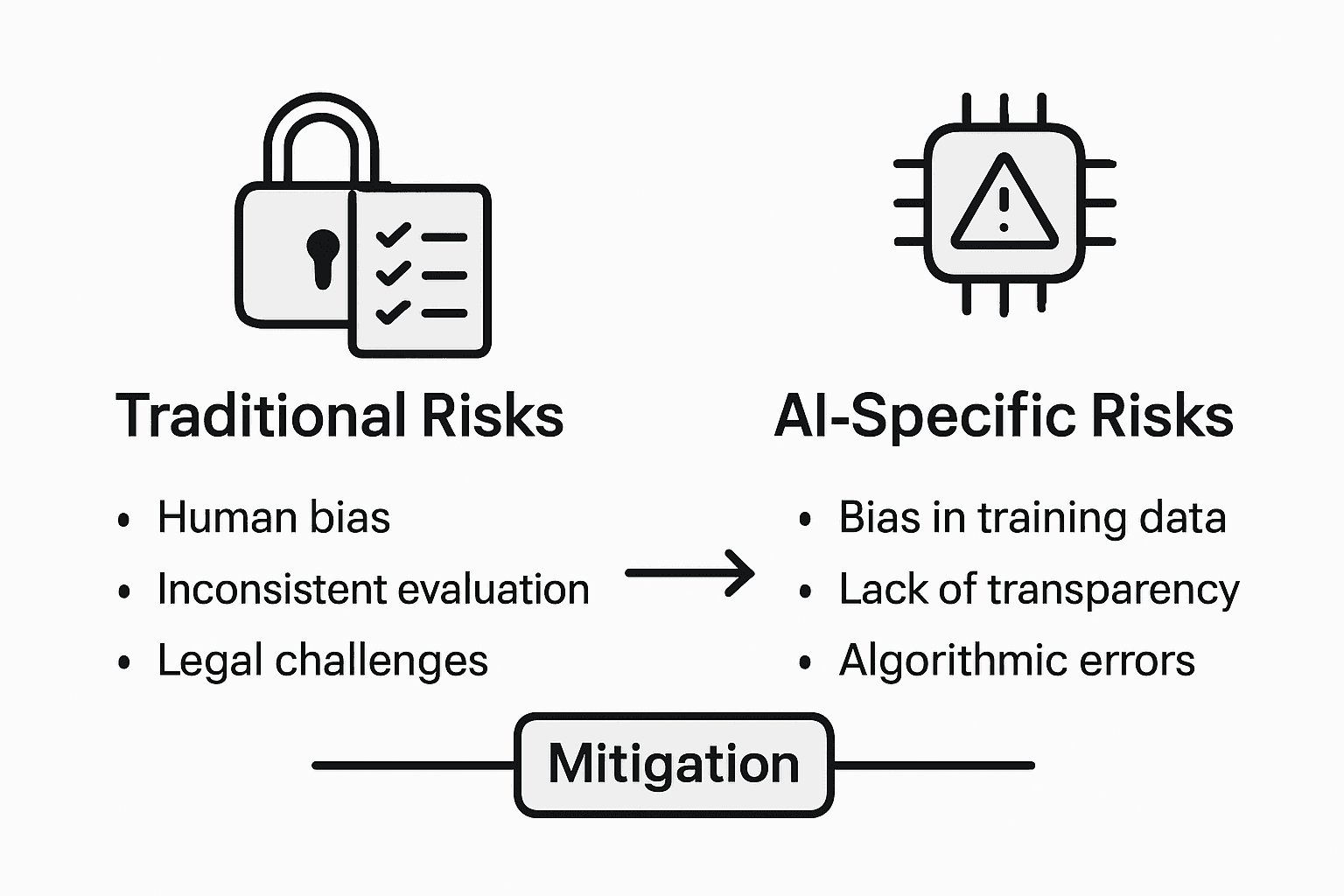
Beyond technological manipulation, organizations must contend with several critical pitfalls inherent in AI-powered assessment systems. These include algorithmic bias that can inadvertently discriminate against certain candidate groups, over-reliance on machine-generated insights that may overlook nuanced human qualities, and the potential for reducing complex human potential to simplistic numerical scores. AI systems can inadvertently perpetuate historical workplace inequities by learning from existing datasets that might contain inherent societal prejudices, thereby creating a feedback loop that reinforces discriminatory hiring patterns.
Pro Tip - Risk Mitigation: Implement a comprehensive validation framework that includes periodic algorithmic audits, diverse training data sets, and human oversight to counterbalance potential AI assessment limitations.
Take Control of Your Hiring with Real-Time AI Interview Assistance
The article highlights how AI is transforming pre-employment testing by offering dynamic, personalized, and predictive candidate evaluations but also points to challenges like fairness, bias, and the risk of overlooking human nuances. If you want to overcome these hurdles while enhancing your interview process, leveraging tools that provide immediate AI-powered support during interviews can make a critical difference. Parakeet’s real-time AI job interview assistant listens carefully and automatically provides accurate, on-the-spot answers that can help candidates showcase their true potential and reduce common pitfalls like biased evaluations or skill misjudgments.
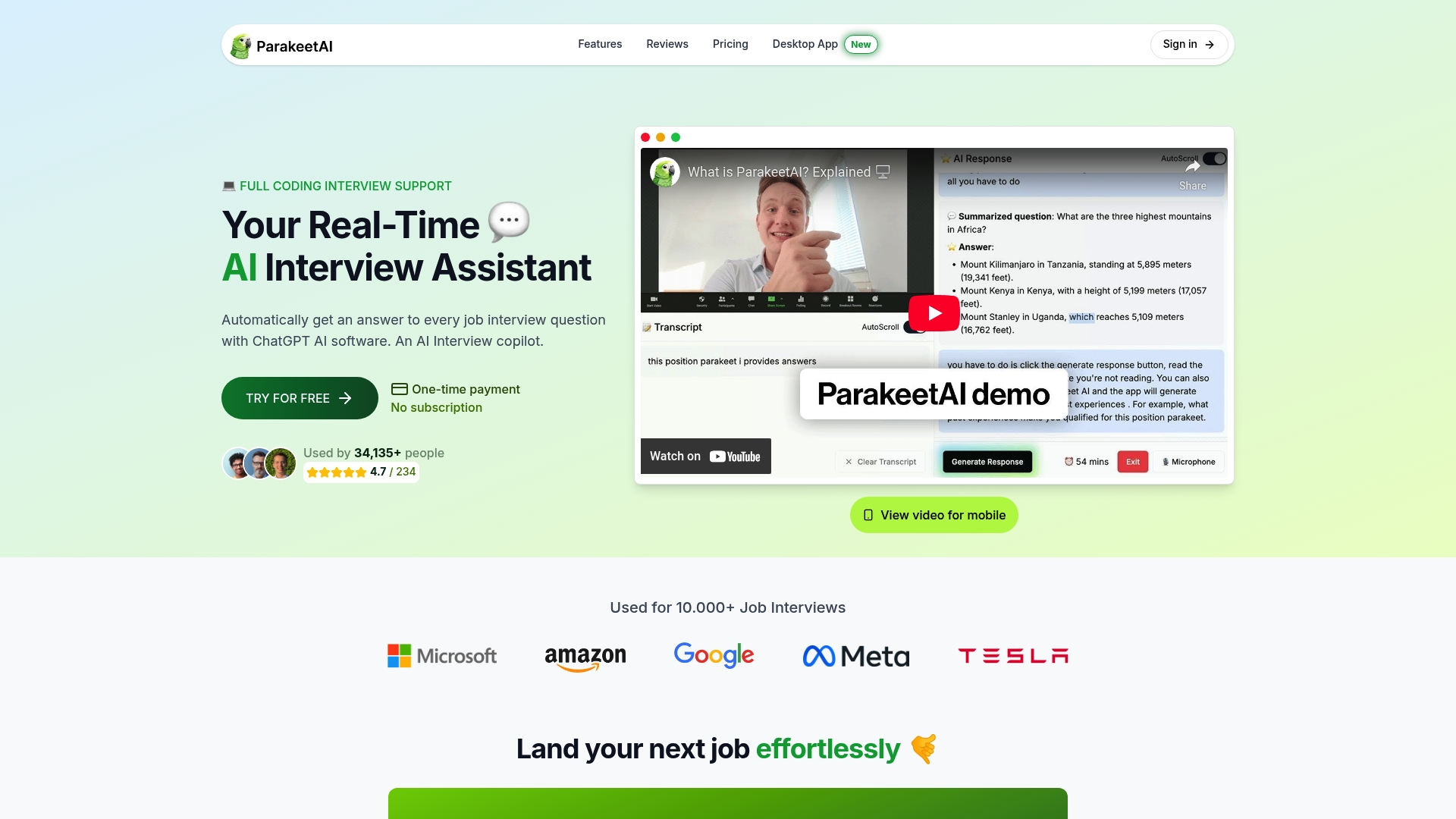
Experience firsthand how intelligent AI can revolutionize the way you hire by bringing fairness and precision into every interview. Visit Parakeet AI now to explore an innovative solution that aligns perfectly with the advanced concepts discussed in this article. To deepen your understanding of AI’s role in pre-employment testing, check out the detailed article here and see how Parakeet fits into making your hiring outcomes smarter and more ethical.
Frequently Asked Questions
What is AI in pre-employment testing?
AI in pre-employment testing refers to the use of advanced computational techniques, including machine learning algorithms, to evaluate job candidates more efficiently and accurately than traditional assessment methods.
How does AI improve the accuracy of candidate evaluations?
AI enhances accuracy by analyzing large volumes of data in real time, identifying nuanced patterns, and creating comprehensive candidate profiles that assess both skills and personality traits, thereby predicting job success more reliably.
What are the different types of AI-driven assessments used in hiring?
AI-driven assessments include adaptive skills tests, cognitive testing, language analysis, and automated essay scoring, each targeting different abilities and characteristics relevant to job performance.
How can organizations ensure fairness in AI-driven pre-employment testing?
Organizations can ensure fairness by conducting regular algorithmic audits, utilizing diverse training data sets, and implementing transparent evaluation criteria to mitigate biases and promote equitable hiring practices.