
Stepwise Interview Preparation for Confident Results

Most American hiring managers say that over 80 percent of tech candidates struggle to show how their skills match a company’s values during interviews. For job seekers worldwide, especially recent graduates, understanding job requirements and company culture is vital for making a strong first impression. This guide offers step-by-step strategies that transform scattered preparation into a focused game plan with proven methods to help you succeed in today’s competitive tech market.
Table of Contents
- Step 1: Analyze Job Requirements And Company Culture
- Step 2: Organize Targeted Study Materials And Practice Questions
- Step 3: Implement AI Interview Assistant For Real-Time Support
- Step 4: Practice Responding To Common And Technical Questions
- Step 5: Evaluate Responses And Refine Preparation Strategies
Quick Summary
| Key Insight | Explanation |
|---|---|
| 1. Research Job Requirements | Analyze the job description and match your skills to the specified needs for better alignment. |
| 2. Understand Company Culture | Investigate the organization’s values and work environment to show you fit into their culture. |
| 3. Organize Study Materials | Collect and categorize interview resources for an efficient preparation strategy. |
| 4. Utilize AI for Practice | Engage an AI assistant for real-time feedback and tailored mock interviews to enhance your performance. |
| 5. Evaluate and Improve | Continuously assess your practice sessions to identify weaknesses and refine your interview skills. |
Step 1: Analyze job requirements and company culture
Successfully preparing for an interview begins with comprehensive research about the job and organization. Your goal is to understand not just what skills the company needs, but how your professional profile matches their specific culture and expectations.
Start by conducting a thorough analysis of the job description. Carefully review each requirement and competency listed, mapping your own experiences and skills against those specific needs. Pay attention to both technical skills and soft skills the employer emphasizes. Look for keywords that describe the ideal candidate and prepare concrete examples from your background that demonstrate those qualities.
Next, dive deep into understanding the company’s culture through multiple research channels. Examine the company website, review their mission statement, explore recent press releases, and scan their social media profiles. Check employee review platforms like Glassdoor to gain insider perspectives on workplace dynamics. Your research should help you understand the organization’s values, work environment, and professional expectations. This knowledge allows you to tailor your interview responses and demonstrate that you are not just qualified, but a genuine cultural fit.
Pro tip: Create a side-by-side comparison document matching your skills against job requirements to identify your strongest selling points before the interview.
Step 2: Organize targeted study materials and practice questions
Preparing for an interview requires strategic organization of your study resources to maximize learning efficiency and confidence. Your goal is to create a structured approach that helps you comprehensively review and master potential interview content.
Creating a systematic approach to study materials starts with gathering all relevant resources. Collect job description details, company research, potential interview questions, and your professional portfolio materials. Categorize these resources by themes such as technical skills, behavioral competencies, and company specific knowledge. Digital note taking apps can help you organize and quickly access these materials. Consider creating separate digital folders or notebooks for each category to streamline your preparation process.

Develop a prioritized study plan that focuses on the most critical areas first. Start by identifying the core competencies required for the position and rank your study materials based on their importance and complexity. Break down complex information into digestible summaries or mind maps that help you quickly recall key points. Practice answering potential interview questions out loud, recording yourself to analyze your communication style and identify areas for improvement. This active learning approach will help transform your study materials from static documents into dynamic interview preparation tools.
Pro tip: Use color coding and digital tagging to quickly distinguish between different types of study materials and track your progress through each category.
Step 3: Implement AI interview assistant for real-time support
Taking your interview preparation to the next level involves leveraging advanced AI technology to provide instant, personalized coaching and feedback. Your goal is to transform traditional interview practice into an interactive, intelligent learning experience.
The AI interview assistant offers dynamic human-AI collaboration designed to support you through every stage of interview preparation. Begin by selecting a reputable AI interview tool that can analyze your responses, provide real-time feedback, and simulate different interview scenarios. Load your prepared study materials and practice questions into the system, allowing the AI to generate customized mock interviews tailored to your specific job application. As you respond to simulated questions, the AI will evaluate your communication skills, detect potential areas of improvement, and offer immediate suggestions for refining your answers.
Pay close attention to the AI assistant’s detailed analytics. Most advanced platforms provide comprehensive insights into your verbal and nonverbal communication, including speech patterns, confidence levels, and content relevance. Use these insights to iteratively improve your interview performance. Record multiple practice sessions, compare your progress, and focus on addressing specific feedback points. The goal is not just to memorize answers but to develop a natural, authentic interview presence that demonstrates your unique professional capabilities.
Here’s a quick comparison of traditional vs. AI-powered interview preparation methods:
| Method | Approach Overview | Key Advantages | Potential Limitations |
|---|---|---|---|
| Traditional Practice | Manual mock interviews | Personalized feedback, free | Limited scalability, bias |
| AI Interview Assistant | Simulated, adaptive practice | Detailed analytics, 24/7 access | Requires tech familiarity |
Pro tip: Run at least three complete mock interviews with your AI assistant and review the comparative analytics to track your improvement trajectory.
Step 4: Practice responding to common and technical questions
Developing confident interview responses requires strategic preparation and deliberate practice across both general and specialized question types. Your mission is to transform potential interview anxiety into a showcase of your professional capabilities.
Thorough interview preparation involves researching and practicing comprehensive question sets that cover multiple dimensions of your professional profile. Divide your practice into two primary categories: common behavioral questions and technical domain specific inquiries. For behavioral questions, craft stories that demonstrate your problem solving skills, leadership experiences, and ability to handle workplace challenges. Develop a narrative structure that highlights your actions, challenges overcome, and positive outcomes. For technical questions, focus on clear, concise explanations that showcase your depth of knowledge while remaining accessible to non specialists.
Implement a structured practice approach by recording yourself answering questions and reviewing your performance critically. Pay attention to your verbal communication clarity, body language, and the depth of your responses. Practice with colleagues, mentors, or AI interview tools to get diverse perspectives and feedback. Aim to develop responses that are authentic, professional, and tailored to highlight your unique strengths and experiences. Remember that the goal is not to memorize scripted answers but to develop a flexible communication strategy that allows you to adapt to different interview styles and unexpected questions.
Use this summary to guide your question practice strategy:
| Question Type | Focus Area | Recommended Practice Method | Goal |
|---|---|---|---|
| Behavioral | Teamwork, problem solving | Storytelling, recording responses | Show soft skills |
| Technical | Job-specific knowledge | Concise explanations, mock problem sets | Demonstrate expertise |
Pro tip: Create a personal question bank with at least 20 potential interview questions and practice responding to three new questions from this bank every week.
Step 5: Evaluate responses and refine preparation strategies
Successful interview preparation is an iterative process that requires continuous self reflection and strategic improvement. Your objective is to transform each practice session into a targeted learning opportunity that incrementally enhances your interview performance.
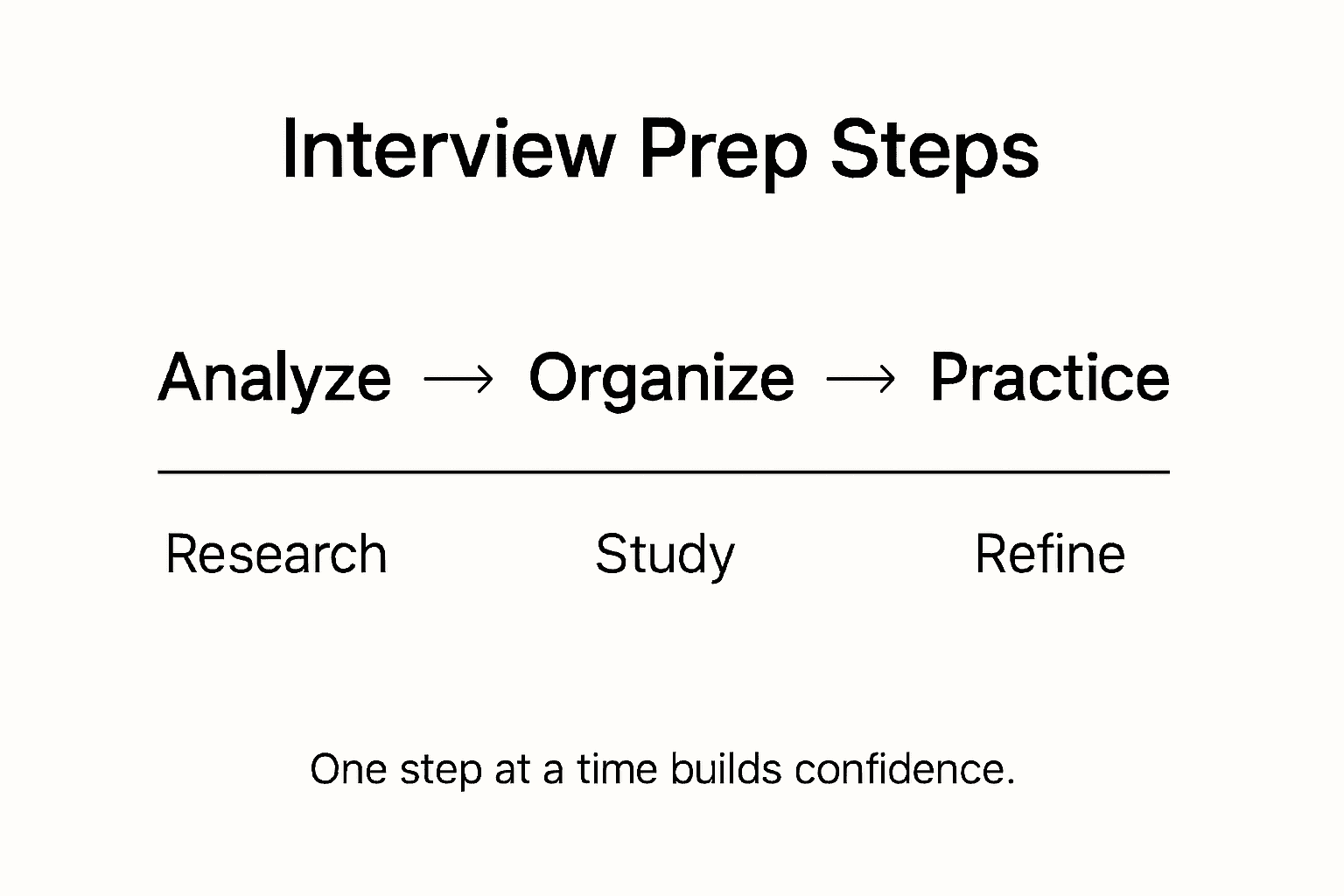
Systematically analyzing your interview practice responses involves creating a structured feedback mechanism. After each mock interview or practice session, document your performance objectively. Record specific moments where your responses felt strong or weak, noting verbal communication patterns, body language, and content depth. Create a detailed feedback log that tracks your progress over time. Pay particular attention to recurring challenges such as hesitation, unclear explanations, or difficulty articulating complex professional experiences.
Develop a responsive improvement strategy based on your documented observations. Identify specific skill areas that need refinement such as technical knowledge gaps, communication clarity, or storytelling techniques. Seek external feedback from mentors, career coaches, or trusted professionals who can provide objective insights into your interview style. Consider using AI interview tools that offer detailed performance analytics to supplement human feedback. The key is to approach each practice session as a learning experience, continuously adapting and refining your approach to become a more confident and articulate interview candidate.
Pro tip: Create a personal improvement scorecard with specific metrics to track your interview performance progress and set measurable skill development goals.
Elevate Your Interview Preparation with Real-Time AI Support
Preparing for an interview can feel overwhelming with all the steps involved from analyzing job requirements to refining your answers. This article highlights the challenges of mastering behavioral and technical questions while continuously improving your responses through detailed feedback. If you want to overcome hesitation, deliver authentic answers, and gain confidence faster, an AI-powered approach can transform your preparation journey.
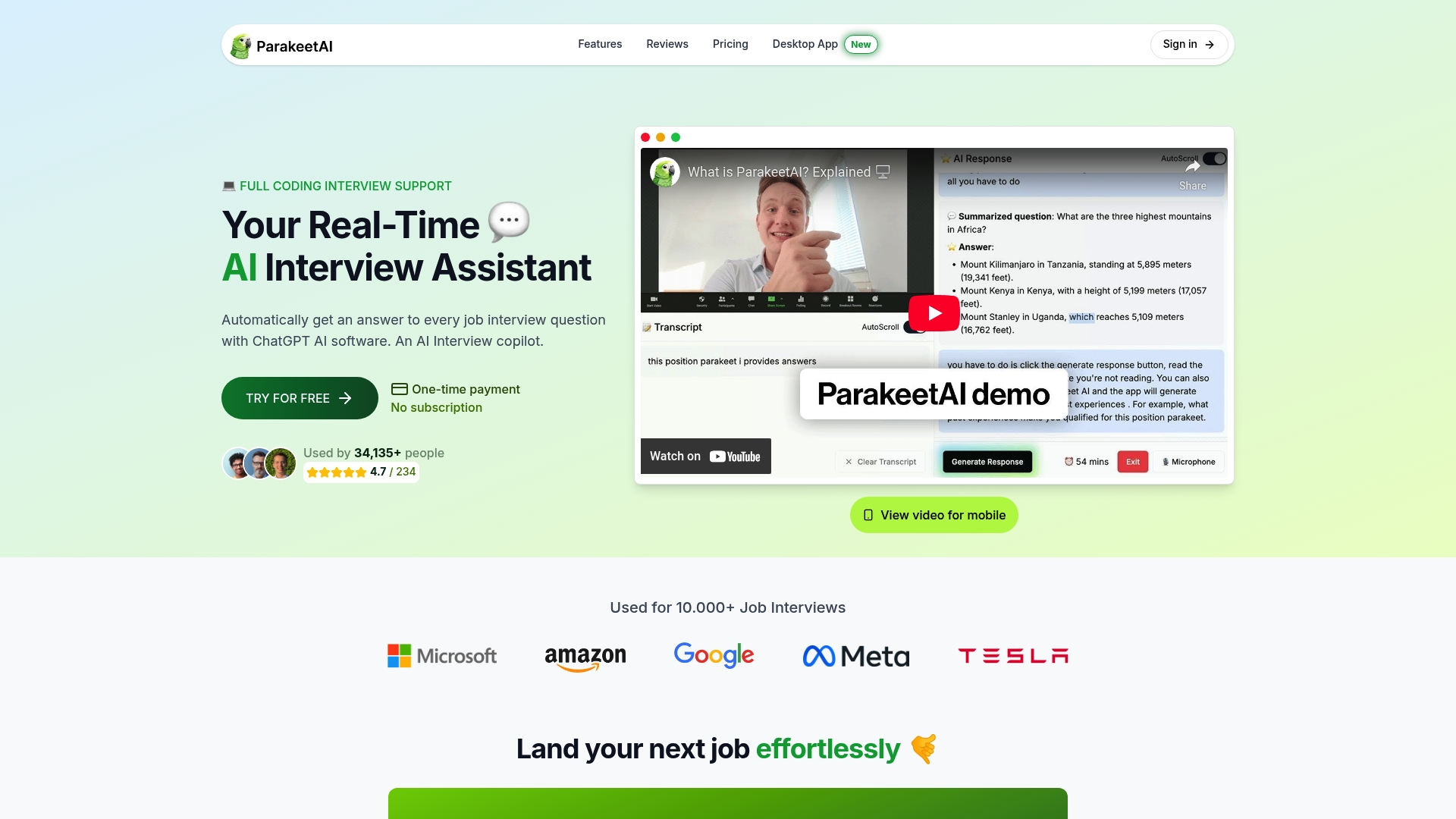
Discover how our real-time AI job interview assistant listens to your responses and provides instant personalized feedback tailored to the job you are applying for. Unlike traditional practice methods, our AI tool offers 24/7 access to adaptive mock interviews, detailed analytics, and customized answer suggestions to sharpen your communication skills. Start practicing smarter today and make every interview an opportunity to showcase your unique strengths. Visit Parakeet AI now and take the next step in your career preparation.
Frequently Asked Questions
How can I effectively analyze job requirements for my interview preparation?
To effectively analyze job requirements, review the job description in detail and map your experiences against each requirement. Identify specific skills, both technical and soft, and prepare examples from your background that align with those needs.
What are the best ways to organize study materials for interview preparation?
Organize study materials by categorizing them into themes such as technical skills and behavioral competencies. Create a prioritized study plan that focuses first on the most critical areas, allowing you to efficiently prepare for the interview.
How can an AI interview assistant enhance my preparation?
An AI interview assistant can provide real-time feedback on your responses and simulate different interview scenarios tailored to your application. Use it to practice and refine your communication skills, leveraging detailed analytics to improve your performance.
What types of questions should I practice for an interview?
Practice both common behavioral questions and technical inquiries specific to your field. Focus on crafting clear narratives for behavioral questions, while preparing concise explanations for technical topics to showcase your expertise.
How do I evaluate my responses after practice sessions?
After each practice session, document your performance and identify areas where you excelled or struggled. Create a feedback log that helps track your progress over time and use these insights to refine your preparation strategies.