
10 Top Interview Questions and How to Answer Them

Nearly 80 percent of american job seekers admit feeling anxious about common interview questions like ‘Tell me about yourself’ or ‘Why should we hire you.’ Interview success depends on more than just qualifications. How you answer these familiar prompts shapes an employer’s first impression. This guide breaks down the most asked american interview questions and reveals practical strategies to help you respond with confidence, clarity, and authenticity.
Table of Contents
- Tell Me About Yourself: Crafting A Strong Introduction
- Why Do You Want This Job? Showing Your Motivation
- What Are Your Strengths? Highlighting Your Best Qualities
- What Are Your Weaknesses? Answering Honestly And Wisely
- Describe A Challenge You Faced: Using Real Examples
- Where Do You See Yourself In Five Years? Planning Ahead
- Why Should We Hire You? Making Your Case Clearly
- How Do You Handle Pressure? Showing Your Coping Skills
- Describe A Time You Worked In A Team: Proving Teamwork
- Do You Have Any Questions For Us? Ending On A Strong Note
Quick Summary
| Key Insight | Explanation |
|---|---|
| 1. Structure Your Responses | Organize your answers chronologically to effectively convey your professional narrative during interviews. |
| 2. Showcase Relevant Experience | Highlight 2-3 experiences that directly align with the job you are applying for, emphasizing key skills. |
| 3. Demonstrate Genuine Enthusiasm | Convey excitement about the role and how it fits into your long-term career goals to resonate with employers. |
| 4. Be Honest About Weaknesses | Choose a real weakness and demonstrate growth steps to show self-awareness and commitment to improvement. |
| 5. Ask Thoughtful Questions | Prepare intelligent questions about the company and role to showcase your interest and strategic thinking at the interview’s close. |
1. Tell Me About Yourself: Crafting a Strong Introduction
The “Tell me about yourself” interview question is your first opportunity to make a powerful impression. It might seem simple, but this open ended prompt requires strategic preparation to showcase your professional narrative effectively.
When responding, your goal is to provide a concise professional summary that highlights your most relevant experiences and connects directly to the job you are seeking. Career experts recommend structuring your response as a compelling professional story that moves chronologically from your past experiences to your present capabilities and future career goals.
Key Components of a Strong Introduction
- Professional Background: Start with a brief overview of your current professional role and most significant achievements
- Relevant Experience: Highlight 2-3 work experiences that demonstrate skills directly applicable to the position
- Career Trajectory: Show how your past experiences have prepared you for this specific opportunity
- Forward Looking Statement: Conclude with why you are excited about this role and how it aligns with your career objectives
The ideal response should take about 60-90 seconds and feel like a strategic narrative. Think of it as your professional “elevator pitch” designed to grab the interviewer’s attention and create interest in learning more about you.
Strategic Response Structure
A winning approach follows this framework:
- Present Position: “I currently work as [job title] at [company]”
- Past Experiences: “Previously, I developed skills in [key areas] that are directly relevant to this role”
- Key Achievements: “In my current role, I [specific achievement that demonstrates value]”
- Future Aspirations: “I’m excited about this opportunity because it allows me to [specific goal related to the position]”
What to Avoid
Steer clear of personal anecdotes, childhood stories, or extensive details about your education. University of Nevada guidance emphasizes focusing strictly on professional experiences that showcase your qualifications.
Remember that this is not an invitation to recite your entire resume. Instead, it is a strategic moment to spark the interviewer’s interest and set a positive tone for the rest of the conversation. Practice your response to sound natural, confident, and genuinely enthusiastic about your professional journey.
2. Why Do You Want This Job? Showing Your Motivation
The interview question “Why do you want this job?” is a critical moment where employers assess your genuine interest, professional alignment, and potential fit within their organization. Your response reveals more than just career aspirations it demonstrates your research, strategic thinking, and professional enthusiasm.
Interview preparation experts recommend conducting thorough research about the prospective employer to craft a compelling and authentic answer. Your goal is to show that this opportunity is not just another job but a strategic step in your professional journey.
Key Components of an Outstanding Response
- Company Knowledge: Demonstrate specific understanding of the organization’s mission, recent achievements, and culture
- Role Alignment: Connect your skills and experiences directly to the job requirements
- Professional Growth: Articulate how this position supports your long term career objectives
- Genuine Enthusiasm: Communicate sincere excitement about contributing to the organization
A powerful response goes beyond generic statements. University research suggests highlighting precise skills and experiences that make you uniquely qualified for the role.
Crafting Your Strategic Answer
- Research Thoroughly
- Explore the company website
- Review recent news and press releases
- Understand the organization’s core values and recent projects
- Connect Personal Goals
- Explain how this role matches your professional development trajectory
- Illustrate specific ways your background prepares you for this opportunity
- Show Genuine Passion
- Discuss what genuinely excites you about the role
- Demonstrate how your professional goals intersect with the company’s mission
Warning: What to Avoid
Steer clear of answers focused solely on salary, benefits, or personal convenience. Employers want to hear about your professional motivation and potential value to their team.
Sample Strong Response Framework
“I am excited about this opportunity because [specific company achievement] aligns perfectly with my expertise in [relevant skill]. My background in [professional experience] has prepared me to contribute meaningfully to [specific company goal or project].”
Remember that authenticity is key. Your response should feel genuine, well researched, and demonstrate that you view this job as a strategic career move rather than just another employment opportunity.
3. What Are Your Strengths? Highlighting Your Best Qualities
The “What are your strengths?” interview question provides a strategic opportunity to showcase your professional capabilities and align your skills with the specific job requirements. This is your moment to confidently articulate what makes you an exceptional candidate without sounding boastful or generic.
Interview preparation experts recommend identifying strengths that are directly relevant to the position and supporting those claims with concrete examples that demonstrate these strengths in action.
Strategic Strength Selection Approach
- Job Relevance: Choose strengths that match the specific role and company needs
- Provability: Select skills you can substantiate with real world examples
- Uniqueness: Highlight qualities that differentiate you from other candidates
- Professional Context: Frame strengths within your professional development
Identifying Your Core Professional Strengths
- Technical Competencies
- Skills specific to your professional domain
- Quantifiable achievements
- Specialized knowledge
- Soft Skills
- Communication abilities
- Teamwork and collaboration
- Problem solving capabilities
- Adaptability and learning agility
- Leadership Potential
- Project management experience
- Initiative and proactive approach
- Ability to motivate and guide teams
Crafting a Powerful Strength Narrative
University career resources emphasize the importance of providing specific examples that illustrate how your strengths have produced tangible results in previous professional experiences.
Example Framework
“One of my key strengths is [specific strength]. For instance, in my previous role at [company], I [specific achievement that demonstrates this strength], which resulted in [measurable outcome].”
Critical Mistakes to Avoid
- Generic statements without supporting evidence
- Listing strengths unrelated to the job
- Appearing arrogant or overly self promotional
- Failing to provide concrete examples
Remember that authenticity is paramount. Your strengths should reflect your genuine professional capabilities while directly addressing the specific requirements of the position you are pursuing. Practice articulating these strengths confidently and concisely to make a memorable impression.
4. What Are Your Weaknesses? Answering Honestly and Wisely
The “What are your weaknesses?” interview question is a strategic psychological assessment designed to evaluate your self awareness, honesty, and professional growth mindset. This seemingly challenging question offers a unique opportunity to demonstrate emotional intelligence and proactive personal development.
University career resources recommend being transparent about weaknesses while strategically framing them as opportunities for improvement.
Strategic Weakness Response Framework
- Authenticity: Choose a genuine weakness
- Relevance: Select a weakness not critical to core job functions
- Growth Orientation: Highlight active steps for improvement
- Professional Context: Demonstrate self reflection and learning
Selecting the Right Weakness
- Technical Skill Limitations
- Specific software or technical knowledge gaps
- Skills you are actively developing
- Learning strategies you are implementing
- Professional Development Areas
- Communication challenges
- Time management
- Public speaking
- Delegation skills
- Personal Work Characteristics
- Tendency toward perfectionism
- Over analyzing complex problems
- Initial hesitation with new technologies
Crafting a Powerful Weakness Narrative
Interview preparation experts emphasize discussing how you are actively addressing and improving upon your identified weakness.
Example Response Structure
“I have recognized that [specific weakness]. To address this, I have been [concrete steps for improvement], which has already helped me [measurable progress or outcome].”
Critical Mistakes to Avoid
- Claiming you have no weaknesses
- Describing a strength as a weakness
- Selecting a weakness crucial to the job
- Appearing defensive or uncomfortable
Remember that self awareness and a commitment to continuous improvement are far more impressive than attempting to appear perfect. The goal is to demonstrate maturity, honesty, and a proactive approach to personal and professional growth.
5. Describe a Challenge You Faced: Using Real Examples
The interview question “Describe a challenge you faced” is a strategic opportunity to showcase your problem solving skills, resilience, and professional maturity. Interviewers use this question to understand how you navigate complex situations and demonstrate your ability to overcome obstacles.
University career resources recommend using the STAR method (Situation, Task, Action, Result) to structure a compelling narrative that highlights your critical thinking and adaptability.
Strategic Challenge Description Framework
- Authenticity: Select a genuine professional challenge
- Relevance: Choose an example aligned with job requirements
- Complexity: Highlight a meaningful problem demonstrating skill
- Resolution: Emphasize positive outcome and lessons learned
Selecting the Right Challenge
- Professional Scenarios
- Project management difficulties
- Team collaboration challenges
- Technical problem solving
- Resource constraints
- Performance Related Challenges
- Meeting tight deadlines
- Resolving interdepartmental conflicts
- Adapting to new technologies
- Managing client expectations
- Personal Growth Obstacles
- Overcoming skill gaps
- Learning new professional competencies
- Navigating organizational changes
- Improving communication strategies
Crafting a Powerful Challenge Narrative
Interview preparation experts emphasize providing specific details about the actions taken and skills demonstrated while overcoming professional challenges.
Example Response Structure
“In my previous role, I encountered [specific challenge]. I approached this by [strategic actions taken], which resulted in [measurable positive outcome] and helped me develop [key professional skills].”
Critical Mistakes to Avoid
- Selecting trivial or irrelevant challenges
- Blaming others for problems
- Lacking a clear resolution
- Appearing negative or defeated
Remember that the goal is not to present a perfect scenario but to demonstrate your ability to think critically, adapt, and grow from challenging professional experiences. Your response should reflect problem solving skills, emotional intelligence, and professional resilience.
6. Where Do You See Yourself in Five Years? Planning Ahead
The interview question “Where do you see yourself in five years?” is a nuanced assessment of your career ambition, strategic thinking, and professional alignment. This seemingly simple prompt requires a thoughtful response that demonstrates both personal aspiration and organizational compatibility.
University career resources recommend articulating clear career objectives that demonstrate how the current position fits into your broader professional development strategy.
Strategic Career Planning Framework
- Realistic Expectations: Set achievable professional goals
- Company Alignment: Connect personal aspirations with organizational needs
- Skill Development: Highlight continuous learning commitment
- Professional Growth: Show potential for increased responsibilities
Career Trajectory Considerations
- Professional Skill Advancement
- Technical capability enhancement
- Leadership skill development
- Industry certification acquisition
- Specialized knowledge expansion
- Potential Role Progression
- Management track opportunities
- Cross functional skill building
- Potential departmental transitions
- Strategic role advancement
- Personal Development Goals
- Professional network expansion
- Mentorship opportunities
- Innovative project involvement
- Entrepreneurial skill cultivation
Crafting a Compelling Career Narrative
Interview preparation experts emphasize creating a response that demonstrates commitment to the organization while maintaining individual professional growth potential.
Example Response Structure
“In five years, I aim to have developed expertise in [specific area], potentially taking on [leadership/specialized role] where I can contribute meaningfully to the organization’s strategic objectives.”
Critical Mistakes to Avoid
- Appearing uncommitted or uncertain
- Mentioning competing company goals
- Sharing overly personal or unrelated ambitions
- Lacking specificity in career planning
Remember that your response should balance personal ambition with organizational potential. The goal is to present yourself as a forward thinking professional who views this role as a strategic opportunity for mutual growth and development.
7. Why Should We Hire You? Making Your Case Clearly
The interview question “Why should we hire you?” is your pivotal moment to transform from a candidate into the solution to the employer’s specific needs. This is not a time for modesty but a strategic opportunity to articulate your unique professional value proposition.
University career resources recommend highlighting unique skills and experiences that distinctively position you as the ideal candidate for the role.
Strategic Self Positioning Framework
- Specific Value Proposition: Align skills with job requirements
- Quantifiable Achievements: Demonstrate measurable impact
- Unique Differentiators: Showcase distinctive professional capabilities
- Cultural Compatibility: Show alignment with organizational values
Key Competitive Advantage Areas
- Professional Competencies
- Specialized technical skills
- Relevant certifications
- Advanced domain knowledge
- Innovative problem solving approaches
- Performance Track Record
- Proven results and achievements
- Successful project completions
- Measurable performance improvements
- Client or stakeholder testimonials
- Intangible Professional Qualities
- Adaptability
- Learning agility
- Cross functional collaboration
- Strategic thinking capabilities
Crafting a Compelling Value Narrative
Interview preparation experts emphasize demonstrating how your specific qualifications will directly contribute to the organization’s success.
Example Response Structure
“Based on the job requirements, I bring a unique combination of [specific skills] that will help the team [specific organizational goal]. For instance, in my previous role, I [concrete achievement] which directly translates to the challenges you are currently facing.”
Critical Mistakes to Avoid
- Generic statements without specific evidence
- Focusing on personal needs over organizational benefits
- Appearing arrogant or overly self promotional
- Lacking concrete examples of past achievements
Remember that your goal is to present yourself as the most compelling solution to the employer’s specific needs. Confidence backed by substantive evidence is the key to making a memorable impression.
8. How Do You Handle Pressure? Showing Your Coping Skills
The interview question “How do you handle pressure?” is a critical assessment of your emotional intelligence, professional resilience, and ability to perform under challenging circumstances. Employers want to understand your psychological approach to high stress situations and your capacity to maintain composure and productivity.
University career resources recommend providing specific examples of high pressure situations where you successfully managed stress and delivered positive outcomes.
Strategic Pressure Management Framework
- Emotional Regulation: Maintain calm and focused mindset
- Problem Solving: Develop systematic approach to challenges
- Prioritization: Distinguish between urgent and important tasks
- Communication: Seek support and clarify expectations
Pressure Coping Strategies
- Mental Preparation Techniques
- Deep breathing exercises
- Visualization of successful outcomes
- Maintaining positive self talk
- Structured time management
- Practical Stress Management
- Breaking complex tasks into smaller steps
- Creating clear action plans
- Establishing realistic timelines
- Implementing proactive communication
- Performance Under Stress
- Maintaining professional composure
- Focusing on solutions
- Adapting quickly to changing scenarios
- Learning from high pressure experiences
Crafting a Compelling Pressure Management Narrative
Interview preparation experts emphasize providing concrete examples demonstrating how you transform pressure into productive performance.
Example Response Structure
“During a critical project deadline at [previous workplace], I encountered [specific high pressure scenario]. I managed this by [systematic approach], which resulted in [successful outcome] and taught me [key professional lesson].”
Critical Mistakes to Avoid
- Claiming you never experience stress
- Providing vague or generic responses
- Appearing overwhelmed by pressure
- Blaming external factors
Remember that employers are seeking professionals who view pressure as an opportunity for growth and demonstration of resilience. Your response should reflect a mature, strategic approach to managing challenging professional situations.
9. Describe a Time You Worked in a Team: Proving Teamwork
The interview question “Describe a time you worked in a team” reveals your collaborative skills, interpersonal dynamics, and ability to contribute effectively within a group setting. Employers seek candidates who can navigate complex team environments with emotional intelligence and strategic cooperation.
University career resources recommend sharing specific team project examples that demonstrate your unique contributions and collaborative capabilities.
Strategic Teamwork Demonstration Framework
- Collaborative Approach: Highlight constructive participation
- Problem Solving: Show collective challenge resolution
- Communication Skills: Demonstrate effective interpersonal interactions
- Mutual Achievement: Focus on team success over individual recognition
Key Teamwork Competency Areas
- Communication Dynamics
- Active listening skills
- Clear and respectful dialogue
- Constructive feedback mechanisms
- Conflict resolution strategies
- Collaborative Performance
- Shared goal alignment
- Complementary skill utilization
- Mutual accountability
- Supportive team environment
- Leadership Within Teams
- Facilitating group discussions
- Mediating potential conflicts
- Recognizing team members contributions
- Driving collective momentum
Crafting a Compelling Teamwork Narrative
Interview preparation experts emphasize providing concrete examples that illustrate your ability to collaborate effectively and contribute to team success.
Example Response Structure
“During a complex project at [previous workplace], our team faced [specific challenge]. I contributed by [specific collaborative action], which helped us [measurable team outcome] and strengthened our collective performance.”
Critical Mistakes to Avoid
- Focusing exclusively on personal achievements
- Criticizing team members
- Appearing uncooperative
- Lacking specific examples
Remember that exceptional teamwork goes beyond completing tasks. It involves creating a supportive environment where collective potential is maximized and mutual growth is prioritized.
10. Do You Have Any Questions for Us? Ending on a Strong Note
The final interview question “Do you have any questions for us?” is your strategic opportunity to demonstrate intellectual curiosity, genuine interest, and professional preparedness. Far from being a casual closing moment, this is a critical chance to distinguish yourself and leave a lasting positive impression.
University career resources recommend preparing thoughtful questions that reflect comprehensive research and authentic engagement with the organization.
Strategic Question Development Framework
- Relevance: Connect questions directly to company context
- Depth: Show nuanced understanding of role and organization
- Professionalism: Demonstrate strategic thinking
- Genuine Interest: Reveal authentic motivation
Question Categories
- Company Insights
- Current strategic priorities
- Recent organizational achievements
- Future growth trajectories
- Emerging industry challenges
- Role Specific Exploration
- Team dynamics
- Performance expectations
- Professional development opportunities
- Potential career progression paths
- Cultural Understanding
- Organizational values
- Collaborative work environment
- Innovation and learning practices
- Employee engagement approaches
Crafting Impactful Questions
Interview preparation experts suggest developing questions that demonstrate research depth and professional sophistication.
Example Question Structures
- “I noticed your recent [specific company initiative]. How do you see this impacting your strategic goals?”
- “What characteristics distinguish top performers in this role?”
- “How does this team approach professional development and skill enhancement?”
Critical Mistakes to Avoid
- Asking about salary prematurely
- Requesting information already covered
- Appearing unprepared
- Asking yes or no questions
Remember that your questions are a final opportunity to showcase your professionalism, strategic thinking, and genuine commitment to potentially joining the organization. Thoughtful inquiry can transform the interview’s closing moments into a memorable professional dialogue.
Below is a comprehensive table summarizing interview question strategies and their key elements discussed throughout the article.
| Interview Question | Key Components | Critical Mistakes to Avoid |
|---|---|---|
| Tell Me About Yourself | Professional background; Relevant experience; Career trajectory; Forward looking statement | Personal anecdotes; Entire resume recitation |
| Why Do You Want This Job? | Company knowledge; Role alignment; Professional growth; Genuine enthusiasm | Salary focus; Generic statements |
| What Are Your Strengths? | Job relevance; Provability; Uniqueness; Professional context | Generic statements; Unrelated strengths |
| What Are Your Weaknesses? | Authenticity; Relevance; Growth orientation; Professional context | Claiming no weaknesses; Crucial job weaknesses |
| Describe a Challenge Faced | Authenticity; Relevance; Complexity; Resolution | Trivial challenges; Blaming others |
| Where Do You See Yourself in Five Years? | Realistic expectations; Company alignment; Skill development; Professional growth | Uncertainty; Competing company goals |
| Why Should We Hire You? | Specific value proposition; Quantifiable achievements; Unique differentiators; Cultural compatibility | Modesty; Personal needs focus |
| How Do You Handle Pressure? | Emotional regulation; Problem solving; Prioritization; Communication | Vaguely managing stress; Appearing overwhelmed |
| Describe a Time You Worked in a Team | Collaborative approach; Problem solving; Communication skills; Mutual achievement | Personal focus; Uncooperativeness |
| Do You Have Any Questions for Us? | Relevance; Depth; Professionalism; Genuine interest | Salary questions; Unpreparedness |
Master Your Interview Answers with Real-Time AI Guidance
Facing tough questions like “Tell me about yourself” or “Why should we hire you” can be challenging. This article highlights how important it is to prepare strategic, authentic responses that showcase your strengths and align with your career goals. The pressure to sound confident and genuine while addressing complex topics like career trajectory and handling challenges can leave many candidates feeling overwhelmed.
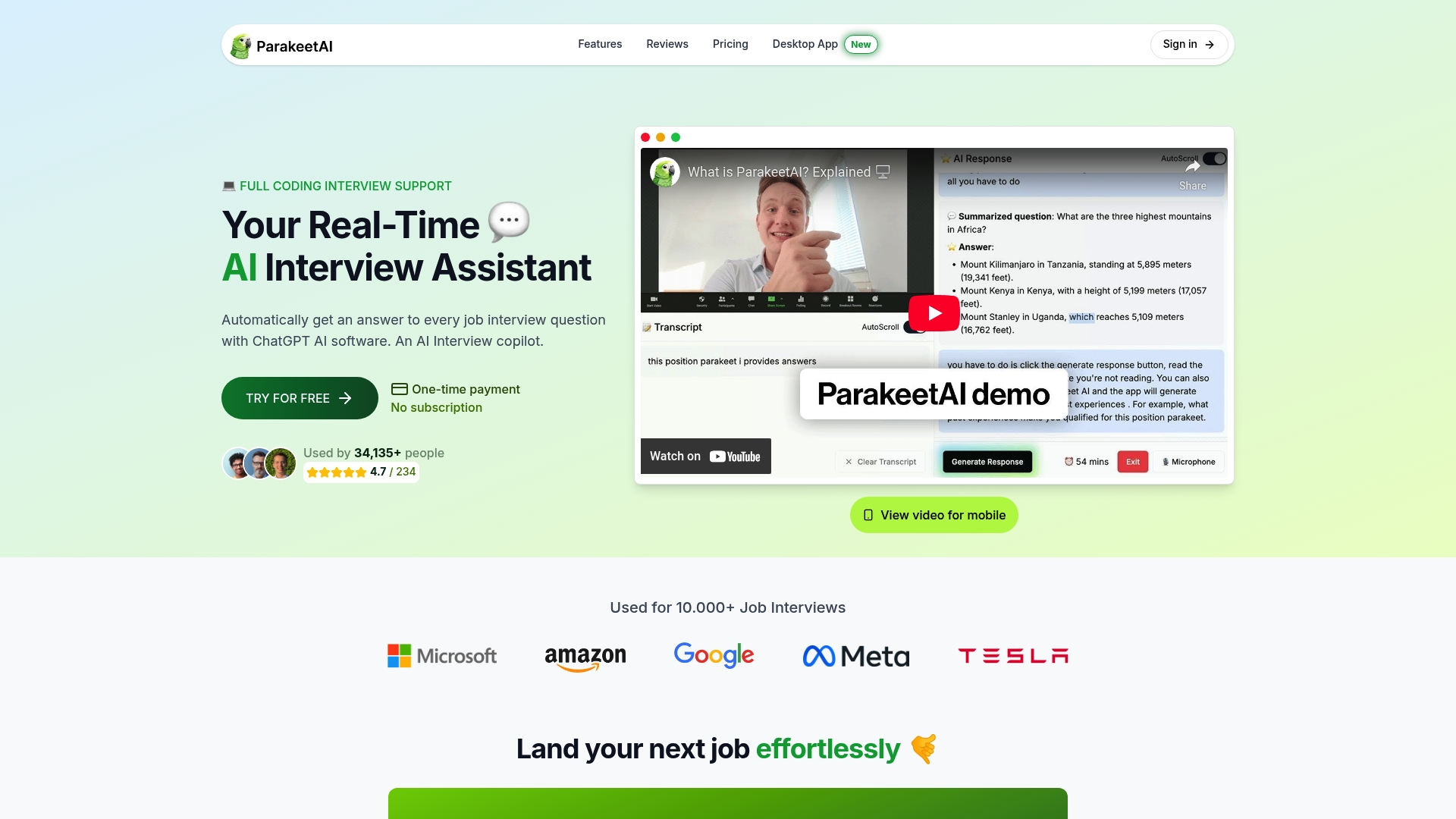
Unlock your potential with a real-time AI job interview assistant that listens carefully and provides tailored answers instantly. With Parakeet AI, you get immediate, personalized coaching so you can confidently handle questions about your strengths, weaknesses, teamwork experiences, and more. Stop worrying about memorizing scripts and start practicing dynamic conversations that adapt to your unique background. Visit Parakeet AI’s landing page now to experience smart interview assistance that prepares you to impress every interviewer and seize your dream job.
Frequently Asked Questions
What are some common interview questions I should prepare for?
Many interviews include standard questions such as “Tell me about yourself,” “Why do you want this job?” and “What are your strengths?” Prepare by practicing these responses to summarize your professional story and how your skills fit the position.
How can I effectively answer the question about my weaknesses?
To answer the weaknesses question effectively, choose a genuine weakness that isn’t critical for the job and explain how you are actively improving it. For example, you might say, “I’m working on my public speaking skills by attending workshops to build my confidence and clarity.”
What strategy should I use when describing a challenge I faced?
Use the STAR method – Situation, Task, Action, Result – to structure your response. Start by briefly explaining the challenge, detail your actions to resolve it, and conclude with the successful outcome you achieved.
What types of questions should I ask at the end of the interview?
At the end of the interview, ask questions that demonstrate your knowledge of the company and role, such as inquiries about team dynamics or professional development opportunities. This shows your interest in the organization and can leave a positive impression.
How long should my response be for the “Tell me about yourself” question?
Aim for a response that lasts about 60-90 seconds, focusing on a concise narrative of your professional background, relevant experiences, and future goals. Practice to ensure clarity and confidence without exceeding this time limit.
What should I focus on when asked, “Why should we hire you?”?
When answering this question, emphasize your unique skills, relevant experiences, and how your contributions can solve specific challenges the team faces. Provide a concrete example of past achievements to showcase your potential value to the organization.