Types of Job Interviews: What You Should Expect
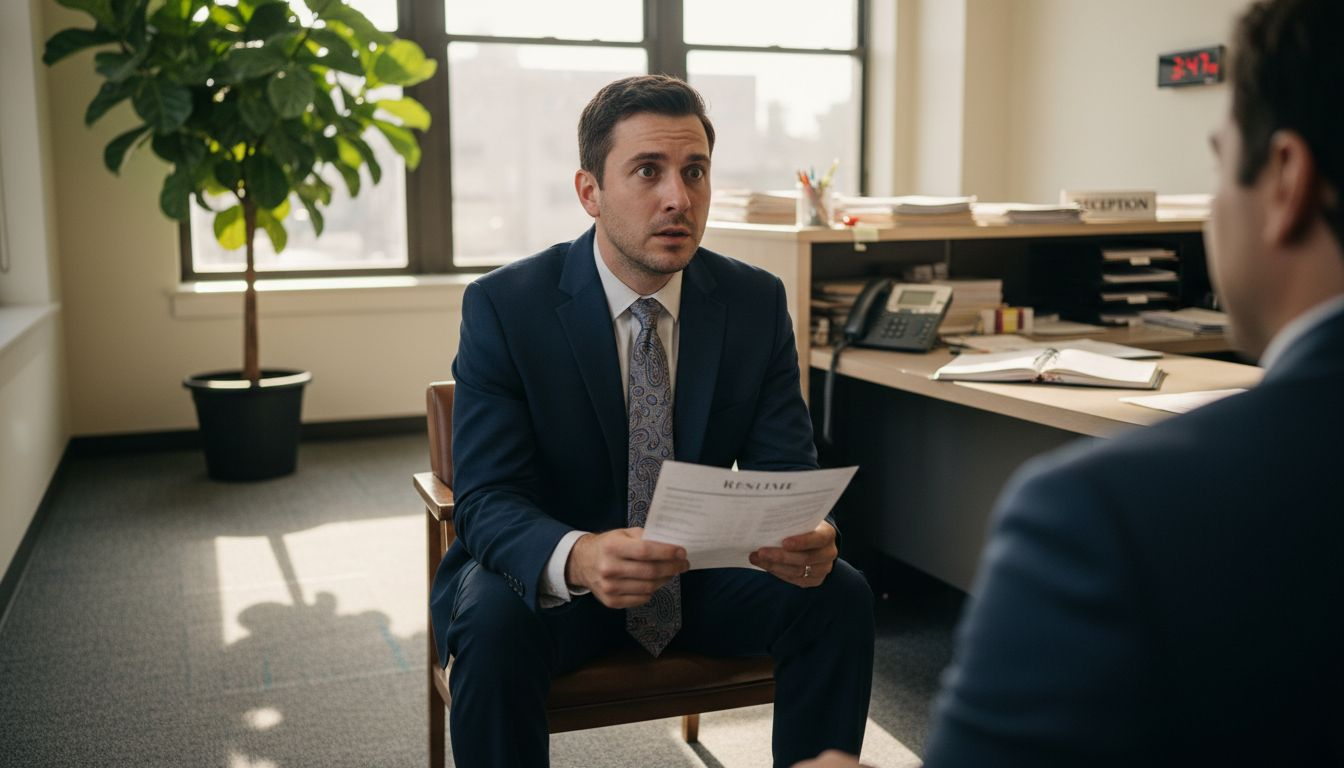
Most American job seekers face an overwhelming variety of interview formats during their careers. The difference between a phone screen, a panel session, or a technical challenge is more than just style—it often decides who lands the job. With over 60 percent of employers now using multiple types of interviews to assess candidates, knowing what sets each experience apart can make all the difference for your next big opportunity.
Table of Contents
- Defining Job Interview Types Clearly
- Traditional, Panel & Group Distinctions
- Case, Coding & Technical Formats
- One-Way, Video & Remote Methods
- Mock & Informational Interview Purposes
- When Stress Or Working Interviews Apply
Key Takeaways
| Point | Details |
|---|---|
| Understand Interview Types | Recognizing different interview formats helps tailor preparation strategies for increased success. |
| Adapt Interview Strategies | Customize communication styles based on the specific interview type to enhance candidate presentation. |
| Prepare for Technical Assessments | Familiarize yourself with common problem-solving methods and practice under time constraints for coding and case interviews. |
| Manage Interview Stress | Develop relaxation techniques to maintain composure during high-pressure interviews and working assessments. |
Defining job interview types clearly
Job interviews are not a one-size-fits-all experience. Professionals encounter various interview formats that test different skills and require unique preparation strategies. Understanding these distinct interview types can dramatically improve your chances of success.
Generally, job interviews fall into several core categories: screening interviews, phone interviews, video interviews, in-person interviews, panel interviews, and behavioral interviews. Each format serves a specific purpose in the candidate evaluation process. Screening interviews typically occur early in the hiring process to quickly assess basic qualifications, while behavioral interviews dive deep into past performance and potential future job performance.
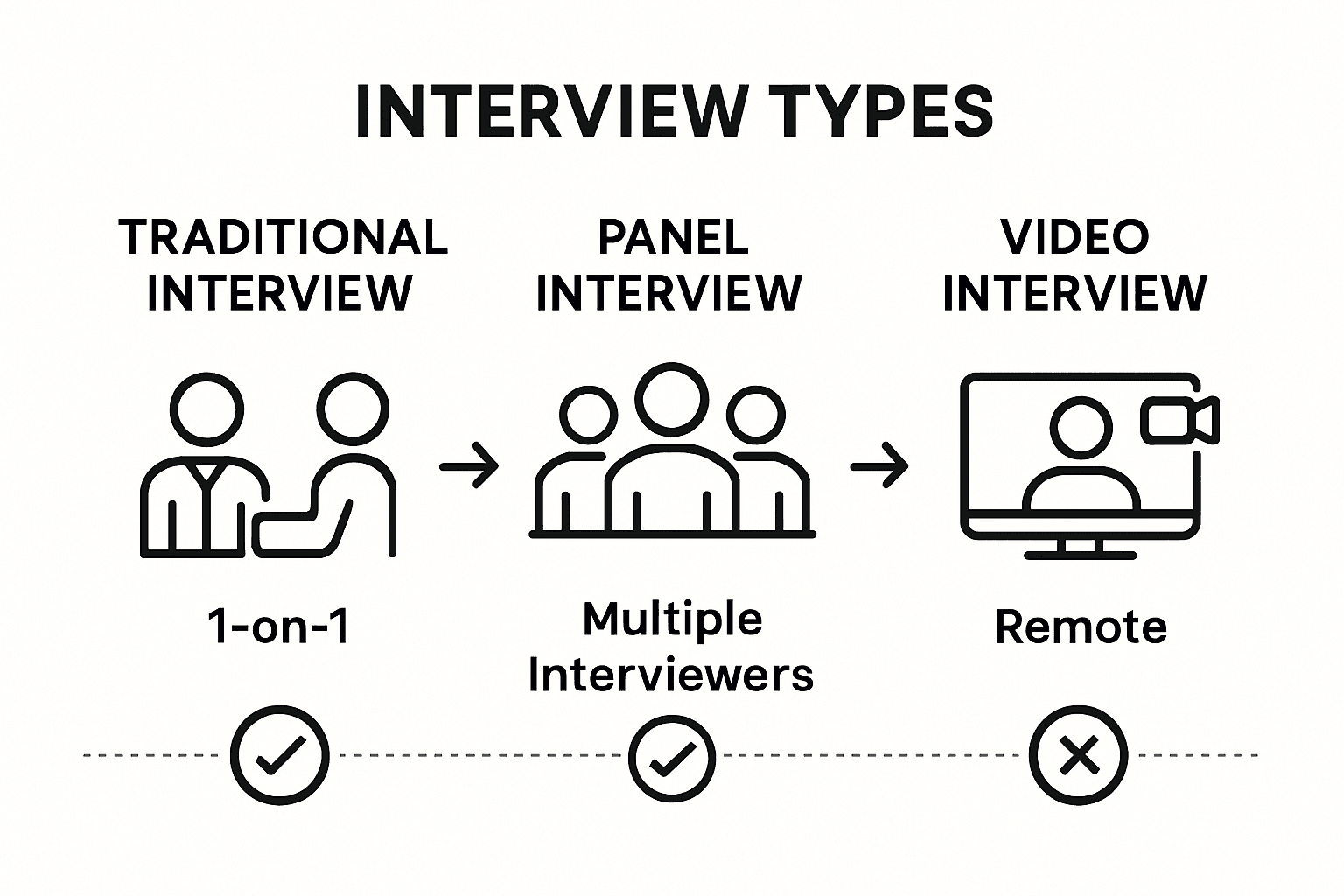
Phone and video interviews have become increasingly prevalent, especially in global and remote hiring scenarios. These virtual interview formats allow employers to conduct initial assessments efficiently, eliminating geographical barriers. In contrast, in-person interviews provide a more comprehensive evaluation, allowing direct personal interaction and assessment of non-verbal communication skills. Panel interviews introduce multiple interviewers simultaneously, testing a candidate’s ability to engage with different perspectives and maintain composure under varied questioning.
Pro Tip - Interview Preparation: Research the specific interview type you’ll encounter and practice accordingly, tailoring your communication style and preparation to match the format’s unique requirements.
Here’s a comparison of common job interview types and their main evaluation focus:
| Interview Type | Assessment Focus | Common Industries |
|---|---|---|
| Screening Interview | Basic qualifications | Most industries |
| Panel Interview | Communication with groups | Government, academia |
| Case Interview | Problem-solving, analytics | Consulting, management |
| Coding Interview | Programming, logic | Technology, software |
| Working Interview | On-the-job performance | Skilled trades, services |
Traditional, panel & group distinctions
Interview formats can be complex, with each type designed to evaluate candidates differently. University career services recognize multiple interview structures that help employers assess candidate potential through unique approaches.
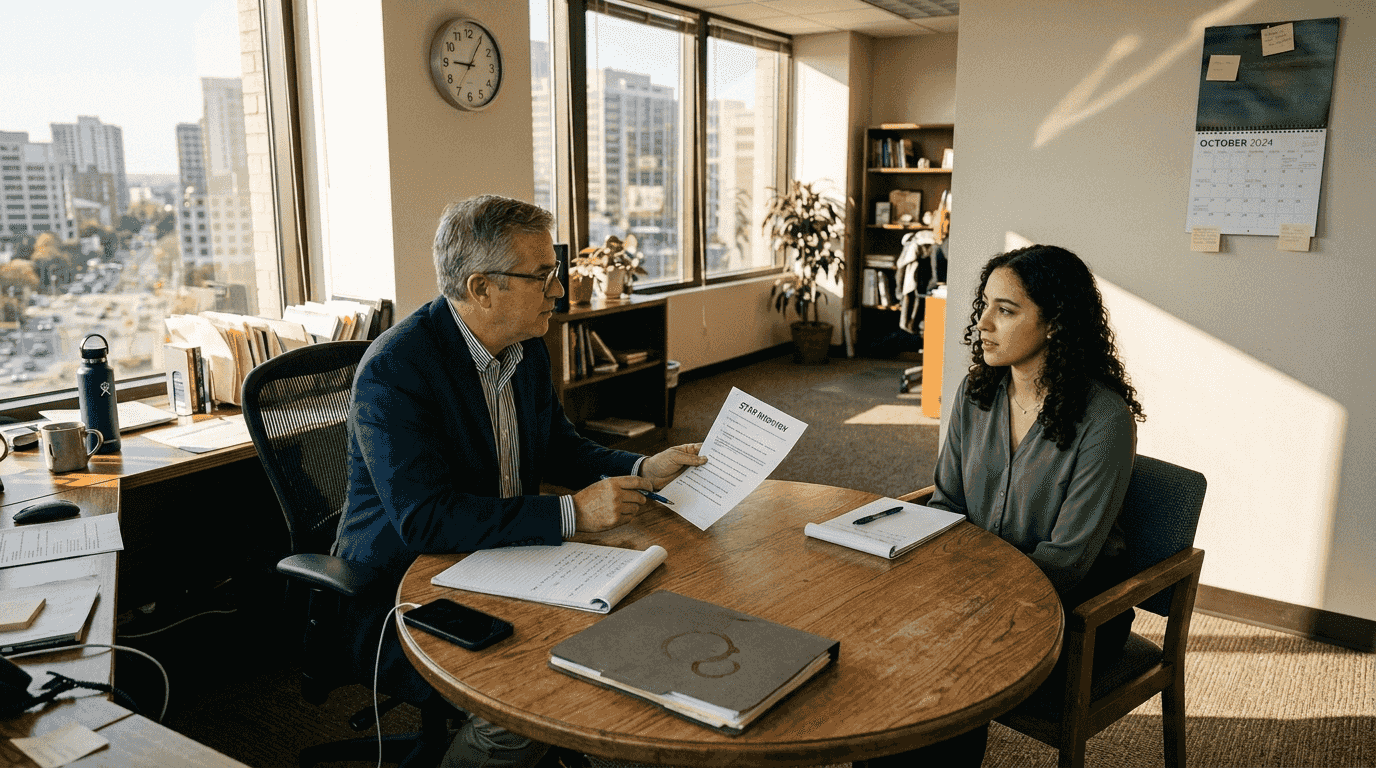
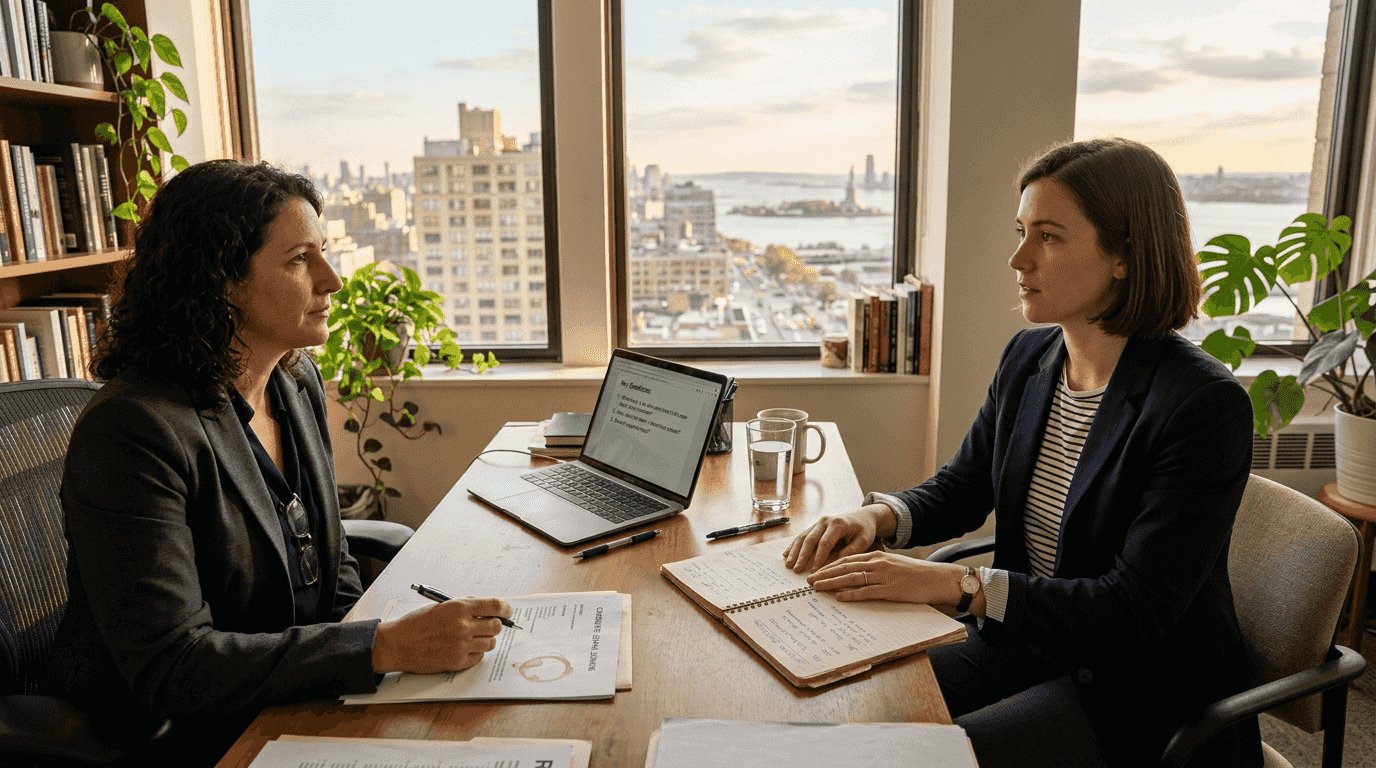
Traditional one-on-one interviews remain the most common format, featuring a single interviewer and candidate engaging in direct conversation. These interviews allow deep exploration of a candidate’s qualifications, experience, and professional background. In contrast, panel interviews involve multiple interviewers simultaneously questioning a candidate, providing a comprehensive assessment from different organizational perspectives. This format tests a candidate’s ability to manage complex social dynamics and respond coherently under varied questioning.
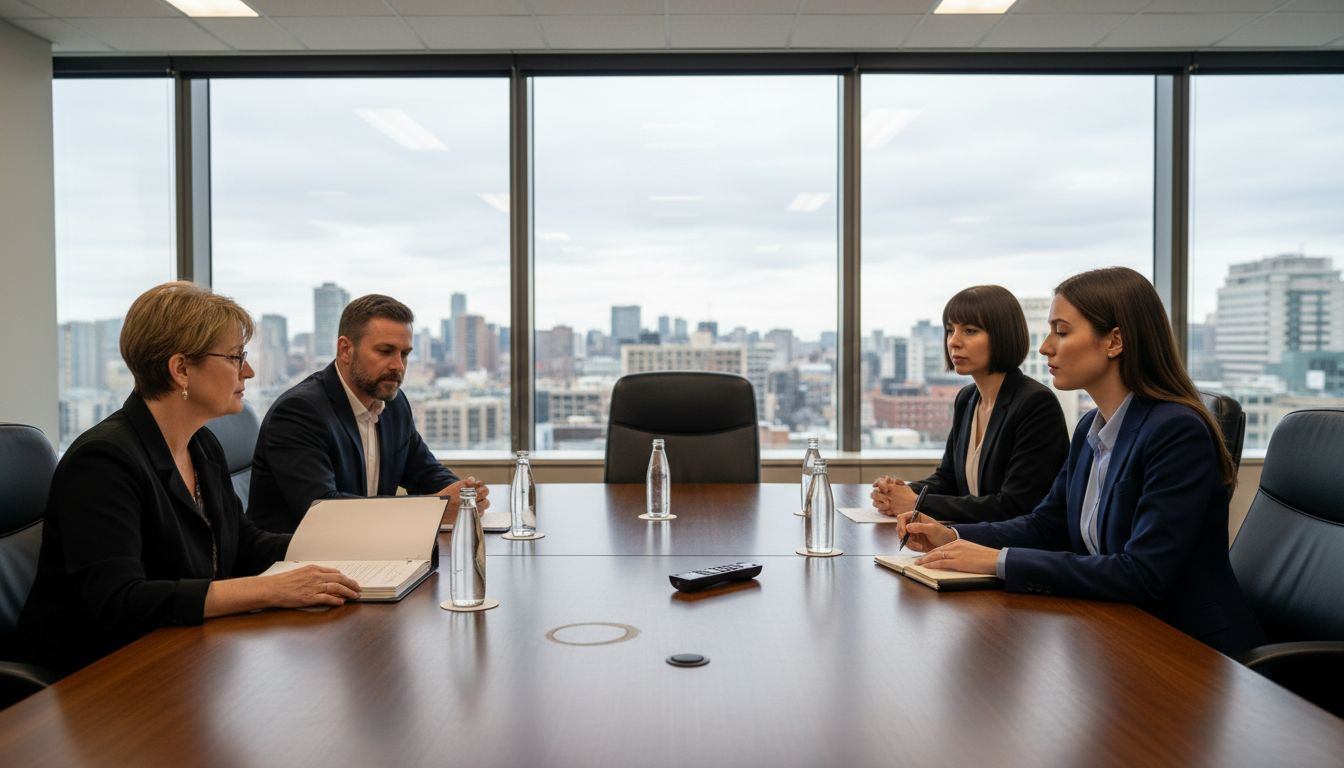
Group interviews represent another distinctive format where multiple candidates are evaluated simultaneously. These sessions assess collaborative skills, communication abilities, and how individuals perform under group pressure. Employers often use group interviews in competitive fields like sales, management, and customer service, where teamwork and interpersonal skills are critical. Participants are typically observed on their interaction styles, leadership potential, and ability to contribute meaningfully while respecting others’ input.
Pro Tip - Interview Strategy: Practice adaptability by preparing responses that demonstrate both individual excellence and collaborative potential, ensuring you shine in any interview format.
Case, coding & technical formats
Technical interviews represent specialized evaluation methods designed to assess a candidate’s specific professional skills. Case interviews simulate complex business problem-solving scenarios, challenging candidates to demonstrate analytical thinking and strategic reasoning in real-world contexts.
Coding interviews are particularly prevalent in technology and software development fields. These technical assessments evaluate programming proficiency through algorithmic challenges, requiring candidates to write clean, efficient code under time constraints. Tech companies use these interviews to gauge not just coding skills, but also problem-solving approaches, logical reasoning, and the ability to communicate technical solutions effectively.
Case interviews, typically used in consulting and management roles, present candidates with hypothetical business scenarios. Participants must break down complex problems, analyze data, and propose strategic recommendations. These interviews test critical thinking, quantitative reasoning, and communication skills. Similarly, technical interviews in engineering and scientific fields often involve hands-on problem-solving, whiteboard challenges, and in-depth discussions about technical expertise, project experiences, and potential solutions to complex technical problems.
Pro Tip - Technical Interview Preparation: Practice solving problems under time pressure, develop clear communication strategies for explaining your thought process, and familiarize yourself with common algorithmic patterns and problem-solving techniques.
One‑way, video & remote methods
Remote interviewing technologies have dramatically transformed the recruitment landscape. One-way interviews represent an innovative asynchronous approach where candidates record responses to predetermined questions, allowing employers maximum flexibility in candidate evaluation.
Video interviews have become increasingly sophisticated, enabling employers to conduct comprehensive assessments without geographical limitations. Academic career services recognize these remote interview methods as efficient screening tools, particularly for initial candidate assessments. These digital interviews typically involve live video conversations or pre-recorded response submissions, giving candidates the opportunity to showcase their communication skills and professional presence through digital platforms.
One-way interviews differ significantly from traditional interview formats by removing real-time interaction. Candidates receive a set of standardized questions and are given a specific timeframe to record their responses. This approach allows employers to evaluate multiple candidates systematically, comparing communication styles, articulation, and content quality without scheduling complex live interview sessions. Remote interview technologies often incorporate features like time limits, question randomization, and advanced assessment metrics to ensure fair and comprehensive candidate evaluation.
Pro Tip - Remote Interview Readiness: Test your technology in advance, choose a quiet professional background, ensure excellent lighting and sound quality, and practice speaking directly to the camera to create a genuine connection with potential employers.
Mock & informational interview purposes
Professional development requires strategic networking and interview preparation techniques. Informational interviews provide unique opportunities to explore career insights without formal job application pressure, allowing professionals to gain valuable industry perspectives directly from experienced practitioners.
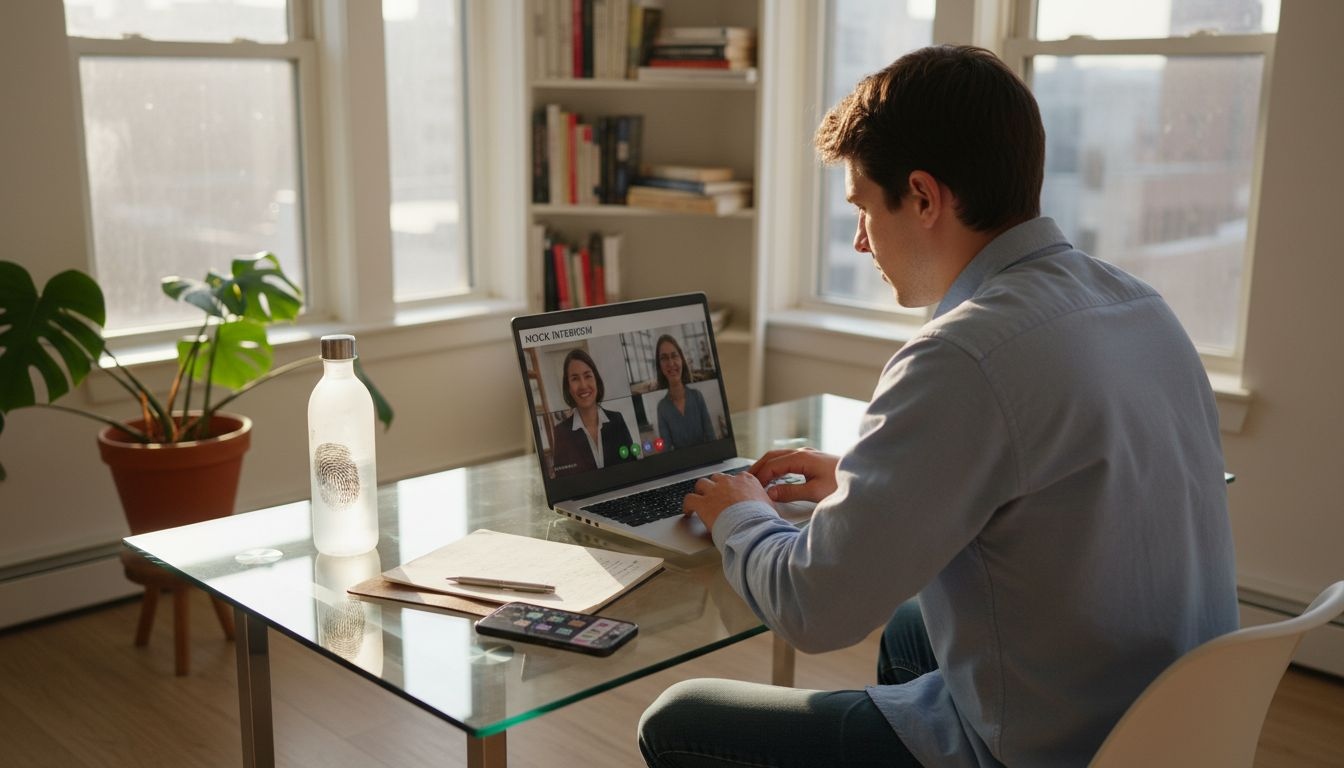
Mock interviews serve as critical preparation tools, simulating real-world interview scenarios to help candidates refine communication skills and build confidence. These practice sessions typically involve professional coaches, career counselors, or experienced colleagues who provide constructive feedback on verbal and non-verbal communication, answer delivery, and overall professional presentation. By recreating potential interview environments, mock interviews help candidates identify and address potential weaknesses in their interviewing approach.
Informational interviews differ significantly from traditional job interviews. These conversations focus on gathering industry knowledge, understanding specific career paths, and building professional networks rather than securing immediate employment. Candidates approach professionals in their desired field to learn about job roles, company cultures, industry trends, and potential career trajectories. The primary goal is knowledge acquisition and relationship building, creating opportunities for future professional connections and potential job recommendations.
Pro Tip - Strategic Networking: Approach informational interviews with genuine curiosity, prepare thoughtful questions in advance, and always send a thank-you note to demonstrate professionalism and maintain potential future connections.
When stress or working interviews apply
Workplace stress research reveals complex dynamics during professional evaluations, highlighting the significant psychological challenges candidates face during high-pressure interview scenarios. Stress interviews and working interviews represent unique assessment methods that deliberately test a candidate’s emotional resilience and performance under challenging conditions.
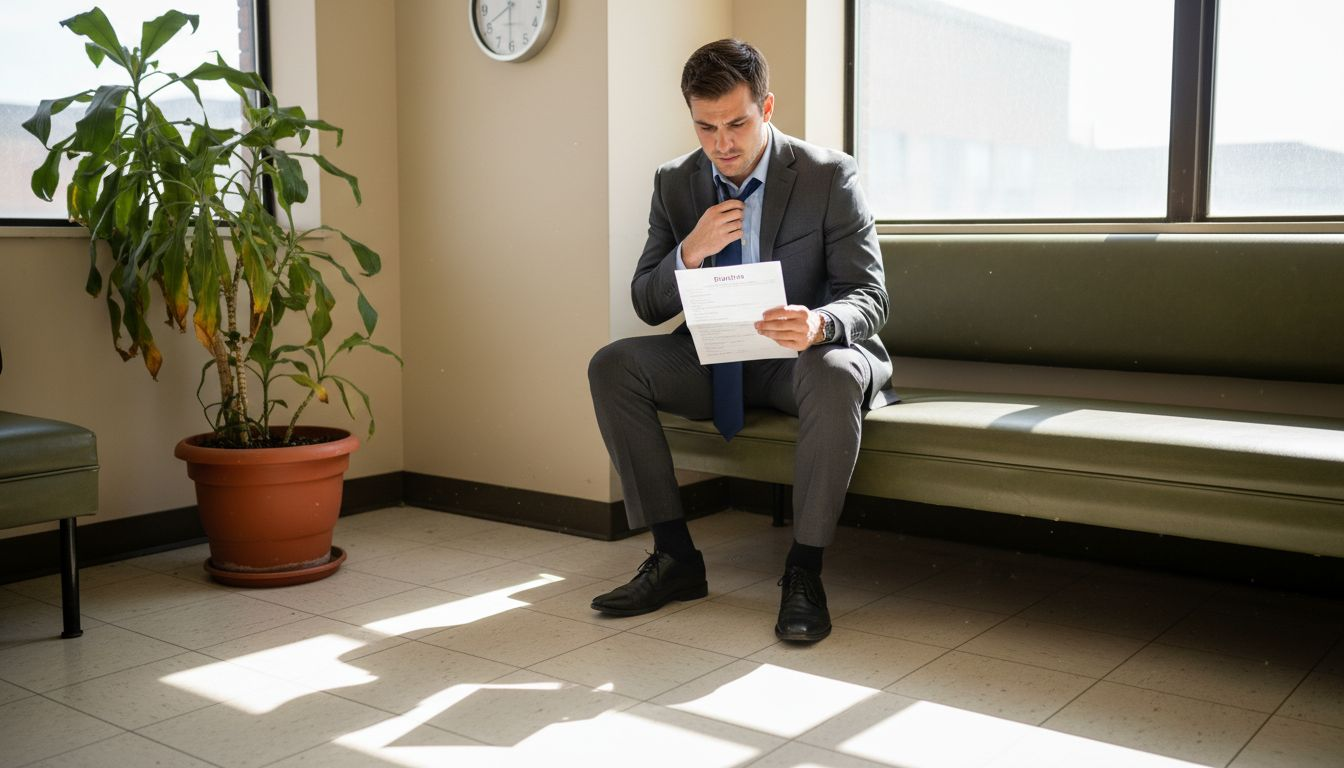
Stress interviews are intentionally designed to provoke emotional responses, evaluating how candidates handle pressure, unexpected challenges, and confrontational interactions. Interviewers might use tactics like rapid-fire questioning, uncomfortable silences, or deliberately challenging statements to observe a candidate’s composure, critical thinking, and emotional intelligence. These interviews are particularly common in high-stakes fields like management consulting, investment banking, and roles requiring strong stress management skills.
Working interviews offer a more practical approach, allowing employers to assess candidates’ actual job performance by observing them complete real work tasks. Unlike traditional interviews, these sessions involve hands-on demonstrations of professional skills, problem-solving abilities, and practical competence. Digital interview platforms have increasingly incorporated multi-modal stress assessment techniques, enabling more nuanced evaluations of candidate responses under pressure. These approaches provide employers with direct insights into a candidate’s technical capabilities, workflow efficiency, and adaptability in real-world work environments.
Pro Tip - Stress Management: Develop a pre-interview relaxation routine that includes deep breathing exercises, positive visualization, and mental reframing to transform interview anxiety into focused, confident energy.
Use this table to prepare for specific interview formats and adapt your strategy accordingly:
| Interview Format | Key Preparation Tip | Evaluation Emphasis |
|---|---|---|
| One-on-One | Practice detailed self-introduction | Depth of experience |
| Group | Demonstrate teamwork and leadership | Collaboration and dynamics |
| One-Way Video | Clarify responses concisely on camera | Articulation, presentation |
| Stress Interview | Stay calm under pressure | Emotional resilience |
| Mock/Informational | Gather feedback and industry insights | Improvement, networking |
Master Every Interview Type With Real-Time AI Support
Navigating the many types of job interviews can be overwhelming from traditional one-on-one sessions to high-pressure stress interviews or remote video formats. This article highlighted key challenges like managing emotional resilience, articulating answers clearly on camera, and adapting communication styles for panel or group interviews. You want to feel confident and prepared no matter which format you face. That is where a real-time AI job interview assistant can make all the difference.
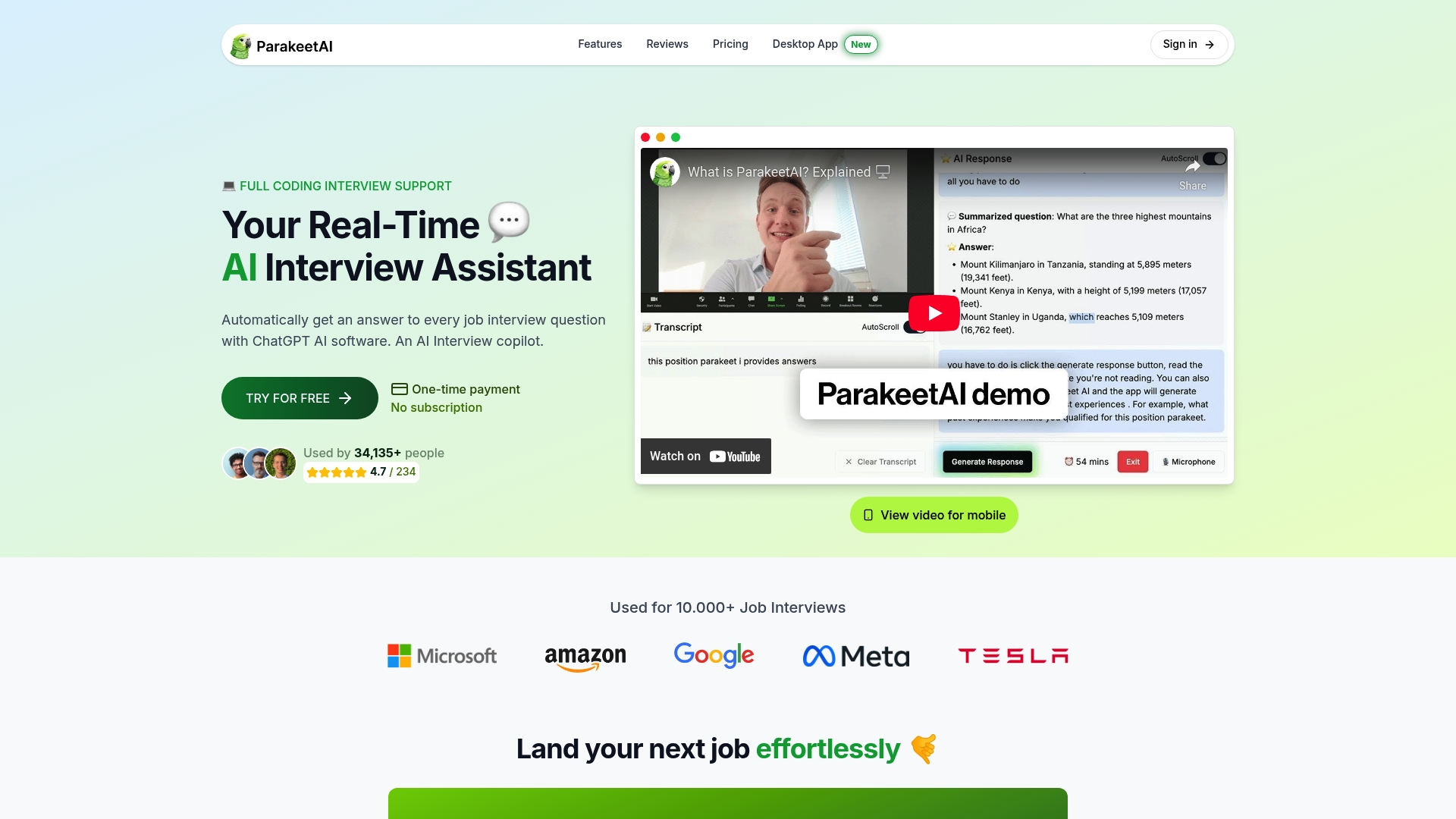
Experience how Parakeet AI listens to your interview and gives instant answer suggestions tailored to each question and situation. Whether you are preparing for a One-Way Video interview or facing a challenging Stress Interview, this tool sharpens your responses, helps manage pressure, and boosts your confidence. Stop guessing how to answer and start mastering every interview type today. Visit Parakeet AI now and transform your preparation into success.
Frequently Asked Questions
What are the different types of job interviews?
Job interviews typically fall into several categories, including screening interviews, phone interviews, video interviews, in-person interviews, panel interviews, and behavioral interviews. Each type serves a unique purpose in assessing a candidate’s qualifications and skills.
How should I prepare for a technical interview?
To prepare for a technical interview, practice solving problems under time constraints, and familiarize yourself with common coding patterns and algorithms. Additionally, develop your ability to articulate your thought process clearly while solving technical challenges.
What is the purpose of a panel interview?
A panel interview involves multiple interviewers questioning a candidate at the same time. This format allows for a comprehensive assessment of the candidate’s skills and abilities from different perspectives, testing their ability to interact with multiple stakeholders effectively.
What is the difference between a mock interview and an informational interview?
A mock interview simulates a real interview scenario, helping candidates practice their communication skills and receive feedback. In contrast, an informational interview focuses on networking and learning about an industry or job role, without the pressure of applying for a specific position.