
What Is AI Interview and Its Impact on Job Seekers

Facing an interview powered by artificial intelligence can feel intimidating for many job seekers, especially those just entering the tech field or fresh out of college. Misunderstandings about what AI systems can actually do create unnecessary anxiety and lead to unrealistic expectations. By revealing the true capabilities and limitations of AI interviews, this guide equips you to approach these assessments with confidence, clarify common misconceptions, and showcase your qualifications effectively.
Table of Contents
- AI Interviews Defined And Common Misconceptions
- Key Types And Formats Of AI Interviews
- How Real-Time AI Interview Assistants Function
- Scoring Logic And Data-Driven Candidate Assessment
- Benefits And Challenges For Job Seekers
- Best Practices For Using AI To Improve Interview Outcomes
Key Takeaways
| Point | Details |
|---|---|
| AI Interviews Enhance Candidate Assessment | AI interviews utilize advanced algorithms for evaluating candidates’ skills and fit, offering greater objectivity in initial assessments. |
| Understanding Limitations is Crucial | AI systems are tools to augment human judgment, not replace it; they may reflect biases from training data. |
| Mock Interviews and Practice are Vital | Job seekers should leverage AI tools for practice, focusing on clear and structured responses to improve performance. |
| Maintain Authenticity | Candidates should ensure their unique voice and professional identity remain evident, even when using AI technologies for preparation. |
AI interviews defined and common misconceptions
An AI interview is a technology-driven assessment process where artificial intelligence algorithms analyze job candidates’ responses, evaluating communication skills, content quality, and potential fit for a role. Unlike traditional interviews, these systems use advanced natural language processing to provide comprehensive candidate evaluations.
Common misconceptions about AI interviews persist, often rooted in misunderstandings about the technology’s actual capabilities. Significant confusion surrounds AI systems, with many people attributing unrealistic human-like qualities to these algorithmic tools. Job seekers frequently believe that AI interviews are completely objective, when in reality they can potentially reflect inherent biases from their training data.
Key misconceptions about AI interviews include:
- AI interviews can perfectly predict job performance
- These systems think exactly like human recruiters
- AI evaluations are 100% unbiased and neutral
- Algorithmic assessments replace human judgment entirely
In reality, AI interviews are sophisticated tools designed to augment human decision-making, not replace it entirely. Algorithmic processing differs significantly from human consciousness, lacking genuine understanding and relying on complex pattern recognition techniques.
Pro Tip: Practice speaking clearly and directly when participating in AI interviews, as these systems are most effective when candidates provide structured, concise responses that highlight key qualifications.
Key types and formats of AI interviews
AI interviews have evolved into sophisticated assessment tools with multiple distinct formats designed to evaluate job candidates comprehensively. Structured interview formats demonstrate the highest validity in candidate assessment, offering consistent and standardized evaluation methods.
The primary types of AI interviews include:
- Video Interview Analysis: Uses computer vision and natural language processing to assess verbal and non-verbal communication
- Text-Based Screening: Algorithmic evaluation of written responses and application materials
- Voice Analysis Interviews: Examines vocal tone, speech patterns, and emotional intelligence
- Chatbot Interviews: Conversational AI platforms that conduct initial candidate screenings
- Simulation-Based Assessments: Interactive scenarios testing problem-solving and situational judgment
Emerging AI Interview Technologies represent a complex landscape where AI-supported interview techniques vary significantly. These systems increase scalability and efficiency but still require human oversight due to contextual and emotional nuance limitations.
While AI interview technologies continue advancing, they remain tools to complement human decision-making rather than completely replace traditional recruitment processes. Candidates should view these technologies as opportunities to showcase their skills through structured, clear, and authentic communication.
Here’s a comparison of AI interview types and their unique assessment strengths:
| Interview Type | Primary Technology | Assessment Focus |
|---|---|---|
| Video Analysis | Computer Vision, NLP | Verbal, non-verbal skills |
| Text-Based Screening | NLP Algorithms | Written communication, clarity |
| Voice Analysis | Speech Recognition, NLP | Emotional tone, speech patterns |
| Chatbot Interview | Conversational AI | Initial response, engagement |
| Simulation Assessment | Interactive AI Scenarios | Problem-solving, situational judgment |
Pro Tip: Prepare for AI interviews by practicing clear, concise responses and understanding how algorithmic evaluation systems interpret communication patterns.
How real-time AI interview assistants function
Real-time AI interview assistants represent a groundbreaking approach to interactive job interview support, leveraging advanced natural language processing and machine learning technologies to provide instantaneous guidance. Generative AI conversational tools boost productivity by offering real-time support that particularly helps less experienced professionals navigate complex interview scenarios.
The core functional components of real-time AI interview assistants include:
- Natural Language Processing (NLP): Analyzes and interprets spoken or typed interview responses
- Contextual Understanding: Recognizes nuanced communication patterns and interview question subtexts
- Response Generation: Crafts suggested answers based on industry-specific knowledge and interview best practices
- Performance Tracking: Provides instant feedback on communication clarity, tone, and content relevance
- Adaptive Learning: Continuously improves recommendations through machine learning algorithms
These AI systems operate through a sophisticated multi-step process. They first capture the interview question, analyze its underlying intent, cross-reference with extensive knowledge databases, and then generate contextually appropriate response suggestions. The technology goes beyond simple keyword matching, employing deep learning models that understand semantic meaning and professional communication standards.
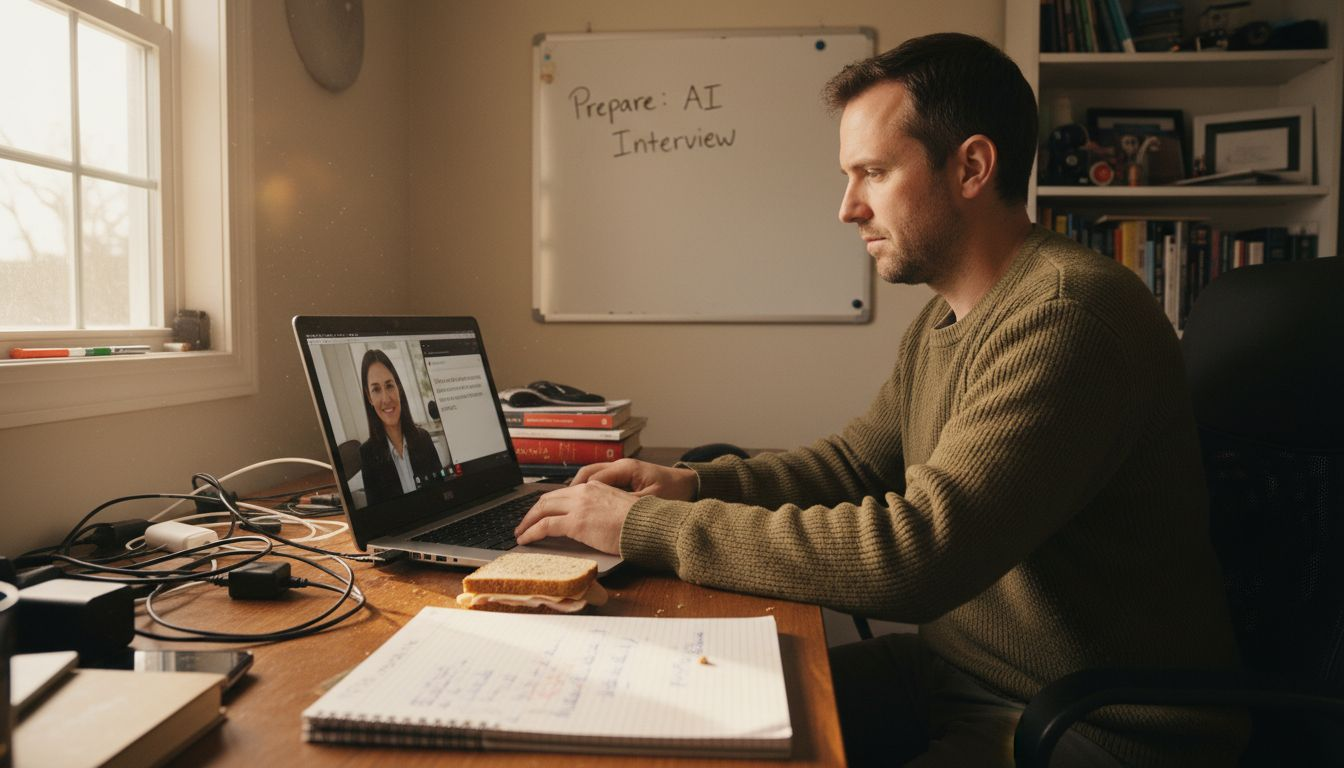
While powerful, these AI assistants are designed as collaborative tools that enhance human communication rather than replace personal authenticity. They serve as intelligent coaches, helping candidates articulate their skills more effectively and providing real-time insights into communication strategies.
Pro Tip: Practice using AI interview assistants to understand their capabilities, but always maintain your unique voice and professional authenticity during actual interviews.
Scoring logic and data-driven candidate assessment
AI-powered candidate assessment represents a sophisticated approach to evaluating job applicants through advanced technological mechanisms. Machine learning models enhance scoring consistency by providing objective, data-driven evaluations that minimize human bias and subjectivity.
The core scoring logic in AI interview assessments involves multiple sophisticated components:
- Linguistic Pattern Analysis: Examines communication clarity, vocabulary complexity, and response structure
- Sentiment and Tone Evaluation: Assesses emotional intelligence and professional communication skills
- Knowledge Domain Mapping: Cross-references responses against industry-specific expertise benchmarks
- Contextual Response Scoring: Analyzes how well candidates address underlying question intentions
- Comparative Performance Metrics: Benchmarks candidate responses against predefined professional standards
AI scoring technologies go beyond traditional assessment methods by integrating advanced AI models that provide immediate, nuanced insights. These systems combine complex algorithms with machine learning techniques to generate comprehensive candidate profiles that capture subtle communication and cognitive attributes.
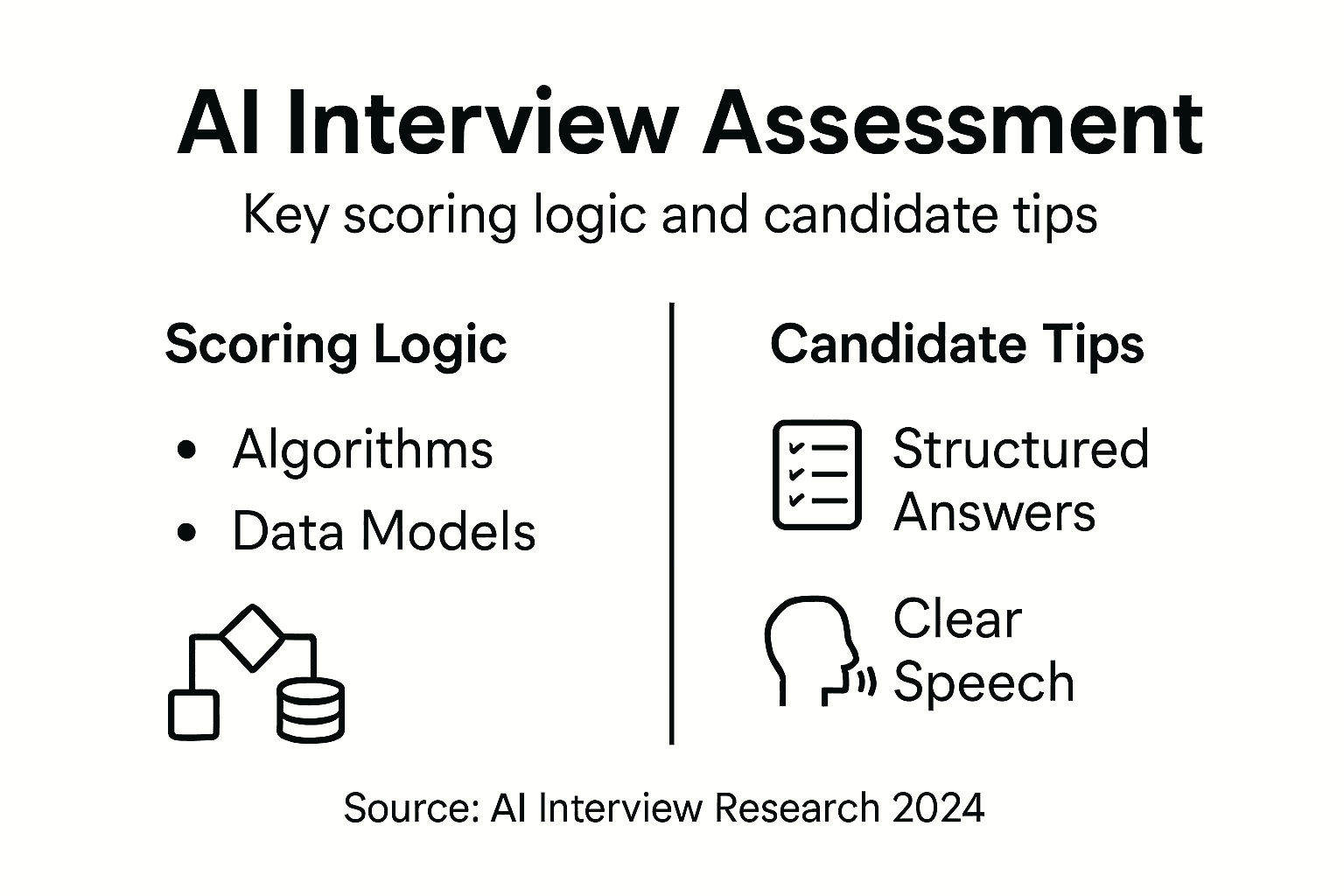
Despite their sophisticated capabilities, AI scoring systems are not infallible. They require continuous human oversight, algorithmic refinement, and ethical considerations to ensure fair and accurate candidate evaluations. The goal remains augmenting human decision-making, not replacing the fundamental human element in recruitment processes.
Pro Tip: Prepare for AI assessments by focusing on clear, structured communication and demonstrating both technical knowledge and interpersonal skills.
Benefits and challenges for job seekers
AI interview technologies are transforming the job application landscape, offering unprecedented opportunities and unique challenges for modern job seekers. AI recruitment processes enhance candidate evaluation by introducing more standardized, efficient screening methods that reduce traditional human biases.
Key benefits for job seekers include:
- Increased Accessibility: Broader opportunities for candidates regardless of geographical location
- Reduced Unconscious Bias: More objective initial screening processes
- Faster Application Cycles: Accelerated response times and interview scheduling
- Detailed Performance Feedback: Comprehensive insights into communication and skill presentation
- Practice and Preparation Tools: AI-powered mock interview platforms for skill development
Job seekers increasingly prefer AI interviewing methods due to perceived fairness and efficiency. However, significant challenges remain, such as potential algorithmic biases, technical limitations, and the need to adapt communication strategies for AI evaluation systems.
The most successful job seekers will learn to navigate these technological assessments by understanding AI interview mechanics, practicing clear and structured communication, and maintaining authenticity while meeting algorithmic evaluation standards. Technology should be viewed as a supportive tool that complements human interaction, not a replacement for genuine professional connection.
The following table summarizes major AI interview benefits and associated challenges for job seekers:
| AI Interview Benefit | Challenge to Overcome |
|---|---|
| Enhanced accessibility | Adapting to digital platforms |
| Lower initial bias | Algorithmic limitations |
| Faster feedback | Need for structured responses |
| Mock interview tools | Technical skill requirements |
| Comprehensive evaluations | Maintaining authenticity |
Pro Tip: Develop a balanced approach by practicing structured responses while preserving your unique professional personality during AI-assisted interviews.
Best practices for using AI to improve interview outcomes
AI interview preparation requires a strategic approach that balances technological tools with authentic professional communication. AI tools can effectively enhance interview readiness by providing targeted practice and personalized feedback mechanisms that help candidates refine their communication skills.
Key best practices for leveraging AI in interview preparation include:
- Mock Interview Training: Use AI platforms to simulate realistic interview scenarios
- Response Analysis: Utilize AI feedback to identify communication strengths and weaknesses
- Industry-Specific Preparation: Leverage AI tools that offer sector-specific interview insights
- Confidence Building: Practice consistently to reduce interview anxiety
- Technical Skill Demonstration: Develop concise ways to showcase professional competencies
Blended learning approaches maximize AI interview preparation effectiveness, emphasizing the importance of combining technological tools with human guidance. Successful candidates will view AI as a supportive coaching mechanism, not a replacement for genuine professional interaction.
The most effective AI interview strategies involve maintaining personal authenticity while strategically using technology to refine communication skills. Candidates should approach AI tools as collaborative partners in professional development, focusing on continuous improvement and self-awareness.
Pro Tip: Treat AI interview preparation tools as personal coaches, using their insights to enhance your natural communication style without losing your unique professional identity.
Elevate Your AI Interview Experience with Real-Time Support
Navigating AI interviews can feel overwhelming with complex scoring logic and algorithmic assessments evaluating every word and tone. If you’re striving to communicate clearly, maintain authenticity, and overcome the challenges posed by AI scoring systems this is the perfect moment to leverage a real-time AI interview assistant designed to boost your confidence and performance. Our solution listens to your interview in real time and instantly provides suggested answers tailored to your unique situation, helping you shine during every question.
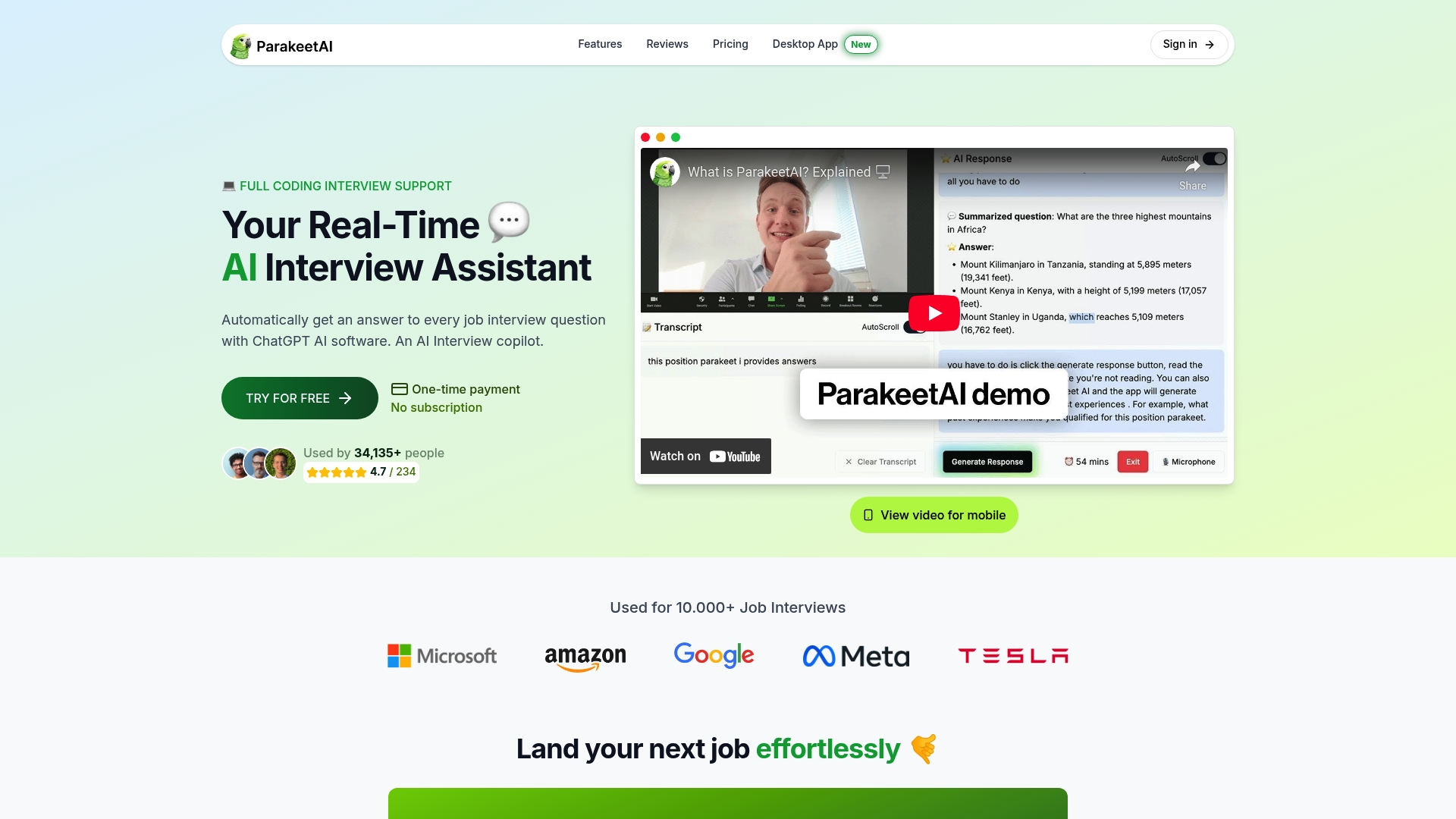
Discover how you can transform AI interview challenges into opportunities by practicing with an intelligent assistant that understands the technology and supports your communication style. Don’t let fears about bias or structured responses hold you back. Visit Parakeet AI today to get started. Learn more about how real-time AI interview assistants empower job seekers with immediate feedback and expert guidance so you can master the art of AI interviews now.
Frequently Asked Questions
What is an AI interview?
An AI interview is a technology-driven assessment where artificial intelligence analyzes job candidates’ responses to evaluate skills and suitability for a position, using techniques like natural language processing.
How do AI interviews differ from traditional interviews?
AI interviews use algorithms and data analysis for evaluation, providing a more standardized and potentially objective method, while traditional interviews rely on human judgment and subjective impressions.
What are common misconceptions about AI interviews?
Common misconceptions include the belief that AI interviews can perfectly predict job performance, that they are entirely unbiased, and that they can fully replace human judgment in the hiring process.
What should candidates do to prepare for an AI interview?
Candidates should practice clear, concise communication to highlight their qualifications and consider using AI tools for mock interviews to adapt their speaking style to algorithmic evaluation systems.