
Why Automate Job Interviews: Efficiency for HR Teams

Most american tech startups discover that manual interviews slow down their hiring, yet almost 60 percent now use some form of automation to accelerate recruitment. For HR professionals, mastering automated job interviews is no longer just an advantage but a necessity as talent competition increases globally. This guide unpacks how these digital tools work, what technologies drive them, and why automated interviews can offer faster, fairer candidate evaluation for startups working at speed.
Table of Contents
- Defining Automated Job Interviews And Key Concepts
- Types Of Job Interview Automation Tools
- How Automated Interviews Work For Startups
- Major Benefits: Speed, Consistency, And Fairness
- Risks, Limitations, And Legal Considerations
- Comparing Automation With Traditional Interview Methods
Key Takeaways
| Point | Details |
|---|---|
| Automated Interview Technologies | These tools leverage AI to streamline candidate assessments, providing consistent and scalable evaluations. |
| Role of Human Oversight | Maintaining human involvement is critical to ensure fairness and to validate the outcomes of automated assessments. |
| Legal and Ethical Challenges | Organizations must navigate data privacy laws and ensure AI systems do not perpetuate bias in hiring practices. |
| Hybrid Assessment Approaches | Combining automated initial screenings with human final evaluations can optimize recruitment effectiveness and candidate experience. |
Defining Automated Job Interviews and Key Concepts
Automated job interviews represent a technological evolution in recruitment, leveraging artificial intelligence and digital platforms to transform traditional hiring processes. These innovative screening methods use sophisticated software to assess candidates through digital interactions, often without direct human intervention. Automated interview technologies fundamentally reimagine how organizations evaluate potential talent.
The core mechanism of automated job interviews involves using AI-powered tools to conduct initial candidate screenings. These systems typically include multiple assessment components: video analysis, conversational AI interfaces, resume parsing, and algorithmic evaluation of candidate responses. Unlike traditional interviews, these digital assessments aim to provide more consistent, scalable, and potentially unbiased candidate evaluations by applying standardized assessment criteria across all applicants.
Key technological components of automated interviews include natural language processing, machine learning algorithms, and video analytics. These tools can analyze verbal communication, facial expressions, tone of voice, and textual responses to generate comprehensive candidate profiles. Advanced systems go beyond simple keyword matching, attempting to understand contextual nuance and candidate communication effectiveness. By integrating multiple assessment layers, AI-driven interview platforms seek to create more holistic evaluation methods that reduce human bias and improve initial candidate screening efficiency.
Here’s a summary of key technologies used in automated job interviews and their business impact:
| Technology Component | Function | Business Impact |
|---|---|---|
| Natural Language Processing | Analyzes text and speech in responses | Improves assessment accuracy |
| Machine Learning Algorithms | Detects patterns in candidate data | Enables data-driven decisions |
| Video Analytics | Evaluates facial expressions and tone | Provides deeper candidate insights |
| Conversational AI | Conducts automated interview questions | Accelerates initial screening |
Pro tip: When implementing automated interview tools, always maintain a human oversight mechanism to ensure fairness and validate AI-generated assessments.
Types of Job Interview Automation Tools
Job interview automation tools have emerged as sophisticated technological solutions designed to streamline and enhance recruitment processes. These digital platforms encompass a diverse range of technologies that address different stages of candidate assessment. Automated interview technologies provide HR teams with powerful instruments for evaluating potential talent more efficiently and systematically.
The primary categories of job interview automation tools include video screening platforms, conversational AI chatbots, skills assessment systems, and comprehensive recruitment management software. Video screening platforms allow candidates to record responses to preset questions, enabling recruiters to review interviews asynchronously and compare candidate presentations. Conversational AI chatbots can conduct initial screening interviews, asking standardized questions and evaluating candidate responses using natural language processing algorithms. Skills assessment systems focus on technical evaluation, offering coding challenges, problem-solving tests, and specialized domain-specific examinations that objectively measure candidate competencies.
Comprehensive recruitment management software represents the most advanced tier of interview automation tools. These integrated platforms combine multiple assessment methodologies, including video interviews, skills tests, personality assessments, and automated candidate ranking systems. By leveraging machine learning algorithms, interview automation solutions can analyze candidate data across multiple dimensions, providing nuanced insights that go beyond traditional evaluation methods. Such tools help organizations reduce hiring bias, accelerate recruitment timelines, and make more data-driven talent acquisition decisions.
Pro tip: Select interview automation tools that offer customizable assessment frameworks and provide transparent evaluation criteria to maintain fairness and candidate trust.
How Automated Interviews Work for Startups
Startups are uniquely positioned to leverage automated interview technologies, transforming their recruitment processes with unprecedented efficiency and scalability. AI-powered interview platforms enable rapid candidate screening that addresses the fast-paced hiring needs of emerging companies. These sophisticated systems allow startups to conduct initial candidate assessments quickly, reducing time-to-hire and minimizing recruitment overhead.
The typical workflow for automated interviews in startup environments involves multiple strategic stages. Initially, candidates submit applications and are automatically routed through a digital screening process. Advanced AI algorithms analyze resume content, screening questions, and initial video or text responses to create comprehensive candidate profiles. Conversational AI chatbots can conduct preliminary interviews, asking standardized questions and evaluating responses using natural language processing. These tools generate structured data points that help startup recruiters make more informed initial screening decisions, effectively filtering large candidate pools without manual intervention.
Technologically, these interview automation systems integrate complex machine learning models that assess candidate potential beyond traditional metrics. Startup recruitment platforms customize interview workflows to match specific job requirements, analyzing verbal and non-verbal communication cues, technical skills, and cultural fit. By leveraging advanced algorithms, these tools can generate nuanced candidate insights, helping startup teams identify top talent more efficiently than traditional recruitment methods. The systems continuously learn and improve, adapting their assessment criteria based on successful hiring outcomes and organizational performance data.
Pro tip: Configure your automated interview tools with clear, transparent evaluation criteria and regularly audit the AI’s assessment algorithms to ensure fairness and reduce potential unconscious bias.
Major Benefits: Speed, Consistency, and Fairness
Automated interview technologies deliver transformative advantages for modern HR teams, fundamentally reshaping recruitment strategies through unprecedented efficiency. AI-driven candidate assessment.pdf) eliminates traditional bottlenecks, enabling organizations to process candidate evaluations with remarkable speed and precision. By automating repetitive screening tasks, these tools dramatically compress hiring timelines, allowing HR professionals to focus on strategic talent acquisition rather than administrative processes.

Consistency represents another critical benefit of automated interview platforms. Unlike human interviewers who may unconsciously introduce variability through personal biases, AI systems apply standardized evaluation criteria across all candidates. Interview automation technologies generate uniform assessment frameworks that compare candidate responses using objective metrics. This approach minimizes subjective interpretations, ensuring that each applicant receives an equitable evaluation based on skills, experience, and potential rather than arbitrary human judgments.
Fairness emerges as a paramount advantage of automated interviewing systems. Advanced algorithms can systematically reduce unconscious human biases that traditionally disadvantage certain candidate groups. By implementing transparent, data-driven assessment protocols, these technologies create more inclusive hiring environments that evaluate candidates based on merit. Machine learning models can be configured to recognize and mitigate potential discriminatory patterns, promoting diversity and providing equal opportunities for talented individuals regardless of background, gender, ethnicity, or personal characteristics.
Pro tip: Regularly calibrate your AI interview tools by comparing their assessment outcomes against actual job performance data to continuously improve evaluation accuracy and fairness.
Risks, Limitations, and Legal Considerations
Automated interview technologies, while promising, introduce complex legal and ethical challenges that organizations must carefully navigate. AI recruitment systems are increasingly classified as high-risk technologies, requiring rigorous compliance with emerging regulatory frameworks. These sophisticated tools demand meticulous management to ensure they do not inadvertently perpetuate systemic biases or violate fundamental legal protections for job candidates.
Data privacy and protection represent significant legal considerations for automated interviewing platforms. Regulatory compliance requirements vary dramatically across different jurisdictions, compelling organizations to develop nuanced approaches to candidate data management. Companies must implement robust mechanisms for obtaining informed consent, protecting personal information, and providing candidates with clear explanations about how their data will be collected, processed, and utilized during automated interview assessments. This necessitates transparent communication protocols and comprehensive data handling strategies that align with regulations like the European Union’s General Data Protection Regulation (GDPR).
Anti-discrimination legal frameworks pose another critical challenge for automated interview technologies. While these systems aim to reduce human bias, they can potentially introduce algorithmic biases that perpetuate systemic inequalities. Machine learning models might inadvertently encode historical discrimination patterns present in training data, leading to potential disparate impact against protected candidate groups. Organizations must therefore implement continuous auditing processes, regularly testing their AI interview tools for fairness, developing sophisticated mitigation strategies, and maintaining mechanisms for human oversight and intervention when potential biases are detected.
Pro tip: Develop a comprehensive AI governance framework that includes regular algorithmic audits, transparent documentation of assessment methodologies, and clear mechanisms for candidate appeal and human review.
Comparing Automation With Traditional Interview Methods
Traditional recruitment methods and automated interview technologies represent fundamentally different approaches to candidate assessment, each with distinct strengths and limitations. Interview performance comparisons reveal nuanced differences in evaluation effectiveness, candidate experience, and overall recruitment outcomes. While traditional face-to-face interviews rely on interpersonal dynamics and subjective human judgment, automated systems introduce data-driven, standardized evaluation frameworks.
The core distinctions between traditional and automated interview methods emerge across multiple dimensions of the recruitment process. Traditional interviews depend heavily on personal interactions, allowing recruiters to assess soft skills, cultural fit, and interpersonal communication through direct engagement. In contrast, AI-driven recruitment technologies prioritize objective, consistent candidate assessment using predefined algorithmic criteria. Automated systems can process significantly larger candidate volumes, apply uniform evaluation standards, and reduce individual interviewer biases that frequently compromise traditional screening approaches.
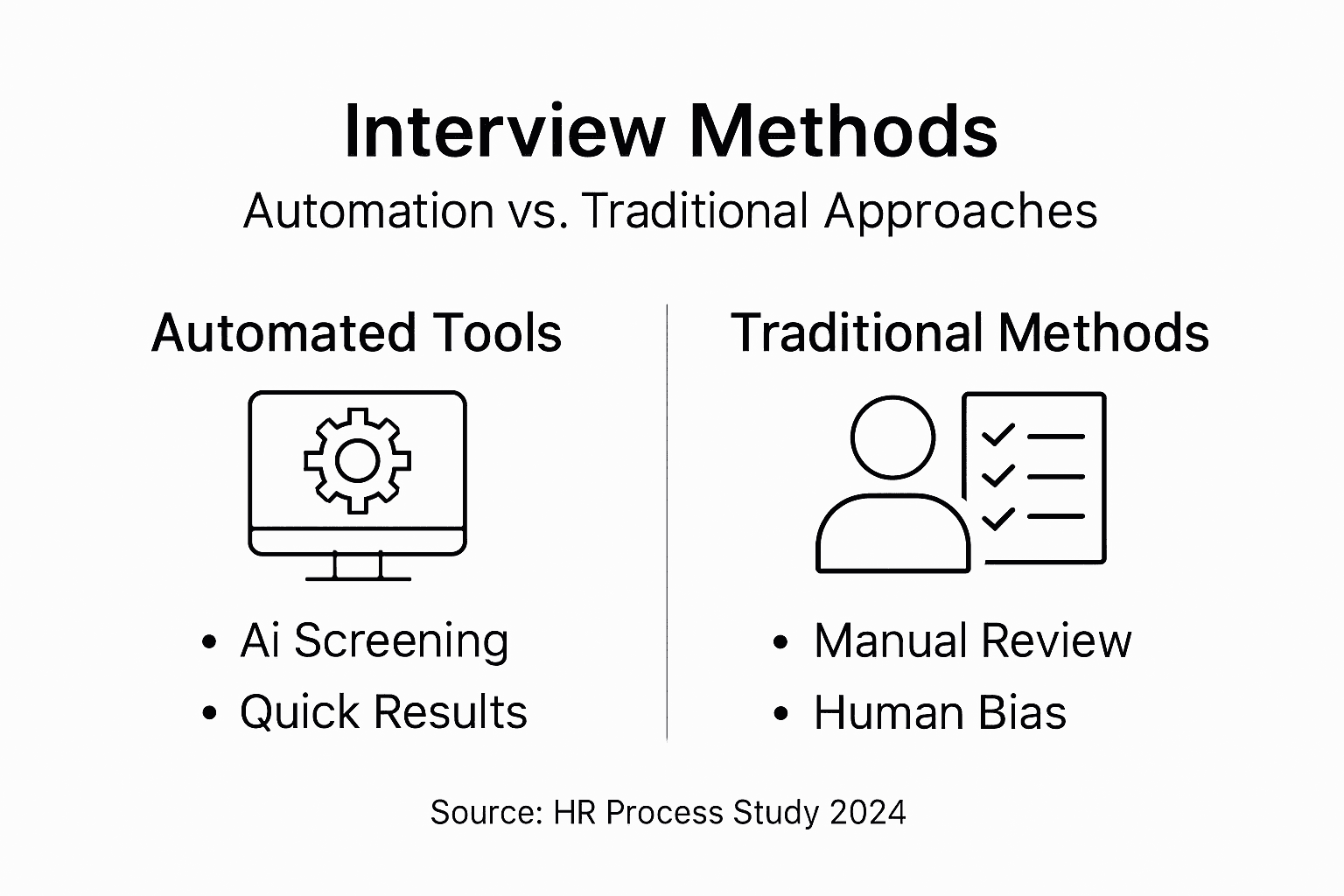
However, the technological transformation of interviewing is not without complexity. While automated tools offer unprecedented efficiency and scalability, they cannot entirely replicate the nuanced human elements of personal interaction. Traditional methods excel in capturing subtle communication cues, emotional intelligence, and interpersonal dynamics that sophisticated algorithms might miss. The most effective recruitment strategies increasingly involve hybrid approaches that combine technological efficiency with strategic human oversight, leveraging automated tools for initial screening while reserving final candidate evaluations for human decision makers who can assess holistic candidate potential.
The following table compares traditional and automated interview methods across major dimensions:
| Aspect | Traditional Interviews | Automated Interviews |
|---|---|---|
| Consistency | Varies by interviewer | Standardized evaluation criteria |
| Scalability | Limited by human resources | Handles large applicant volumes |
| Bias Risk | Subject to unconscious bias | Reduced by algorithmic oversight |
| Personal Insight | High, relies on soft skills | Lower, focuses on quantifiable data |
Pro tip: Design a balanced interview process that uses automated tools for initial screening and standardized assessments, while maintaining human involvement for final candidate selection and complex role evaluations.
Unlock Efficiency and Fairness in Hiring with AI-Powered Interview Assistance
The article highlights the urgent need for speed, consistency, and fairness in job interviews. Many HR teams struggle with biased assessments and lengthy manual screenings. Concepts like natural language processing and machine learning are revolutionizing recruitment, but without the right tools, startups and HR professionals may find automated interviews complex to implement effectively. This is where an intelligent assistant can transform your hiring process by providing real-time AI support that listens and responds instantly during interviews, helping reduce bias while accelerating candidate evaluation.
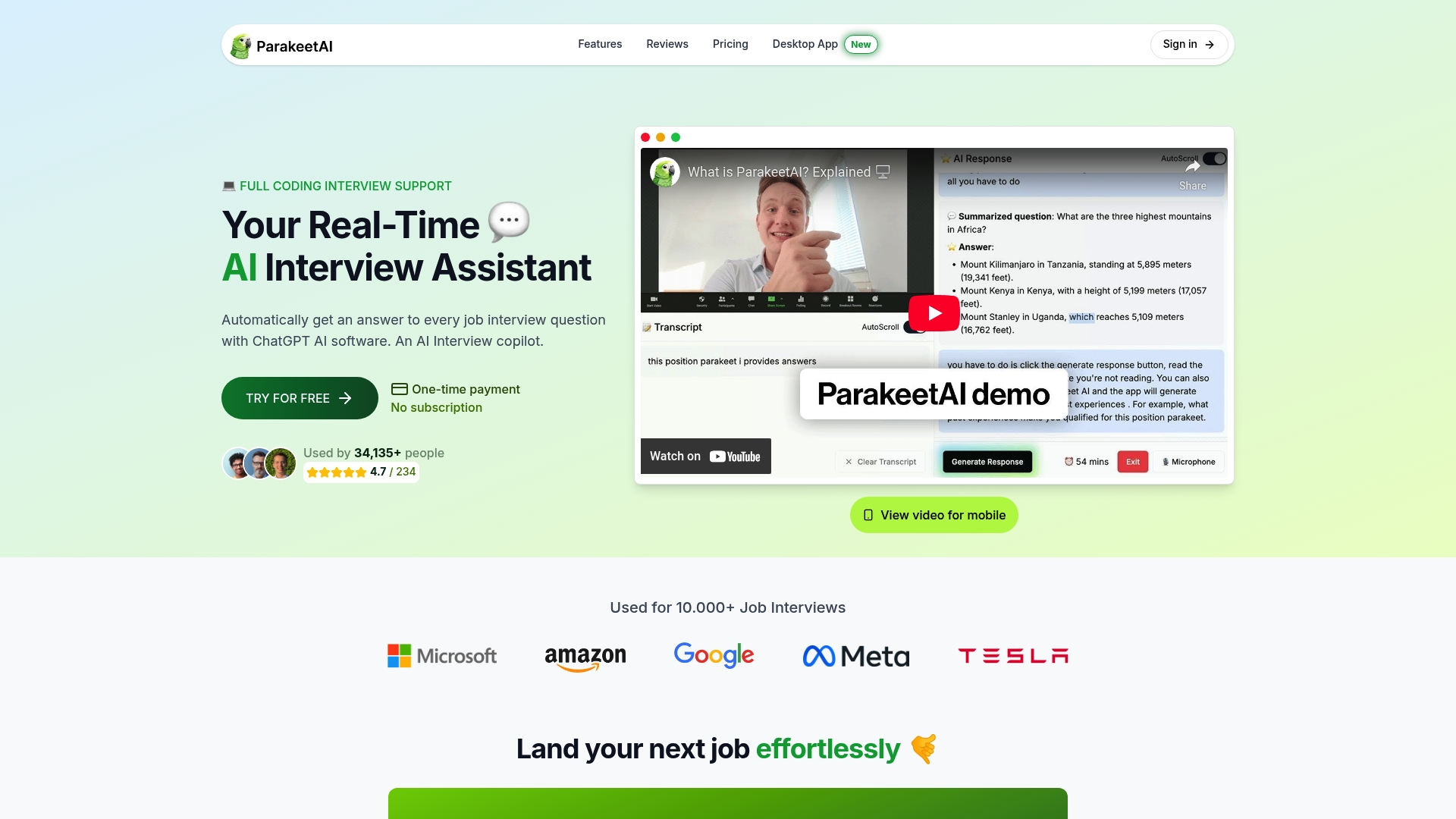
Experience how a real-time AI interview assistant from Parakeet AI empowers HR teams to overcome common hiring challenges discussed in the article. With our technology, you get immediate, data-driven answers to every question, enabling consistent and unbiased evaluations. Don’t let traditional bottlenecks slow down your recruitment. Take control now and boost your team’s productivity while ensuring fairness by visiting https://parakeet-ai.com and start transforming interviews into seamless, efficient experiences today.
Frequently Asked Questions
What are automated job interviews?
Automated job interviews use artificial intelligence and digital platforms to conduct candidate screenings without direct human intervention, leveraging technology to improve the recruitment process.
What are the benefits of using automated interview technologies for HR teams?
Automated interview technologies enhance recruitment efficiency, provide consistent evaluations, reduce bias, and streamline hiring processes by allowing HR teams to focus on strategic talent acquisition tasks.
How do automated interview tools work?
Automated interview tools typically involve candidates submitting applications that are analyzed by AI algorithms. These systems can conduct preliminary interviews, evaluate responses, and generate comprehensive candidate profiles through video analysis and natural language processing.
What risks and challenges are associated with automated interviews?
Automated interviews can introduce legal and ethical challenges, including data privacy concerns and potential algorithmic biases. Organizations must implement regular audits and maintain transparency in their assessment processes.
Recommended
- Understanding Why Automated Interview Tools Matter
- Interview Automation: Transforming Global Job Search
- what is interview automation - ParakeetAI
- why automated interview tools - ParakeetAI
- Security Recruitment Applicant Tracker
- RPA és AI: Az automatizáció jövője - AI tanácsadás, AI alkalmazás - Stratify AI