
Why Use AI for Interview Consistency: Complete Guide

More than 60 percent of hiring managers say unconscious bias affects their decisions in interviews, leading to missed opportunities and unfair outcomes. In today’s competitive job market, ensuring consistent and fair candidate evaluation is crucial for building strong, diverse teams. AI-powered interview consistency changes the game by providing organizations with reliable tools to assess every applicant on equal terms, offering a smarter approach to fair and effective hiring.
Table of Contents
- What Is AI-Powered Interview Consistency?
- Types of AI Used in Interviews Today
- How AI Improves Interview Fairness and Reliability
- Reducing Bias and Human Error in Interviews
- Challenges, Limitations, and Ethical Considerations
Key Takeaways
| Point | Details |
|---|---|
| Standardization | AI-powered interview consistency introduces uniform evaluation criteria, ensuring all candidates are assessed fairly and objectively. |
| Bias Mitigation | By minimizing human biases and implementing data-driven decision-making, AI enhances the fairness of the recruitment process. |
| Advanced Technologies | Utilizing NLP, computer vision, and machine learning, AI provides comprehensive analysis and insights into candidate skills and potential. |
| Ethical Considerations | Organizations must prioritize algorithmic transparency and continuous monitoring to prevent unintended bias and protect candidate privacy. |
What Is AI-Powered Interview Consistency?
AI-powered interview consistency is a transformative approach that leverages artificial intelligence to standardize and optimize the recruitment process. According to mdpi, this technology aims to minimize human biases by implementing uniform evaluation criteria across all candidate assessments.
At its core, AI-powered interview consistency transforms traditional hiring practices by introducing objective, data-driven methodologies. The primary goal is to create a level playing field where every candidate experiences the same assessment standards. en.Wikipedia highlights how AI-driven platforms analyze candidates’ responses and behaviors to provide consistent and fair evaluations, reducing the potential for subjective decision-making.
Key characteristics of AI-powered interview consistency include:
- Standardized evaluation metrics
- Reduced human bias
- Comprehensive candidate analysis
- Objective performance scoring
With Why Use AI for Job Interviews: Complete Guide, organizations can transform their recruitment strategies by implementing intelligent technologies that ensure every candidate is assessed using the same rigorous, unbiased standards. This approach not only enhances fairness but also significantly improves the overall quality of talent acquisition.
Types of AI Used in Interviews Today
Artificial intelligence has revolutionized interview processes through multiple sophisticated technologies. arxiv reveals that current AI applications encompass three primary domains: natural language processing (NLP), computer vision, and machine learning algorithms, each playing a critical role in comprehensive candidate evaluation.
Natural Language Processing (NLP) enables AI systems to analyze textual and verbal responses with unprecedented depth. These advanced algorithms can assess communication skills, detect nuanced language patterns, and evaluate candidate articulation beyond traditional human assessment techniques. By processing linguistic subtleties, NLP provides insights into a candidate’s communication effectiveness and potential cultural fit.
Key AI technologies in modern interviews include:
- Computer Vision: Analyzing non-verbal communication and body language
- Machine Learning Algorithms: Predicting candidate performance based on historical data
- Speech Recognition: Evaluating vocal tone, confidence, and communication clarity
- Sentiment Analysis: Understanding emotional intelligence and psychological markers
With the ai interview best practices guide, organizations can leverage these cutting-edge AI technologies to create more objective, comprehensive, and insightful candidate evaluation processes. By integrating multiple AI technologies, companies can significantly enhance their recruitment strategies and identify top talent more effectively.

How AI Improves Interview Fairness and Reliability
AI has emerged as a powerful tool for transforming interview processes by addressing fundamental challenges of human bias and inconsistency. According to mdpi, artificial intelligence enhances interview fairness by applying uniform evaluation criteria, systematically reducing subjective human biases that traditionally impact hiring decisions.
Objective Assessment is the cornerstone of AI-driven interview technologies. arxiv demonstrates that AI can effectively mitigate cultural biases by focusing exclusively on job-related competencies rather than demographic factors. This approach promotes a more equitable selection process by evaluating candidates purely on their abilities, skills, and potential performance.
Key mechanisms through which AI improves interview fairness include:
- Standardized scoring algorithms
- Consistent question evaluation
- Elimination of unconscious human prejudices
- Data-driven candidate comparison
- Comprehensive skill and competency analysis
With the Understanding AI Interview Analysis Explained Clearly guide, organizations can dive deeper into how these intelligent systems create more transparent, reliable, and unbiased recruitment processes. By leveraging advanced AI technologies, companies can transform their hiring strategies to identify top talent more effectively and equitably.
Reducing Bias and Human Error in Interviews
arxiv reveals that AI systems offer a groundbreaking approach to identifying and correcting biases inherent in traditional interview processes. By analyzing complex patterns and making data-driven decisions, artificial intelligence can systematically reduce the influence of subjective human judgments that often compromise candidate evaluations.
Algorithmic Precision emerges as a critical tool in minimizing human error. However, en.Wikipedia cautions that addressing potential algorithmic bias requires careful consideration. This means ensuring AI systems are trained on diverse, representative datasets to prevent inadvertently perpetuating existing prejudices.
Key strategies for reducing bias through AI include:
- Implementing standardized evaluation frameworks
- Using machine learning to detect subtle discriminatory patterns
- Creating transparent scoring mechanisms
- Continuously auditing and recalibrating AI assessment algorithms
- Developing comprehensive, inclusive training datasets
With the What Is AI in Interviewer Training? Complete Guide, organizations can gain deeper insights into developing more equitable and objective hiring processes. By embracing AI technologies that prioritize fairness and accuracy, companies can transform their recruitment strategies to identify talent based on genuine merit and potential.
Here’s a comparison of the main benefits and challenges of AI-powered interview consistency:
| Aspect | Benefits | Challenges |
|---|---|---|
| Bias Reduction | Standardized scoring Objective assessments |
Potential algorithmic bias Need for diverse training data |
| Fairness | Equal evaluation criteria Consistent candidate experience |
Transparency issues Ethical concerns |
| Efficiency | Faster candidate screening Automated analysis |
Loss of human empathy Complex oversight |
| Data Handling | Data-driven decisions Comprehensive analysis |
Privacy risks Regulatory compliance |

Challenges, Limitations, and Ethical Considerations
arxiv highlights a critical challenge in AI-driven interviews: the ‘black-box’ nature of algorithmic decision-making. This opacity creates significant transparency issues, making it difficult for candidates and organizations to understand how specific interview evaluations are generated, which can potentially undermine trust in the entire recruitment process.
Ethical Considerations are paramount in AI interview technologies. en.Wikipedia emphasizes the critical need for continuous monitoring and updating of AI models to ensure they do not inadvertently discriminate against specific demographic groups. This requires a proactive approach to identifying and mitigating potential systemic biases that could compromise the fairness of candidate assessments.
Key challenges in AI-powered interviewing include:
- Maintaining algorithmic transparency
- Preventing unintentional demographic bias
- Protecting candidate privacy and data rights
- Balancing technological efficiency with human empathy
- Ensuring legal and regulatory compliance
With the Why Use AI Job Interview Assistant for Better Hiring guide, organizations can develop a nuanced understanding of navigating the complex ethical landscape of AI-driven recruitment. By implementing rigorous oversight and maintaining a commitment to fairness, companies can harness the power of AI while preserving the fundamental principles of equitable hiring practices.
Boost Interview Consistency and Fairness with Real-Time AI Support
Struggling to achieve unbiased and consistent interview evaluations Is the challenge of reducing human error and bias holding back your hiring process The “Why Use AI for Interview Consistency: Complete Guide” article highlights key pain points like standardized scoring and objective assessment These are exactly the issues that a real-time AI job interview assistant can solve by listening carefully to your interview and providing instant, accurate answers to every question Using AI for interview consistency means you get uniform evaluation criteria, reduce unconscious biases, and create a fair experience for every candidate.
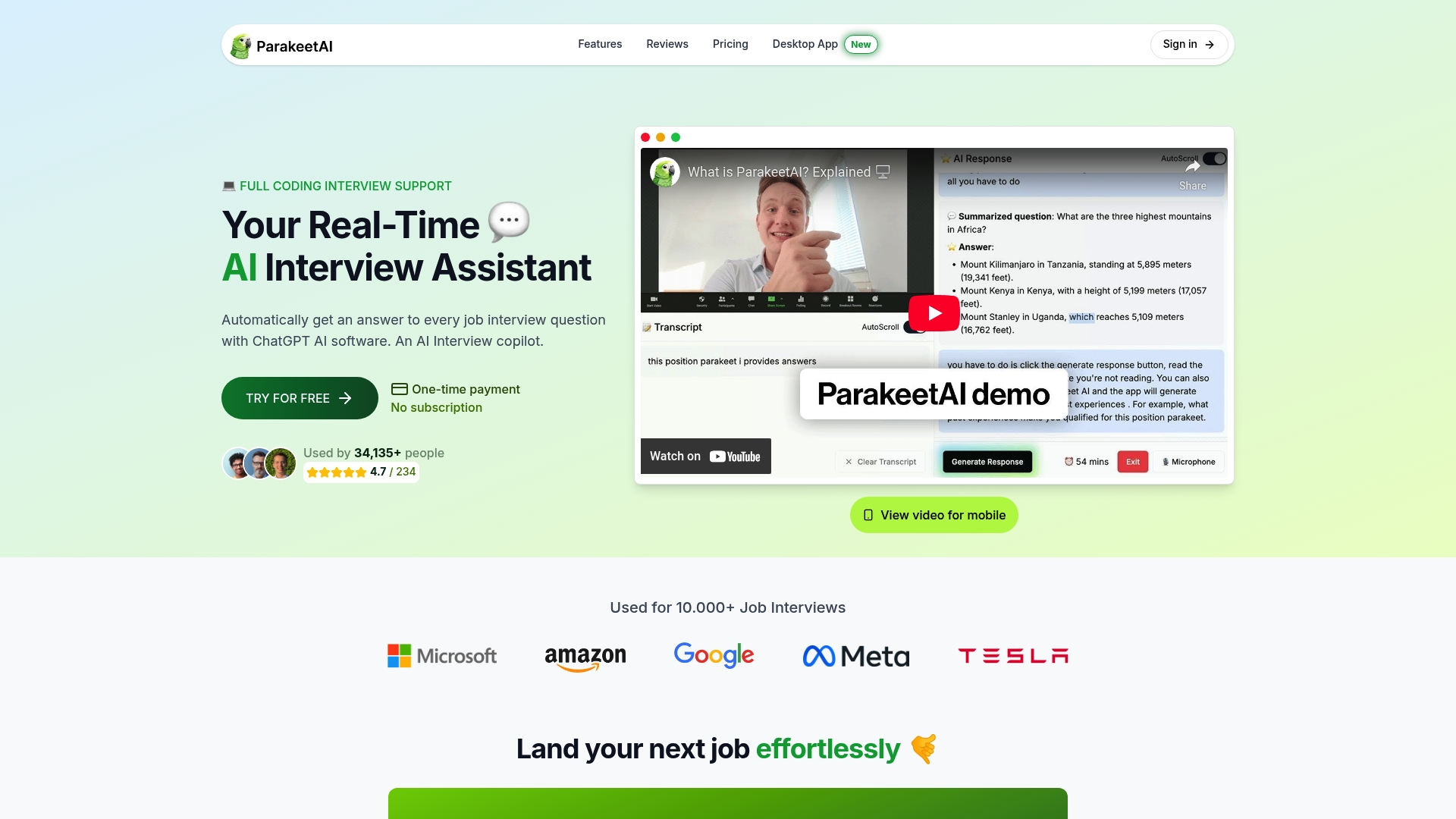
Transform how you conduct interviews today with Parakeet AI. Experience the power of AI-driven fairness and reliability now and ensure your next hires reflect true talent and potential. Don’t wait to master unbiased interviewing—visit our landing page and learn from the Why Use AI for Job Interviews: Complete Guide to get started immediately.
Frequently Asked Questions
What is AI-powered interview consistency?
AI-powered interview consistency is the use of artificial intelligence to standardize and optimize the recruitment process by minimizing human biases and ensuring uniform evaluation criteria across all candidate assessments.
How does AI improve fairness in interviews?
AI enhances fairness in interviews by applying standardized evaluation metrics, focusing solely on job-related competencies and systematically reducing subjective human biases traditionally impacting hiring decisions.
What types of AI technologies are used in interviews?
Modern interviews utilize various AI technologies, including Natural Language Processing (NLP) for analyzing responses, Computer Vision for assessing body language, Machine Learning for predicting performance, Speech Recognition for evaluating vocal tone, and Sentiment Analysis for gauging emotional intelligence.
What are some challenges of using AI in the interview process?
Challenges include maintaining algorithmic transparency, preventing unintentional demographic bias, protecting candidate privacy, balancing efficiency with human empathy, and ensuring legal compliance.