
AI Resume Screening: Smart, Fair Hiring Solutions

Most American companies now rely on artificial intelligence to sort through job applications, yet many are unaware that these high-tech tools often introduce more bias than they eliminate. With more than 85 percent of Fortune 500 firms adopting AI resume screening, the rush for efficiency can overshadow crucial concerns about fairness and transparency. This guide examines what AI-powered hiring really does, uncovers common myths, and offers insight into the balance between speed, objectivity, and the need for ongoing human oversight.
Table of Contents
- Core Concept And Common Misconceptions
- How Ai Parses And Matches Resumes
- Variants Of Ai Screening Tools
- Legal, Ethical, And Bias Safeguards
- Limitations And Human Oversight Needs
Key Takeaways
| Point | Details |
|---|---|
| Understanding AI Limitations | AI resume screening cannot entirely replace human judgment, as it may overlook nuanced aspects of candidates. Human oversight is essential for accurate interpretation and decision-making. |
| Importance of Monitoring | Regular audits of AI tools are necessary to identify biases and ensure fair candidate evaluations, maintaining a balance between technology and ethics. |
| Diverse Training Data | Using diverse and representative training datasets can mitigate systemic biases embedded in algorithms, promoting inclusive hiring practices. |
| Collaborative Approach | Successful implementation of AI in recruitment requires ongoing collaboration between technology and human oversight to enhance decision-making while preserving empathy and nuance. |
Core Concept and Common Misconceptions
AI resume screening represents an emerging technological approach that promises efficiency in talent acquisition, but comes with nuanced challenges. At its core, this technology uses machine learning algorithms to analyze and evaluate job candidate resumes automatically, potentially reducing human review time and standardizing initial candidate assessments.
Unfortunately, many organizations misunderstand AI screening’s capabilities and limitations. Risks of using AI for resume screening are significant, particularly around transparency and potential systemic biases. The algorithms can inadvertently perpetuate historical hiring patterns, potentially discriminating against candidates from underrepresented groups by replicating past hiring practices embedded in training data.
Key Misconceptions About AI Resume Screening:
- AI can completely replace human judgment
- The technology is 100% objective
- All AI screening tools function identically
- Machine learning automatically eliminates human bias
The reality is far more complex. While AI screening can process massive volumes of applications rapidly, it requires careful design and continuous monitoring to ensure fair, accurate candidate evaluations. Human oversight remains crucial in interpreting algorithmic recommendations and preventing unintended discriminatory outcomes.
Successful AI resume screening demands a balanced approach: leveraging technological efficiency while maintaining human critical thinking. Employers must regularly audit their AI tools, understand their underlying mechanisms, and create transparent processes that complement—not replace—human decision-making in recruitment.
How AI Parses and Matches Resumes
Resume parsing represents a sophisticated technological process where artificial intelligence transforms unstructured resume documents into structured, machine-readable data. This advanced extraction involves multiple complex steps that go far beyond simple text scanning, utilizing natural language processing and machine learning algorithms to comprehend professional experiences, skills, and qualifications.

The parsing mechanism typically breaks down resumes into distinct components like professional contact information, educational background, work history, technical skills, and certifications. Understanding how AI interprets job matching patterns reveals a multi-layered approach where algorithms analyze keywords, contextual relevance, and semantic relationships between resume content and specific job requirements.
Key Resume Parsing Techniques:
- Optical Character Recognition (OCR) for document scanning
- Natural Language Processing for semantic understanding
- Machine learning pattern recognition
- Statistical modeling of professional taxonomies
AI systems employ advanced techniques like semantic matching, which goes beyond simple keyword identification. These intelligent algorithms can recognize synonyms, understand skill transferability, and evaluate professional experiences holistically. For instance, an AI might recognize that “project management” skills could be equivalent across different industry contexts, enabling more nuanced candidate evaluations.
The ultimate goal of AI resume parsing is not just to filter candidates, but to provide a comprehensive, unbiased assessment that captures the full potential of professional talent. By leveraging sophisticated data extraction and interpretation techniques, these systems aim to transform recruitment from a subjective selection process into a data-driven, meritocratic approach that identifies the most suitable candidates more effectively than traditional manual screening methods.
Variants of AI Screening Tools
AI resume screening tools represent a diverse ecosystem of technological solutions designed to transform recruitment processes. These sophisticated platforms leverage different approaches and methodologies to evaluate candidate potential, ranging from simple keyword matching systems to advanced machine learning algorithms that comprehend contextual professional experiences.
Multi-agent frameworks utilizing Large Language Models have emerged as a groundbreaking approach in resume screening technology. These innovative systems integrate multiple specialized agents responsible for different aspects of resume evaluation, including extraction, contextual analysis, summarization, and scoring, enabling more comprehensive and nuanced candidate assessments.
Primary Categories of AI Screening Tools:
- Keyword-based matching systems
- Machine learning pattern recognition tools
- Natural Language Processing (NLP) screening platforms
- Semantic analysis screening solutions
- Multi-agent AI screening frameworks
Advanced AI screening tools now incorporate sophisticated techniques like contextual understanding and external knowledge integration. Research demonstrates significant improvements in recruitment workflow automation, with these intelligent systems capable of processing resumes faster and more accurately than traditional manual methods. The technology goes beyond simple pattern recognition, employing complex algorithms that can interpret professional experiences, skills transferability, and potential job fit.
The evolution of AI screening tools reflects a broader transformation in talent acquisition strategies. By leveraging advanced machine learning and natural language processing, these tools aim to reduce human bias, increase efficiency, and provide more objective candidate evaluations. However, successful implementation requires careful design, continuous monitoring, and a balanced approach that combines technological capabilities with human oversight and ethical considerations.
Legal, Ethical, and Bias Safeguards
AI resume screening demands rigorous ethical frameworks to ensure fair, transparent, and legally compliant candidate evaluations. As artificial intelligence becomes increasingly integrated into recruitment processes, organizations must proactively address potential systemic biases and discriminatory patterns that can inadvertently emerge from algorithmic decision-making.
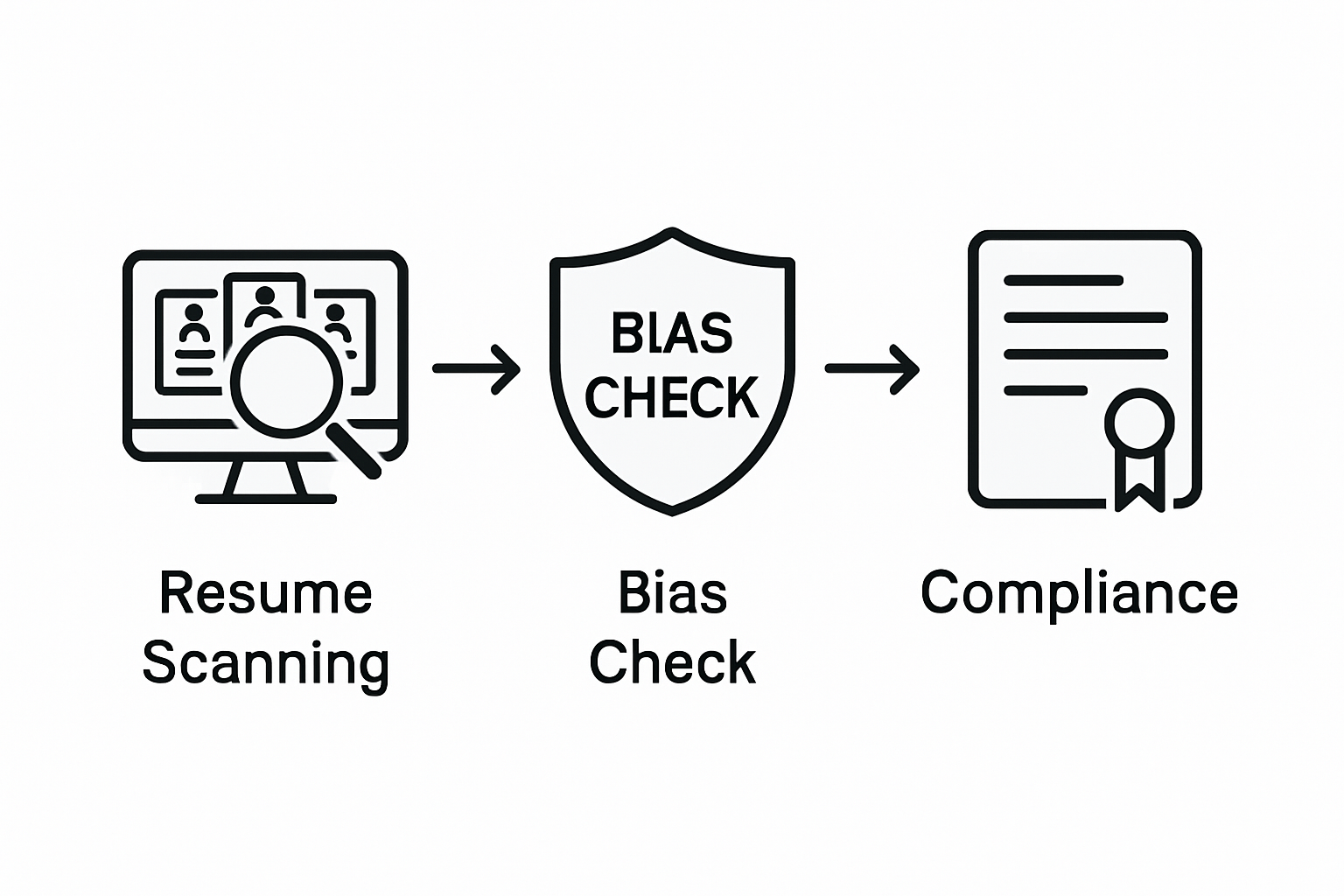
Risks of AI resume screening extend beyond simple technological limitations, encompassing complex legal and ethical considerations. Unintentional bias can emerge through training data that reflects historical hiring patterns, potentially perpetuating systemic inequalities and excluding qualified candidates from underrepresented groups.
Key Ethical Safeguard Strategies:
- Regular algorithmic bias audits
- Transparent decision-making documentation
- Diverse and representative training datasets
- Continuous monitoring of screening outcomes
- Mandatory human oversight mechanisms
Comprehensive compliance with regulations like GDPR and EEOC guidelines requires sophisticated technical and procedural interventions. Organizations must implement multi-layered safeguards that include diverse training data, interpretable AI models, and consistent external validation to mitigate potential discriminatory outcomes.
Successful ethical AI implementation demands a holistic approach that balances technological innovation with fundamental principles of fairness, transparency, and equal opportunity. This requires ongoing collaboration between data scientists, legal experts, diversity professionals, and organizational leadership to create AI screening tools that not only optimize recruitment efficiency but also actively promote inclusive hiring practices.
Limitations and Human Oversight Needs
AI resume screening represents a powerful technological tool, but it is not a standalone solution for comprehensive talent acquisition. While these intelligent systems offer unprecedented efficiency, they inherently possess significant limitations that necessitate consistent human intervention and strategic oversight.
The primary challenge lies in the nuanced complexity of human professional experiences that cannot be fully captured by algorithmic interpretation. Machine learning models, regardless of their sophistication, struggle to understand contextual subtleties, career trajectory nuances, and the intangible qualities that distinguish exceptional candidates. Insights from AI-powered interview technologies underscore the critical need for human judgment in interpreting candidate potential beyond raw data points.
Critical Human Oversight Mechanisms:
- Final candidate selection review
- Periodic algorithmic performance audits
- Manual intervention for edge cases
- Contextual experience interpretation
- Ethical decision-making validation
Successful AI resume screening requires a balanced approach where technological capabilities complement human expertise. Recruiters must actively monitor screening outcomes, challenge algorithmic recommendations, and provide sophisticated contextual understanding that machines cannot replicate. This collaborative model ensures that AI serves as an enhancement tool rather than a replacement for human discernment in talent acquisition.
Ultimately, the most effective recruitment strategies will integrate AI screening as a supportive technology, recognizing both its remarkable computational power and its inherent limitations. By maintaining a critical, thoughtful approach to technological implementation, organizations can leverage AI tools while preserving the irreplaceable human elements of empathy, intuition, and nuanced professional evaluation.
Enhance Your Hiring Process with AI-Powered Interview Support
The article highlights the critical challenges of AI resume screening such as bias risks, lack of full objectivity, and the need for continuous human oversight. If you want to move beyond just automated resume parsing and ensure your hiring decisions are both smart and fair, consider real-time AI assistance during interviews. Our AI job interview assistant listens carefully to every question and instantly provides intelligent answers, helping recruiters and candidates overcome the limitations of traditional AI screening tools.
Key benefits include:
- Reducing unconscious bias through data-driven responses
- Enhancing clarity on candidate skills beyond resume keywords
- Supporting human judgment with AI-powered insights
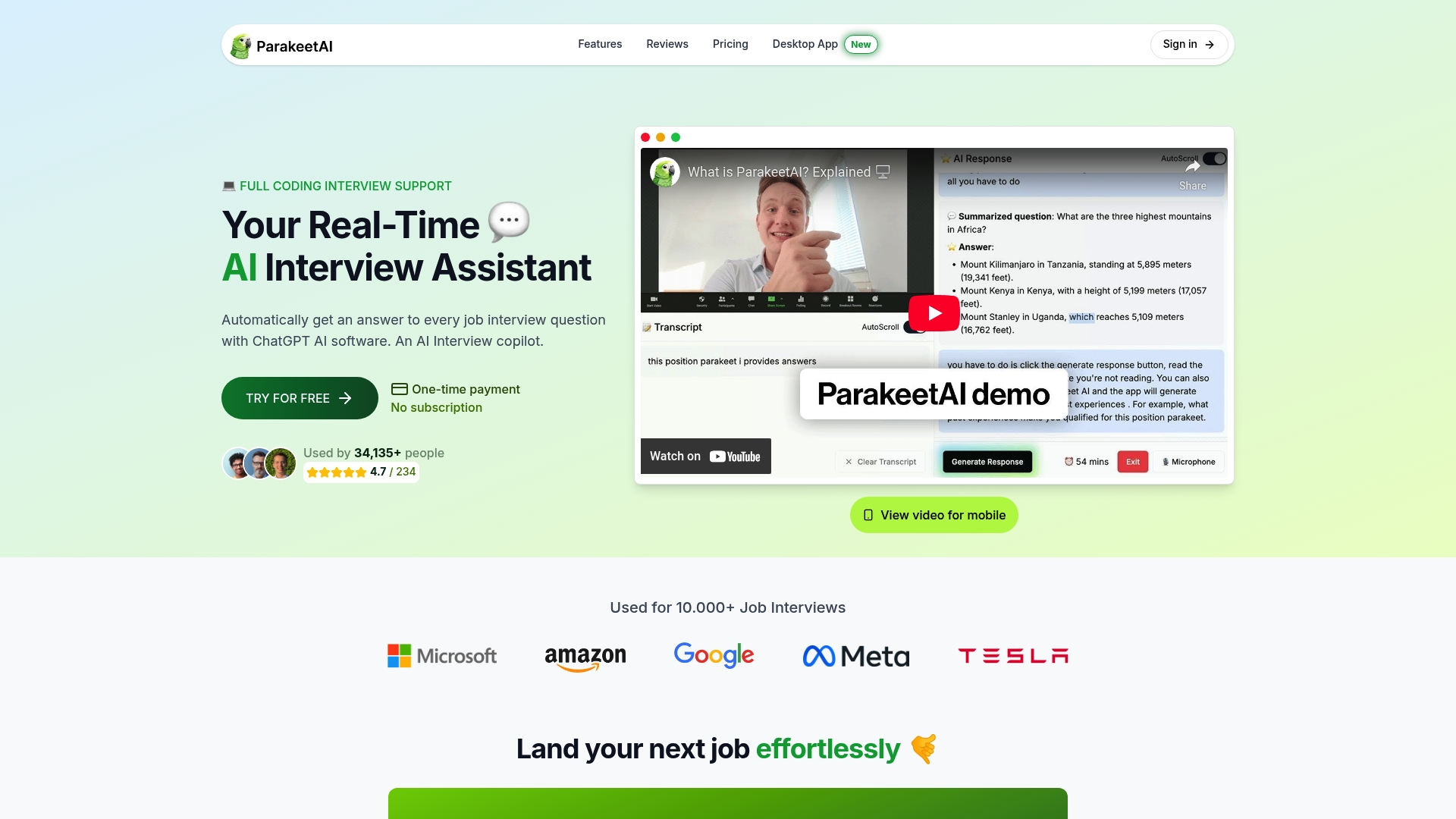
See how you can complement your AI resume screening strategy with cutting-edge interview technology. Visit Parakeet AI to learn more and start transforming your recruitment process today. Empower your hiring team with tools that encourage transparency, fairness, and smarter candidate evaluations now.
Frequently Asked Questions
What is AI resume screening?
AI resume screening uses machine learning algorithms to automatically analyze and evaluate job candidate resumes, streamlining the recruitment process by reducing human review time and standardizing initial assessments.
What are the main benefits of using AI for resume screening?
AI resume screening enhances efficiency by quickly processing large volumes of applications, provides standardized evaluations, and can help reduce human bias when designed carefully with oversight.
How does AI resume parsing work?
AI resume parsing transforms unstructured resume documents into structured, machine-readable data by utilizing techniques like Optical Character Recognition, Natural Language Processing, and machine learning to accurately interpret candidates’ skills and experiences.
What are the ethical considerations surrounding AI resume screening?
Organizations must ensure fairness and transparency in AI resume screening by conducting regular bias audits, using diverse training datasets, and maintaining human oversight to prevent systemic discrimination and ensure compliance with legal regulations.