Emotional AI in interviews: how it works for job seekers

TL;DR:Emotional AI analyzes nonverbal cues like facial expressions, voice, and language during interviews. It aims to provide objective, scalable, and consistent candidate assessments but can perpetuate biases if poorly designed. Preparation involves practicing body language, vocal variety, and requesting human review if unfair judgments occur.
Hiring is no longer just about what you say. Emotional AI, technology that reads your face, voice, and word choice in real time, is quietly reshaping how companies screen candidates. If you think a polished resume and sharp answers are enough, consider this: people mirror AI hiring biases up to 90% of the time when the system is poorly trained. That means a flawed algorithm can silently tank your chances before a human ever reviews your file. Understanding how emotional AI works is no longer optional. It is the new interview prep.
Table of Contents
- What is emotional AI in interviews?
- How does emotional AI analyze candidates?
- Benefits and drawbacks of emotional AI in interviews
- How to prepare for interviews using emotional AI
- Our take: What most guides get wrong about emotional AI in interviews
- Next steps: Elevate your interview performance with AI tools
- Frequently asked questions
Key Takeaways
| Point | Details |
|---|---|
| Emotional AI analyzes more than words | It reviews facial expressions, tone, and microreactions in interviews for deeper insights. |
| Bias can be amplified or reduced | AI can cut or increase hiring bias, depending on how it’s designed and used. |
| Preparation is essential | Success involves practicing both verbal and nonverbal communication for emotional AI analysis. |
| Human oversight matters | Psychologist reviews and candidate feedback loops make AI-driven interviews fairer. |
| AI tools can boost readiness | Specialized platforms offer real-time feedback to help you master interview performance. |
What is emotional AI in interviews?
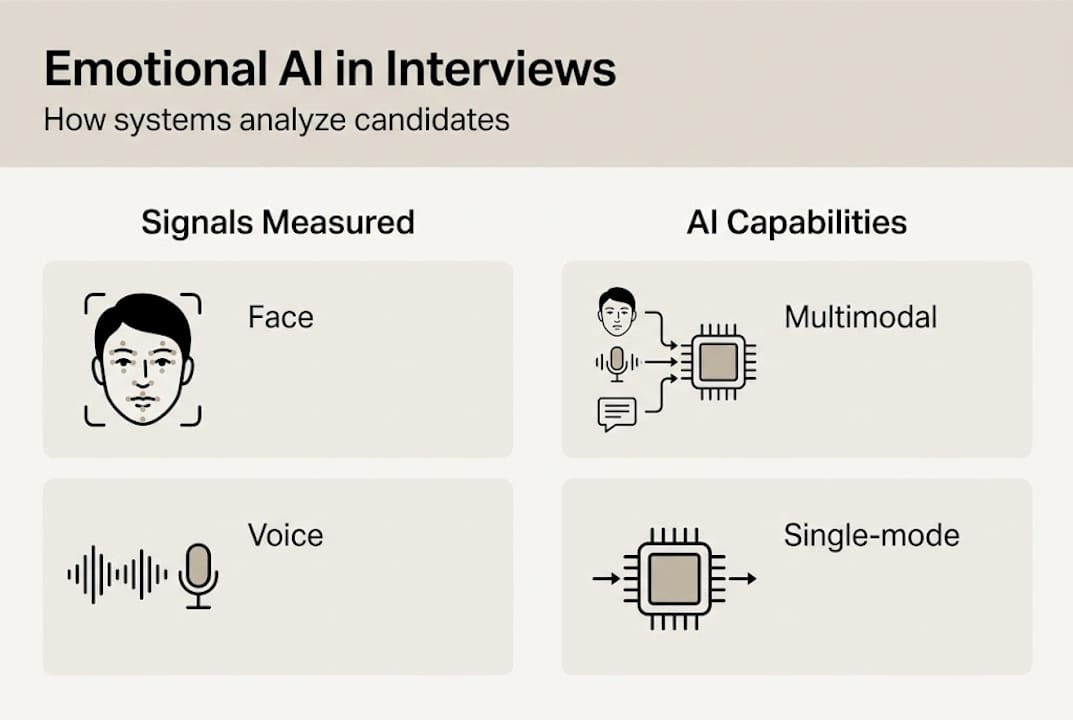
Emotional AI refers to automated systems that analyze nonverbal cues, including facial expressions, vocal tone, speech pace, and even the specific words you choose, to infer a candidate’s emotional state, confidence, and fit. Unlike traditional interview technology such as skill assessments or personality quizzes, emotional AI captures signals you may not even realize you are sending.
Think about it: 93% of communication is nonverbal, which is exactly why employers are so interested in technology that can read beyond your scripted answers. A nervous laugh, a downward glance, or a slight hesitation can all be logged and scored.
Here is what emotional AI typically captures during an interview:
- Facial expressions: Micro-expressions lasting less than a quarter of a second
- Voice signals: Pitch, speed, volume, and pauses
- Linguistic patterns: Word choice, sentiment, and response structure
- Eye contact: Gaze direction and blink rate
- Body language: Posture and head movement (when video is used)
Employers are drawn to AI interview technology for three main reasons: objectivity (in theory), speed, and scale. A single recruiter can only interview so many people per day. An AI system can screen thousands of video interviews overnight and flag candidates worth a second look.
“Emotional AI promises consistency across candidates, but that promise only holds if the underlying model is built and audited carefully.”
Pro Tip: Before your next video interview, record yourself answering practice questions and watch it back with the sound off. You will spot nonverbal habits you never knew you had.
As a job seeker, you can expect emotional AI to run quietly in the background during video interviews, especially at large companies. Some platforms disclose this; others do not. Knowing why employers use AI for job interviews helps you treat every video session as a scored performance, not just a conversation.
How does emotional AI analyze candidates?
With a firm grasp of what emotional AI means, it is crucial to understand how it actually analyzes candidates. The process is more layered than most people expect.
- Data capture: The system records your video, audio, and text responses simultaneously.
- Signal extraction: Algorithms isolate specific features, such as the corners of your mouth, your vocal frequency, or your response latency.
- Emotional scoring: Each signal is mapped to an emotional state (confidence, anxiety, enthusiasm) using a trained model.
- Aggregation: Scores across all modalities are combined into an overall candidate profile.
- Human review: In responsible deployments, a recruiter or psychologist reviews the AI output before any decision is made.
The key word in step five is responsible. Not every company follows this practice, which is where things get risky.
One of the most important concepts here is multimodal analysis, meaning the AI reads face, voice, and text together rather than relying on just one signal. Multimodal analysis reduces bias compared to single-modality approaches because no single cue is weighted too heavily. Here is how the two approaches compare:
| Feature | Single-modality AI | Multimodal AI |
|---|---|---|
| Signals analyzed | One (e.g., face only) | Multiple (face, voice, text) |
| Bias risk | Higher | Lower |
| Accuracy | Moderate | Higher |
| Fairness for diverse candidates | Lower | Better |
The role of AI for interview fairness depends heavily on which approach a company uses. Single-modality systems can misread candidates from different cultural backgrounds who express emotions differently. Multimodal systems are more forgiving but still imperfect.
For AI in video interviews, what gets measured most often includes micro-expressions, pitch variation, response speed, and specific language patterns. A candidate who speaks in a flat monotone may score lower on enthusiasm even if their answers are excellent. That is the uncomfortable reality of how these systems work today.

Benefits and drawbacks of emotional AI in interviews
Understanding the process lets us weigh the real-world advantages and pitfalls of emotional AI in interviews.
Benefits:
- Reduces time-to-hire by screening large candidate pools quickly
- Offers consistent scoring criteria across all candidates
- Can surface candidates who might be overlooked by a tired or biased human recruiter
- Provides structured feedback data that companies can audit
Drawbacks:
- Can amplify existing bias if trained on non-diverse data
- Misreads cultural differences in emotional expression
- Raises serious workplace surveillance and privacy concerns
- May penalize neurodivergent candidates whose expressions differ from norms
| Factor | Benefit | Risk |
|---|---|---|
| Speed | Screens thousands quickly | Rushed decisions |
| Consistency | Same criteria for all | Rigid, ignores context |
| Data | Structured feedback | Privacy exposure |
| Objectivity | Reduces human fatigue bias | Hides algorithmic bias |
“The danger is not that AI is biased. The danger is that people assume it is not.”
Here is the statistic that should give every job seeker pause: AI amplifies bias through human mirroring when systems are poorly tuned, but implicit bias tests can reduce that adoption by 13%. That 13% matters when your career is on the line.
The good news is that the AI interview fairness guide approach, combining human oversight with algorithmic scoring, significantly reduces these risks. Companies that use psychologist review alongside AI output tend to produce fairer outcomes. The role of AI assistants in interviews is most valuable when it supports human judgment rather than replacing it entirely.
The broader emotional AI debate is ongoing, and regulators in several countries are beginning to scrutinize these tools. As a candidate, knowing your rights matters just as much as knowing the technology.
Pro Tip: Before an AI-screened interview, ask the recruiter whether emotional AI is used and whether human review is part of the process. You have every right to ask, and the answer tells you a lot about the company’s culture.
How to prepare for interviews using emotional AI
With the landscape clear, here is how you can get ahead and prepare for an emotional AI-powered interview.
- Practice on camera: Record yourself and review your facial expressions, eye contact, and posture. Adjust anything that reads as closed off or disengaged.
- Work on vocal variety: Speak with intentional pitch changes. A monotone voice scores poorly on enthusiasm metrics.
- Slow down: Response speed is measured. A brief, deliberate pause before answering reads as thoughtful, not nervous.
- Choose words carefully: Positive, structured language scores better. Avoid filler words like “um” and “you know.”
- Test your setup: Lighting, camera angle, and background affect how clearly the AI reads your face. A well-lit, front-facing setup is not optional.
For non-native speakers and international candidates, cultural sensitivity is critical. Emotional AI systems are often trained on Western norms of expression. If your cultural background involves less direct eye contact or more reserved facial expressions, that does not mean you are less confident. It means the system may need context that it does not have.
Here is what to do if you feel the AI judged you unfairly:
- Request a human review of your interview
- Ask for feedback on your performance
- Document your concerns in writing
- Research whether the company’s AI tool complies with local employment law
AI accuracy aligns with human evaluations when systems are properly tuned, but mirroring of AI bias remains common. Knowing how AI personalizes job interviews helps you tailor your preparation rather than guessing what the system wants.
Pro Tip: Spend 10 minutes before any video interview doing a simple breathing exercise. Reduced physical tension visibly relaxes your face and voice, two of the primary signals emotional AI reads.
Our take: What most guides get wrong about emotional AI in interviews
Most articles on emotional AI in interviews make one critical mistake: they treat AI objectivity as a feature rather than a claim to be verified. The word “objective” sounds reassuring, but an algorithm trained on biased historical data is not objective. It is bias at scale, running faster than any human could.
The guides that tell you to “just be yourself” also miss the point. Emotional AI does not evaluate authenticity. It evaluates signals against a model. If that model was built on data from a narrow demographic, being yourself may actually hurt your score.
What we believe matters most is the feedback loop. Candidates should receive meaningful feedback after AI-screened interviews, not just a rejection email. Companies that use AI and fairness in interviews responsibly build in transparency and human review as non-negotiables, not afterthoughts.
The most prepared candidates are not the ones who game the AI. They are the ones who understand what is being measured, practice with intention, and know when to push back.
Next steps: Elevate your interview performance with AI tools
Now you are equipped with evidence and practical advice. The next move is practice, and that is where smart tools make a real difference.
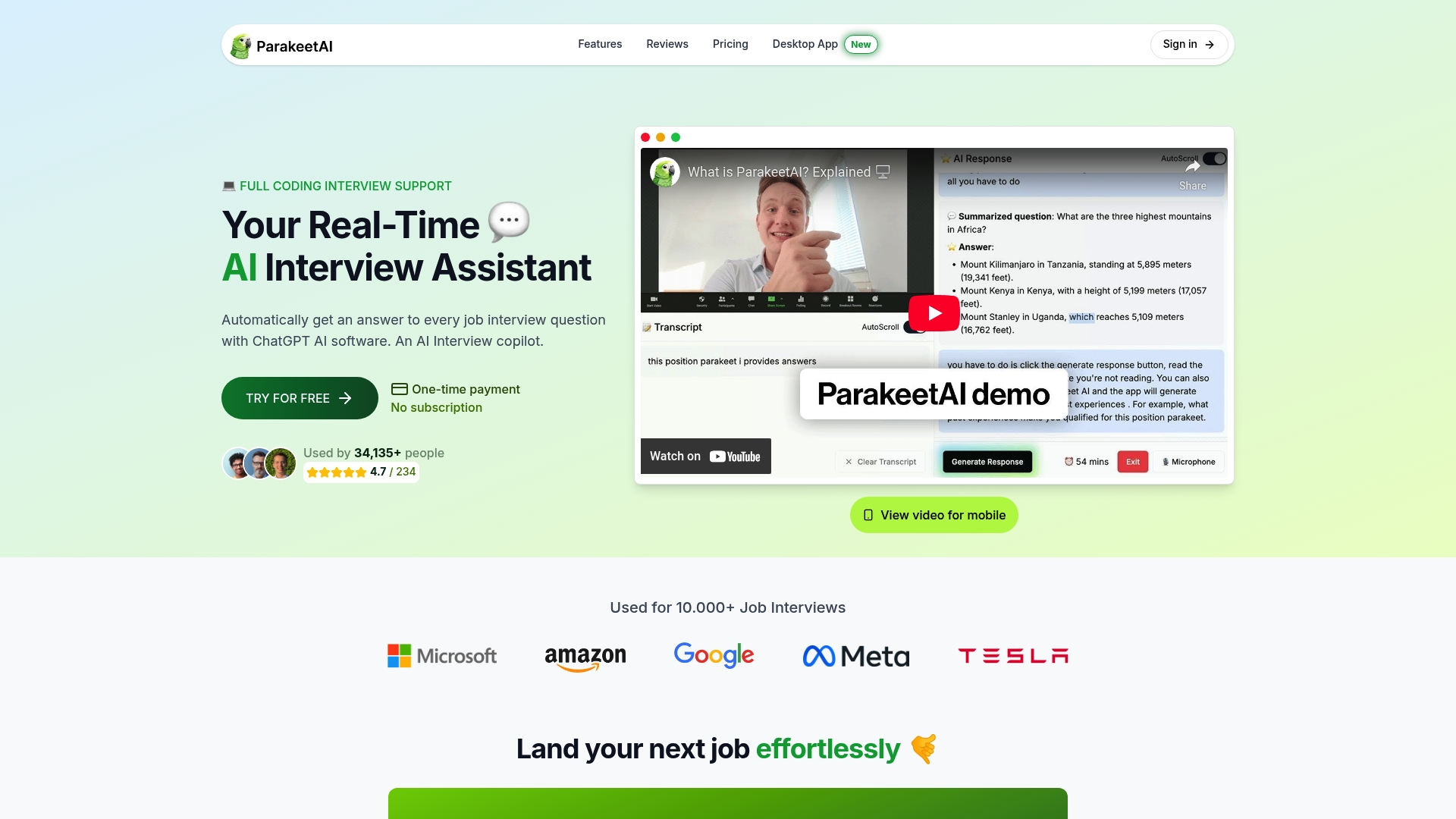
ParakeetAI is a real-time AI interview assistant that listens during your interview and instantly surfaces relevant answers to every question. Whether you are preparing for an emotional AI-screened first round or a high-stakes final interview, ParakeetAI gives you the edge of always having the right words ready. Think of it as a co-pilot for your interview, keeping you calm, sharp, and on message when it counts most. Explore ParakeetAI and start practicing smarter today.
Frequently asked questions
Can emotional AI interviews be biased against certain people?
Yes, emotional AI can reflect and even amplify biases if not properly designed and reviewed by humans. AI amplifies bias through human mirroring when systems are poorly tuned, making human oversight essential.
Is emotional AI replacing human interviewers?
Emotional AI usually supplements, not replaces, human decision-making, adding another layer of analysis to the hiring process. Psychologist review combined with AI output produces more accurate and fair results than either approach alone.
How should I prepare differently for an interview using emotional AI?
Practice expressing confidence through facial cues and clear, varied speech since AI analyzes nonverbal signals just as much as your words. Since 93% of communication is nonverbal, your body language and tone carry as much weight as your answers.
Does emotional AI help reduce discrimination in interviews?
It can, if used responsibly with human oversight, but may perpetuate bias if left unchecked. Multimodal AI reduces bias compared to single-modality tools, but poor tuning risks amplifying existing inequalities rather than correcting them.