
Mock Interview Benefits: Complete Guide for Job Seekers

Over 80 percent of american professionals say nerves have hurt their interview performance at least once. Tackling the modern job hunt means more than brushing up your resume. Mock interviews give job seekers a powerful edge by offering real-world practice with direct feedback. This approach helps candidates silence self-doubt, sharpen responses, and adapt to the high stakes of actual interviews, clearing away outdated myths and boosting true confidence.
Table of Contents
- Defining Mock Interviews And Common Myths
- Major Types Of Mock Interview Experiences
- How Mock Interviews Enhance Interview Skills
- Real-World Impact Of Practicing With Ai Tools
- Common Mistakes And How To Avoid Them
Key Takeaways
| Point | Details |
|---|---|
| Importance of Mock Interviews | Mock interviews are essential for candidates to practice and refine their communication skills in a realistic environment. |
| Myths About Mock Interviews | Common misconceptions suggest that mock interviews are unnecessary or ineffective, but they provide significant benefits for all levels of professionals. |
| AI Transformation | AI-driven tools enhance mock interview training by offering personalized feedback and adapting scenarios to individual performance. |
| Preparation Strategies | Effective mock interviews require intentional preparation and a focus on identifying and addressing performance gaps for successful outcomes. |
Defining Mock Interviews and Common Myths
A mock interview is a strategic training exercise designed to simulate an authentic professional job interview experience. Job candidates can practice their skills in a controlled environment that closely mimics real-world recruitment scenarios. Unlike traditional interview preparation methods, mock interviews provide candidates with immediate feedback and opportunities for targeted improvement.
The fundamental purpose of mock interviews extends beyond simple rehearsal. These simulated interactions help job seekers develop critical communication skills, reduce performance anxiety, and build confidence before actual job interviews. By recreating professional interview conditions, candidates can refine their verbal and nonverbal communication techniques, learn how to articulate their professional experiences effectively, and understand nuanced employer expectations.
Despite their proven effectiveness, several persistent myths surround mock interviews. One widespread misconception is that interview skills cannot be learned or improved through practice. Research definitively challenges this belief, demonstrating that systematic interview training can significantly enhance a candidate’s performance. Professional interview skills are not innate talents but learnable competencies that develop through targeted practice, constructive feedback, and strategic self-improvement.
Key myths about mock interviews include:
- Myth: Mock interviews are unnecessary for experienced professionals
- Myth: These practice sessions don’t reflect real interview dynamics
- Myth: Interview performance cannot be substantially improved through training
- Myth: Only nervous or inexperienced candidates need mock interviews
In reality, mock interviews offer universal benefits across career stages and industries. They provide a safe, controlled environment to experiment with communication strategies, receive objective feedback, and continuously refine professional presentation skills.
Major Types of Mock Interview Experiences
Mock interviews come in diverse formats designed to address specific professional contexts and skill development needs. Professional sectors have unique interview dynamics, requiring tailored preparation strategies. Systematic interview practice helps candidates navigate these nuanced environments effectively, building confidence across different professional landscapes.
Academic and research settings often feature specialized interview formats. Technical interviews with discipline-specific challenges require candidates to demonstrate deep subject knowledge and problem-solving capabilities. These mock interviews frequently involve whiteboarding exercises, complex technical questions, and scenario-based assessments that test a candidate’s theoretical understanding and practical application skills.
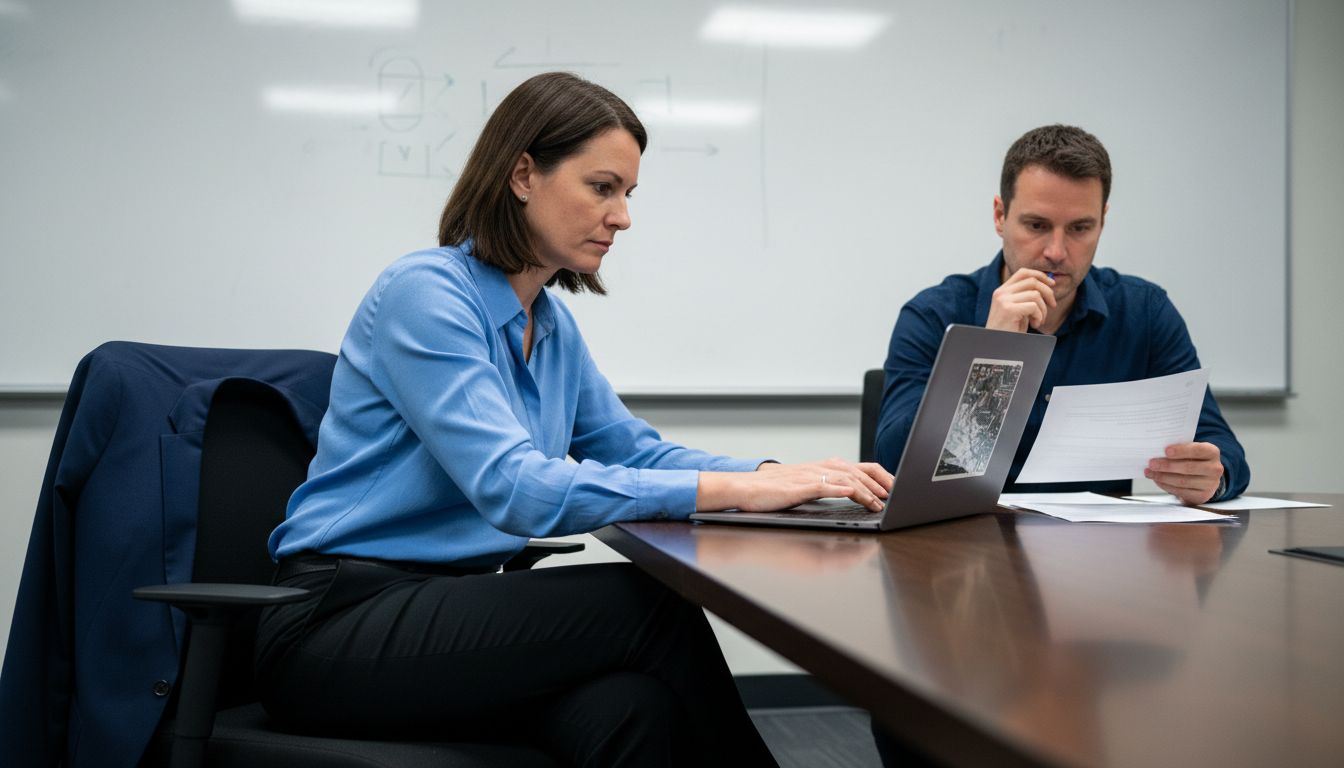
Technology has revolutionized mock interview experiences, introducing AI-driven simulation platforms that provide real-time feedback and adaptive learning environments. These advanced systems can recreate intricate interview scenarios, from technical screenings to behavioral assessments, offering candidates unprecedented opportunities to refine their communication and presentation techniques.
Key types of mock interview experiences include:
- Academic Position Mock Interviews
- Technical Screening Simulations
- Behavioral Interview Rehearsals
- Industry-Specific Professional Interviews
- Entry-Level and Senior Management Interview Formats
- AI-Powered Interactive Interview Training
Each mock interview type serves a unique purpose, helping job seekers develop targeted skills and strategies for navigating complex professional recruitment processes. The goal remains consistent: transforming interview anxiety into confident, strategic communication.
How Mock Interviews Enhance Interview Skills
Mock interviews serve as a powerful transformative tool for developing critical professional communication skills. Strategic interview preparation helps candidates systematically deconstruct and improve their communication patterns, body language, and response strategies. This deliberate practice allows job seekers to identify and address potential weaknesses before encountering high-stakes real-world interviews.
Self-confidence emerges as a significant benefit of comprehensive mock interview training. Professional candidates who engage in simulated interviews develop a more nuanced understanding of their presentation style, learning to modulate their tone, manage nervousness, and project authentic professional presence. Research indicates that repeated practice substantially increases perceived self-efficacy, directly translating into more composed and articulate interview performances.
The technical and psychological dimensions of mock interviews create comprehensive skill development opportunities. Candidates learn to structure responses effectively, anticipate potential questions, and develop adaptive communication strategies. Virtual and in-person mock interview platforms provide immediate feedback mechanisms, allowing professionals to rapidly iterate and improve their interview techniques.
Key skill enhancement areas include:
- Verbal communication clarity
- Nonverbal communication awareness
- Professional storytelling techniques
- Question anticipation and response strategy
- Confidence management
- Stress reduction and emotional regulation
Ultimately, mock interviews function as a controlled environment for professional growth, transforming interview preparation from a passive experience into an active, strategic skill-building process.
Real-World Impact of Practicing with AI Tools
Artificial intelligence has transformed mock interview preparation by introducing sophisticated, adaptive training platforms that provide unprecedented personalized feedback. Advanced AI interview technologies enable candidates to simulate complex professional interactions with remarkable precision, analyzing verbal and nonverbal communication patterns in real time.
Machine learning algorithms have dramatically enhanced interview preparation strategies. Generative AI models can generate highly nuanced interview scenarios that adapt to individual candidate performance, offering targeted recommendations for improvement. These intelligent systems go beyond traditional practice methods by providing granular insights into communication effectiveness, helping professionals refine their interview techniques with scientific accuracy.
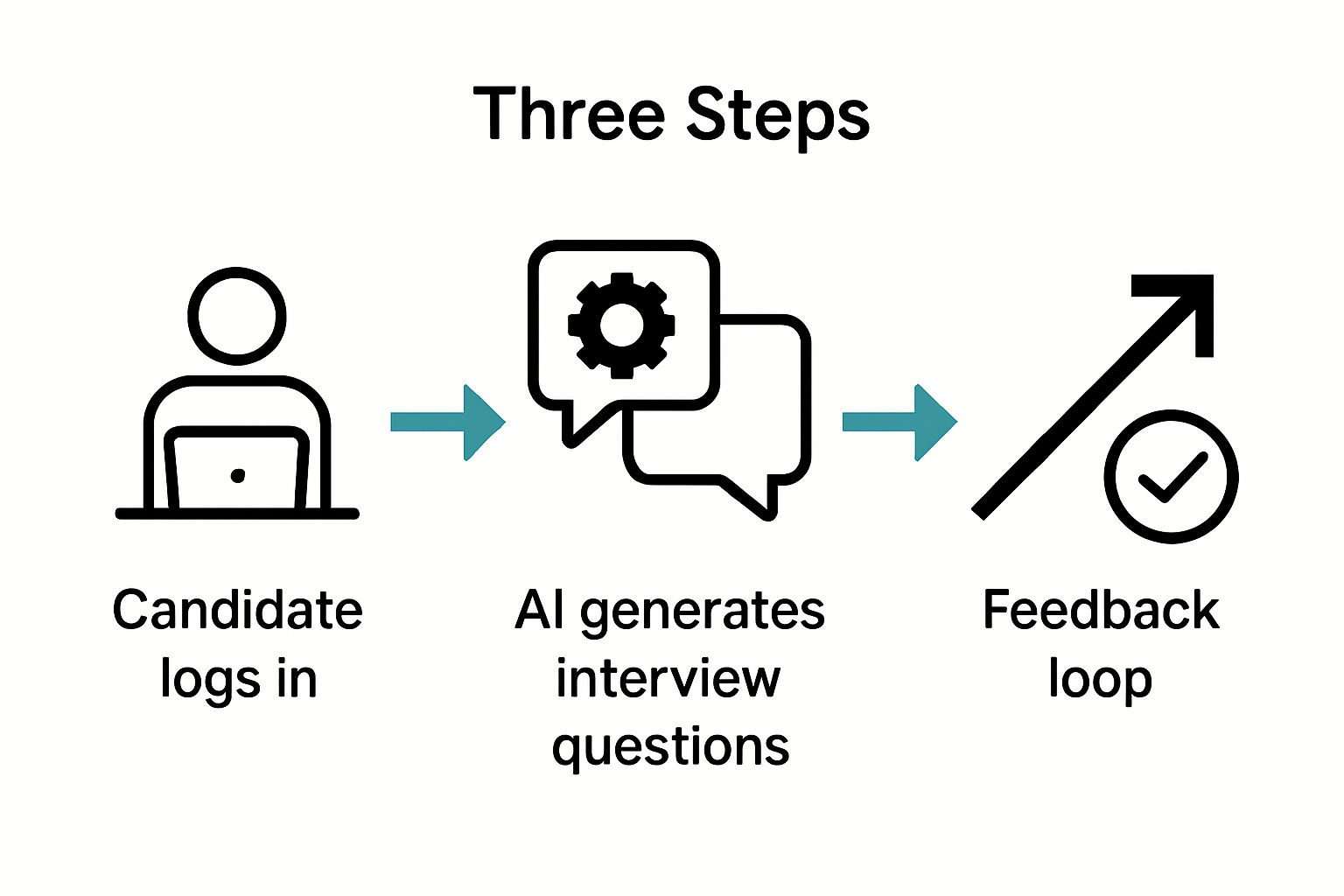
The transformative potential of AI-driven interview tools extends far beyond simple rehearsal. Sophisticated systems can now predict candidate performance, identify potential communication barriers, and suggest personalized strategies for professional development. By analyzing thousands of interview interactions, these platforms create comprehensive learning experiences that simulate real-world recruitment environments with unprecedented depth and complexity.
Key real-world impacts of AI interview tools include:
- Objective performance assessment
- Personalized communication skill development
- Reduced interview anxiety
- Adaptive learning experiences
- Comprehensive feedback mechanisms
- Data-driven improvement strategies
Ultimately, AI interview tools represent a paradigm shift in professional skill development, transforming interview preparation from a subjective experience into a precise, measurable science.
Common Mistakes and How to Avoid Them
Mock interviews can quickly become ineffective when candidates approach them without strategic preparation. Understanding interview fundamentals helps professionals recognize and eliminate common performance-limiting behaviors that can undermine their chances of success.
One critical mistake involves treating mock interviews as casual rehearsals rather than serious professional development opportunities. Unstructured interview approaches can lead to inconsistent performance and missed learning opportunities. Professional candidates must develop intentional strategies that transform these practice sessions into targeted skill enhancement experiences, focusing on deliberate improvement rather than passive participation.
Psychological barriers frequently sabotage mock interview effectiveness. Many professionals struggle with active listening, fail to demonstrate genuine engagement, and struggle to articulate their experiences coherently. Effective mock interview preparation requires candidates to develop metacognitive skills that allow them to critically analyze their communication patterns, identify potential weaknesses, and systematically address performance gaps.
Common mock interview mistakes include:
- Providing generic, non-specific responses
- Neglecting to research the interview context
- Failing to practice active listening
- Overlooking nonverbal communication cues
- Demonstrating inconsistent professional demeanor
- Not seeking or integrating constructive feedback
Successful interview preparation demands a proactive, analytical approach that transforms practice into meaningful professional growth.
Transform Your Interview Skills with Real-Time AI Support
The article highlights how mock interviews help overcome anxiety, improve communication, and build confidence before real job interviews. Many job seekers struggle with delivering clear, specific answers and managing stress during these high-pressure moments. You want to practice effectively, get immediate feedback, and avoid common mistakes like generic responses or poor nonverbal cues. That is where Parakeet AI comes in, providing a real-time AI job interview assistant that listens and helps you answer every question with precision
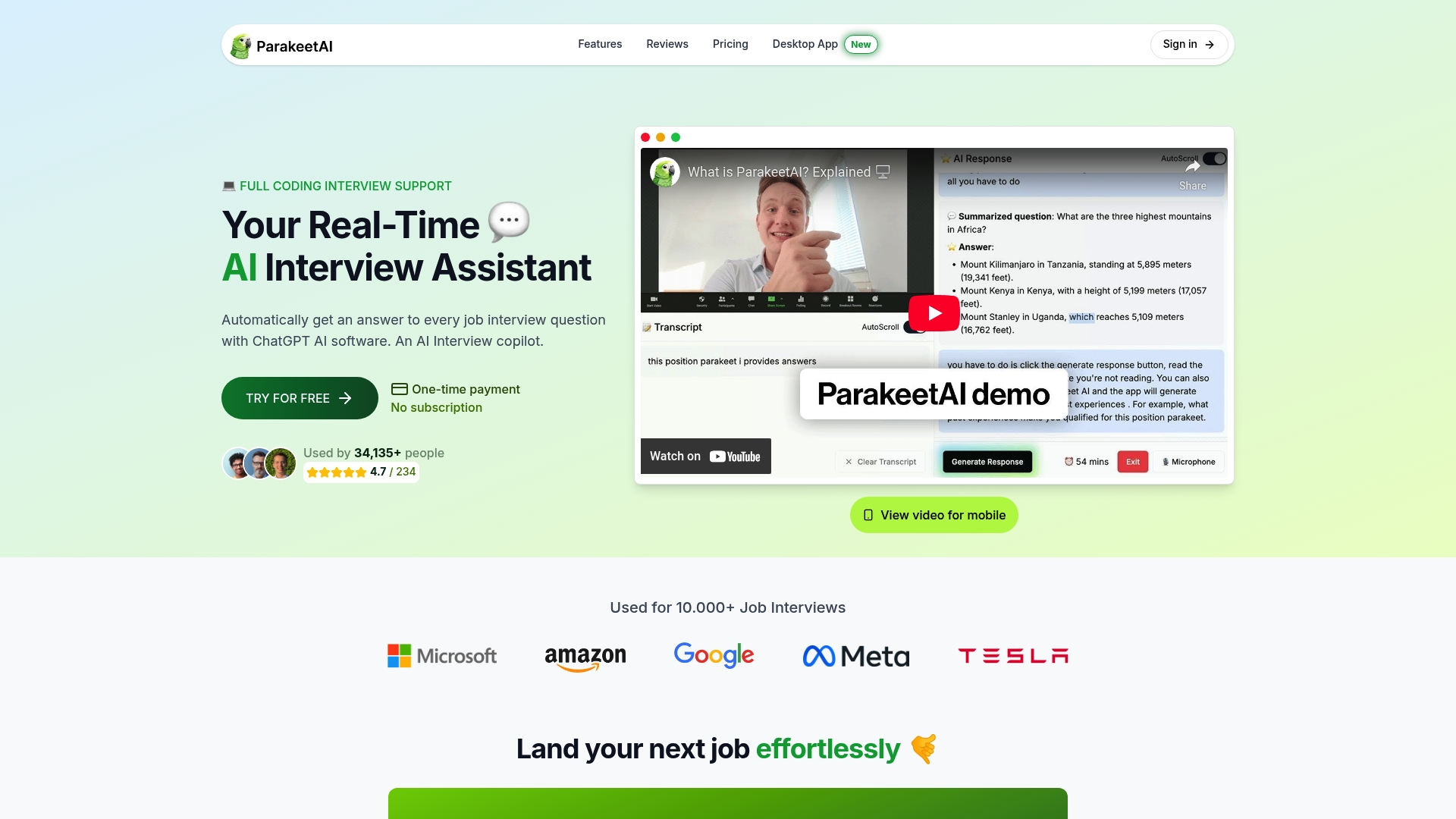
Don’t settle for guesswork or outdated prep techniques. Experience the power of AI-driven feedback that boosts your confidence and sharpens your professional storytelling. Start practicing now with advanced interview tips and see how personalized, data-driven insights will transform your approach. Elevate your interview skills at Parakeet AI and take control of your career success today.
Frequently Asked Questions
What is a mock interview?
A mock interview is a simulated job interview experience that allows candidates to practice their interview skills in a controlled environment, receive feedback, and improve their performance.
How do mock interviews help reduce interview anxiety?
Mock interviews help reduce interview anxiety by providing candidates with the opportunity to familiarize themselves with the interview process, practice their responses, and build self-confidence through repeated practice and constructive feedback.
What types of mock interviews are available?
There are various types of mock interviews, including behavioral interview rehearsals, technical screening simulations, academic position mock interviews, and AI-powered interactive interview training, each tailored to specific career needs and contexts.
How can AI tools enhance my mock interview experience?
AI tools enhance the mock interview experience by providing personalized feedback, analyzing communication patterns in real-time, and adapting interview scenarios to individual performance, ensuring candidates receive targeted recommendations for improvement.