
Master Software Engineering Manager Interview Questions and Answers

Landing a software engineering manager position can feel overwhelming when interviews now demand more than technical know-how. Many candidates find that creating a professional environment and practicing the right responses is just as important as mastering algorithms. This guide offers a step-by-step approach to building a reliable setup, refining your answers to common leadership and technical questions, and using AI interview assistants for personalized feedback on your performance.
Table of Contents
- Step 1: Set Up Your Interview Environment And AI Assistant
- Step 2: Gather And Analyze Key Interview Questions And Answers
- Step 3: Practice Delivering Solutions And Leadership Examples
- Step 4: Leverage AI Tools For Real-Time Feedback And Improvement
- Step 5: Verify Readiness Through Mock Interviews And Review
Quick Summary
| Main Insight | Explanation |
|---|---|
| 1. Optimize Your Interview Setup | Prepare a professional environment with reliable tech to enhance your presence. |
| 2. Collect and Analyze Questions | Develop a repository of key interview questions to craft strong narrative responses. |
| 3. Practice Leadership Examples | Use the STAR method to articulate your leadership stories effectively in interviews. |
| 4. Utilize AI Feedback Tools | Leverage AI technologies for real-time analysis and improvement of your interview performance. |
| 5. Conduct Mock Interviews | Engage in diverse mock interviews, gathering feedback to refine your strategies and responses. |
Step 1: Set up your interview environment and AI assistant
Mastering your software engineering manager interview requires a strategic approach to preparing your technological environment. This section will walk you through creating a seamless, professional setup that leverages cutting-edge AI interview assistance technologies.
To establish an optimal interview environment, you’ll need several key components:
- A reliable computer with a stable internet connection
- High-quality webcam and microphone
- Quiet, professional background space
- Updated web browser with latest security settings
- Backup device in case of technical issues
Your AI interview assistant requires precise configuration to maximize performance. Start by selecting a reputable AI platform compatible with software engineering management interview scenarios. These platforms typically integrate speech recognition, real-time language processing, and adaptive questioning techniques.
Configuration involves connecting your microphone, testing audio levels, and ensuring your internet bandwidth supports smooth video communication. Position your camera at eye level, choose a neutral background, and dress professionally to create a polished first impression.
Technical preparation is 50% of interview success. Your environment speaks volumes before you say a word.
Pro tip: Conduct a full technical rehearsal 24 hours before your interview to identify and resolve any potential connectivity or equipment issues.
Step 2: Gather and analyze key interview questions and answers
Successfully navigating a software engineering manager interview requires strategic preparation and deep understanding of potential questions. This section will help you systematically analyze interview question categories to craft compelling responses.
Software engineering management interviews typically explore three critical domains:
- Leadership capabilities
- Technical proficiency
- Project management expertise
Start by creating a comprehensive question repository that covers these key areas. Focus on collecting questions that probe your ability to lead technical teams, solve complex problems, and drive strategic initiatives. Your analysis should involve breaking down each question type and developing targeted response strategies.
Prepare by developing a structured approach to answering questions. Use the STAR method (Situation, Task, Action, Result) to construct clear, concise narratives that demonstrate your problem-solving skills and leadership experience. Practice articulating your responses with clarity and confidence, ensuring you can communicate complex technical concepts in an accessible manner.
Interview success hinges on your ability to translate experiences into compelling, structured narratives.
Pro tip: Record and review your practice interview responses to identify areas of improvement and refine your communication strategy.

Step 3: Practice delivering solutions and leadership examples
Preparing compelling leadership narratives is critical to demonstrating your software engineering management potential. This section will help you develop and practice behavioral interview strategies that showcase your problem-solving and leadership capabilities.
Effective interview preparation involves developing a robust set of strategic leadership examples:
- Conflict resolution scenarios
- Team motivation techniques
- Performance management experiences
- Agile process implementation stories
Focus on crafting detailed narratives that highlight your ability to transform challenges into opportunities. Each example should demonstrate concrete actions, quantifiable results, and your unique leadership approach. When discussing past experiences, emphasize your role in driving team performance, resolving technical challenges, and creating positive organizational impact.
Structure your examples using the STAR method, ensuring each story provides context, describes specific actions, and clearly articulates the outcomes. Practice delivering these narratives with confidence, maintaining a balance between technical depth and strategic vision. Remember that interviewers are seeking leaders who can communicate complex ideas effectively and inspire their teams.
Great leaders don’t just solve problems. They transform challenges into opportunities for growth and innovation.
Pro tip: Record yourself practicing interview responses and critically analyze your delivery, focusing on clarity, concision, and emotional intelligence.
Step 4: Leverage AI tools for real-time feedback and improvement
Modern software engineering managers can dramatically enhance their interview preparation by strategically incorporating automated interview feedback technologies. These advanced AI tools offer unprecedented insights into your communication, technical expertise, and leadership potential.
Effective AI-powered interview preparation involves several key strategies:
- Real-time performance analysis
- Speech pattern evaluation
- Emotional intelligence assessment
- Technical response accuracy tracking
Artificial intelligence tools can provide granular insights that traditional preparation methods cannot. By recording and analyzing your practice interviews, these sophisticated systems help you identify subtle communication nuances, eliminate verbal tics, and refine your narrative delivery. Look for AI platforms that offer comprehensive scoring across multiple dimensions, including technical knowledge, problem-solving approach, and leadership communication style.
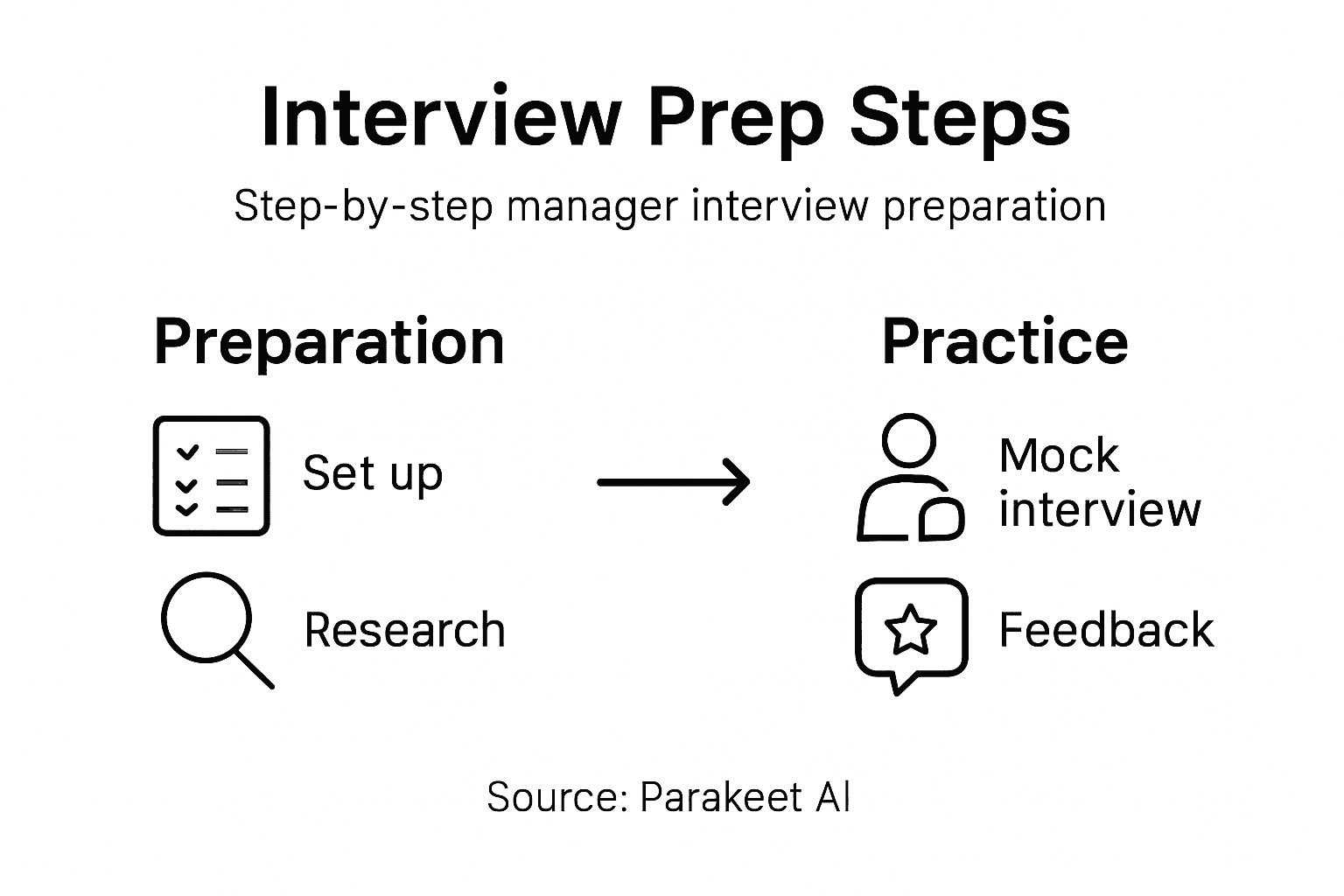
Here’s a comparison of top AI-powered interview preparation features and their impact:
| Feature | How It Works | Benefit for Candidates |
|---|---|---|
| Real-time performance | Analyzes answers instantly | Improves response quality fast |
| Speech pattern analysis | Detects tone and pacing | Refines communication clarity |
| Emotional intelligence | Evaluates empathy, reactions | Boosts interviewer engagement |
| Technical accuracy | Flags technical mistakes | Ensures expert-level responses |
Develop a systematic approach to using AI feedback. Begin by recording multiple practice interviews, then carefully review the AI-generated insights. Pay special attention to areas of improvement in your communication, technical explanations, and overall presentation style. Iterate rapidly, using each AI assessment to incrementally enhance your interview performance.
Technology transforms interview preparation from guesswork to precision-driven skill development.
Pro tip: Select AI tools that provide both quantitative scores and qualitative feedback to get a holistic view of your interview readiness.
Step 5: Verify readiness through mock interviews and review
The final step in your software engineering manager interview preparation involves rigorous validation through comprehensive mock interview techniques. Mock interviews serve as a critical diagnostic tool to identify strengths and potential improvement areas in your interview performance.
Structure your mock interview process with these essential components:
- Professional peer evaluation
- Recorded interview sessions
- Diverse interviewer perspectives
- Structured feedback collection
Systematic review requires more than passive listening. Actively engage with your mock interview feedback by creating a detailed improvement plan. Break down each aspect of your performance - technical responses, leadership narratives, communication style, and problem-solving approach - and develop targeted strategies for enhancement.
Seek out diverse mock interview scenarios that simulate real-world software engineering management challenges. This might include technical deep dives, leadership scenario discussions, conflict resolution assessments, and strategic thinking exercises. The more varied your practice, the more confident and adaptable you’ll become in actual interview settings.
Use this summary of key mock interview formats to diversify your practice:
| Format Type | Example Scenario | Value Added |
|---|---|---|
| Peer Evaluation | Feedback from colleagues | Identifies hidden weaknesses |
| Diverse Interviewers | Multiple backgrounds | Prepares for real-world mix |
| Recorded Sessions | Video self-review | Tracks progress over time |
| Conflict Resolution | Challenging team scenario | Tests leadership agility |
Preparation transforms uncertainty into confident, strategic performance.
Pro tip: Rotate between different mock interview formats and participants to expose yourself to varied assessment styles and prevent developing rehearsed, inauthentic responses.
Elevate Your Software Engineering Manager Interview with Real-Time AI Support
Preparing for leadership and technical questions takes focus and practice. This article highlights the need to master structured narratives, navigate complex challenges, and hone communication skills using tools like the STAR method. However the real challenge lies in applying these strategies confidently during the actual interview while managing your environment and responses in real time. Key pain points include delivering precise answers, maintaining emotional intelligence, and adapting to dynamic questioning under pressure.
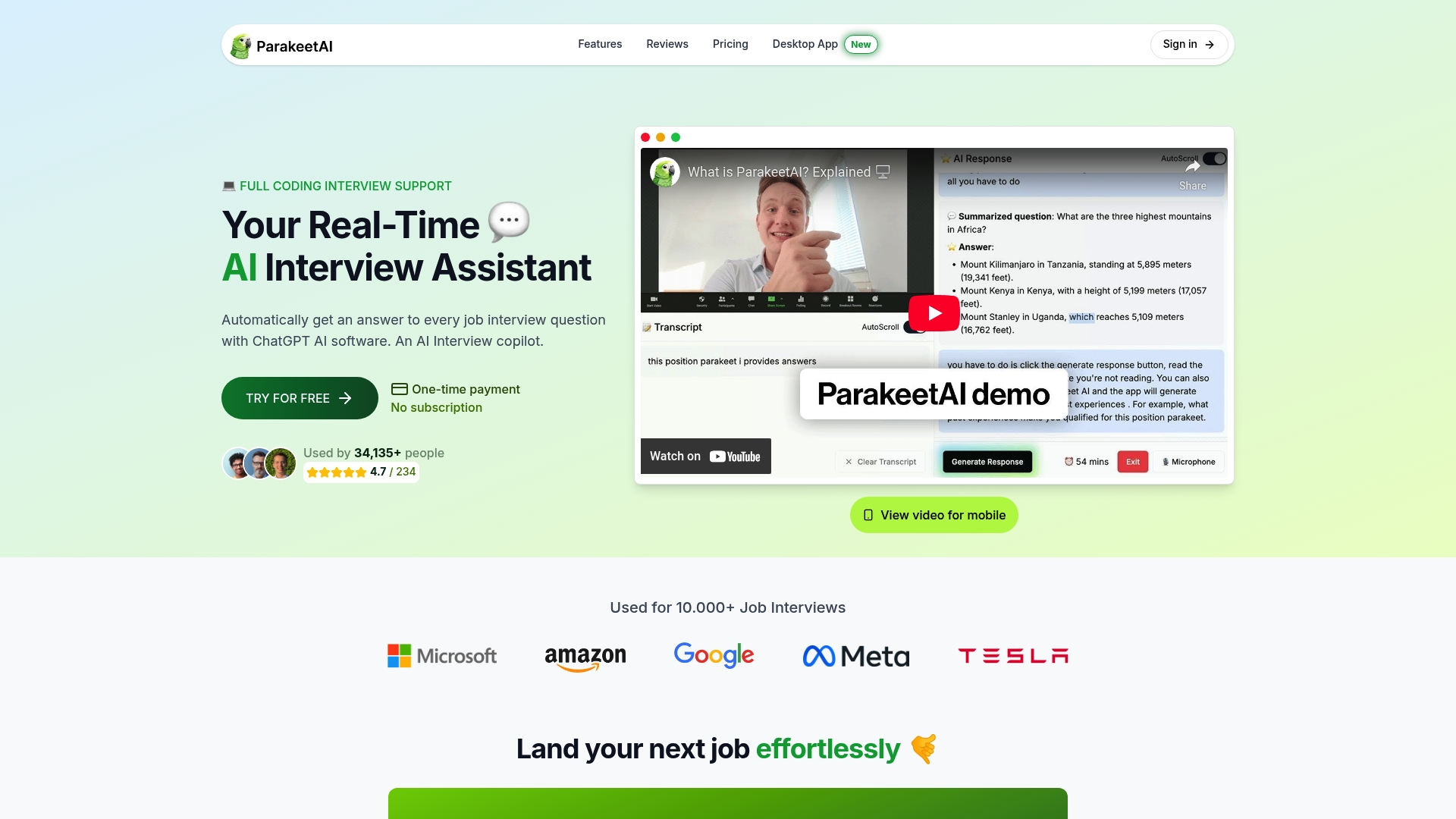
Take your preparation beyond traditional methods by harnessing a real-time AI job interview assistant. Parakeet AI listens to your interview practice sessions and instantly provides tailored answers powered by advanced artificial intelligence. This solution gives you immediate feedback on technical accuracy leadership storytelling and communication clarity. It transforms uncertainty into confidence and helps you refine your delivery through real-time insights.
Don’t wait until the big day to face tough questions or miss critical improvements. Experience a smarter way to master your software engineering manager interview by visiting Parakeet AI. Step into your next interview ready to impress with a polished environment, compelling leadership stories, and precise technical answers all guided by AI assistance.
Frequently Asked Questions
What are the key competencies evaluated in a software engineering manager interview?
The key competencies include leadership capabilities, technical proficiency, and project management expertise. Prepare by gathering common interview questions in these areas and develop structured responses using the STAR method to articulate your experiences clearly.
How can I effectively prepare for behavioral interview questions?
To prepare effectively, focus on crafting detailed narratives around your leadership experiences and problem-solving examples. Use the STAR method to structure your responses, ensuring that you cover the situation, task, action, and result for each narrative.
What is the STAR method, and how do I use it in my interview?
The STAR method is a framework for answering behavioral interview questions by outlining the Situation, Task, Action, and Result. Practice articulating your responses in this structured format to clearly convey your past experiences and demonstrate your skills effectively.
How can I leverage AI tools to improve my interview preparation?
Utilize AI tools for real-time performance analysis and feedback on your practice interviews. Record your responses, analyze the AI-generated insights, and focus on areas for improvement to refine your communication style and technical explanations over a few practice sessions.
Why are mock interviews important for my interview readiness?
Mock interviews provide a simulated environment to practice your responses and receive feedback on your performance. Engage in various formats and scenarios to identify strengths and weaknesses, enhancing your confidence and adaptability before the actual interview.
How can I manage technical issues that arise during the interview?
To manage technical issues, ensure you have a reliable computer and a stable internet connection set up for your interview. Test all equipment beforehand and have a backup device ready to avoid disruptions, allowing for a smooth interview experience.