
Role of Voice AI in Interviews: Enhancing Real-Time Answers

Most American job seekers now face competition from hundreds of other applicants for a single role. The pressure to stand out in high-stakes interviews is higher than ever, and even the most qualified candidates can freeze under scrutiny. Voice AI Interview Assistants are reshaping how American professionals prepare by using powerful real-time analysis to boost confidence and performance. With more than 60 percent of companies exploring AI-driven recruiting tools, understanding these technologies can help you gain a critical edge.
Table of Contents
- What Voice AI Interview Assistant Is
- How Voice AI Responds Instantly
- Platforms and Use Cases
- Privacy, Ethics, and Bias Risks
- Legal and Security Considerations
Key Takeaways
| Point | Details |
|---|---|
| Innovative Technology | Voice AI Interview Assistants utilize advanced AI to simulate real interview environments, providing personalized feedback and strategic preparation. |
| Real-Time Feedback | These systems deliver immediate insights on verbal and non-verbal communication, helping candidates improve their performance effectively. |
| Diverse Applications | Voice AI Interview Assistants are beneficial in various sectors, including technology, HR, and education, adapting to specific interview scenarios. |
| Ethical Considerations | Privacy and algorithmic bias are crucial concerns, necessitating robust consent protocols and transparency in data handling practices. |
What Voice AI Interview Assistant Is
Voice AI Interview Assistant is an advanced technological solution designed to transform the traditional interview preparation and performance process by leveraging artificial intelligence and real-time voice recognition capabilities. These intelligent systems act as interactive companions, helping job seekers navigate complex interview scenarios with enhanced confidence and strategic responses.
At its core, a Voice AI Interview Assistant provides real-time automated mock interview capabilities that simulate professional interview environments. The system utilizes sophisticated AI algorithms to analyze resumes, generate contextually relevant questions, and provide immediate feedback on a candidate’s verbal and non-verbal communication skills. Unlike traditional practice methods, these AI tools can detect nuanced aspects of communication such as speech patterns, confidence levels, answer organization, and overall professional presentation.
The technological foundation of Voice AI Interview Assistants involves multiple sophisticated components. Advanced machine learning models process voice inputs, natural language processing algorithms interpret responses, and real-time feedback mechanisms offer actionable insights. Research by academic innovators like Ehsan Hoque demonstrates how these systems can incorporate detailed performance analysis, including:
- Instant verbal feedback evaluation
- Confidence level measurement
- Speech pattern recognition
- Non-verbal behavior assessment
- Personalized interview strategy recommendations
Pro Tip: Practice with your Voice AI Interview Assistant multiple times using different scenarios to build genuine adaptability and reduce interview anxiety. Treat each simulation as a real interview opportunity to maximize learning and improvement.
How Voice AI Responds Instantly
Real-time response generation represents the most revolutionary aspect of modern Voice AI Interview Assistants. These sophisticated systems utilize advanced natural language processing and machine learning algorithms to analyze interview questions and craft instantaneous, contextually relevant answers that demonstrate professional communication skills.
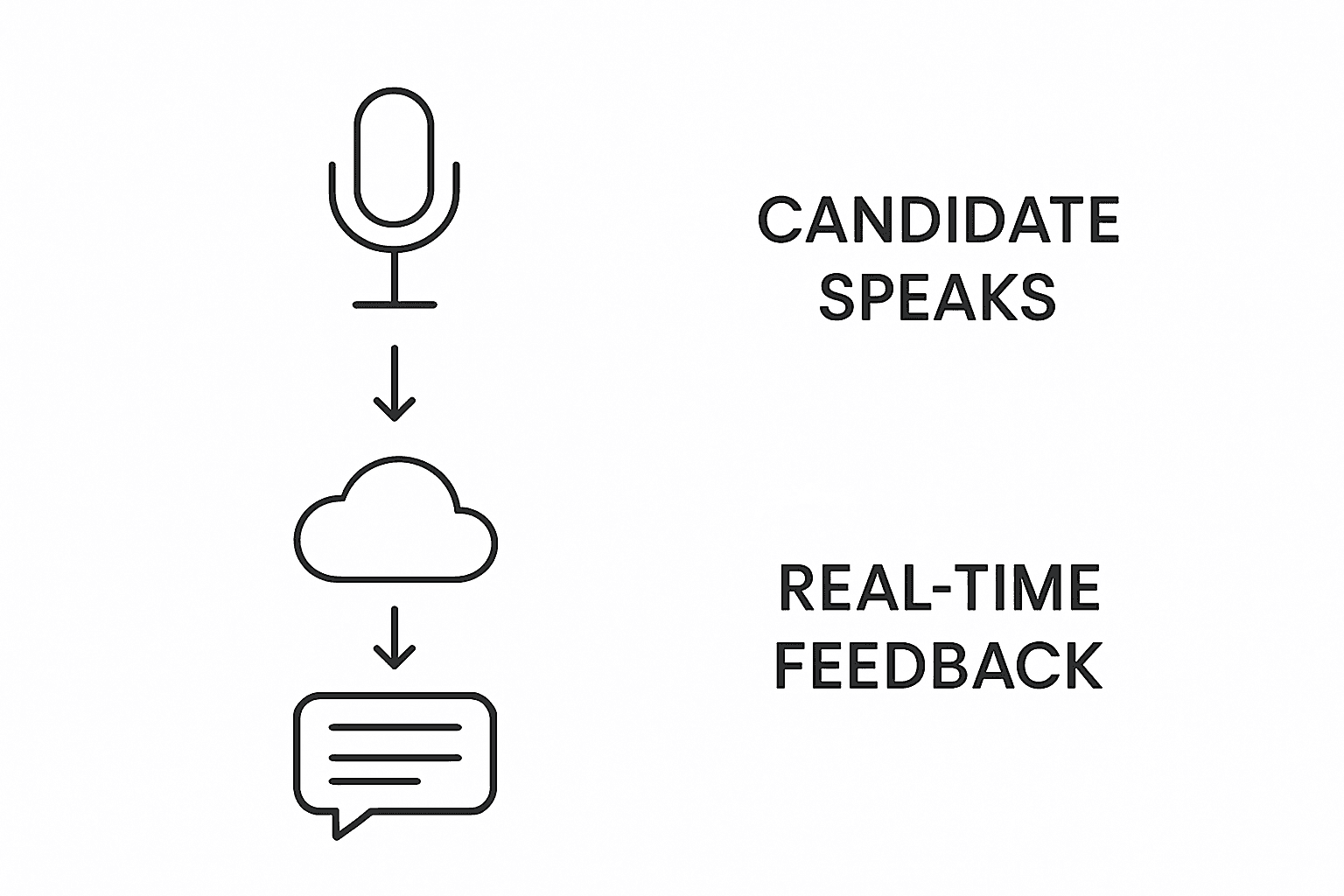
Voice AI technologies capture audio inputs through browser-based platforms, enabling seamless transcription and immediate comprehension of spoken interview questions. The underlying technological infrastructure involves complex neural networks that process audio signals, break down linguistic components, and generate human-like responses within milliseconds. This rapid processing allows candidates to receive immediate guidance, ensuring they maintain smooth conversational flow during high-pressure interview scenarios.
The instant response mechanism operates through several sophisticated stages:
- Audio Capture: Real-time sound wave recording
- Speech-to-Text Conversion: Precise linguistic transcription
- Contextual Analysis: Deep semantic understanding of question intent
- Response Generation: Crafting tailored, professional answers
- Delivery Optimization: Ensuring natural speech cadence and tone
Advanced machine learning models continuously improve these systems by analyzing thousands of interview scenarios, learning nuanced communication patterns, and adapting response strategies to match different professional contexts and communication styles.
Pro Tip: Practice speaking clearly and maintaining a consistent volume during Voice AI interview simulations to help the system accurately capture and process your responses.
Platforms and Use Cases
Voice AI Interview Assistants have rapidly expanded across multiple professional domains, offering versatile solutions for job seekers, recruiters, educational institutions, and corporate training programs. These intelligent platforms demonstrate remarkable adaptability across various interview preparation and assessment scenarios, transforming traditional communication and evaluation methodologies.

Interview platforms like Interview Coder represent a cutting-edge approach to specialized interview preparation, particularly in technical fields such as software engineering and programming. These advanced systems provide targeted practice environments that simulate realistic interview conditions, allowing candidates to refine their skills through AI-powered interactive experiences.
The diverse use cases for Voice AI Interview Assistants span multiple professional sectors:
- Technology and Software Development
- Coding interview simulations
- Technical skill assessment
- Algorithm problem-solving practice
- Corporate Human Resources
- Initial candidate screening
- Communication skills evaluation
- Behavioral interview analysis
- Academic and Professional Training
- Mock interview workshops
- Language proficiency assessment
- Soft skills development
- Specialized Industry Preparation
- Medical residency interviews
- Legal profession communication training
- Sales and customer interaction coaching
These platforms leverage advanced machine learning algorithms to provide nuanced, context-specific feedback that goes beyond traditional interview preparation methods. By analyzing vocal patterns, response structures, and non-verbal communication cues, Voice AI Interview Assistants offer comprehensive insights that help candidates improve their overall interview performance.
Pro Tip: Select Voice AI platforms that specialize in your specific industry or job role to receive the most targeted and relevant interview preparation support.
Here’s how leading Voice AI Interview Assistants benefit different user groups:
| User Group | Primary Benefit | Example Use |
|---|---|---|
| Job Seekers | Personalized performance feedback | Improve interview responses |
| Recruiters | Standardized candidate assessment | Screen large applicant pools |
| Educational Institutions | Interactive training simulations | Student mock interview practice |
| Corporate Training | Scalable skills development | Bulk employee coaching |
Privacy, Ethics, and Bias Risks
Voice AI Interview Technologies represent a complex ecosystem of innovation and potential ethical challenges, requiring careful navigation of privacy, algorithmic fairness, and responsible technological implementation. As these intelligent systems become increasingly sophisticated, they simultaneously offer transformative interview preparation capabilities while introducing nuanced ethical considerations that demand rigorous scrutiny.
Systematic research on voice assistant technologies has unveiled significant privacy implications surrounding always-listening devices and their pervasive integration into professional and personal environments. The fundamental concern revolves around the delicate balance between technological convenience and individual privacy rights, necessitating transparent data handling protocols and robust consent mechanisms that protect candidate information throughout the interview preparation process.
The primary ethical risks associated with Voice AI Interview Assistants can be categorized into several critical domains:
- Privacy Vulnerability
- Unauthorized audio recording
- Potential data misuse
- Insufficient user consent mechanisms
- Algorithmic Bias
- Unintentional discrimination
- Skewed performance evaluations
- Inconsistent response interpretation
- Psychological Implications
- Reduced human interaction
- Increased interview performance anxiety
- Potential algorithmic intimidation
Comprehensive studies on conversational AI systems consistently highlight user concerns regarding trust, security, and ethical deployment. These investigations underscore the critical need for developing AI technologies that prioritize transparency, fairness, and individual autonomy. Successful implementation requires a multifaceted approach that integrates advanced technological capabilities with stringent ethical guidelines and user-centric design principles.
Pro Tip: Always review the privacy policy and data handling procedures of any Voice AI Interview Assistant before sharing personal information or participating in simulated interviews.
Legal and Security Considerations
Legal compliance represents a critical foundation for Voice AI Interview Assistants, demanding rigorous adherence to complex global data protection regulations and sophisticated security protocols. These intelligent systems must navigate an intricate landscape of legal requirements that protect candidate privacy while maintaining technological innovation and effectiveness.
Global data protection regulations mandate comprehensive consent and security frameworks for AI interview platforms. The General Data Protection Regulation (GDPR) serves as a benchmark, requiring explicit user consent, transparent data processing practices, and robust security measures that safeguard personal information throughout the interview preparation process.
Key legal and security considerations for Voice AI Interview Assistants include:
- Consent Management
- Explicit user authorization
- Clear data usage explanations
- Opt-in/opt-out mechanisms
- Data Protection
- End-to-end encryption
- Secure data storage protocols
- Limited data retention periods
- Compliance Requirements
- International privacy law adherence
- Industry-specific regulatory standards
- Regular security audits
Systematic research on conversational AI systems emphasizes the paramount importance of implementing robust security measures that protect user data and maintain technological trust. This involves developing sophisticated encryption technologies, implementing strict access controls, and creating transparent data handling processes that prioritize individual privacy rights.
Pro Tip: Request and carefully review the comprehensive security and privacy documentation of any Voice AI Interview Assistant before engaging with the platform, ensuring alignment with your personal and professional privacy standards.
Below is a summary of key privacy, ethics, and legal challenges associated with Voice AI Interview Assistants:
| Challenge Area | Main Concern | Suggested Mitigation |
|---|---|---|
| Privacy | Unauthorized audio recording | Transparent consent process |
| Algorithmic Bias | Discriminatory response interpretation | Regular bias testing and review |
| Data Security | Data breaches or leaks | End-to-end encryption |
| Legal Compliance | Infringement of GDPR or similar laws | Adherence to global regulations |
Experience Real-Time Confidence with Voice AI Interview Assistance
The article highlights how challenging it is to respond quickly and effectively during interviews while managing anxiety and communication nuances. Job seekers often face the struggle of crafting well-organized answers, maintaining a confident tone, and adapting to unexpected questions on the spot. With concepts like “real-time response generation” and “instant verbal feedback,” the clear goal is to transform interview nerves into confident performance.
At Parakeet AI, we understand these pain points deeply. Our real-time AI job interview assistant listens carefully to your interview and provides immediate, contextually relevant answers to every question through advanced voice AI technology. This helps you practice staying clear, confident, and professional in any scenario. If mastering your interview communication is your goal, our AI interview assistant is designed precisely to help you overcome hesitation, improve answer structure, and reduce anxiety before the real opportunity.
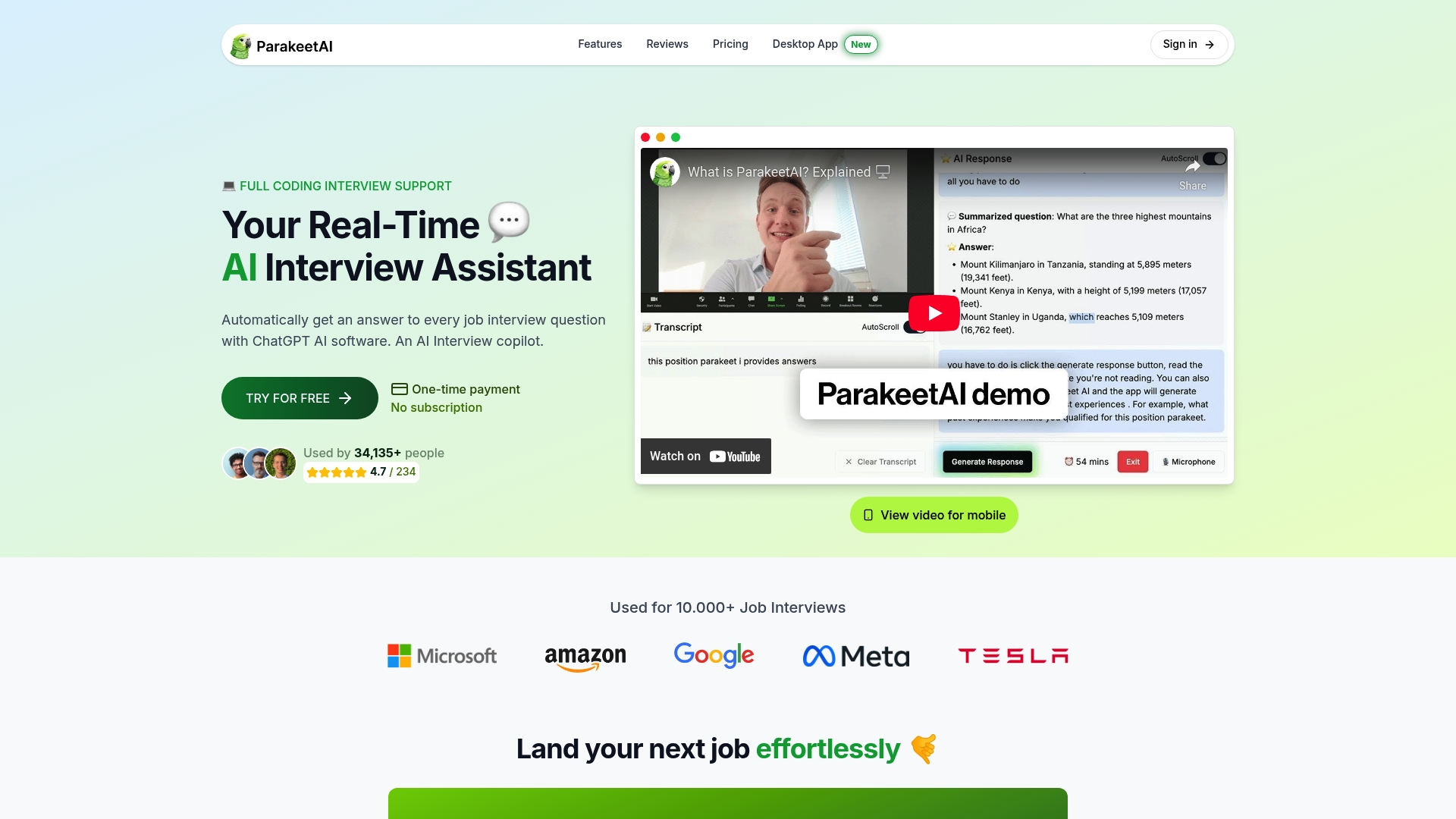
Ready to take control of your interview outcomes? Don’t wait to transform uncertainty into preparedness. Try our powerful AI assistant that supports live speaking practice and instant feedback. Discover more about how real-time voice AI can boost your interview skills at Parakeet AI today and start your journey towards interview success.
Frequently Asked Questions
How does a Voice AI Interview Assistant enhance interview preparation?
Voice AI Interview Assistants simulate real interview environments, providing candidates with automated mock interviews that generate relevant questions and offer real-time feedback on verbal and non-verbal communication skills.
What technology powers real-time responses from Voice AI Interview Assistants?
These systems are powered by advanced natural language processing and machine learning algorithms that enable them to analyze spoken interview questions and generate contextually appropriate responses almost instantaneously.
What are some use cases for Voice AI Interview Assistants in different industries?
Voice AI Interview Assistants can be used in various domains, including software development for coding simulations, corporate HR for initial candidate evaluations, and educational institutions for student mock interview practice.
What ethical considerations should I be aware of when using Voice AI Interview Assistants?
It’s important to consider privacy risks, algorithmic bias, and the psychological impact of reduced human interaction. Users should ensure that any Voice AI system they use has clear privacy policies and ethical guidelines.