
AI Hiring Platforms: Transforming Job Interviews Today

Landing your first professional role often means navigating complex online applications and unpredictable interview formats. For recent graduates and tech-driven job seekers, making a great impression can hinge on understanding how employers use artificial intelligence to evaluate candidates. AI hiring platforms automate resume screening, testing, and interviews, helping companies identify the best talent efficiently. This guide explores core principles and features of modern AI hiring platforms, showing how you can use these cutting-edge tools to stand out and secure a rewarding position.
Table of Contents
- What Is an AI Hiring Platform? Core Principles
- Types of AI Hiring Platforms Explained
- Key Features and How These Platforms Work
- Real-World Uses for Tech-Savvy Candidates
- Risks, Bias, and Common Pitfalls in AI Hiring
- Maximizing Your Success With AI Platforms
Key Takeaways
| Point | Details |
|---|---|
| AI Hiring Platforms Enhance Recruitment | These platforms automate and optimize recruitment processes, improving efficiency and precision in candidate evaluation. |
| Diverse Types Address Various Stages | Different platforms serve distinct recruitment functions, from resume screening to onboarding, enhancing decision-making. |
| Ethical Considerations are Crucial | Organizations must focus on unbiased AI applications and maintain oversight to prevent discrimination in hiring practices. |
| Candidates Can Leverage AI for Success | Job seekers should optimize their profiles and use AI insights to enhance their visibility and job matching potential. |
What Is an AI Hiring Platform? Core Principles
AI hiring platforms represent a groundbreaking technological solution transforming traditional recruitment processes. These sophisticated systems leverage artificial intelligence to automate and optimize talent acquisition strategies, fundamentally reimagining how organizations identify and evaluate potential candidates. By integrating advanced machine learning algorithms and natural language processing, AI hiring platforms streamline recruitment workflows with unprecedented efficiency and precision.
At their core, these platforms operate on several key principles designed to enhance hiring effectiveness. They focus on automating repetitive screening tasks, reducing human bias, and matching candidates more accurately with organizational requirements. Advanced AI technologies analyze multiple data points including resume content, interview responses, skill assessments, and behavioral indicators to create comprehensive candidate profiles. This approach goes beyond traditional recruitment methods by providing deeper, more nuanced insights into potential employee capabilities.
The fundamental components of AI hiring platforms typically include:
- Automated resume screening
- Intelligent candidate matching algorithms
- Virtual interview analysis
- Predictive performance modeling
- Skills and personality assessment tools
Crucially, these platforms are not about replacing human decision makers but augmenting their capabilities. Ethical AI integration remains paramount to ensure fair, transparent, and unbiased candidate evaluation. Organizations must implement robust oversight mechanisms to prevent potential algorithmic discrimination and maintain human-centric hiring practices.
Pro Tip: Research the specific AI algorithms and transparency protocols of any hiring platform before implementation to ensure alignment with your organization’s ethical standards.
Types of AI Hiring Platforms Explained
The landscape of AI hiring platforms is diverse and sophisticated, with specialized tools designed to address different stages of the recruitment process. Modern AI hiring tools encompass multiple technological approaches that transform traditional talent acquisition strategies, enabling organizations to streamline and enhance their recruitment workflows.
These platforms can be categorized into several distinct types, each serving a unique purpose in the hiring ecosystem:
- Automated Resume Screeners: Utilize machine learning to rapidly analyze and rank candidate applications
- AI Chatbots: Provide initial candidate engagement and preliminary screening
- Video Interview Analyzers: Assess candidate communication skills, emotional intelligence, and nonverbal cues
- Predictive Analytics Tools: Forecast candidate performance and potential organizational fit
- Skills Assessment Platforms: Objectively evaluate technical and soft skills through adaptive testing
- Diversity and Inclusion Enhancers: Help mitigate unconscious bias in recruitment processes
- Onboarding Assistant Platforms: Facilitate smooth integration of new hires into organizational structures
Each of these platform types leverages artificial intelligence to address specific recruitment challenges, moving beyond traditional linear hiring approaches. By integrating advanced algorithms and data analysis techniques, these tools provide unprecedented insights into candidate potential, helping organizations make more informed and equitable hiring decisions.
Understanding the nuanced capabilities of different AI hiring platforms allows recruiters and hiring managers to select tools that align precisely with their organizational needs and hiring objectives. The key is to view these technologies not as replacements for human judgment, but as powerful augmentation tools that enhance decision-making capabilities.
Here’s a summary of how different types of AI hiring platforms add value at each recruitment stage:
| Platform Type | Primary Recruiting Stage | Unique Value Provided |
|---|---|---|
| Automated Resume Screeners | Initial Application Review | Speed up bulk candidate sorting |
| AI Chatbots | Early Candidate Engagement | Enhance response rate, save time |
| Video Interview Analyzers | Interview Assessment | Objective nonverbal analysis |
| Predictive Analytics Tools | Candidate Selection | Spot best-fit, reduce turnover |
| Diversity & Inclusion Enhancers | Screening to Final Selection | Reduce unconscious hiring bias |
| Skills Assessment Platforms | Skills Evaluation | Uncover real, not just claimed, skills |
| Onboarding Assistant Platforms | Post-Hire Integration | Streamline employee ramp-up |
Pro Tip: Conduct a comprehensive audit of your current recruitment process to identify specific pain points where AI hiring platforms can provide the most significant impact.
Key Features and How These Platforms Work
Advanced AI hiring platforms leverage sophisticated technologies to revolutionize the recruitment process, transforming traditional hiring methods into intelligent, data-driven systems. These platforms integrate cutting-edge artificial intelligence technologies like machine learning, natural language processing, and computer vision to automate and optimize every stage of talent acquisition.
The core functionality of AI hiring platforms typically involves several key operational stages:
- Candidate Sourcing: Automatically scanning multiple job boards and professional networks
- Resume Screening: Using machine learning to parse and evaluate candidate applications
- Skills Matching: Analyzing candidate profiles against specific job requirements
- Predictive Analytics: Forecasting candidate potential and job performance
- Interview Evaluation: Analyzing video interviews for communication skills and cultural fit
- Bias Reduction: Implementing anonymization techniques to promote equitable hiring
These platforms work by processing vast amounts of data with remarkable speed and precision. They can analyze hundreds of applications within minutes, identifying top candidates based on complex algorithms that go far beyond traditional keyword matching. By integrating advanced data analysis techniques, these systems provide recruiters with comprehensive insights, transforming subjective hiring processes into objective, data-driven decisions.

The technological architecture of AI hiring platforms involves complex machine learning models that continuously improve their matching capabilities. They learn from each interaction, refining their understanding of successful candidate profiles and organizational requirements. This adaptive approach ensures that the platforms become increasingly sophisticated and accurate over time, helping organizations make more informed hiring decisions.
Pro Tip: Regularly update your platform’s training data and machine learning models to maintain accuracy and adapt to evolving workplace dynamics.
Real-World Uses for Tech-Savvy Candidates
AI hiring platforms offer transformative opportunities for tech-savvy candidates to navigate modern job markets with unprecedented strategic advantages. These sophisticated systems provide intelligent tools that go beyond traditional application processes, enabling candidates to showcase their skills and potential through advanced technological interfaces.
Tech-savvy job seekers can leverage AI hiring platforms in several strategic ways:
- Resume Optimization: Use AI-powered parsing tools to align resumes with job descriptions
- Skill Matching: Identify precise skill gaps and targeted learning opportunities
- Interview Preparation: Access AI-driven practice platforms and real-time feedback mechanisms
- Personalized Job Discovery: Receive intelligent job recommendations based on comprehensive profile analysis
- Performance Benchmarking: Compare professional skills against industry standards
- Career Path Insights: Gain predictive analytics about potential career trajectories
These platforms fundamentally transform how candidates approach professional development and job searching. By utilizing advanced algorithms, candidates can receive nuanced insights into their professional profiles, understand market demands, and strategically position themselves for emerging opportunities. The technology enables a more transparent, data-driven approach to career management that empowers individuals to make informed decisions about their professional journeys.
Navigating AI hiring platforms requires a strategic mindset. Successful candidates will learn to interpret AI-generated insights, optimize their digital professional presence, and understand how machine learning algorithms evaluate potential. The key is to view these platforms not as impersonal screening tools, but as sophisticated career development partners that can provide unprecedented visibility into professional potential.
Pro Tip: Regularly update your digital professional profile with quantifiable achievements and keywords aligned with your target industry to maximize AI matching algorithms.
Risks, Bias, and Common Pitfalls in AI Hiring
AI hiring platforms present complex ethical challenges that extend far beyond their technological capabilities. Despite promises of objective assessment, these systems can inadvertently perpetuate systemic inequalities through subtle algorithmic mechanisms that reproduce historical biases embedded in training data and organizational practices.
The most significant risks in AI hiring platforms include:
- Data Bias: Inheriting discriminatory patterns from historical recruitment records
- Algorithmic Opacity: Lack of transparency in decision-making processes
- Demographic Exclusion: Unintentional screening out of qualified candidates
- Privacy Concerns: Potential misuse of personal and professional information
- Limited Context Understanding: Inability to capture nuanced human attributes
- Overemphasis on Quantitative Metrics: Reducing human potential to numerical scores
Understanding these risks requires recognizing that AI systems are not neutral arbiters but reflection of their underlying design and training environments. Algorithmic bias can manifest subtly, such as prioritizing candidates from specific educational backgrounds or geographic regions, effectively reproducing historical employment inequities. Organizations must implement rigorous fairness audits, diversify training datasets, and maintain human oversight to mitigate these systemic challenges.
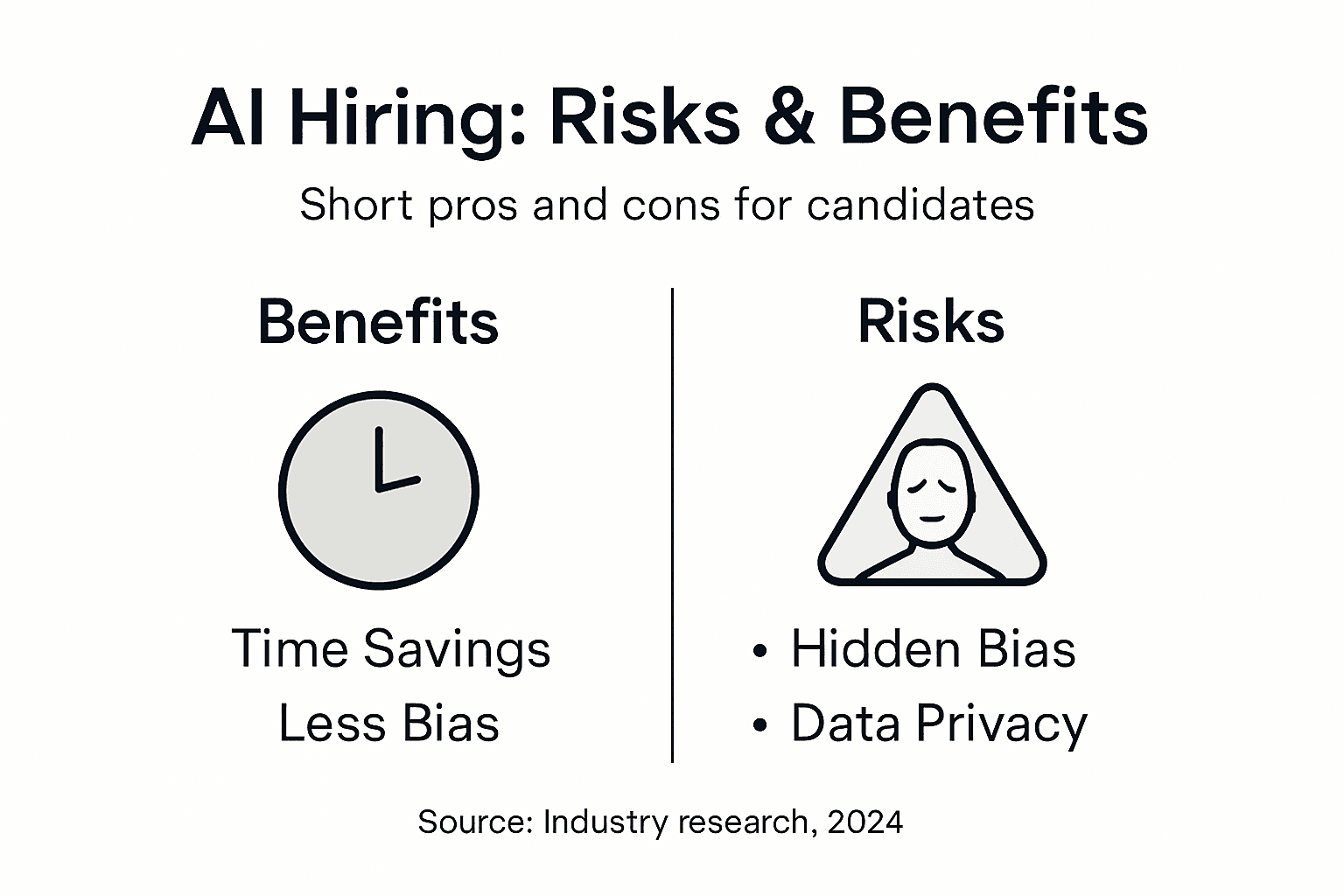
Navigating the ethical landscape of AI hiring demands a proactive approach. Candidates and employers alike must critically evaluate these platforms, understanding their limitations while leveraging their potential. This means demanding transparency, challenging opaque algorithms, and advocating for comprehensive fairness protocols that protect individual rights and promote genuine meritocratic opportunities.
Compare key benefits and risks when adopting AI hiring platforms:
| Area | Main Advantages | Potential Drawbacks |
|---|---|---|
| Efficiency | Faster candidate filtering | Possible overlooked soft skills |
| Fairness | Less recruiter bias | Risk of data or algorithm bias |
| Consistency | Standardized evaluations | May ignore cultural nuances |
| Transparency | Clearer scoring criteria | Some systems lack clarity |
| Cost | Lower HR workload expenses | Setup and maintenance investments |
Pro Tip: Request detailed information about an AI platform’s bias mitigation strategies and fairness metrics before engaging with or implementing the technology.
Maximizing Your Success With AI Platforms
Strategic engagement with AI hiring platforms requires a sophisticated approach that balances technological capabilities with human insight. Modern job seekers must develop a nuanced understanding of how these intelligent systems evaluate professional potential, transforming traditional application strategies into data-driven, algorithmic-aware approaches.
To maximize success, candidates should focus on several key strategies:
- Algorithmic Profile Optimization: Strategically align digital profiles with AI parsing mechanisms
- Keyword Sophistication: Incorporate industry-specific terminology matching job descriptions
- Quantifiable Achievement Highlighting: Emphasize measurable professional outcomes
- Continuous Skill Development: Maintain adaptive learning approaches
- Platform Diversity: Engage multiple AI hiring platforms to broaden opportunities
- Transparency Awareness: Understand each platform’s evaluation methodologies
Successful candidates recognize that AI platforms are not adversarial systems but collaborative tools designed to match talent with organizational needs. By understanding the underlying algorithms, job seekers can craft more compelling professional narratives that resonate with both technological screening processes and human decision makers. This requires a dynamic approach that combines technical savvy with authentic professional storytelling.
The most effective strategy involves viewing AI platforms as sophisticated career development partners. This means continuously refining digital professional representations, staying informed about technological trends, and maintaining flexibility in career exploration. Candidates who approach AI hiring platforms with curiosity, strategic thinking, and a commitment to personal growth will consistently outperform those who treat these systems as passive screening mechanisms.
Pro Tip: Regularly conduct mock AI platform assessments to understand and optimize your professional digital footprint.
Master Your AI-Powered Job Interviews with Real-Time Assistance
The article highlights how AI hiring platforms transform the recruitment landscape by providing real-time feedback and objective insights during interviews. A common pain point for candidates is navigating AI-driven assessments and interview analysis that evaluate communication skills and cultural fit. At Parakeet AI, we address these challenges directly by offering a real-time AI job interview assistant that listens carefully and automatically generates answers to every question, helping you showcase your best self and align with what AI-powered systems expect.
Why struggle with complex AI interview evaluations alone when you can harness smart assistance? With Parakeet AI, you get instant support that helps you overcome the pressures of predictive analytics tools and video interview analyzers, boosting your confidence and performance in every session. Discover how this advanced technology complements your skills and turns AI hiring platforms from a challenge into a powerful advantage.
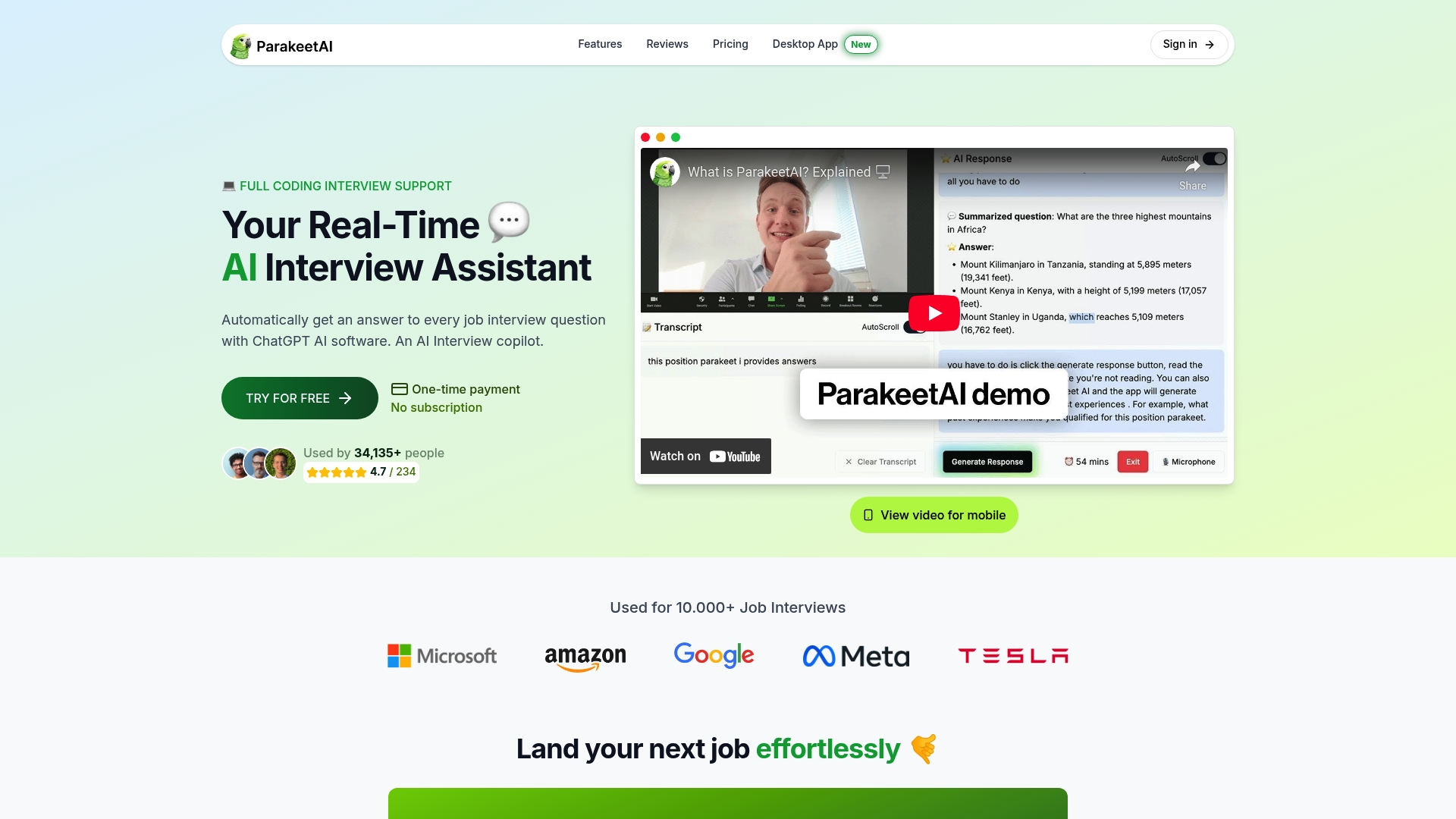
Take control of your interview outcomes today by visiting Parakeet AI. Get started now and transform your job search with intelligent, AI-driven interview support tailored for tech-savvy candidates looking to outperform. Unlock your potential and outshine the competition in this fast-evolving hiring landscape.
Frequently Asked Questions
What is an AI hiring platform?
AI hiring platforms are advanced technological solutions that utilize artificial intelligence to automate and optimize recruitment processes, helping organizations efficiently identify and evaluate potential candidates.
How do AI hiring platforms reduce bias in recruitment?
AI hiring platforms help reduce bias by using algorithms designed to promote fair assessments, implementing anonymization techniques, and requiring diverse training datasets to prevent the perpetuation of historical inequalities.
What key features should an AI hiring platform include?
An effective AI hiring platform should include features such as automated resume screening, intelligent candidate matching, virtual interview analysis, predictive performance modeling, and skills assessment tools.
How can candidates leverage AI hiring platforms for job applications?
Candidates can optimize their resumes using AI tools, align their skills with job descriptions, prepare for interviews with AI-driven practice platforms, and receive personalized job recommendations based on their profiles.