Coding Interview Practice Online: 10 Best Resources
You're three weeks out from interviews, you've got a browser full of tabs, and you can solve a medium dynamic programming problem at your kitchen table. Then a friend plays interviewer, asks you to clarify the input format, and your explanation falls apart. You knew the pattern. You just hadn't practiced saying it, defending it, or recovering when your first idea was wrong.
That's the core problem with coding interview practice online. Solving alone, finishing a timed assessment, and talking through a solution with another person train different skills, and most candidates overtrain the first one. Adoption isn't the issue. A 2020 HackerEarth developer survey found 70% of students and 53% of working professionals used online coding platforms to improve their skills.
So don't ask which single site is best. Ask what job each resource does in your week. The ten below are judged on practice format, feedback quality, structure, accessibility, and how realistically you'd use them under time pressure. Some drill patterns. Some simulate the clock. A few force you to speak. You'll probably need one from each category, used in the right order, rather than five subscriptions that all do the same thing.
1. AI Mock Interview Practice
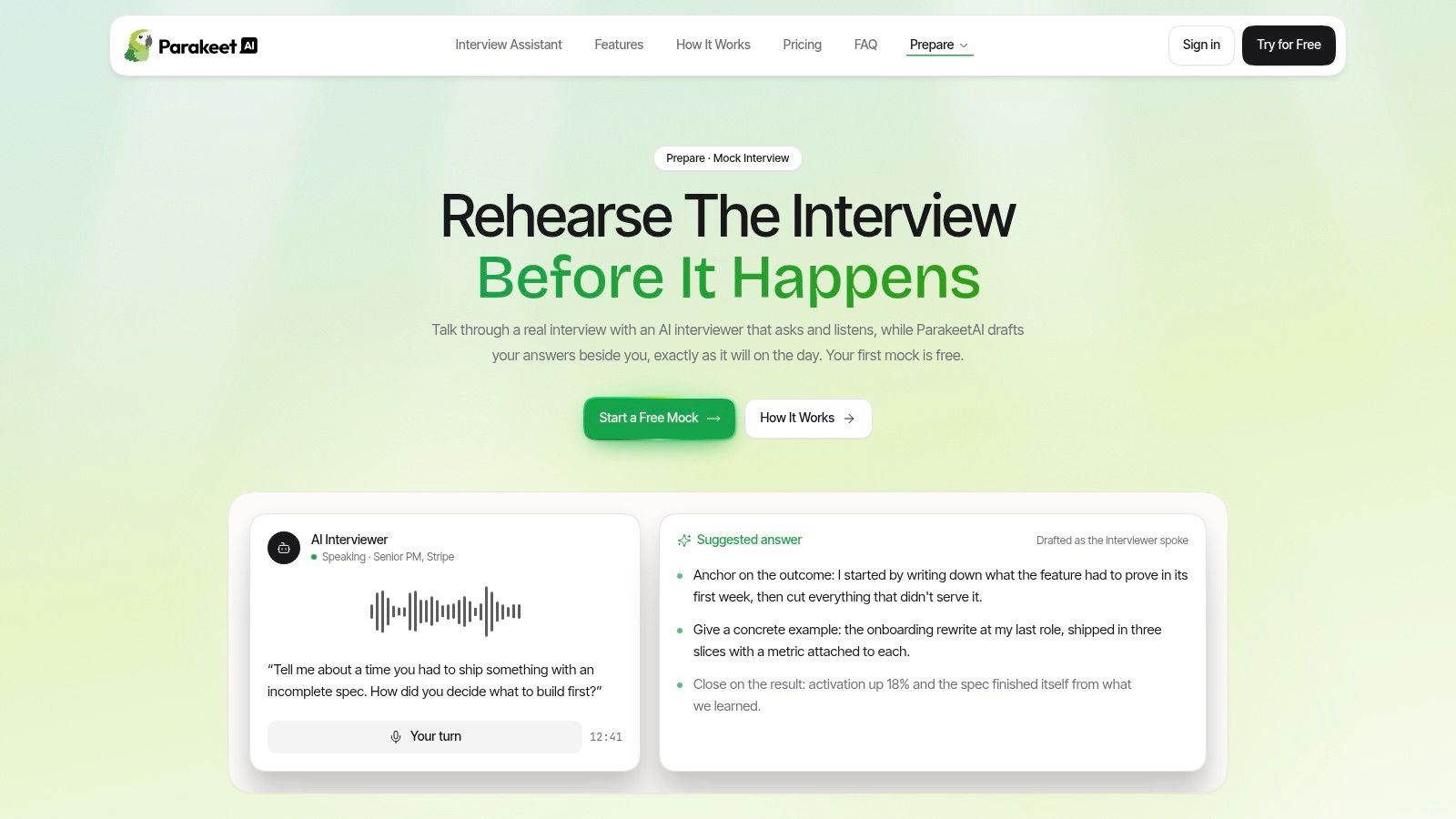
Most drilling platforms never make you open your mouth. ParakeetAI's mock interview tool flips that order. An AI interviewer asks questions, listens to your answers, and asks follow-up questions, so the session feels like a conversation instead of a static list you read. Your session transcript is saved, which matters more than it sounds. You can reread exactly where you rambled, skipped a clarifying question, or claimed a complexity you couldn't justify.
That spoken layer fills a real gap. In a 2025 global technology hiring survey, technical discussion was used by 75.27% of respondents and live coding by 49.82%, while asynchronous coding tests sat at 24.54%. If discussion is the most common format, silent problem solving alone is incomplete preparation.
Where It Fits and Where It Doesn't
Use this after you've learned a topic, not before. Attempt problems elsewhere first, then rehearse explaining your approach, trade-offs, and edge cases here. It's also a low-stakes way to build reps if booking human mocks feels expensive or intimidating, and it pairs well with broader interview practice with AI when you want more conversational drilling.
- Interactive follow-ups: The interviewer listens and responds, so you can't hide behind a memorized script.
- Saved transcript: Reviewing your own words exposes vague reasoning you'd otherwise miss.
- First mock free: You can test the format before paying anything.
- Limits to know: Only the first mock is free, further use may require credits or a subscription, and an AI won't fully reproduce a human interviewer's nuance, interruptions, or skepticism.
2. LeetCode
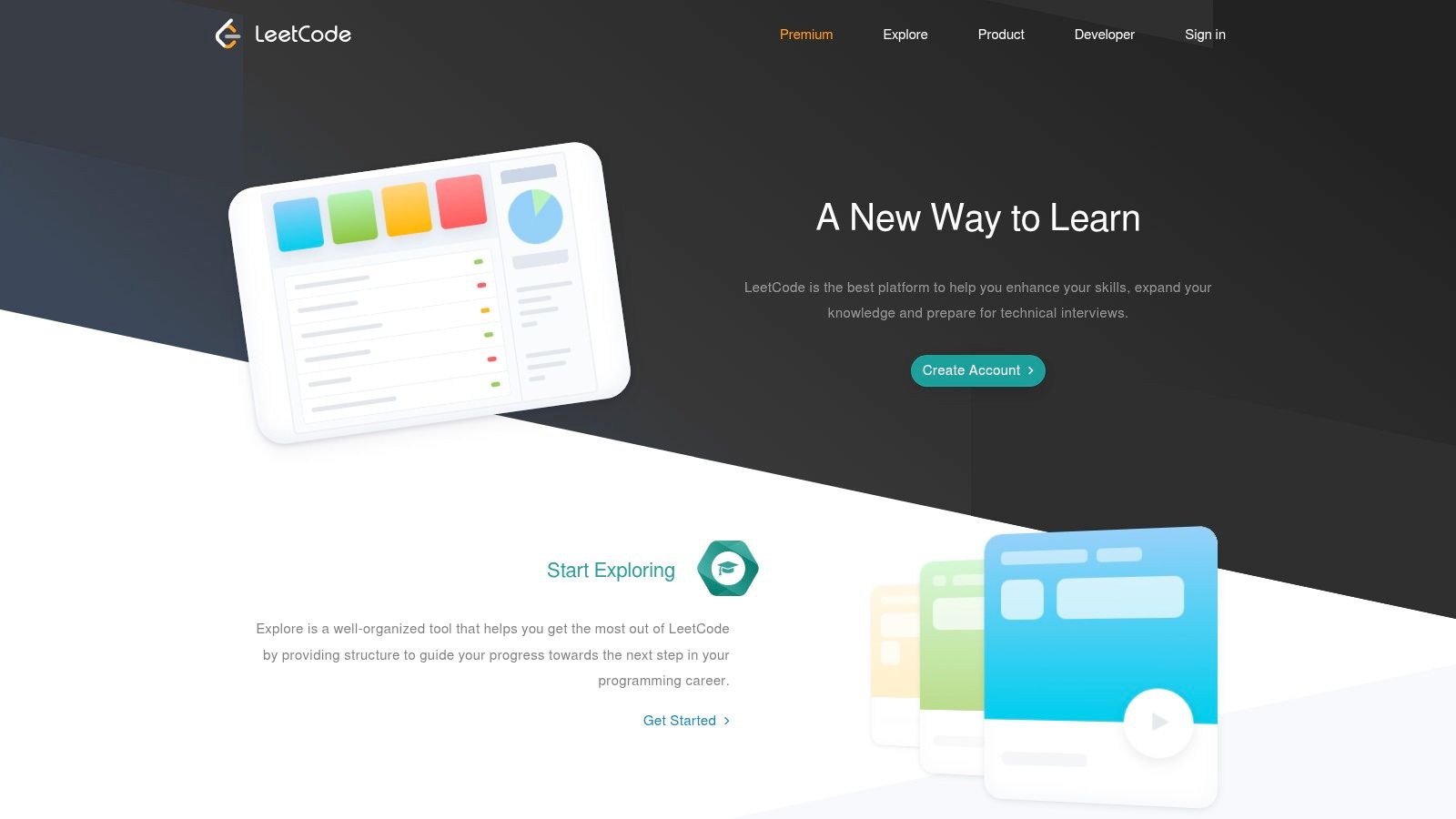
LeetCode is the default drilling ground for a reason. The problem library is enormous, difficulty ranges from warm-ups to hard, and company-tagged questions let you focus once you know who's interviewing you. Many problems are free. Premium, listed at $35 per month or $159 per year in the U.S. when checked, adds video solutions and extra interview features.
Its popularity shows up in preparation habits. In a 2025 study of technical interview preparation surveying 131 people, LeetCode users reported practicing data structures and algorithms for about 2 hours per day on average, typically around 3 days per week. That's a serious time investment, which makes direction essential.
How to Avoid Drowning in It
The volume is the trap. Randomly picking problems feels productive and teaches little. Work topic by topic, set a timer, and write down why you got stuck before opening any editorial.
- Breadth: Topics and difficulties cover nearly anything an interviewer might ask.
- Timed simulations: Useful once untimed accuracy is solid.
- Free tier depth: You can do substantial preparation without paying.
- Main drawback: Without a study plan, the archive overwhelms, and Premium explanations sit behind payment.
3. interviewing.io
If LeetCode trains your hands, interviewing.io trains your performance in front of a person. It offers live technical mock interviews with experienced engineers, plus AI-led coding and system design practice. Formats include coding, system design, machine learning, and frontend, and practice can be anonymous, which lowers the embarrassment barrier considerably.
That realism matters because interview skill isn't just correctness. A peer-reviewed validity synthesis covering 37 studies and 30,646 participants found interview evaluations had criterion-related validity of approximately ρ = 0.30 for task performance. Interviews predict something real, but imperfectly, so rehearsing explanation and requirement handling alongside code is worthwhile.
Cost and Best Use
AI practice and some content are free. Paid human interviews start at $179, varying by subject and interviewer, so treat them as diagnostics, not daily reps. Book one after a few weeks of drilling, fix what it exposes, then book another.
- Real-time communication: You practice responding to hints and follow-ups live.
- Experienced interviewers: Feedback reflects industry expectations.
- Free AI option: No booking needed for initial practice.
- Main drawback: Human sessions are costly, and fit varies by interviewer.
4. HackerRank
HackerRank is built around the assessment end of hiring. Its interview preparation kits run for one week, one month, or three months, giving you a calendar instead of an undifferentiated problem pile. If your near-term hurdle is a timed online screen rather than a conversational round, that structure is directly relevant.
Basic access includes one coding AI mock interview, one mock test, and limited AI Tutor use. Paid monthly or quarterly plans expand that access, with current pricing shown on the account pricing page. Check it before committing, since plan details change.
There's a broader relevance question worth keeping in mind while you practice here. A 2025 industry survey on coding assessments identified lack of role relevance as the top improvement area for coding tests at 54%, followed by unreasonably short time limits at 40%. In other words, assessment fluency is a skill in itself, separate from job skill, and practicing the format is rational even when the format is flawed.
Strengths and Trade-offs
- Guided kits: A clear starting point if you don't know what to study first.
- Timed practice: Mock tests mirror assessment pressure well.
- Accessible entry: Basic access lets you try core features.
- Main drawback: It's more test-oriented than conversational, and fuller features require a subscription.
5. Exponent (formerly Aced)
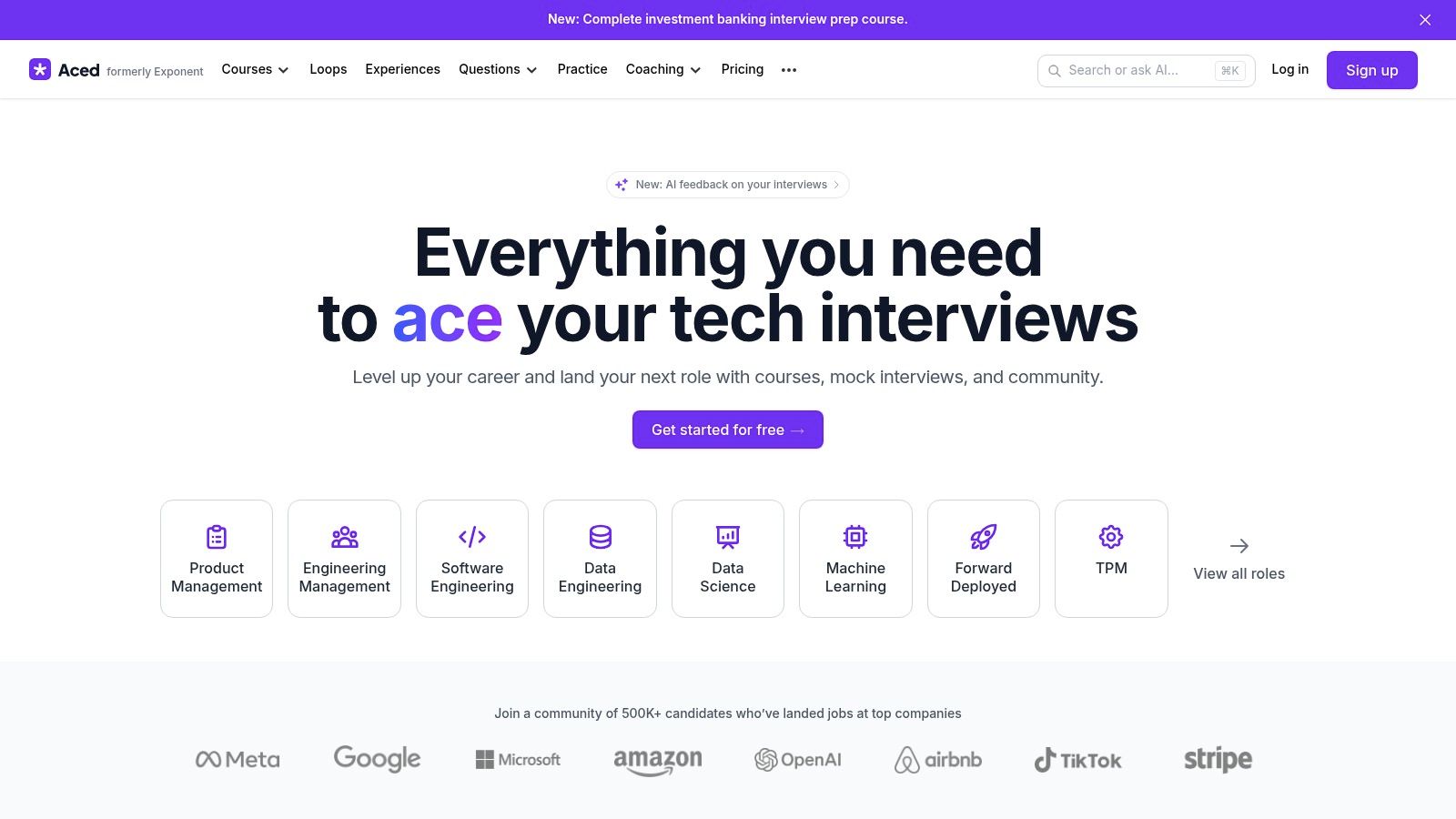
Exponent combines self-guided study with peer mock interviews, which is a smart pairing. The software engineering course includes interactive coding questions and walkthroughs for data structures and algorithms. Peer sessions then put you in a collaborative code editor with another person, where you have to talk while you type.
Playing interviewer is the underrated part. Watching someone else flounder through a prompt teaches you what unclear communication sounds like from the other side of the table. You start noticing missing clarifying questions in your own approach almost immediately.
Pricing and Practicalities
Some content can be previewed. The coding course page listed all-access membership at $12 per month when checked, and paid coaching is separate. System design and behavioral preparation are included in the broader offering, useful if your loop goes beyond algorithms.
- Instruction plus live practice: You learn a topic, then rehearse it with a peer.
- Shared editor: Coding mocks feel closer to real interview tooling.
- Both roles: Interviewing others sharpens your own judgment.
- Main drawback: Peer practice depends on scheduling and showing up, and some content and coaching cost extra.
6. AlgoMonster
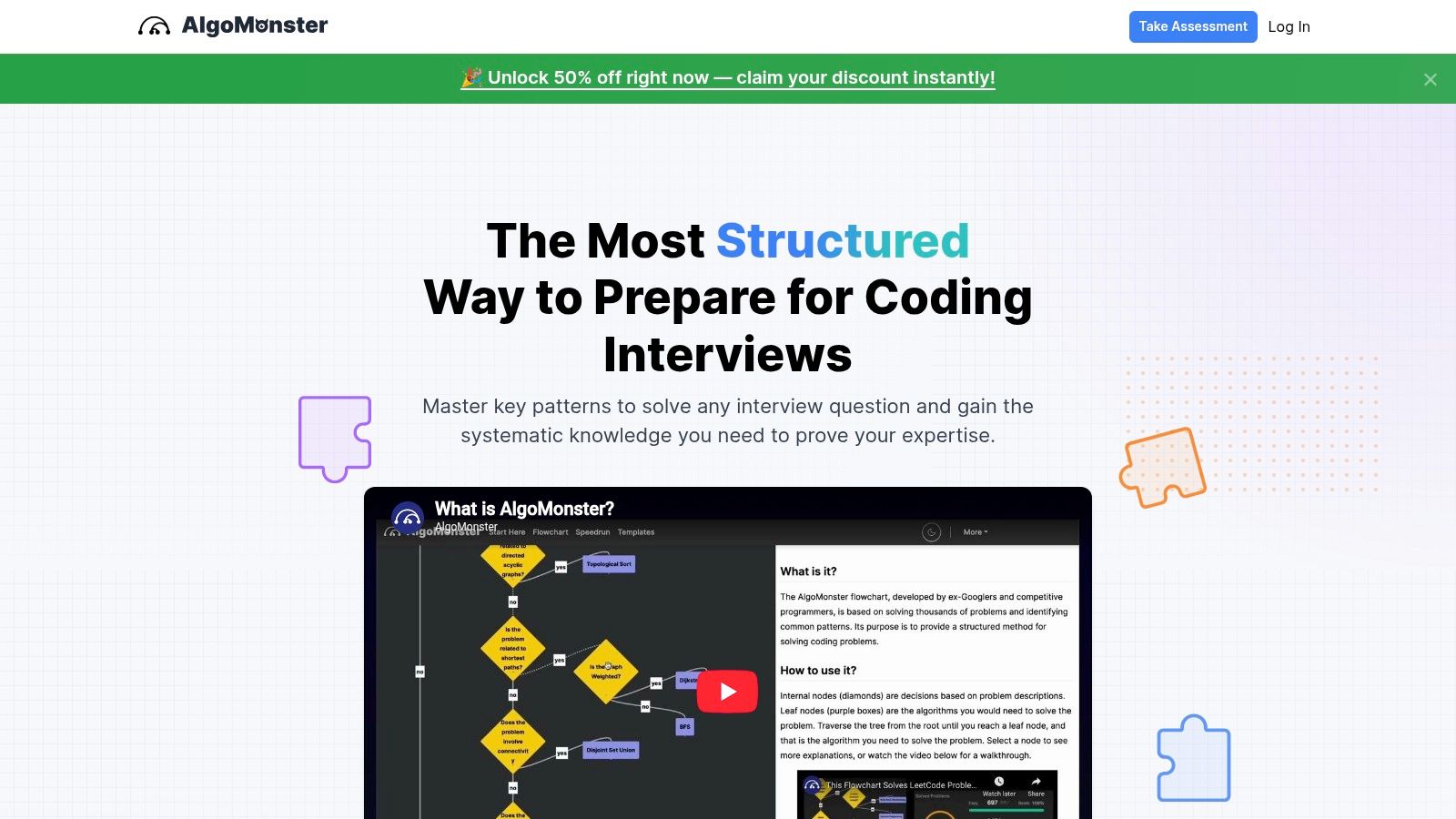
Some candidates don't need more problems. They need someone to tell them what to study next. AlgoMonster is a guided curriculum built around repeatable coding patterns, with lessons and visual explanations alongside practice problems, a company-specific question bank, and an AI assistant on Pro.
The pattern framing is the honest way most strong candidates solve problems. They aren't inventing algorithms from scratch under pressure. They're recognizing that a prompt is a sliding window or a binary search variant and adapting a known template. Teaching recognition explicitly shortens that path.
Learn the pattern name out loud, not just the code. Being able to say why a technique fits is what interviewers are listening for.
Full access is paid. Pro was listed at $45 per month, $23.34 per month billed quarterly, or $8.25 per month billed annually during a displayed promotion, so verify checkout pricing.
- Organized sequence: Removes decision fatigue about what comes next.
- Pattern emphasis: Explanations focus on recognition, not memorization.
- Main drawback: Full access requires payment, and a curated path may feel limiting if you prefer a huge open archive.
7. NeetCode
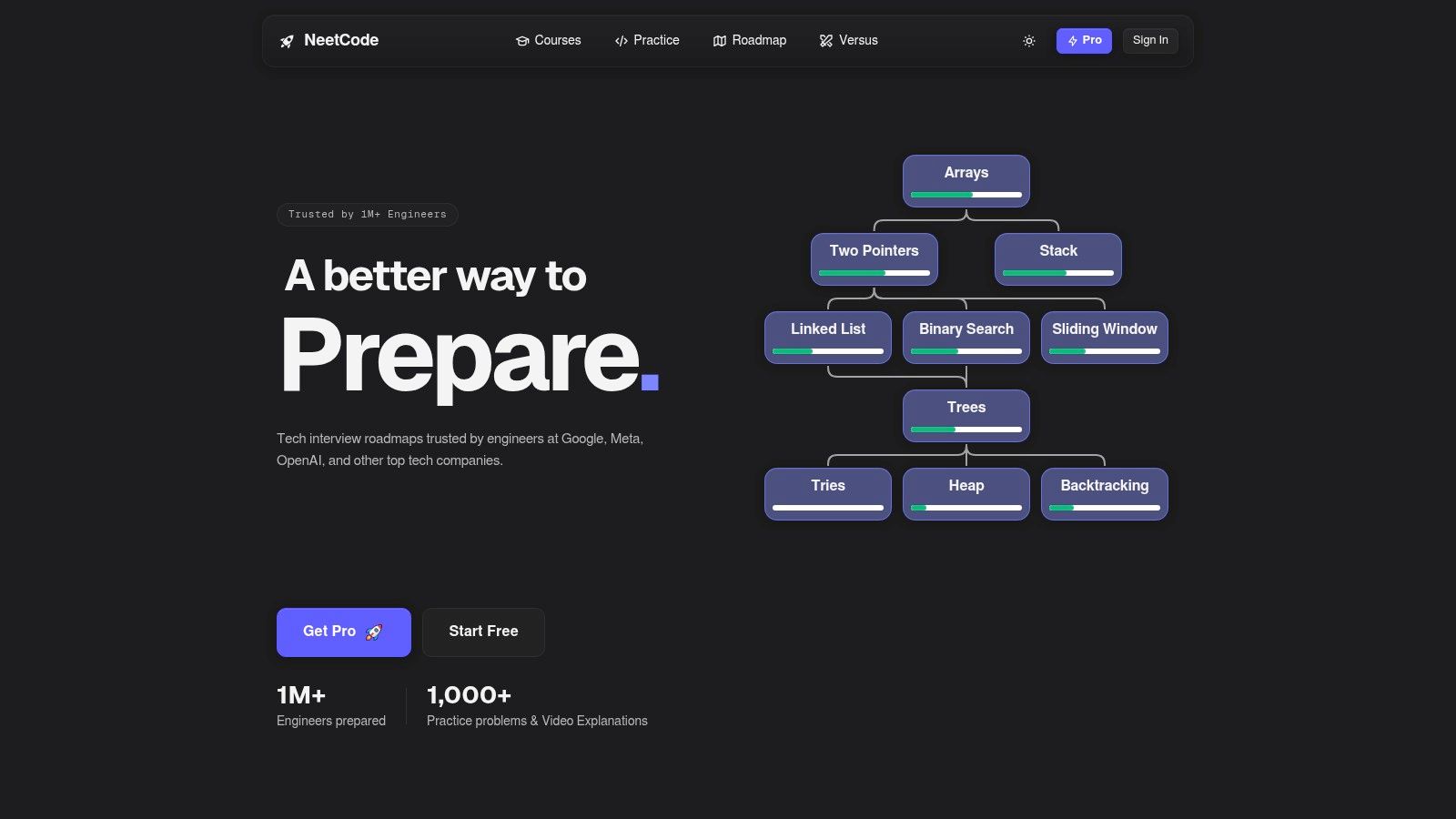
NeetCode answers the question LeetCode leaves open, which problems and in what order. Its curated lists, including NeetCode 150, pair a defined sequence with video explanations, written guides, and an in-browser coding workspace with test cases. Solutions come in several programming languages, so you're not translating someone else's Python into your Java mid-session.
The danger is passive watching. Video explanations feel like learning because the reasoning sounds obvious when someone else narrates it. It isn't learning until you reproduce the solution cold, ideally a day later, without the video open.
Access and Fit
Substantial free practice is available. The Pro page listed $119 for one-year access and $297 for lifetime access when checked. For self-directed candidates who want a roadmap without paying for a full course platform, that's a reasonable middle ground.
- Curated roadmap: A finite list beats an infinite archive for planning.
- Multiple formats: Video and written explanations suit different learners.
- Generous free tier: You can start the core list today.
- Main drawback: Some courses require payment, and video-first study can become passive.
8. CodeSignal
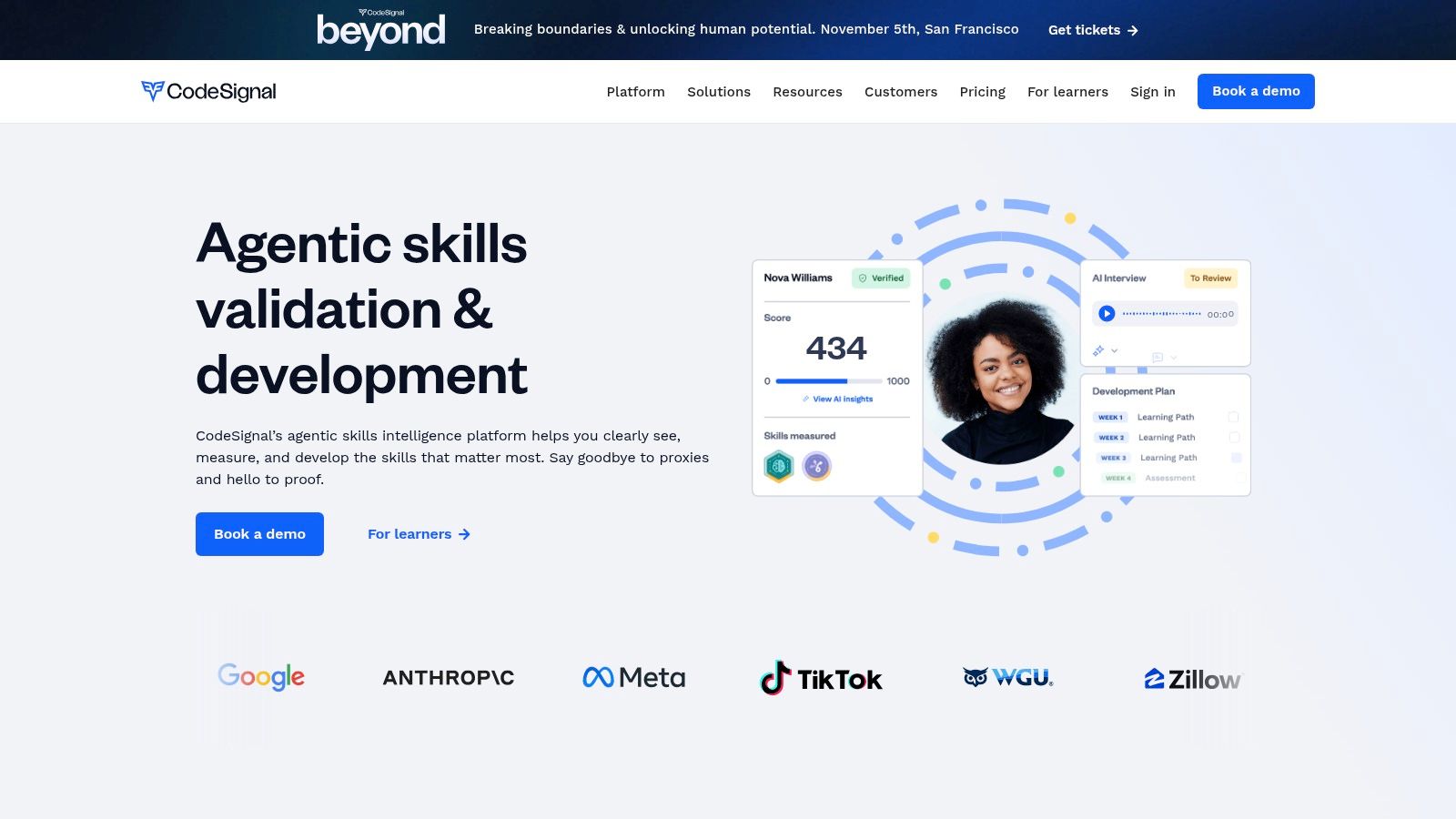
CodeSignal serves a narrow but useful purpose. If an employer sends you a CodeSignal assessment, you want your first encounter with that interface to happen in practice, not on the clock. Its candidate-facing practice includes questions modeled on assessment formats in a timed environment, and practice activity stays separate from employer-visible results.
Be clear about the limit, though. The official practice area contains one question per question type according to its help page. That's enough to learn the editor, the test layout, and the pacing. It is not enough to build algorithmic depth, and treating it as your main study platform would leave you underprepared.
Costs and Best Use
Individual Learn access is free to start, with programming skill paths and an AI tutor on individual plans. Cosmo+ was listed at $24.99 per month. Use CodeSignal in the final days before a known assessment, layered on top of broader drilling done elsewhere.
- Interface familiarity: Removes avoidable surprises on assessment day.
- Private practice: Employers don't see your rehearsal attempts.
- Free entry point: Easy to spin up quickly.
- Main drawback: Limited practice variety makes it a poor primary resource.
9. Educative
Educative is for learners who'd rather read than watch. Its interview courses, including the well-known Grokking pattern material, combine text, diagrams, quizzes, and in-browser coding, with guided paths that extend into system design. You code inside the lesson, so there's no local environment to configure and no context switch between reading and trying.
Text has a real advantage for review. Skimming back to a diagram takes seconds. Scrubbing through a forty-minute video to find one explanation doesn't. For pattern revision in the final week before interviews, that matters.
There's also a comprehension angle. A controlled study of interview-style problem solving with 80 participants found grammatical-reasoning accuracy was positively correlated with problem-solving accuracy across participants. Reading prompts carefully and restating them precisely is trainable, and text-based study supports exactly that habit.
Pricing Snapshot
Plans listed Standard at $13 per month billed annually, Premium at $17, and Premium Plus at $21, with AI-assisted feedback and mock features on eligible plans.
- Hands-on reading: Code without setup, review without scrubbing video.
- Broad coverage: Patterns, system design, and more in one subscription.
- Main drawback: Full access generally requires payment, and course study doesn't replace live spoken practice.
10. AlgoExpert
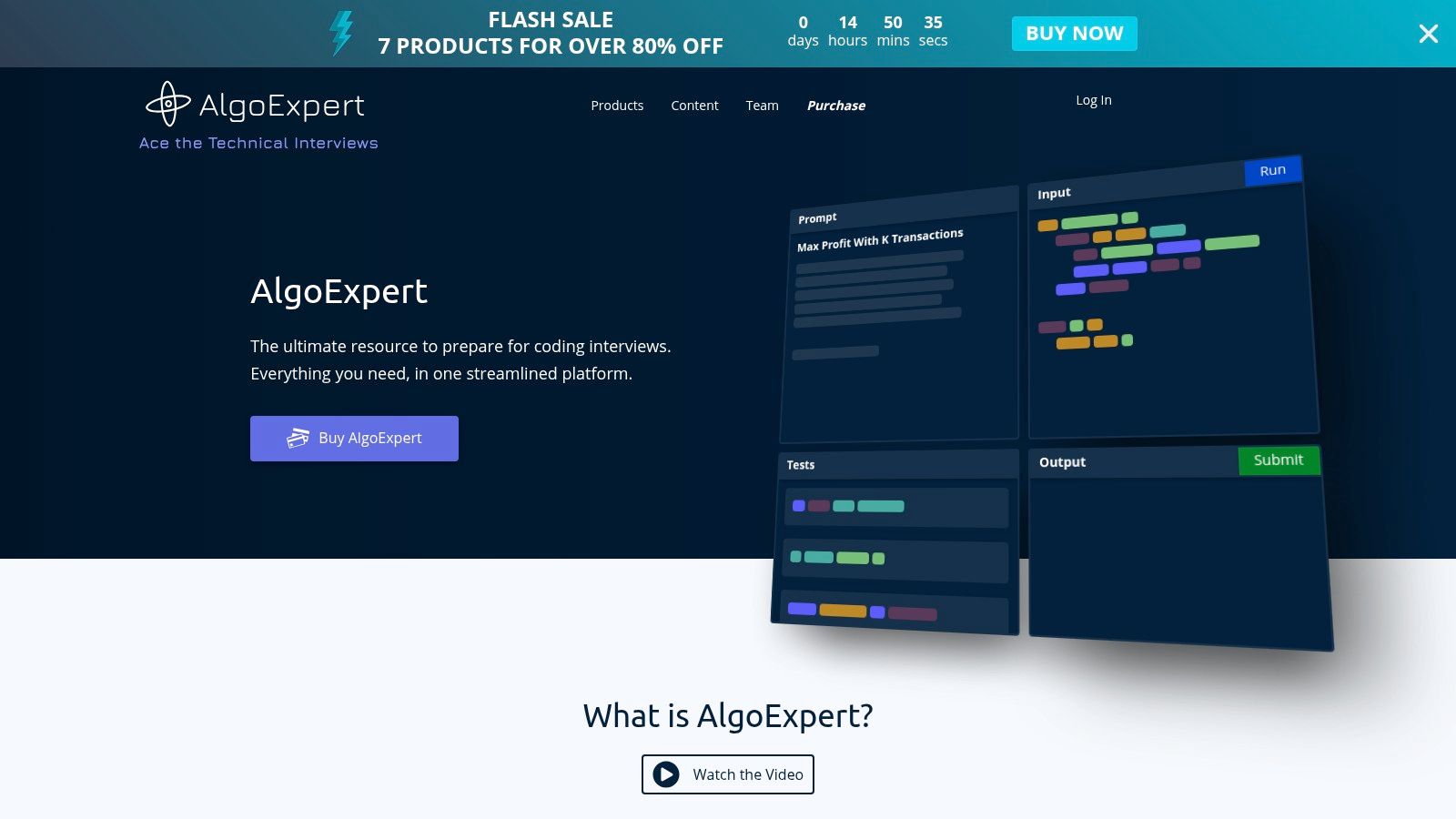
AlgoExpert packages what many candidates otherwise assemble from four different sites. You get curated coding questions, detailed video explanations with complexity analysis, solutions in multiple languages, an in-browser workspace, timed assessments, and peer mock coding interviews in one product.
That integration is the selling point, and also the constraint. A curated library is smaller than an open platform's archive, so heavy grinders may exhaust it. For candidates with six to eight weeks and limited patience for stitching resources together, though, one coherent system beats a sprawling bookmark folder.
Practical rule: Always attempt the problem before pressing play. An explanation watched first teaches recognition. An explanation watched after a failed attempt teaches correction.
Full access is paid. The purchase page listed an All Access one-year package at $119 during a displayed sale, so confirm current pricing and availability before buying.
- Thorough explanations: Complexity analysis is treated as part of the answer, not an afterthought.
- All-in-one workspace: Questions, timing, and mocks live together.
- Main drawback: Paid access and a smaller library than broad open platforms.
Top 10 Online Coding Interview Practice Resources Compared
| Tool | Core Practice | Standout Feature | Best For | Price & Access |
|---|---|---|---|---|
| ParakeetAI Mock Interview | AI-led conversational interview practice | ★ Follow-up questions and saved transcript; first mock is free | 👥 Practicing spoken answers and interview flow | 💰 One free mock; more use may require credits or Unlimited |
| LeetCode | Large coding-problem library and timed simulations | ✨ Company-tagged problems across many topics | 👥 Candidates seeking broad algorithm practice | 💰 Many problems free; U.S. Premium listed at $35/month or $159/year |
| interviewing.io | AI and live technical mock interviews | 🏆 Experienced human interviewers and detailed feedback | 👥 Candidates wanting realistic technical interview practice | 💰 AI practice available free; human interviews start at $179 |
| HackerRank | Coding challenges, prep kits, and mock tests | ✨ Structured one-week, one-month, or three-month kits | 👥 Candidates preparing for timed assessments | 💰 Basic access available; expanded features require a paid plan |
| Exponent | Courses, coding practice, and peer mock interviews | ✨ Collaborative code editor and peer practice | 👥 Candidates wanting both study materials and live practice | 💰 Course listed at $12/month; coaching costs extra |
| AlgoMonster | Guided, pattern-based coding curriculum | ✨ Visual explanations and company question bank | 👥 Learners who prefer a structured study path | 💰 Pro listed at $45/month, with lower quarterly or promotional annual rates |
| NeetCode | Curated problem lists, guides, and coding workspace | 🏆 NeetCode 150 with video and written explanations | 👥 Candidates following a curated coding plan | 💰 Free practice; Pro listed at $119/year or $297 lifetime |
| CodeSignal | Timed coding-assessment practice and skill paths | ✨ Practice modeled on its assessment formats | 👥 Candidates getting familiar with online coding tests | 💰 Free to start; Cosmo+ listed at $24.99/month |
| Educative | Interactive courses, coding challenges, and interview paths | ✨ Text-and-diagram lessons with in-browser coding | 👥 Learners seeking guided coding and system-design study | 💰 Plans listed from $13/month billed annually |
| AlgoExpert | Curated coding questions, assessments, and explanations | 🏆 Timed assessments and peer mock interviews in one package | 👥 Candidates seeking an all-in-one coding curriculum | 💰 All Access listed at $119 for one year during a sale |
Build a Practice Routine That Changes Modes
Buying access is the easy part. The candidates who improve fastest rotate deliberately between modes instead of grinding one format until it stops teaching them anything. A six-week structure works well because it's long enough to build patterns and short enough to stay honest about weak spots.
Start weeks one and two with a guided resource or curated sequence. AlgoMonster, NeetCode, or Educative can teach core patterns in a sensible order, arrays and hashing through trees, graphs, and basic dynamic programming. Keep sessions untimed. Your only job is recognition, naming the pattern before you write code.
In weeks three and four, shift weight to a broad platform like LeetCode and solve unseen problems independently. Set a timer, but don't panic about it yet. After each problem, log three things, whether your approach was right, where you stalled, and what signal in the prompt you missed. That log becomes your revision list, and it's far more useful than a solved count.
Weeks five and six are for realism. Complete timed assessments in an assessment-style environment such as HackerRank or CodeSignal practice, especially if you know an employer uses one of them. In parallel, rehearse spoken reasoning at least twice a week through AI mock practice, peer sessions on Exponent, or a paid human mock on interviewing.io when you want a hard diagnostic. Speak your clarifying questions. Narrate your trade-offs. Say your complexity out loud and defend it.
Before You Pay for Anything
Verify current pricing on each provider's official page, since promotions and regional prices change often. For ParakeetAI, check its official pricing page rather than trusting any number quoted secondhand. Free tiers across these tools are sufficient to test fit, so spend a week evaluating before stacking subscriptions you won't use.
Track separate scores instead of a single solved tally. Rate yourself on functional correctness, time and space complexity, explanation quality, and requirement handling. A correct solution you explained badly is a partial success at best, and your practice should record it that way.
If you remember one rule, make it this. Attempt first, review second, explain aloud third, and record what changed after every session. Repeat that loop across modes for six weeks and you won't just know more patterns. You'll perform like someone who does.
When silent drilling stops being enough, ParakeetAI lets you rehearse with an AI interviewer that asks questions, listens to your answers, follows up, and saves a transcript you can review afterward, with your first mock interview free. If explaining your reasoning under pressure is the weak spot in your preparation, visit ParakeetAI and run your first session before your next round of problem practice.