
How AI Scores Interview Performance: Real Impact

Landing your first tech role often means facing fast-paced interviews where every detail matters. With employers from Silicon Valley to Berlin increasingly relying on AI-scored video interviews, candidates must adapt to standardized evaluation systems analyzing everything from speech clarity to emotional tone. Discover how AI interview scoring works, what metrics count, and how real-time feedback transforms your interview preparation for today’s competitive, global job market.
Table of Contents
- How AI Interview Scoring Works Today
- Key Metrics in AI-Powered Interview Analysis
- Types of AI Interview Tools and Methods
- Real-Time Feedback and Candidate Improvement
- Risks, Bias, and Best Practices for Using AI
Key Takeaways
| Point | Details |
|---|---|
| AI Interview Scoring | Leveraging advanced algorithms, AI interview scoring enhances recruitment by providing objective evaluations of candidates across various dimensions such as communication skills and emotional intelligence. |
| Real-Time Feedback | AI platforms offer immediate feedback, enabling candidates to refine their presentation and communication strategies dynamically during practice sessions. |
| Mitigating Bias | Organizations must proactively address risks of algorithmic bias in AI hiring by implementing regular audits, maintaining transparency, and ensuring human oversight in decision-making processes. |
| Variety of Tools | A range of AI interview technologies, from chatbots to immersive simulations, allows for comprehensive candidate evaluations that go beyond traditional methods. |
How AI Interview Scoring Works Today
AI interview scoring represents a sophisticated technological approach to candidate evaluation, transforming traditional recruitment processes through advanced computational techniques. AI-powered interview analysis enables organizations to capture candidate responses across multiple communication channels, converting video, voice, and chat interactions into analyzable text data.
The core mechanism involves natural language processing models trained on thousands of structured interviews. These intelligent systems assess candidate responses by breaking down linguistic patterns, emotional tonality, communication clarity, and behavioral indicators. By comparing candidate performance against predefined job success criteria, AI generates nuanced scores that provide recruiters with objective, data-driven insights into potential employee capabilities.
Unlike traditional human-only evaluations, AI interview scoring introduces unprecedented consistency and scalability. Transparent scoring methodologies help reduce individual interviewer bias by applying identical evaluation standards across all candidates. The technology simultaneously captures multiple performance dimensions such as verbal communication skills, problem-solving approaches, emotional intelligence, and technical knowledge.
Pro tip: When preparing for an AI-scored interview, focus on clear, structured responses that demonstrate logical thinking and directly address the question’s core requirements.
Key Metrics in AI-Powered Interview Analysis
AI-powered interview analysis relies on sophisticated metrics that transform subjective conversation evaluations into objective, measurable insights. Understanding interview analysis requires examining the complex computational approaches used to assess candidate performance across multiple dimensions.
The primary metrics analyzed during AI interview evaluations typically include communication effectiveness, linguistic complexity, emotional intelligence, and problem-solving capabilities. These metrics are derived through advanced natural language processing algorithms that break down verbal responses into granular components. Key performance indicators might encompass response clarity, coherence, vocabulary sophistication, reasoning structure, and the candidate’s ability to articulate complex ideas concisely.

Emotional and behavioral metrics represent another critical dimension of AI interview scoring. Advanced systems now analyze vocal tone, speech patterns, facial expressions, and microexpressions to gauge candidate confidence, stress management, and interpersonal communication skills. These nuanced assessments provide recruiters with deeper insights beyond traditional text-based evaluations, offering a more comprehensive understanding of a candidate’s potential cultural and professional fit.
Pro tip: Practice recording mock interviews to understand how your communication style translates into measurable metrics, helping you refine your presentation and communication strategies.
Types of AI Interview Tools and Methods
AI interview technologies have evolved dramatically, creating a diverse ecosystem of sophisticated assessment tools designed to transform recruitment processes. AI interviewing systems range from simple rule-based chatbots to complex, immersive evaluation platforms that leverage cutting-edge machine learning algorithms.
The primary categories of AI interview tools include conversational AI assistants, video analysis platforms, virtual reality simulations, and gamified assessment environments. These tools analyze multiple data points such as verbal responses, facial expressions, speech patterns, and cognitive problem-solving approaches. Specialized systems can evaluate technical skills through coding challenges, assess emotional intelligence via microexpression analysis, and measure communication effectiveness by examining linguistic complexity and response coherence.
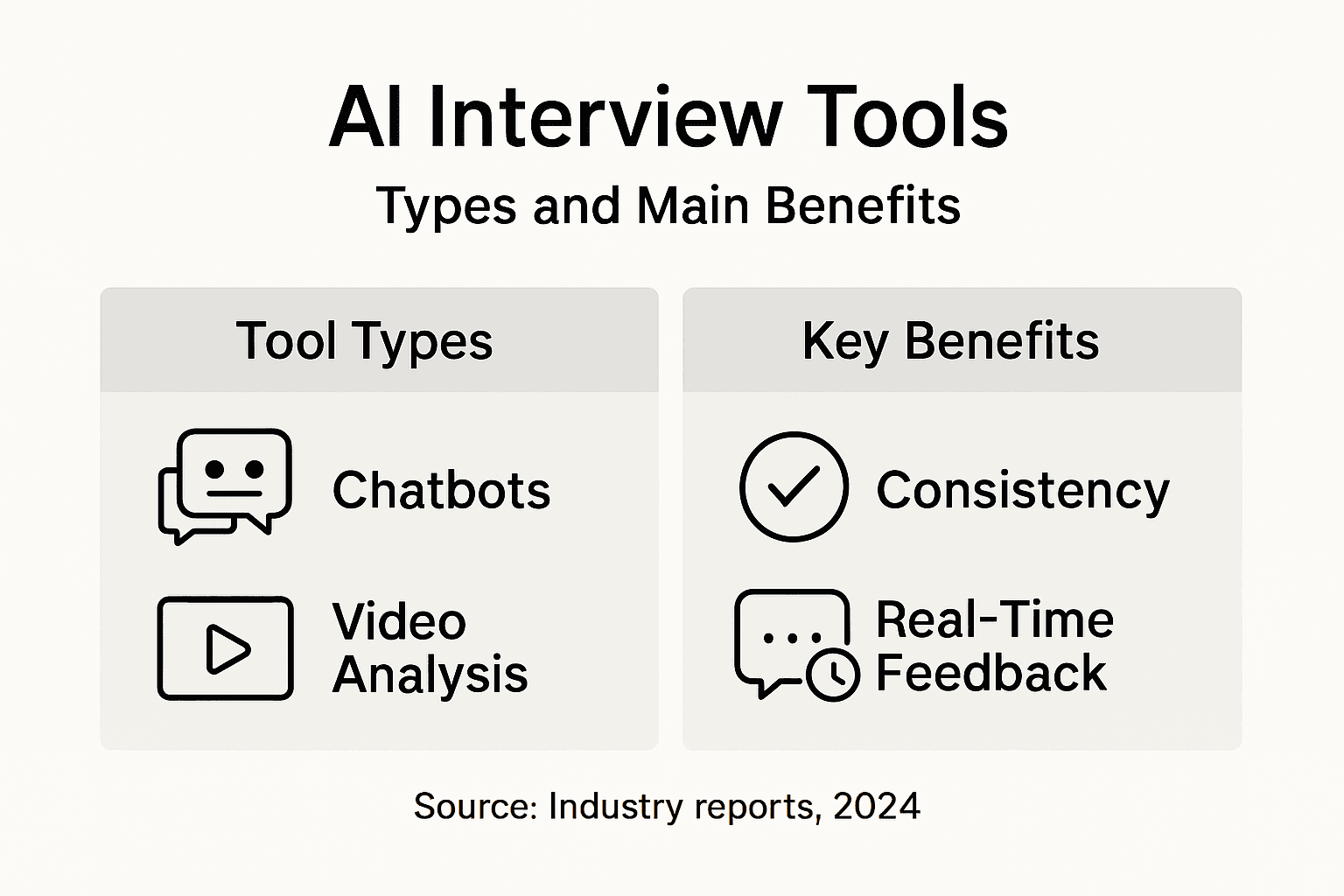
Here’s a comparison of major types of AI interview tools and their unique benefits:
| Tool Type | Main Focus Area | Distinctive Business Impact |
|---|---|---|
| Conversational AI | Language processing | Automates initial candidate screening |
| Video Analysis Platform | Visual and audio assessment | Uncovers subtle behavioral indicators |
| Virtual Reality (VR) | Simulation and immersion | Evaluates job realism and adaptability |
| Gamified Assessment | Problem-solving and reactions | Engages candidates, reveals cognitive skills |
Advanced AI interview technologies now support collaborative interactions between human recruiters and artificial intelligence. These sophisticated systems can provide real-time question recommendations, adaptive feedback mechanisms, and comprehensive candidate performance evaluations across diverse professional domains. By integrating natural language processing, machine learning, and predictive analytics, these tools offer unprecedented insights into candidate potential beyond traditional interview methodologies.
Pro tip: Research and familiarize yourself with different AI interview platforms in your industry to understand their specific evaluation criteria and prepare targeted interview strategies.
Real-Time Feedback and Candidate Improvement
AI-driven interview platforms have revolutionized candidate development through sophisticated real-time feedback mechanisms that provide immediate, actionable insights during mock and live interview scenarios. These intelligent systems analyze communication effectiveness, body language, and response quality, enabling candidates to make instantaneous adjustments and improve their performance.
The core functionality of real-time feedback tools involves multi-modal signal processing that evaluates verbal and nonverbal communication cues. Advanced AI algorithms can detect subtle nuances in speech tone, facial expressions, and linguistic patterns, generating comprehensive performance assessments that highlight strengths and identify potential areas for improvement. By providing granular, data-driven insights, these systems create personalized learning pathways that help candidates refine their interview skills with unprecedented precision.
Moreover, modern AI interview platforms transform the traditional interview preparation approach by offering iterative learning experiences. These technologies create immersive simulation environments where candidates can practice repeatedly, receiving adaptive feedback that evolves based on their individual performance patterns. The continuous learning process allows job seekers to develop targeted communication strategies, build confidence, and systematically enhance their interview presentation skills across different professional contexts.
Pro tip: Record multiple practice interviews and use AI feedback to track your progress, focusing on incremental improvements in communication clarity and professional demeanor.
Risks, Bias, and Best Practices for Using AI
AI interview technologies present complex ethical challenges that demand careful navigation. AI interview scoring systems can inadvertently amplify existing societal biases if not meticulously designed and continuously monitored. The potential for algorithmic discrimination exists across multiple dimensions, including gender, racial, age-related, and socioeconomic background representations.
The primary risks associated with AI interview tools stem from their training data and underlying algorithmic frameworks. Biased historical hiring data can lead to perpetuating systemic inequalities, where certain candidate groups are systematically disadvantaged. Advanced mitigation strategies require multidisciplinary approaches that integrate expertise from data science, industrial-organizational psychology, and ethical AI design to create more equitable evaluation mechanisms.
The following table summarizes leading risks of AI interview scoring and how organizations can mitigate them:
| Risk | Example Challenge | Mitigation Strategy |
|---|---|---|
| Algorithmic Bias | Favoring specific demographics | Regular bias audits and diverse datasets |
| Lack of Transparency | Opaque scoring criteria | Require documentation and audits |
| Overreliance on AI | Ignoring individual context | Maintain human oversight and review |
| Data Privacy Concerns | Sensitive candidate data exposure | Enforce strict data governance policies |
Best practices for responsible AI implementation in hiring contexts involve comprehensive, proactive bias detection and correction methodologies. This includes developing transparent algorithms, conducting regular bias audits, implementing identity-shielding techniques, and maintaining meaningful human oversight. Organizations must prioritize creating AI systems that complement human decision making rather than replacing nuanced professional judgment, ensuring that technological innovation supports, rather than undermines, fair hiring practices.
Pro tip: Request transparency documentation from AI interview tool providers, focusing on their bias mitigation strategies and independent audit results before implementing their systems.
Unlock Your Full Potential with Real-Time AI Interview Coaching
The article explains how AI interview scoring assesses your communication, emotional cues, and problem-solving skills to deliver fair and data-driven evaluations. If you want to overcome the challenge of delivering clear, structured responses and manage those subtle nonverbal signals that AI picks up on, our real-time AI job interview assistant is designed to help you excel. By listening to your interview and instantly providing AI-generated answers and feedback, Parakeet AI empowers you to sharpen your skills and grow confident under pressure.
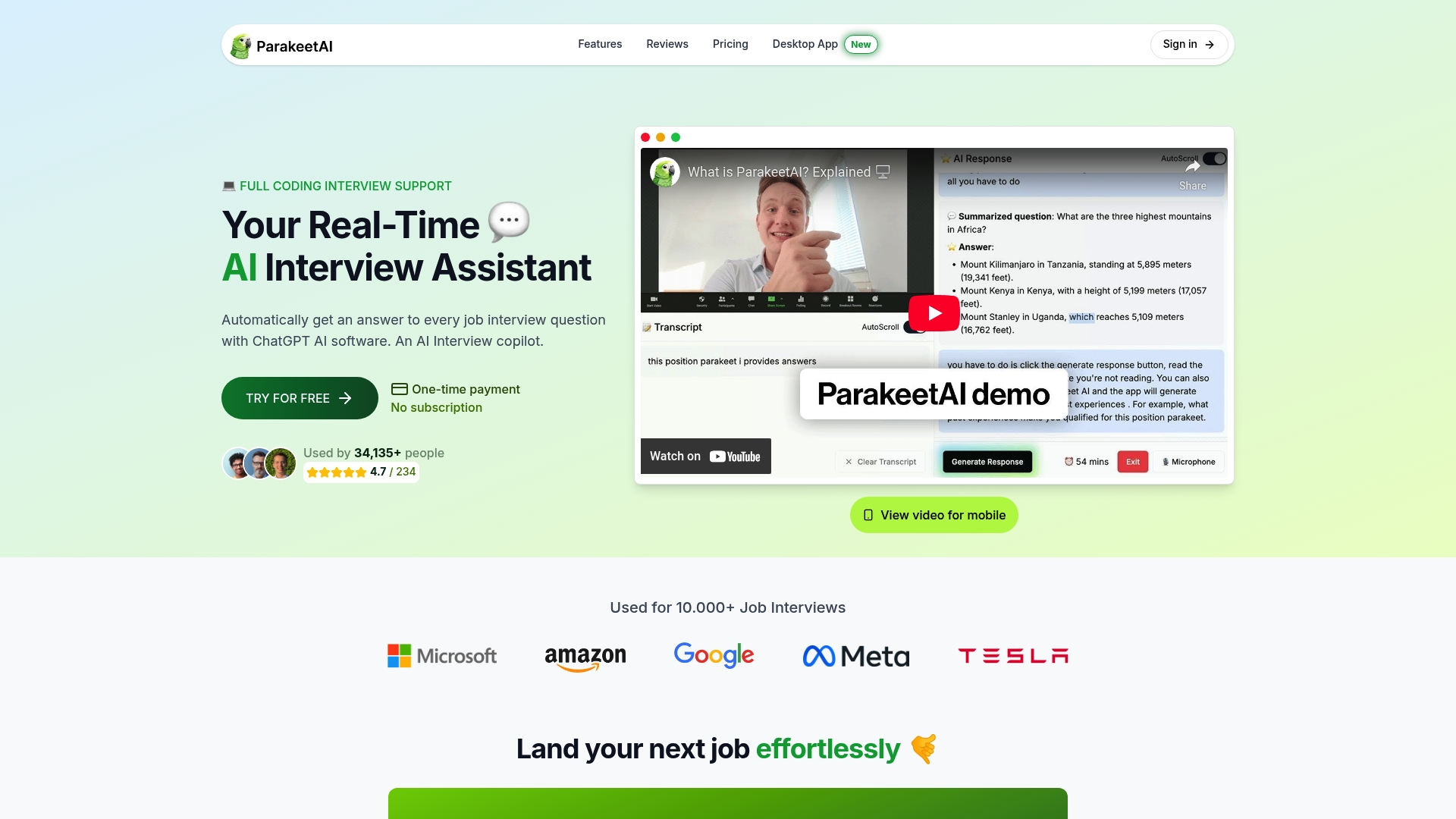
Get ahead of AI scoring algorithms today by practicing with the tool that adapts to your unique interview style. Experience personalized coaching based on key metrics from the article like communication clarity and emotional intelligence. Visit https://parakeet-ai.com now to transform how you prepare and make every interview count. Discover how AI interview scoring works and why mastering these insights is your key advantage.
Frequently Asked Questions
How does AI evaluate interview responses?
AI evaluates interview responses using natural language processing techniques that analyze linguistic patterns, emotional tone, communication clarity, and behavioral indicators to generate objective scores based on predefined success criteria.
What metrics does AI interview scoring assess?
AI interview scoring assesses several metrics, including communication effectiveness, linguistic complexity, emotional intelligence, and problem-solving capabilities, providing a comprehensive evaluation of a candidate’s performance.
What types of AI interview tools are available?
There are various AI interview tools, including conversational AI assistants, video analysis platforms, virtual reality simulations, and gamified assessments, each designed to analyze different aspects of candidate performance during interviews.
How can candidates improve their interview skills using AI technology?
Candidates can improve their interview skills by using AI-driven platforms that provide real-time feedback on communication effectiveness and body language, allowing them to refine their presentation and enhance their interview strategies through iterative practice.