
Interview Process Best Practices: AI Impact for HR

Sorting through stacks of resumes rarely reveals the full story behind a candidate’s potential. For HR teams at tech startups, the interview process now spans far beyond technical skills or past job titles. The shift toward holistic, AI-enhanced interviews empowers organizations to dig deeper into professional growth and cultural alignment. Adopting strategic and technology-driven assessment tools can transform hiring into a collaborative journey, revealing hidden strengths and creating stronger matches for dynamic startup environments.
Table of Contents
- Defining The Interview Process In 2026
- Types Of AI-Powered Interview Methods
- Key Techniques For Effective Candidate Assessment
- Integrating AI Tools With Human Oversight
- Legal, Ethical, And Compliance Considerations
- Common Pitfalls And How To Avoid Them
Key Takeaways
| Point | Details |
|---|---|
| Transformative Interview Process | Interviews are evolving into strategic experiences that focus on candidate potential, growth, and cultural fit. |
| AI Integration | AI technologies will provide objective assessments, identify hidden talents, and personalize candidate experiences. |
| Human-AI Collaboration | The future of interviewing requires collaboration where AI aids in data processing while human professionals handle complex evaluations. |
| Legal and Ethical Compliance | Organizations must prioritize data privacy and algorithmic fairness to ensure ethical AI deployment in hiring processes. |
Defining the Interview Process in 2026
The professional interview process is rapidly transforming into a strategic tool for talent development and organizational performance. By 2026, interviews will no longer be simple assessment transactions but holistic experiences designed to understand candidate potential, growth trajectory, and cultural alignment.
Companies are shifting towards more dynamic interview frameworks that emphasize continuous dialogue and professional development. Professional interview strategies will incorporate multidimensional evaluation approaches that go beyond traditional skill matching.
Key characteristics of the 2026 interview process include:
- Expanded career trajectory exploration
- Deeper emphasis on individual growth potential
- More interactive and reciprocal communication models
- Integration of AI-driven insights and assessment tools
- Regulatory compliance with evolving professional development standards
The emerging interview paradigm requires HR professionals to adopt more nuanced approaches. Managers will transition from purely evaluative roles to developmental coaching positions, focusing on understanding candidate potential rather than just measuring current capabilities.
Technological Integration
Artificial intelligence and advanced analytics will play a critical role in transforming interview processes. These technologies will help:
- Provide more objective candidate assessments
- Identify hidden potential beyond traditional metrics
- Create personalized candidate experience pathways
- Enable real-time performance insights
The future of interviewing is not about filtering candidates, but about understanding human potential and creating meaningful professional connections.
Pro tip: Invest in continuous learning and adaptability to stay ahead of emerging interview methodologies and technological innovations.
Here’s a comparison of traditional interviews and AI-powered interview methods in 2026:
| Aspect | Traditional Interviews | AI-Powered Interviews 2026 |
|---|---|---|
| Evaluation Focus | Assess current skills | Reveal potential and adaptability |
| Communication Style | One-way questioning | Dynamic, conversational dialogue |
| Technology Integration | Minimal use | High use of AI and analytics |
| Role of HR | Sole evaluator | Developmental coach and interpreter |
| Bias Risk | High, often unintentional | Reduced with constant auditing |
| Compliance Management | Manual oversight | Automated process audits |
Types of AI-Powered Interview Methods
The landscape of AI-powered interviewing is rapidly evolving, offering sophisticated methods that go beyond traditional screening techniques. AI-driven interviewing systems now encompass multiple innovative approaches designed to comprehensively assess candidate potential across diverse professional domains.
These advanced interview methodologies can be categorized into several distinct types:
- Rule-based AI systems: Utilize predefined evaluation criteria and algorithmic decision-making
- AI-enhanced interviews: Incorporate natural language processing for deeper candidate insights
- Immersive simulation interviews: Create interactive scenarios testing real-world problem-solving skills
- Gamified assessment platforms: Transform interviews into engaging, performance-based experiences
Technological Frameworks
Each AI interview method leverages unique technological capabilities to provide nuanced candidate evaluation. Natural language processing enables sophisticated linguistic analysis, while machine learning algorithms can detect subtle communication patterns, emotional intelligence, and cognitive flexibility.
Specialized interview approaches are emerging across critical sectors:
- Healthcare: Scenario-based simulations testing clinical reasoning
- Education: Personality and teaching methodology assessments
- Law Enforcement: Behavioral and ethical decision-making evaluations
- Technology: Technical skill and collaborative potential measurements
AI-powered interviews represent a paradigm shift from traditional assessment methods to intelligent, adaptive candidate exploration.
Emerging Technological Trends
The next generation of AI interview technologies will likely integrate emotional responsiveness, real-time feedback mechanisms, and personalized candidate experience pathways. These systems aim to create more holistic, human-centric evaluation frameworks that recognize individual potential beyond standardized metrics.
Pro tip: Continuously update your understanding of AI interview technologies to remain competitive in talent acquisition strategies.
Key Techniques for Effective Candidate Assessment
Candidate assessment has transformed into a sophisticated, data-driven process that goes far beyond traditional screening methods. Effective candidate evaluation now requires a multifaceted approach that balances objective measurement with nuanced understanding of individual potential.
Modern assessment techniques encompass a comprehensive range of sophisticated strategies:
- Structured interviews: Standardized questioning protocols
- Skill-specific evaluations: Targeted assessments matching job requirements
- Psychometric testing: Personality and cognitive capability measurements
- Work sample demonstrations: Practical skills validation
- Behavioral scenario analysis: Real-world problem-solving assessments
Technological Assessment Frameworks
Advanced candidate evaluation leverages cutting-edge technologies to create more comprehensive and unbiased assessment methodologies. Machine learning algorithms and sophisticated data analysis tools enable HR professionals to develop more refined, predictive candidate screening processes that identify not just skills, but potential cultural and collaborative fit.
Key assessment dimensions include:
- Technical competency verification
- Soft skill and emotional intelligence measurement
- Cultural alignment potential
- Adaptability and learning capacity
- Collaborative interaction potential
Effective candidate assessment is about understanding human potential beyond traditional metrics.
Bias Reduction Strategies
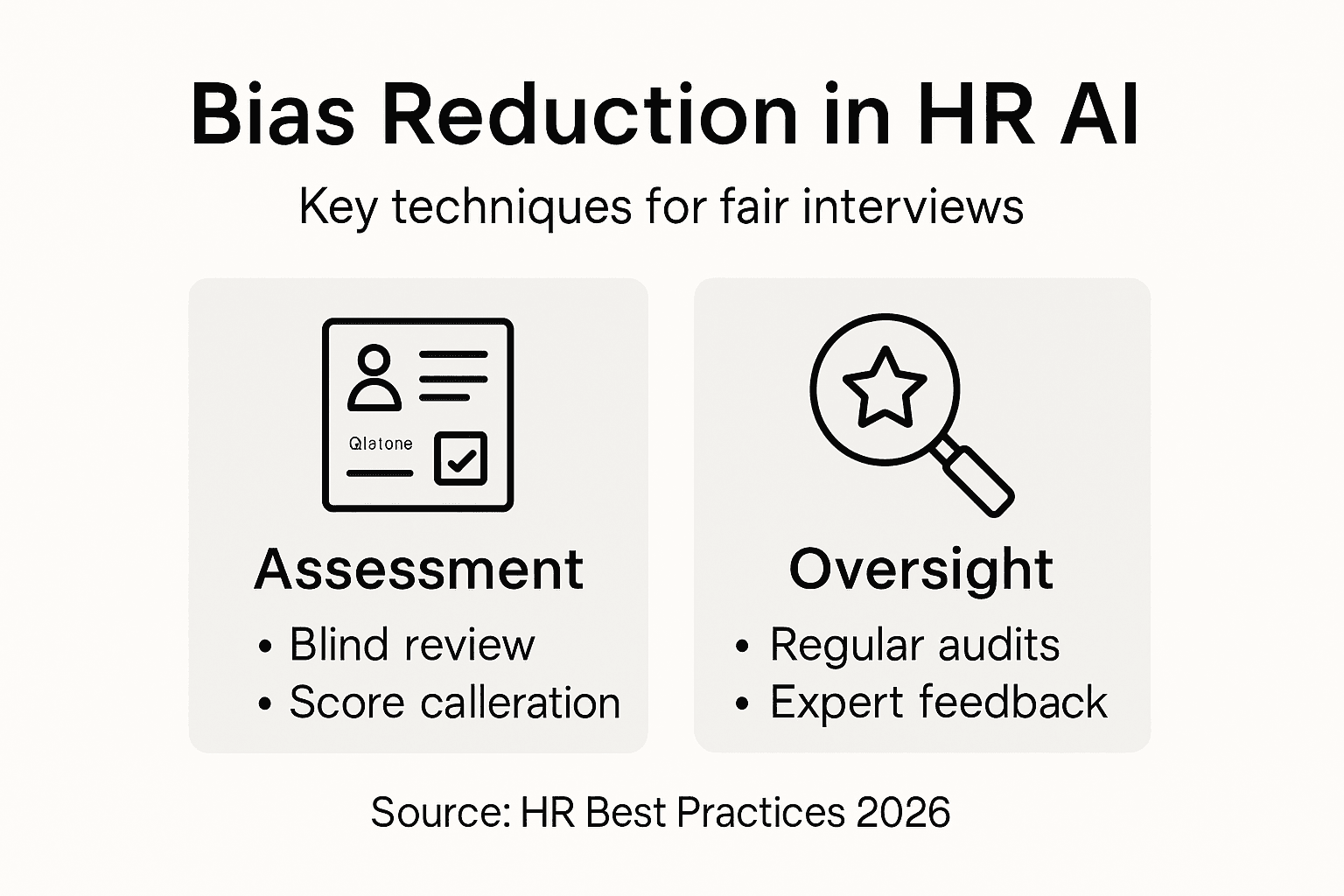
Modern assessment techniques prioritize creating fair, inclusive evaluation frameworks that minimize unconscious bias and promote diversity. This involves developing standardized assessment protocols, utilizing anonymized screening processes, and implementing multiple-perspective evaluation techniques.
Pro tip: Continuously validate and update your assessment methodologies to ensure they remain objective, comprehensive, and aligned with evolving workplace dynamics.
Integrating AI Tools With Human Oversight
The future of interviewing lies in seamless collaboration between artificial intelligence and human expertise. Human-AI collaboration represents a nuanced approach where technology enhances rather than replaces human decision-making capabilities in the hiring process.
Successful integration strategies involve carefully defined interaction models:
- Dynamic role allocation: AI handles data processing, humans manage complex judgments
- Contextual augmentation: AI provides insights, humans interpret and validate
- Real-time feedback mechanisms: AI generates recommendations, humans make final decisions
- Continuous learning protocols: AI adapts based on human intervention
- Ethical oversight frameworks: Human experts monitor AI performance and potential biases
Technological Synergy Frameworks
AI tools can transform interview processes by automating routine tasks and providing sophisticated analytical capabilities. This allows human professionals to focus on nuanced aspects of candidate evaluation that require emotional intelligence, contextual understanding, and strategic thinking.
Key integration principles include:
- Establishing clear boundaries between AI assistance and human decision-making
- Developing transparent algorithmic processes
- Creating robust training programs for HR professionals
- Implementing ongoing performance monitoring
- Ensuring ethical and legal compliance
The goal of AI integration is not replacement, but augmentation of human capabilities.
Oversight and Governance
Effective AI tool integration demands comprehensive governance structures that prioritize human judgment. This involves creating transparent systems where AI recommendations can be critically examined, challenged, and ultimately validated or rejected by human professionals.

Pro tip: Develop a collaborative mindset that views AI as a sophisticated assistant, not a replacement for human expertise in interview processes.
Legal, Ethical, and Compliance Considerations
The integration of artificial intelligence in recruitment processes demands rigorous attention to legal and ethical standards. AI recruitment ethics require comprehensive frameworks that protect candidate rights and prevent systemic discrimination.
Key legal and ethical considerations include:
- Data privacy protection
- Algorithmic fairness and bias prevention
- Transparent decision-making processes
- Candidate consent and information rights
- Ongoing system accountability
Regulatory Compliance Frameworks
Organizations must navigate complex legal landscapes that govern AI-powered hiring technologies. This involves meeting stringent requirements from regulations like EEOC, GDPR, and emerging AI-specific employment guidelines that mandate fair and transparent candidate assessment mechanisms.
Critical compliance dimensions encompass:
- Documenting AI decision-making processes
- Ensuring algorithmic transparency
- Implementing regular bias audits
- Maintaining candidate data protection
- Providing clear appeal mechanisms
Ethical AI deployment requires constant vigilance, transparency, and commitment to fundamental human rights.
Risk Mitigation Strategies
Successful legal compliance demands proactive risk management approaches that prioritize candidate welfare and organizational integrity. This involves developing robust governance structures, continuous monitoring protocols, and adaptive AI systems that can be critically examined and adjusted.
Pro tip: Develop comprehensive documentation and regular audit processes to demonstrate your AI hiring tools’ legal and ethical compliance.
Common Pitfalls and How to Avoid Them
AI-powered interview technologies introduce complex challenges that require strategic navigation. AI candidate screening techniques demand careful implementation to prevent unintended negative consequences in hiring processes.
Common pitfalls in AI-driven recruitment include:
- Algorithmic bias propagation
- Over-reliance on keyword matching
- Inadequate candidate context understanding
- Privacy and data security vulnerabilities
- Lack of human oversight and interpretation
Technological Screening Challenges
AI screening systems can inadvertently create barriers that exclude qualified candidates through rigid, inflexible assessment mechanisms. These technologies require nuanced calibration to ensure fair and comprehensive candidate evaluation.
Key strategies for mitigating AI interview risks:
- Implement human review checkpoints
- Diversify training data sets
- Regularly audit algorithmic decisions
- Create transparent evaluation criteria
- Develop contextual interpretation protocols
Effective AI interviewing balances technological efficiency with human empathy and understanding.
Risk Mitigation Approaches
Successful AI interview implementation requires continuous monitoring, adaptive learning, and a commitment to maintaining human-centered evaluation processes. Organizations must develop sophisticated frameworks that leverage AI’s capabilities while preserving candidate dignity and potential.
Below is a summary of key risk mitigation strategies for AI interview implementation:
| Risk Area | Recommended Action | Impact on Process |
|---|---|---|
| Algorithmic Bias | Use diverse training data | Improves fairness |
| Data Privacy | Regular security audits | Protects candidate information |
| Over-reliance on AI | Maintain human review checkpoints | Ensures nuanced assessments |
| Opaque Decisions | Provide transparent explanations | Builds candidate trust |
Pro tip: Develop comprehensive validation processes that combine AI recommendations with human expertise to ensure fair and accurate candidate assessments.
Elevate Your Interview Process with Real-Time AI Support
The article highlights the growing complexity of interview best practices in 2026 emphasizing the importance of continuous dialogue, unbiased candidate assessment, and AI-powered insights to uncover true potential. Addressing common challenges like bias reduction and human-AI collaboration can feel overwhelming. That is why adopting solutions that combine AI technology and human expertise is critical to transforming your recruiting strategy.
Imagine having a real-time AI job interview assistant that listens attentively and provides instant, accurate answers to every question. This innovative approach not only supports seamless AI-powered interviews in 2026 but also helps reduce bias and improve candidate experience by enhancing your team’s ability to focus on deeper candidate insights.
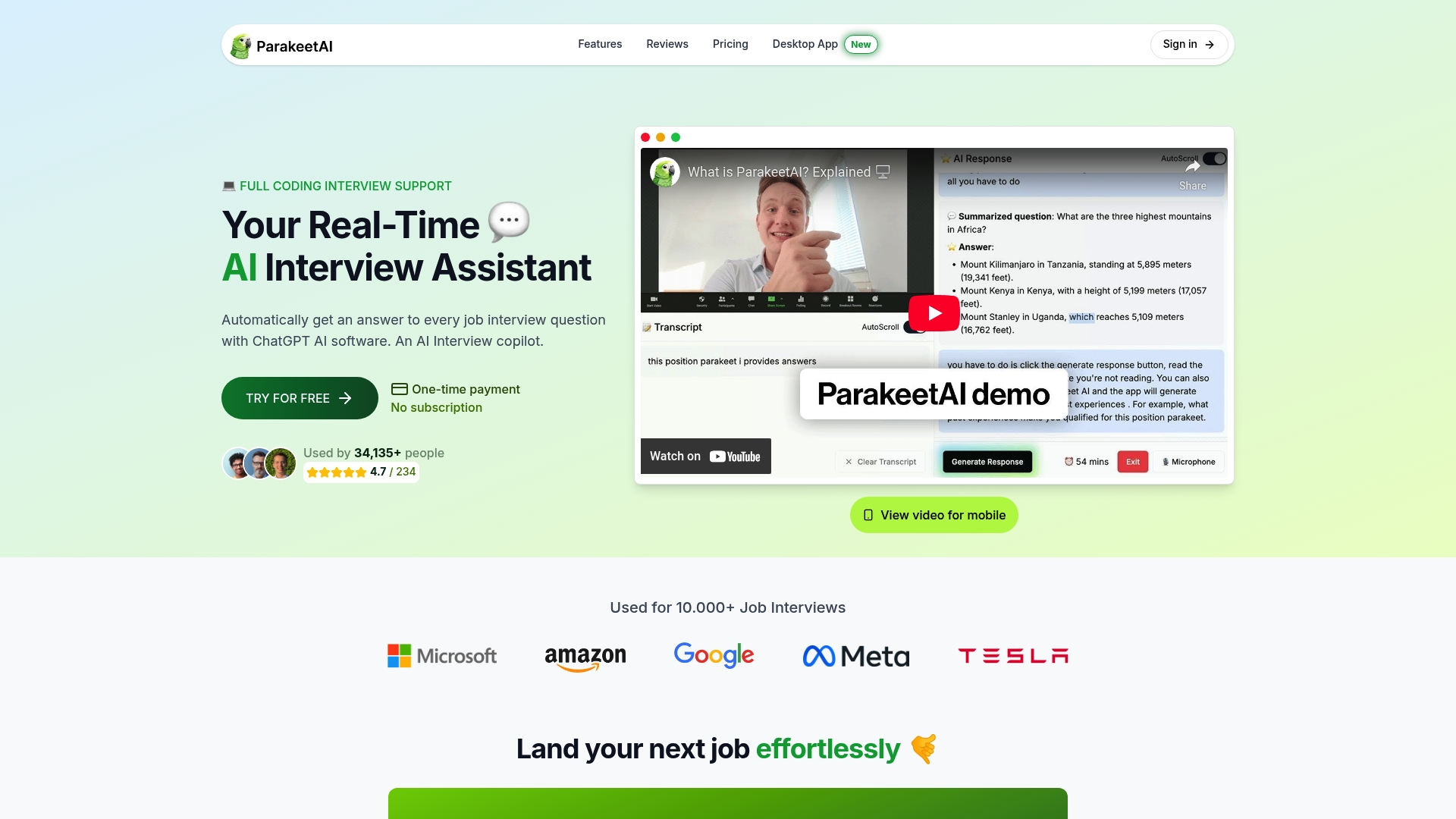
Get ahead in the evolving hiring landscape by integrating smart AI assistance today. Discover how you can align with emerging interview practices and benefit from continuous learning tools at Parakeet AI. Visit Parakeet AI now to revolutionize your interview process and unlock the full potential of every candidate.
Frequently Asked Questions
What are the key characteristics of the interview process in 2026?
The 2026 interview process emphasizes expanded career trajectory exploration, deeper individual growth potential, interactive communication models, integration of AI-driven insights, and compliance with evolving professional development standards.
How will AI impact candidate assessment in interviews?
AI will enhance candidate assessments by providing more objective evaluations, identifying hidden potential, creating personalized pathways, and enabling real-time performance insights during the interview process.
What are some advanced AI-powered interview methods?
Advanced methods include rule-based AI systems, AI-enhanced interviews utilizing natural language processing, immersive simulation interviews, and gamified assessment platforms that create engaging candidate experiences.
How can organizations ensure ethical and unbiased AI recruitment practices?
Organizations can ensure ethical AI practices by prioritizing data privacy protection, maintaining algorithmic fairness, implementing transparent decision-making processes, and conducting regular audits to assess biases in the hiring process.